For the best experienceDownload the Mobile App

(LifeSiteNews) — Exorcist Father Chad Ripperger told Tucker Carlson that communists operate the same way demons do.  In a nearly two-hour interview released Friday, Fr. Ripperger told Carlson he has observed that the methods of demons and communists closely mirror each other, something he has expounded on in a video series. ARVE Error: Invalid URL in url “When you strip the veneer away of one being political and the other being spiritual, the patterns of thinking are exactly the same,” Fr. Ripperger said. “The demons always present temptation as this pie-in-the-sky thing that you’re gonna get, and you’re going to get this pleasure and joy and everything’s going to turn out right,” the exorcist noted. “But then once you give into the temptation, from there they take you down. It’s the exact same thing in communism.” Communism, too, provides a beautiful, idealistic vision about what it will provide. “You’re never gonna have to worry. The government’s gonna provide everything. Everything’s going to be peaceful and joyful,” Fr. Ripperger said in imitation of communism’s promises. “They get you a bill of goods. They get you to sign off on it. And from there they take you down,” said the exorcist priest, describing a pattern of communism that has repeated historically all over the world, in which citizens promised a utopia are instead met with severe deprivation and even death. Fr. Ripperger said he also sees this pattern when demons afflict people with diabolic obsession, which is when the demons “besiege their imagination and emotions to such a degree that they can’t really think outside the box.” “Oh man, who hasn’t been there?” said Carlson, noting that it is usually lust related but also manifests through anger and envy. Fr. Ripperger said the way to identify diabolic obsession in relationship to a thought pattern is to observe whether the thoughts switch on and off without any external trigger. If this occurs, the thoughts are diabolic in origin. Fr. Ripperger’s videos on the similarities between communism and diabolic psychology can be found on his YouTube channel, Sensus Traditionis.

By Leonardo Blair, Senior Reporter Thursday, April 09, 2026La'Boris Cole is the new wife of gospel singer and pastor of The Chosen Vessel church in Fort Worth, Texas, Marvin Sapp. | YouTube/ The Chosen Vessel ChurchLa'Boris Cole, the wife of gospel singer and pastor of The Chosen Vessel church in Fort Worth, Texas, Marvin Sapp, shot down critics of their lavish wedding on Sunday, insisting that the couple did not use church funds to pay for last month's celebration of their nuptials, which featured a ballerina, helicopter and sea of flowers.Cole’s comments came as she was formally introduced to The Chosen Vessel congregation on Easter Sunday as Sapp’s first lady. The 59-year-old “Never Would Have Made It” singer invited his 37-year-old wife to share her vision for a personal ministry. The licensed professional counselor then briefly segued into a spirited clapback at critics of her husband, who insinuated that the cost of their lavish wedding at the church was being paid with church funds.Over the last year, Sapp, who infamously ordered ushers to shut the doors at a Christian conference until attendees collectively donated $40,000, had come under heightened scrutiny for his unapologetic fundraising tactics.“Despite what the haters on the internet say about you, you are an integral man. You don't take or rob the church. The church didn't pay for the wedding. Y'all stop lying. God's been good to me. Y'all stop that. Now, y'all stop. Devil, you are defeated,” Cole declared.“Saying all these lies about the man of God. I bought the helicopter. He didn't buy the helicopter. Let's make that straight while we screaming. Y'all stop lying? Stop it. Everybody not broke. And everybody don't need the church's money. So, hey, God's been good, y'all. I just don't look good,” she added.Marvin Sapp attends the BMI Trailblazers of Gospel Music Awards at FLOURISH Atlanta on March 30, 2023, in Atlanta, Georgia. | Erika Goldring/Getty Images for BMISapp and Cole wed on March 20 in a private ceremony at The Chosen Vessel Church following a courtship that began in 2024, according to an interview with Essence.“In 2024, we decided to exclusively date and made it clear with intention that this would be a courtship leading to marriage. By 2025, we knew we were heading towards marriage and, while we kept our relationship private, we did start thinking about the practical aspects of a wedding — including when we wanted it to take place,” Sapp said. “We chose March 20 since it is the beginning of spring, representing a new season both literally and figuratively. We set the date before we were engaged! We were focused on establishing an unbreakable bond between us and taking the necessary measures to ensure we were entering into a marriage with a clear and aligned focus.”The nuptials featured a grand entrance by Cole and members of her family in a helicopter. When news of the wedding broke on social media, some critics insisted that the wedding looked expensive, joking that the "doors must have been locked again." Cole insisted in her comments that both she and her husband have multiple streams of income and no need to use the tithes and offerings to fund their personal expenses.“I have surrendered my life to God, and he's blessed me with multiple streams of income as well as the bishop. He has multiple streams of income outside the church. When he wasn't getting paid here, God still blessed him. God still blessed. So y'all go and record and tell that,” she said. “I tell Bishop all the time, I told God a long time ago, I'm not going to serve you and your people, and I'm broke. I look like brokenness. So how can I be a living witness to you all that God is healer?”View this post on InstagramA post shared by ESSENCE (@essence)

By Samantha Kamman, Christian Post Reporter Thursday, April 09, 2026Savannah Guthrie (L) and her mother Nancy Guthrie (R). | Screenshot/YouTube/ABC NewsA detective who specializes in cold cases says the abduction of Nancy Guthrie may have started as an attempt to gain money but escalated into a far more serious crime because the woman’s captors misjudged her health.Brian Martin, a detective with the Fort Wayne Police Department in Indiana, told Brian Entin in an interview on Tuesday with NewsNation that he believes those responsible for abducting Nancy Guthrie likely intended to hold her briefly while demanding money, then release her. The detective speculated that the kidnappers planned to keep the 84-year-old woman in an unknown location for a few days before collecting the money and abandoning her somewhere, like a Walmart parking lot.Martin theorized that the kidnappers “underestimated” Nancy Guthrie’s health, suggesting that some sort of medical event forced them to change their plans.“It just scares me to think that somebody maybe took Ms. Guthrie, and she had some sort of medical event when it was happening, because obviously it’d be an incredibly stressful situation and very taxing on somebody,” the detective said.The disappearance of Nancy Guthrie, the mother of "Today" show co-anchor Savannah Guthrie, has drawn nationwide attention as authorities continue to search for the missing woman.Nancy Guthrie was reported missing Feb. 1 after she failed to attend a virtual church service that morning. She was last seen around 9:45 p.m. Jan. 31 after having dinner with her family.Law enforcement officials have released doorbell camera footage of a masked man outside the elderly woman’s home in Tucson, Arizona, on the day of her disappearance. However, authorities have not named any suspects or persons of interest in connection with the case.During the interview with the Fort Wayne detective, Entin said Martin’s theory would explain why no one appears to have tried to collect a ransom in exchange for Nancy Guthrie. The detective replied that the perpetrator or perpetrators cannot attempt to collect any money now, which he believes was the motive for abducting the 84-year-old woman.“Things went sideways, things went wrong, and what they had to do is they had to … it sounds horrible … they had to dispose of Ms. Guthrie because she was no longer of value to them in that monetary gain that they’re hoping to get,” Martin said.Media outlets like TMZ have reported receiving ransom notes following the disappearance of Savannah Guthrie’s mother. The notes include demands for millions of dollars in cryptocurrency and graphic descriptions of the consequences of not paying the ransom.On April 6, TMZ reported that it had received another note from someone claiming to offer information about Nancy Guthrie’s location in exchange for one Bitcoin.According to Martin, the ransom notes are either legitimate and written by someone involved in the case, or they were written by someone seeking attention and “trying to cause the family heartache.”In past cases Martin has worked on, authorities had to decide whether to keep the contents of ransom notes or taunting letters private or share them with the public in hopes of gaining information.Martin hopes the notes in this case do not lead law enforcement down “a completely wrong path” that would distract from finding Nancy Guthrie.“This person … whoever sent the letters obviously … they want some attention,” he continued. “They want those letters to be found, or they wouldn’t have sent them to a news outlet. I would hope that if it is the person involved in Ms. Guthrie’s disappearance, they want to be heard and are legitimately trying to negotiate some type of deal.”Even though Guthrie has been missing for more than 60 days, the detective does not consider it a cold case.“I don’t think this is a cold case at all,” Martin said. “We’re looking at 60 days. I think there’s still a lot of very viable information that can be gained, both electronically and through interviews and re-interviews, and not only that, but tips that are coming in.”Amid the ongoing investigation, the Guthrie family has asked the public to continue praying for their missing relative.In an Easter video message for Good Shepherd New York church, Savannah Guthrie discussed her mental struggles after her mother’s disappearance. During this period of uncertainty, Savannah Guthrie said she has wondered whether Jesus ever experienced pain like hers during His time on Earth.“Recently, though, in my own season of trial, I have wondered, I have questioned whether Jesus really ever experienced this particular wound that I feel," she said. "This grievous and uniquely cruel injury of not knowing, of uncertainty and confusion and answers withheld."“In those darkest moments, I have thought bitterly, and perhaps irreverently, that I have stumbled upon a feeling that Jesus did not know,” the co-anchor added.At the conclusion of her message, Savannah Guthrie said that she would close her eyes and “feel the sunshine.”“I see a bright vision of the day when Heaven and Earth pass away because they are one, on Earth as it is in Heaven," she continued. "When we celebrate today, this is what we celebrate, and I celebrate, too. I still believe. And so I say with conviction, 'Happy Easter.'”

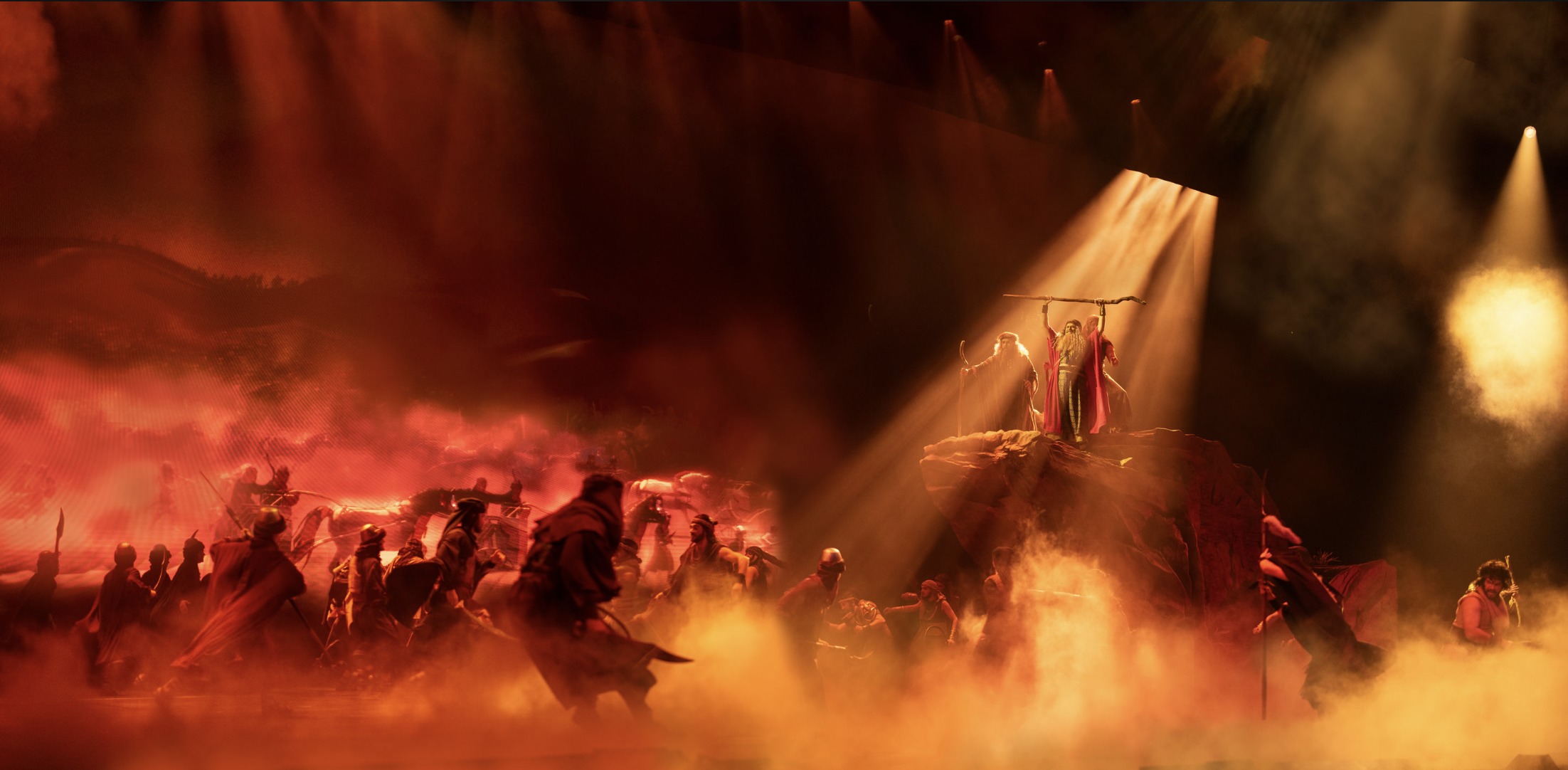
By Leah MarieAnn Klett, Assistant Editor Thursday, April 09, 2026A still image from Sight & Sound's stage production of "Joshua." | Sight & SoundLANCASTER, Pennsylvania — Sight & Sound Theatres’ newest stage production, “Joshua,” is drawing audiences into one of the Bible’s most dramatic stories with a large-scale spectacle centered on trust, obedience and God’s mercy.The production, which follows the biblical account of Joshua leading the Israelites into the Promised Land, features Sight & Sound’s typical stunning visuals, including towering giants, chariot battles, the Ten Commandments on Mount Sinai and the collapse of Jericho’s walls. But behind the elaborate scenes lies a yearslong process of discernment for the creative team. “It was actually a long time to get to that point,” Ryan Miller, the show’s creative producer, told The Christian Post. “At the beginning, it felt like a no-brainer … big Bible story moments, Jericho walls and all of that. But then it wasn’t until I got into it that I started losing some of that confidence.”Miller said the production, which includes a state-of-the-art LED screen, three-story tall sets, and a cast of nearly 60, required nearly a year of prayer, research and development before the team found a clear path forward.“It ended up being tricky to get there, for sure,” he added.One of the most technically demanding elements was depicting the falling of Jericho’s walls as documented in Joshua 5, a sequence Miller said was unprecedented even for the theater company, known for its elaborate staging.“The collapse felt like figuring out 10 Goliaths,” he said, noting it required extensive prototyping and innovation.Beyond technical challenges, the creative team also grappled with how to present the darker themes found in the Book of Joshua, including violence and moral complexity, while maintaining the trust of families. Miller, a father of three, said he often evaluated scenes through the lens of what it would be like to watch alongside his own children.“We take that really seriously,” Miller said. “We don’t want to break that trust with families … and yet we’re also handed stuff that is difficult to deal with.”“I didn’t want to put any parent in a position that I wasn’t willing to be in,” he said.At the same time, he emphasized the importance of portraying both God’s judgment and mercy, particularly through the inclusion of Rahab, a Canaanite woman and prostitute whose faith leads to her salvation.“If you take her out of it, the perspective of God tends to be very judgmental,” Miller said. “She highlights the Lord’s mercy … all who cry out and call the name of the Lord will be saved.”Rahab in Sight & Sound's stage production of "Joshua." | Sight & SoundActor Carl Anderson, who portrays Joshua, said he was drawn to the character’s internal strength and quiet leadership. The play highlights how Joshua trusted and followed God’s commands, even when the Israelites refused to obey. “He’s grounded and steadfast externally, but internally there might be chaotic things going on,” Anderson said. “I really relate to that.”Anderson, who sings the majority of the play’s songs, described the role as spiritually challenging; Joshua’s dependence on God, he said, has influenced his own daily walk of faith.“You have to make a choice … am I going to trust the Lord for what’s next?” he said. “It definitely impacts me every day.”Audience response, particularly from children, has been enthusiastic. Anderson noted that younger viewers are often captivated by both the music and the larger-than-life elements of the show, including the live animals and giants.“The way they take it all in … they remember so many parts of it because it's such a tangible story to kind of focus in on,” he said.Founded in the 1970s by Glenn and Shirley Eshelman, Sight & Sound has grown to two state-of-the-art theater locations, one in Lancaster and one in Branson, Missouri, an online streaming platform and a film studio. The ministry recently released the film “A Great Awakening,” which earned an A+ CinemaScore from audiences and grossed more than $2 million.“We try to say no to hundreds of good ideas and yes to the God idea,” Josh Enck, president of Sight & Sound, recently told CP. “Once we know, we don’t look back. We are anti-ego. None of this is about us. It’s about bringing the Bible to life on stage and now on screen and getting out of the way of what God is doing.”And, as with all Sight & Sound productions, “Joshua” concludes with a clear presentation of the Gospel, a longstanding, non-negotiable element of the company’s mission.“Our founder was a preacher … it’s such a core part of who we are,” Miller said. “The Gospel message has to be clearly communicated. It’s why we're here. At the same time, there is an element where we understand that, in many ways, we are preaching to the choir. Many people that are coming here are already saved, they're already walking with the Lord, and yet, they also need encouragement. They also need to be challenged in trusting the Lord and things like that. “We always try and make sure that, yes, the Gospel message is preached, while also trying to inspire and encourage and strengthen people who are already saved. That’s a core part of what we’re trying to do.”Carl Anderson stars in Sight & Sound's "Joshua." | Sight & SoundStill, “Joshua” is undeniably entertaining even to those not familiar with the Old Testament account. Miller said the production is designed to both encourage believers and engage newcomers.“You can come and just have a good time,” he said. “And then we trust the Holy Spirit to do His part.”Ultimately, both Miller and Anderson said the central message of the production is one of trust, a theme embodied not only in Joshua’s leadership but also in Rahab’s unlikely act of faith.“The overall message of the show is, are you going to trust the Lord?” Miller said. “There’s only one thing that’s not going to crumble, and that’s the foundation of Jesus Christ.That’s the commonality between even Joshua and Rahab, whether it's Joshua choosing to trust the Lord in the manna, in the burning the chariots, in the walking around the city, or for her, it's, ‘Am I going to trust the Lord and tie the scarlet cord in my window and do something that makes absolutely no sense?’ Ultimately, that is what I want people to be thinking about: What have I put my hope and trust in?”Anderson echoed that sentiment, expressing hope that audiences will see themselves reflected in the story.“I want people to be able to see themselves … and know that wherever they are, the Lord is there,” he said. “They can trust Him.”“Joshua” is on stage for one season only, March 14th – December 31, 2026. Tickets can be purchased on Sight & Sound’s website.

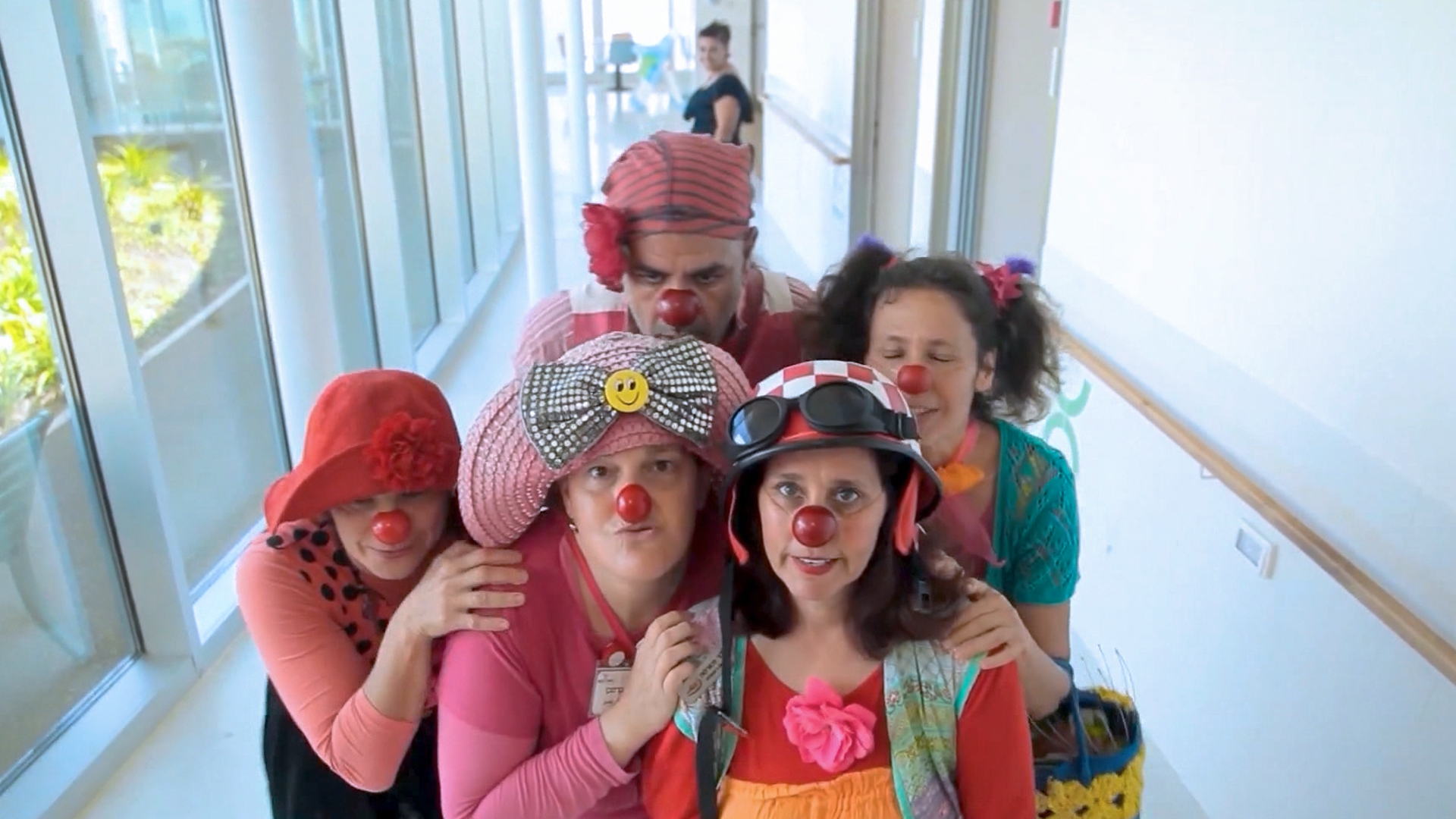
In Israel, clowning is serious business. The Dream Doctors Project, Medical Clowning in Action, is comprised of a group of more than 100 healing professionals. They are professional members of medical teams at about 30 hospitals in that nation, and focus mostly on juvenile patients. They've been doing it for more than 20 years, serving hundreds of thousands of patients each year.   Dozens of research studies show medical clowns can bring a reduction in anxiety and pain.  In fact, some procedures can be performed without any sedation at all, just with the clown's help. Similarly, almost like an interpreter, kids convey to the clown their symptoms and other important information useful to doctors and nurses that the children might not otherwise feel comfortable sharing with anyone else. Visiting America Members of Israel's renowned Dream Doctors Project visited Norfolk, Virginia's Children's Hospital of the King's Daughters, blessing patients and their families as well as teaching their skills to health care providers. A medical clown named Nimrod Eisenberg told CBN News that humor, empathy and creativity serve as therapeutic tools in a hospital setting. "A clown in a way is a symbol of optimism and hope and the ability to cope with problems," he said. "Clowns love problems. We love when things go wrong and we fall down, we kick stuff, we kick the door. On the way out, suddenly a smile comes back. That smile tells us something about how we deal with problems in our lives." ***Please sign up for CBN Newsletters and download the CBN News app to ensure you receive the latest updates.***  Many of the play techniques are non-verbal, which is especially useful if there's a language barrier or if a child can't speak. CHKD's director of Integrative Care was impressed with the way the clown communicates with children. "Some patients are scared. Some parents are scared," she said. "Some patients don't know how to verbalize what they're feeling or how they're feeling. And so it comes out through play. And so the simple popping and moving of bubbles just really helped them to express themselves and to feel safe." Humanitarian Relief In addition to hospitals, The Dream Doctors Project medical clowns regularly deploy to disaster zones, providing vital humanitarian relief to people around the world, such as Moldova, where they helped Ukrainian refugees, and Nepal, following an earthquake. They faced their most challenging assignment, however, back home following the October 7th terror attacks. The Dream Doctors Project Chief Executive Officer Tsour Shriqui described to CBN News the early portion of that experience. "All the villages around Gaza were destroyed," he said. "People were killed, people were kidnapped, and the people who stayed there were evacuated to other places in Israel. And that's where we get in. We went to see them in those places because a kid is a kid, right?" Like never before, The Dream Doctors Project medical clowns had to put aside their own fear, anger, and grief for the sake of the children. "The clown with those children is this imaginary friend that can give them feelings and support emotions that they really need at that time, without having to go into the psychology and the story of what has happened, to move forward, to see hope and to see optimism even in the darkest times," Eisenberg said. Many parents, who were described as looking like "the walking dead," began to cheer up when they saw their children playing with the clowns.  The moms and dads began to smile and play with their own children again.  This unique type of compassion provided by the clowns also spread to other adults, including soldiers and former hostages. The Work Continues The Dream Doctors Project representatives told a gathering at Virginia Beach's Jewish Community Center that their work in Israel continues. "It is vital," participant Sharon Goretsky told CBN News. "It is vital because those people are so traumatized." "I think we always, as a Jewish community, like to support our colleagues in Israel," participant Dr. Edward Karotkin told CBN News. "We are big supporters of Israel and big supporters of our Jewish community here." While parts of life, such as medical issues, natural disasters, and war, can be scary, Israel's The Dream Doctors Project medical clowns help take the edge off, for both children and adults. Related:

By Michael Gryboski, Editor Thursday, April 09, 2026Tiffany Alyan Watson, 39, of Gray, Georgia, was arrested on April 7, 2026, and charged with several felonies over allegedly defrauding a church of more than $500,000. | Bibb County Sheriff's OfficeAn administrator has been arrested for allegedly defrauding a Georgia church of more than $500,000, with additional charges pending, authorities said.The Bibb County Sheriff's Office announced Tuesday the arrest of Tiffany Alyan Watson, a 39-year-old resident of Gray, in connection with more than $500,000 allegedly taken from Riverside United Methodist Church. Watson, who is being held without bond, faces multiple felony charges, including computer theft, first-degree forgery, fiduciary theft by taking, financial identity fraud, money laundering, theft by conversion and theft by deception.She was also charged with evasion of income tax, penalty, interest or other and violating Georgia's Racketeer Influenced and Corrupt Organizations (RICO) law.The Bibb County Sheriff's Office Criminal Investigation Division responded last October to a complaint from leaders of the United Methodist Church South Georgia Conference regarding concerns over the "financial status, debt, and general financial operations of the Riverside United Methodist Church.""It was reported after numerous attempts to secure cooperation into the financial workings of church committees and the church administrator, the church leadership contracted a forensic accountant to work with the church's bank and determine the financial solvency of the church," explained the sheriff's office."During the investigation over the next several months, The Criminal Investigation Division discovered criminal findings dating back as far as 2022 through 2025 when the church was closed."Police found that more than $500,000 had been taken from the church "without proper authority and converted to personal use," with investigators finding that "a criminal enterprise was created."Watson, who had served as church administrator and co-director of the Riverside UMC Children Center, was eventually identified as a person of interest in the theft investigation.Watson met with authorities Tuesday morning. She was then transported to the Bibb County Law Enforcement Center, the sheriff's office said, adding that the "investigation is still active."Last October, around the time the conference contacted the police, Riverside UMC announced that it was closing after about 70 years of operation due to financial difficulties."It shocked us," one longtime Riverside UMC member told the Macon-based 13 WMAZ. "They locked it, changed the lock on Friday, locked us out. We could not get in the building to have service."Riverside UMC had previously attempted to sell its property to Encounter Church, a nondenominational congregation that leased the property, according to 13 WMAZ, but the conference reportedly prevented the transaction.Follow Michael Gryboski on Twitter or Facebook

By Ryan Foley, Christian Post Reporter Thursday, April 09, 2026(L-R) Astronauts Jeremy Hansen, Victor Glover, Reid Wiseman and Christina Hammock Koch stand onstage after being selected for the Artemis II mission around the moon during a news conference held by NASA and CSA at Ellington Airport in Houston, Texas, on April 3, 2023. Traveling aboard NASA's Orion spacecraft during Artemis II, the mission is the first crewed flight test on the agency's path to establishing a long-term scientific and human presence on the lunar surface. | Mark Felix/AFP via Getty ImagesAstronauts deployed on the Artemis II mission around the moon have listened to Christian music during their voyage after Christian singer Anne Wilson performed the national anthem at the spaceship’s launch. In a message posted on Facebook Monday, Christian musician TobyMac reacted to a report from The New York Times highlighting that astronauts participating in the Artemis II mission began their sixth day on the journey by listening to the song “Good Morning,” which he produced in collaboration with the late Christian singer Mandisa. “Wow, what an honor for me and my friend @mandisaofficial … I know she’s smiling up there right now! #songinspace,” he wrote. Updates from NASA state that astronauts were greeted with the song as part of their wake-up routine for that morning, reports CCM Magazine.  Artemis II departed from Kennedy Space Center in Cape Canaveral, Florida, on April 1. The “crewed lunar flyby” was scheduled to last 10 days. The crew is slated to return to Earth on Friday. Another mission, Artemis IV, is scheduled to depart in early 2028. That mission will involve two astronauts spending a week on the surface of the south pole of the moon.At the launch ceremony, Wilson performed the National Anthem. The 24-year-old reflected on the experience in a Facebook post published last week. “What an incredible honor it was to sing the National Anthem at the Artemis II launch!!! This moment feels so full circle for me. There was a time in my life when I dreamed of becoming an astronaut and working for @nasa,” she recalled.“After walking through deep loss in my family, my path changed in ways I never expected. And yet, standing here now, getting to be a small part of something so historic, I’m just overwhelmed by God’s goodness. He writes stories far greater than we could ever imagine.”In another Facebook post on Thursday, Wilson called her performance in Cape Canaveral “by far the most special day of my entire career."“I’m still taking all of this in and processing all yesterday was," she stated, reiterating how her appearance at Kennedy Space Center marked “a full circle moment."In another post published Tuesday, Wilson said she visited the Kennedy Space Center with hopes of becoming an astronaut almost 10 years before she performed the National Anthem at the Artemis II launch. Wilson’s trip to Cape Canaveral as a teenager was on April 3, 2016; her National Anthem performance there was on April 1, 2026. Christianity and God’s role in creating the universe came up during an interview with the astronauts on Easter Sunday. CBS News’ Michael Strassman asked astronaut Victor Glover, an outspoken Christian, if he had a message he would “like to share from space about Easter Sunday.” “I don’t have anything prepared,” Glover responded, describing how he had the opportunity to look at “the beauty of creation” and “can really see Earth as one thing."“When I read the Bible and I look at all of the amazing things that were done for us who were created, ... we’re in a spaceship really far from Earth, but you’re on a spaceship called Earth that was created to give us a place to live in the universe, in the cosmos," he said. “Maybe the distance we are from you makes you think what we’re doing is special,” he said, noting that “We’re the same distance from you.” “You are special in all of this emptiness," Glover said. "This is a whole bunch of nothing, this thing we call the universe. You have this oasis, this beautiful place that we get to exist together."“I think as we go into Easter Sunday thinking about … all the cultures all around the world, whether you celebrate it or not, whether you believe in God or not … this is an opportunity for us to remember where we are, who we are and that we are the same thing and that we got to get through this together.” In 2020, Glover, the first African American astronaut to go on a long-term mission, took communion cups and the word of God on SpaceX Crew Dragon as he ventured into space. Glover also told the Churches of Christ-affiliated publication Christian Chronicle that he planned to participate in “virtual service” and “virtual giving” during the months-long mission. “Before I go and even get in an airplane to go on a flight, I say a prayer, and I always think about my family,” Glover said at the time. “God doesn’t really have to have a concern for my patriotism, but I am an American, and we were blessed to be born in America.”After learning in 2023 that he would pilot Artemis II, the first crewed mission to the moon in more than half a century, Glover stressed that he wanted to “thank God for this amazing opportunity.” He prayed that “God will bless this mission” and that “we can continue to serve as a source of inspiration, for cooperation and peace — not just between nations, but in our own nation.” 

By Ian M. Giatti, Christian Post Reporter Thursday, April 09, 2026Emmanuel Ahsono Mbwavi in an undated booking photo | Image via Houston Police DepartmentA 23-year-old Texas man armed with a loaded revolver and more than 100 rounds of ammunition was tackled by a church security team member inside a downtown Houston church service before he could open fire, court documents show.Emmanuel Ahsono Mbwavi faces two counts of aggravated assault with a deadly weapon in connection with the March 15 incident at Eden Church Houston, a church plant which holds services at the Post Entertainment Center in downtown Houston on Sunday mornings, according to Harris County court records. A member of the church’s security team, Fernando Romo, recognized Mbwavi upon his arrival wearing a backpack. Mbwavi had been asked to leave the property roughly two months earlier after trying to hand out "concerning" flyers to parishioners, court documents state. Pastor Jared Darby, who is listed as a Bible teacher on the website for Faithbridge, a church located in Spring, Texas, instructed the security team to monitor him.Romo told investigators he observed Mbwavi following Pastor Darby into the bathroom, then walking in and out of the bathroom three times before disappearing into the crowd of churchgoers. Another pastor, Abraham Guajardo, approached Mbwavi to question his presence at the service, according to court documents.While the two were speaking, Romo noticed Mbwavi holding the grip of a pistol tucked into his right front pant pocket. Court documents say Mbwavi attempted to pull the weapon, but the hammer snagged on his pants. Believing Mbwavi was about to shoot Guajardo, himself and other church members, Romo tackled him to the ground.Mbwavi had his cellphone in his left hand and was pushing on the screen while verbally counting down, leading Romo to fear he might detonate a bomb in his backpack when he reached zero. Church members assisted in restraining Mbwavi until officers arrived. A bystander picked up the revolver, which had fallen during the scuffle. Court records say the revolver was loaded with six live rounds, and another 100 live rounds were found in Mbwavi’s backpack.While on the ground, Mbwavi shouted, "I’m gonna kill Jared, who is a fake prophet. I am a prophet called Warlock." He also threatened to kill Romo, according to the charging documents.Romo seized Mbwavi’s phone, which, according to court records, was open to the Notes app displaying a memo that read, "Kill Jared Darby in the downstairs restroom with bag in hand." The note also included details about Pastor Darby’s black Audi SUV Q5 and its license plate number.Mbwavi was initially arrested on a charge of unlawful carrying of a weapon but was later charged with an additional two counts of aggravated assault. He was booked into the Harris County Jail on March 30 with bail set at more than $250,000 and is scheduled to appear in court on May 5.Neither The Eden Church nor Faithbridge responded to a request for comment. This article will be updated if a response is received. The Eden Church, which has over 1,000 members, conducts services in the foyer of the Post Entertainment Center every Sunday at 8:30 a.m., 10 a.m. and 11:30 a.m. before most businesses open, according to the charging complaint. The church’s small security team is made up of church members.

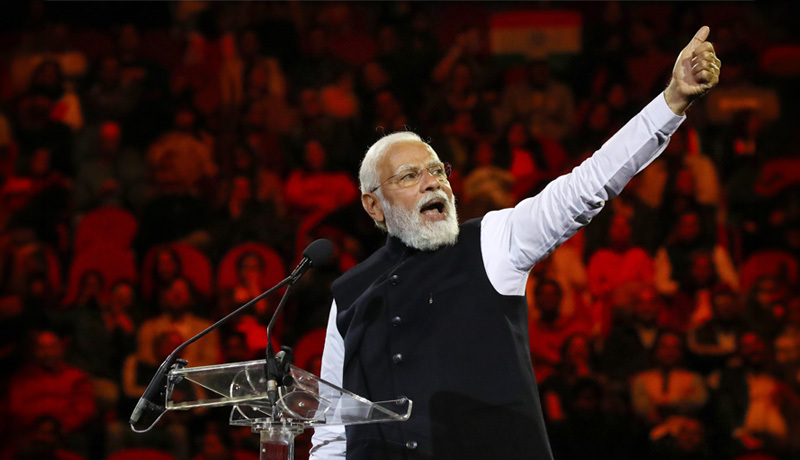
India's Prime Minister Narendra Modi at an Indian cultural event May 23, 2023. Under Prime Minister Narendra Modi’s Bharatiya Janata Party (BJP), India’s culture wars have morphed from rhetoric into policy. Lisa Maree Williams/Getty Images On July 5, 2021, Father Stanislaus Lourduswamy— n 83-year-old Jesuit priest and tribal rights activist—died in pre-trial custody in Mumbai, India. Frail from Parkinson’s disease and a COVID-19 infection, he had spent nine months behind bars under India’s anti-terror laws, denied bail despite his deteriorating health. His alleged crime was implausible: authorities accused him of sedition and links to Maoist insurgents—charges widely derided as baseless.  To many, his imprisonment and death became a symbol of a constitutional democracy being quietly hollowed out. Ramachandra Guha, one of India’s most widely read historians and public intellectuals, bluntly called it “a case of judicial murder.” A UN human rights expert said Father Stan’s ordeal would “forever remain a stain on India’s human rights record,” condemning how a priest came to be branded a terrorist and left to die without trial. Culture wars become legal wars An emboldened ecosystem of vigilantes and ideological enforcers has emerged alongside the state. Under Prime Minister Narendra Modi’s Bharatiya Janata Party (BJP), India’s culture wars have morphed from rhetoric into policy. Energy once spent on political posturing—debates over beef consumption, religious conversions, or textbook content—now finds expression in police raids, criminal cases, and new legislation. An emboldened ecosystem of vigilantes and ideological enforcers has emerged alongside the state, advancing a vision of an uncompromisingly Hindu India. Father Stan (also known as Swamy) was one of thousands ensnared by the Unlawful Activities (Prevention) Act (UAPA). In its expanded form, the law allows authorities to arrest individuals for alleged “unlawful,” or “terrorist” activity based not on acts of violence but on intent, speech, or association, and to detain them for up to 180 days without filing charges.  In recent years, fewer than 2% of those arrested under the law have been convicted, while thousands endure prolonged pre-trial incarceration. In Father Stan’s case, independent forensic investigations in the wider Bhima Koregaon prosecution later found strong indications that incriminating digital files may have been remotely planted on the devices of several accused. By the time these findings emerged, Swamy was already dead. Across India, state assemblies have passed sweeping anti-conversion bills in response to a narrative that Christians and Muslims are forcibly converting Hindus. In practice, these laws have created an enabling environment in which vigilantes and officials harass churches, charities, and religious gatherings. The cumulative effect is systemic: an attack from within on the pluralistic principles enshrined in India’s constitution. Large parts of the administrative and legal state have abandoned secular neutrality. India’s culture-war trajectory has diverged sharply from that of the United States. Where American culture wars remain largely online and judicial institutions still function as buffers, India’s have taken on a ruthless, sectarian character. Large parts of the administrative and legal state have abandoned secular neutrality, turning a blind eye to—if not actively facilitating—the violence and abuse that follow. Christmas under siege India’s tiny Christian minority—just 2% of the population—now finds itself the focus of this state-enabled culture war. In late 2021, vigilantes vandalized a Jesus statue in Haryana and burned a Santa Claus effigy in Varanasi amid anti-Christian chants. Since then, Hindu nationalist groups have increasingly raided churches, disrupted prayer services, and assaulted clergy. One widely circulated video from December 2025 showed the BJP’s district vice-president in Jabalpur, Madhya Pradesh, barging into a church gathering. In the footage, she grabs a visually impaired Christian woman and twists her arm, accusing those present of illicit conversions. She sneers that the woman will “be blind in her next birth too,” as police officers look on. Days later in Ghaziabad, near Delhi, another mob stormed a church during a service. A local extremist, flanked by supporters, confronted the pastor with taunts about Christianity, even grabbing the priest’s collar. “The Christian Bible, a foreign book, will not be accepted in our India… We have only Ram as our God!” he shouted. Police detained the pastor and his wife for questioning under forced-conversion charges, while allowing the assailants to walk free. The Christmas season has become a gauntlet of intimidation. Church leaders say the Christmas season has become a gauntlet of intimidation. The Catholic Bishops’ Conference of India recently expressed anguish at the “alarming rise” in mob attacks on carol singers and congregations, acts that “gravely undermine India’s constitutional guarantees of freedom of religion and the right to live and worship without fear.” The data support this claim. At least 834 attacks on Christians were recorded in 2024 alone, averaging roughly 70 incidents per month, with hundreds more the following year. These ranged from church vandalism and public harassment to, representing the majority of cases, false police reports of “forced conversion.” The vigilante state BJP-ruled states such as Uttar Pradesh and Madhya Pradesh have enacted especially stringent versions of anti-conversion laws, inviting abuse. India’s Supreme Court itself has noted concerns that these laws are being misused to falsely prosecute Christians. Uttar Pradesh alone has arrested well over a thousand people under its anti-conversion statute in recent years. Muslims, though far more numerous, face even broader forms of state-sanctioned intimidation and legal exclusion. The Citizenship Amendment Act and the proposed National Register of Citizens explicitly exclude Muslim refugees and threaten to render large numbers of Indian Muslims legally precarious. Police readily jail minorities based on complaints from Hindu nationalist groups, yet are slow to charge the mobs who attack them. Administrative harassment compounds the pressure. Missionary visas have been cancelled, and church-run charities have faced sudden government crackdowns. On one Christmas Eve, the government froze the bank accounts of Mother Teresa’s Missionaries of Charity. This climate of impunity encourages violence and embeds it within governance. When vigilantes tear down Christmas decorations or harass a priest, the only police action is often against the victims themselves. Only a fraction of hate crimes are formally recorded by law enforcement. This climate of impunity encourages violence and embeds it within governance. The end of Indian secularism India’s slide toward majoritarian authoritarianism has been gradual enough to escape sustained international condemnation. But Father Stan Swamy’s death exposes what that gradualism has produced: a state in which law no longer restrains authorities’ ability to persecute those it believes are cultural enemies. The BJP’s most seductive claim... that Hinduism is civilizational, not religious, and therefore that it is intrinsic to Indian identity. The philosophical basis of this persecution rests on the BJP’s most seductive claim. That Hinduism is civilizational, not religious, and therefore that it is intrinsic to Indian identity and compatible with other private religious beliefs. Outside its Judeo-Christian cultural context, the liberal ideals of the French Revolution, within which secularism finds its meaning for Western civilization, are ultimately foreign. In other faith contexts, like that of Hinduism or Islam, secularism sits uncomfortably. A concerted and whole-of-society effort would be necessary to reconcile India to the kind of secularism it needs to secure freedom of religion for beliefs other than Hindu. If this effort fails, India is inviting atrocities against its many minorities. India’s allies around the world—and Indian Hindus themselves—must reckon with this reality. While the law insists that everything is still working, India has quietly abandoned secularism—the surest guarantee of stability and pluralism in the largest and most diverse democracy on earth. Originally published by Christian Post. Republished with permission. Azeem Ibrahim is the Chief Strategy Officer at the New Lines Institute for Strategy and Policy and a columnist at Foreign Policy magazine. He has written extensively on the persecution of religious minorities, including essays for Foreign Policy on the targeting of Christian communities in Myanmar and China. See Azeem's website for more information: https://www.azeemibrahim.com/. 

A new report by the American Bible Society finds that while overall Bible engagement in the United States has declined, openness to Scripture has grown, with 9 million more Americans expressing interest since 2024. Unsplash / Rod Long A newly released national study by the American Bible Society finds that while Bible reading and engagement in the United States have declined from last year’s levels, openness to the Bible has grown significantly, with 9 million more Americans expressing interest in its message since 2024. The findings come from the first chapter of the organization’s 2026 State of the Bible report, published April 9, which analyzes Americans’ attitudes toward Scripture, faith practices and church involvement. The report indicates that 28% of U.S. adults now fall into what researchers call the “Movable Middle”—those who are curious about the Bible but not deeply engaged—marking a notable increase over the past two years. The new data mark a shift from 2025, when researchers reported a surprising rise in Bible engagement—particularly among younger men—prompting discussion of a possible spiritual renewal. In an interview with Christian Daily International last year, ABS Chief Innovation Officer John Farquhar Plake described the trend as unexpected. While that increase has since leveled off, the 2026 findings point instead to a growing pool of Americans who remain open to Scripture but are not yet actively engaged. Researchers said the expansion of this “Movable Middle” appears to come largely from individuals who were previously disengaged from Scripture, a segment that has declined by 5 million adults since 2024. Meanwhile, the proportion of Americans considered “Scripture Engaged” has returned to about 17%, similar to levels recorded two years ago. “Though Scripture engagement has come back down, the number of Americans who are interested in and open to the Bible has swelled,” said Plake, who also serves as the editor-in-chief of the report series. He added that many in this “Bible Curious” group indicated a willingness to explore Scripture if guided by others, pointing to what he described as an opportunity for churches and individual believers. The report also highlights long-term familiarity with the Bible among Americans. About half of respondents said they have read at least half of the Bible, including one-third who reported reading most or all of it. Seventeen percent said they have read the entire Bible, while only 10% reported not reading any of it.  American Bible Society In terms of format, printed Bibles remain the most widely used, with nearly 80% of Bible users reading a physical copy at least monthly. Digital formats are also common, with 62% of users engaging Scripture digitally each month. Among younger generations, including Millennials and Generation Z, digital use slightly exceeds print, though most report using both formats regularly. The study also found a connection between reading habits and attitudes toward the Bible. Among respondents who said the Bible has transformed their lives, 64% reported reading most or all of it. By contrast, 60% of those who view the Bible as a tool for control or manipulation said they had read little or none of it. Use of structured reading plans was also associated with higher engagement. Nearly three-quarters of respondents who follow a reading guide or program said they had read most or all of the Bible. The findings are based on a nationally representative survey of 2,649 U.S. adults conducted between Jan. 8 and Jan. 27, 2026, by NORC at the University of Chicago using its AmeriSpeak panel. According to Dr. Jennifer Holloran, President and CEO of the American Bible Society, the report is intended to help church leaders respond to shifting patterns in Bible engagement. She said the accompanying resources, including a podcast series and ministry toolkits, are designed to support churches in engaging those who are curious about Scripture. The 2026 State of the Bible report will be released in seven chapters through November, with upcoming installments expected to address topics including parenting, artificial intelligence and questions of calling and purpose.

As more states legalize marijuana, new research shows that a greater number of users are struggling with serious health consequences.  And many who were hoping for its promised medicinal benefits aren't finding the relief they expected. Approximately 27% of adults in the U.S. and Canada report having ever used cannabis for medical purposes, according to a recent report published by the Journal of the American Medical Association. However, it states, "Evidence from randomized clinical trials does not support the use of cannabis or cannabinoids for most conditions for which it is promoted, such as acute pain and insomnia."   The New York Times editorial board supported marijuana legalization over a decade ago, but now admits many of the predictions they believed back then turned out to be wrong, and as a result, now details the seriousness of the miscalculation in an editorial entitled, "It's Time for America to Admit That It Has a Marijuana Problem." Current surveys show that daily pot users now outnumber daily alcohol drinkers. An estimated 18 million people reportedly use marijuana more than 21 days per month, compared to less than one million in 1994.  Meanwhile, since the early 1990s, the concentration of THC, the psychoactive component of marijuana that makes a person "high," has exploded from 4% to up to 90% in many cannabis products today. Dr. Nora Volkow, director of the National Institute of Drug Abuse, which is part of the National Institutes of Health, told CBN News THC has a direct impact on brain function. "The higher the dose of THC," she said, "the higher the likelihood that you will end up with a psychotic episode and that will lead you to end up in the Emergency Room Department." ***Sign up for CBN Newsletters and download the CBN News app to ensure you receive the latest updates from a Christian perspective.***  Former marijuana addict Zach Plant told CBN News that's exactly what happened to him. "I had thoughts of other people wanting to hurt me," he said, "thoughts of the only way of being safe was to end my own life." The CDC reports, "Researchers do not yet know the full extent of the consequences when the body and brain are exposed to high concentrations of THC." However, frontline doctors who increasingly treat patients suffering from marijuana-related complications are getting an idea. "As it became legal, definitely saw more delirium, hallucinations, paranoia, and then even normal depression and anxiety," Internal Medicine physician John-Paul Jansen, M.D., told CBN News. "They would come in and have been having long bouts of being unable to eat. This would last for three or four days, and it was well known it was due to marijuana." Official estimates indicate that about a third of marijuana users suffer from cannabis use disorder, meaning even though the drug causes problems in their life, they can't stop using it. Aubrey Adams, director of Every Brain Matters, an organization that educates about the dangers of marijuana, told CBN News that the legalization of marijuana is directly responsible for the destruction of lives. "The legal marijuana industry has to addict their users," she said, "so the more potent the product, the more at risk they are of becoming addicted." While marijuana might not harm everyone, counselors often recommend scripture to help someone decide whether to use the drug. "I think for Christians they should heed what the Bible says in First Peter that, 'We should be sober and alert,'" Luke Niforatos, Executive Vice President of Smart Approaches to Marijuana, an alliance of organizations and individuals dedicated to a health-first approach to marijuana policy, told CBN News. "I think that if you're somebody who believes the Bible, you should look to verses like that and see that getting high, whether it's marijuana or any other drug, not a very good idea."  

(LifeSiteNews) — The Archbishop of Tehran–Isfahan has sent an Easter message to Catholics in Iran, expressing his hope to be reunited with them soon after being evacuated amid the ongoing conflict with the U.S. Cardinal Dominique Mathieu, who was evacuated to Rome as the hostilities broke out, penned an Easter message to his flock in the war-torn country. An English translation of the letter was published by Vatican journalist Diane Montagna. “I am far from you, the flock entrusted to me, separated by the events of war, waiting for the day we can be together again,” the Belgian bishop wrote. “Yet, on the holy night, I celebrated the Easter Vigil carrying all of you in my heart: physically distant from my flock, yet, precisely for this reason, mysteriously close to each one of you.” Mathieu was evacuated from Tehran to Rome on March 8, following target air strikes by Israel and the U.S. in late February. “I found myself celebrating, so to speak, beneath the dome of St. Peter’s Basilica, in the sign of the universal Church, in visible communion with the Successor of Peter and with the entire Catholic world,” he said in his letter. “Close to the Shepherd of the Church, yet far from the flock the Lord has entrusted to me. But it is precisely this circumstance that allows me to learn to experience distance not as an impassable separation, but as a bridge that draws us near in Christ.” “We celebrate the Easter Vigil after the sun sets on Saturday, when, according to biblical tradition, the new day begins: a threshold between night and light,” he continued. “It is a night illuminated by reflected light, like the moon, which calls to mind the Virgin Mary. Just as the moon reflects the sun’s light, so she points to the source of all life: her Son, Jesus Christ, true God and true man.” The bishop then offered a reflection on the Easter feast, the death and resurrection of Jesus Christ. “He, the conqueror of death, takes the initiative and sends them forth: ‘Go and tell my brethren to go to Galilee, and there they will see me,’” Mathieu stated. “Galilee is the place of beginnings, of calling, of lived, everyday life: it is there that the Risen One waits for His own.” “Dear friends, there is a ‘Galilee’ for us as well: it will be the day when, if God wills, we can be reunited,” the archbishop wrote. “But even now, beneath this dome that symbolizes the unity of the Church, and while I am far from you, I know that in Christ we are truly one.” “In Christ, alive and risen, closeness and distance are transfigured. Only He remains, who unites us, guards us, and guides us – until the day we are once again gathered as one flock under one Shepherd,” he concluded. Iran is home to about 22,000 Catholics, most of them Chaldean Catholics, with some communities of Armenian and Latin Catholics.

The seventy-two returned with joy and said, “Lord, even the demons submit to us in your name!” (Luke 10:17 NIV)  When I was born again, the last thing I wanted to discuss was demons. Not only was I finishing a degree and considered myself something of an intellectual, but I’d just fled New Age spirituality, which had failed to cure 17 years of anxiety and depression. So, I’d had my fill of the supernatural smorgasbord. I was hungry for something that would sit well in collegiate conversations; something reasonable, like the joy of a perfectly placed semi-colon, or a spirited debate about Bible translations. Plus, the idea of unclean spirits terrified me. Though I knew God, who raised the dead, was Himself supernatural, I preferred to skim past the demonic encounters in Jesus’ ministry and linger on something more relatable, like the Parable of the Lost Son. But God had other plans for my spiritual and conversational diet. One night, He gave me a firsthand education in the power of His name over the enemy. I did not plan to encounter the living God in my parents’ backyard on a Tuesday night. I had, in fact, planned to be in bed by 10:00. Thankfully, God has better plans than I do. It was a summertime backyard Bible study with some friends, and the very epitome of Southern charm. We were three good friends doing exactly what good Texan Christians do: studying the Word of God while sipping sweet tea by the pool. We discussed Jesus’ authority over demons. The 72 went out with nothing but His name and came back astonished that it worked (Luke 10:17). Then Jesus tells His disciples, “I have given you authority to trample on snakes and scorpions and to overcome all the power of the enemy; nothing will harm you” (Luke 10:19). Though we weren’t experts, we believed in the power of His name. So they prayed over me in Jesus’ name—for hours—and then it happened: I felt a presence and saw a light in the shape of a man. I sensed He had the power to create and destroy the universe, but there was no violence in Him. He was full of love, mercy, and grace. He made the gripping darkness in my mind flee. I fell to my knees. After that moment of encountering Jesus, I have never been the same. The hornets’ nest in my mind that had hummed and stung its way through 17 years of my life went quiet. If the buzzing begins, I return to Him—His presence, His Word, and His people—and He keeps the quiet when nothing else ever has. The temptation is to make the miracle the entire story, yet Jesus points to something greater than supernatural authority: "Do not rejoice that the spirits submit to you, but rejoice that your names are written in heaven” (Luke 10:20). As a disciple of Jesus, you hold citizenship in a kingdom where anxiety, depression, and suffering no longer exist because it’s the dwelling place of God, who is the source of peace. Every moment of the peace that “transcends all understanding” (Philippians 4:7) is that kingdom colliding with what we experience on earth. That reality does not erase struggling in this life, but it does give us a basis for hope. The promise of the Gospel is that the peace we can taste in part, we will one day inherit in full. When we struggle with racing thoughts and crushing sadness, we can take heart; we belong to the One who holds authority over everything that has ever frightened us. He is with us, and He loves us. He knows your name, your pain, and everything you are going through. He is inviting you to draw closer to Him—now and for eternity. ~ Scripture quotations are taken from THE HOLY BIBLE, NEW INTERNATIONAL VERSION®, NIV® Copyright © 1973, 1978, 1984, 2011 by Biblica, Inc.® Used by permission. All rights reserved worldwide.

Editor’s note: This statement originally appeared on Bishop Joseph Strickland’s X account. (LifeSiteNews) — My dear brothers and sisters in Christ, My heart is heavy as I look toward Lebanon – a land long marked by faith, suffering, and perseverance. Lebanon is not merely another nation in conflict. It is home to one of the oldest and largest Christian populations in the Middle East, where the name of Jesus Christ has been professed continuously since the earliest centuries of the Church. In that sacred land stands the shrine of St. Charbel Makhlouf, a humble monk whose life of prayer, penance, and Eucharistic devotion has borne extraordinary fruit. Known as the “miracle monk of Lebanon,” countless souls have testified to God’s healing through his intercession – a sign that even in suffering, God has not abandoned His people. And yet today, Lebanon bleeds. Reports continue to emerge of relentless bombardment in densely populated civilian areas – families, children, the elderly – lives shattered without warning. What we are witnessing is not simply warfare, but a grave assault on human dignity. The deliberate targeting or reckless endangerment of innocent life is never justified. NEVER. The Church has always been clear: War itself is a tragedy – but the intentional harming of civilians is a moral evil that cries out to Heaven. We must not grow numb to images of destruction. We must not allow political narratives to dull our conscience. Every child killed, every home destroyed, every mother weeping over her son – this is not abstract. This is human suffering. This is Christ crucified again in His people. Lebanon has already endured decades of instability, economic collapse, and the exodus of Christians from the region. To strike this nation again – especially in ways that devastate civilian life – is to deepen wounds that may take generations to heal. While the world turns a blind eye, Lebanon is being decimated. We must raise our voices for those who are being silenced while their home is being destroyed. Peace will never prevail as long as the powerful ignore the plight of Lebanon. St Charbel intercede for your brothers and… pic.twitter.com/bn1BQZkrn2 — Bishop Joseph Strickland @ Pillars of Faith (@BishStrick) April 8, 2026 I call upon all leaders involved to remember this: power does not grant moral permission. Military strength does not justify the loss of innocent life. There can be no lasting peace built upon the graves of the defenseless. And to the faithful, I say this: do not remain silent in your hearts. Pray. Fast. Offer sacrifice. Pray for the people of Lebanon. Pray for the conversion of those who wield power without mercy. Pray for true peace – not the fragile silence of ceasefires, but the peace that comes from justice rooted in truth. Through the intercession of St. Charbel Makhlouf, may God bring healing to the wounded, comfort to the grieving, and repentance to those who act without regard for the sanctity of life. And may we never forget: Every human life is sacred, from conception to natural death, in every nation, without exception. In Christ Our Hope, Bishop Joseph E. Strickland Bishop Emeritus

Loading...
Loading...
Confirmation
Are you sure?
Cancel Continue