For the best experienceDownload the Mobile App

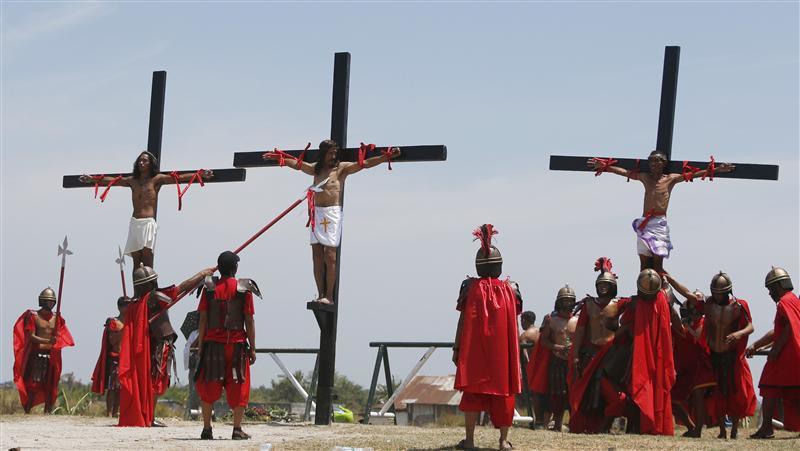
Our work is made possible by the generosity of supporters like you. Your contributions empower us to continue breaking stories that matter, providing clarity from a biblical worldview, and standing for truth in an era of competing narratives.By making a recurring donation or a one-time donation of any amount, you’re helping to keep CP’s articles free and accessible for everyone.$25/month$50/quarter$100/yearOnetimePage 2 By Michael Gryboski, Editor Friday, April 03, 2026Members of the Italian community take part in a re-enactment of the crucifixion of Jesus Christ on Good Friday in Bensheim, southwest of Frankfurt, Germany, April 14, 2017. | REUTERS/Kai Pfaffenbach1. Passion playsOne popular way to observe Good Friday is through a Passion play, a performance usually held outdoors that reenacts the final hours of Jesus’ life, from His arrest to His crucifixion. Passion plays are said to have originated in Europe during the Middle Ages. These dramatic performances are widely held throughout modern Christendom.Some of the most popular include the play performed in Trafalgar Square, London and the elaborate procession held in Bensheim, Germany.The village of Oberammergau in the Bavarian Alps is said to have the longest tradition, having performed the production regularly since 1634.“It remains an entirely local production, with villagers taking all the parts and singing in the chorus. Since 1930, roofed seats have protected the audience from the weather. The production runs from May through September,” according to Britannica.Follow Michael Gryboski on Twitter or Facebook

By Christian TodayFriday, April 03, 2026Reuters/BeawihartaThe Gospels describe three hours of darkness from noon at the crucifixion of Jesus, prompting debate over whether this was an eclipse. This is the story …The crucifixion account The story of the crucifixion is so important that it is covered in all four Gospel accounts in the New Testament. Three of them, known as the Synoptic Gospels of Matthew, Mark and Luke, all describe a darkness over the land.In Matthew it says: “From the sixth hour there was darkness over all the land unto the ninth hour” (Matthew 27:45, KJV). Mark states: “And when the sixth hour had come, darkness came over all the earth until the ninth hour” (Mark 15:33, KJV). Matthew and Mark report “darkness over all the land” without specifying the cause. The sixth hour was measured from dawn, so they meant what we call noon.Symbolism of darknessMany people see a fulfilment of prophecy from Isaiah, who prophesied, “I clothe the heavens with blackness, and I make sackcloth their covering” (Isaiah 50:3); and from Amos, who prophesied, “And it shall come to pass in that day, saith the Lord GOD, that I will cause the sun to go down at noon, and I will darken the earth in the clear day” (Amos 8:9). Others point to Joel, who prophesied: “The sun will be turned to darkness and the moon to blood, before the coming of the great and glorious day of the LORD” (Joel 2:32).The word 'eclipse'The idea that there was an eclipse at the crucifixion comes from the Greek word “ἐκλιπόντος” (eklipontos), which appears in the original text of the account found in Luke 23:45. The Greek word “ἐκλείπω” (ekleipo) is the origin of the English word “eclipse.”In English, as in Greek, it can mean something is darkened or obscured. The Greek word has come into English to be used mainly in the astronomical sense of the obscuring of the sun or the moon, as in solar and lunar eclipses. In English, the word eclipse is also used metaphorically, such as in Bonnie Tyler’s 1983 hit song “Total Eclipse of the Heart,” or in phrases like “His fame was eclipsed by a newcomer” or “The war has eclipsed all other issues in the news.”Astronomical eclipsesThe planet Earth orbits the sun in an elliptical orbit each year, and the moon revolves around the Earth in an orbit each month. Sometimes the moon is directly between the Earth and the sun, or the Earth is directly between the sun and the moon. The moon goes through phases: when one face is fully visible, it is called a “full moon.” At other times, there is a half-moon, a crescent moon, or a “new moon,” when the moon is nearly invisible.A solar eclipse occurs when the moon passes between the Earth and the sun, temporarily blocking the sunlight and casting a dark shadow upon the Earth. Because the sun is behind the moon, it appears as a “new moon.” In contrast, a lunar eclipse happens when the Earth positions itself between the sun and a “full moon,” when the side facing Earth is illuminated. When the Earth blocks all sunlight to the moon, it causes the Earth’s shadow to fall on the moon, making it appear reddish instead of white — sometimes called a “blood moon.”When the moon blocks the sun in a solar eclipse, it creates a darkness on Earth called an umbra. During a total solar eclipse, sunlight is blocked out by the moon, and the part of the Earth where the shadow falls gradually becomes dark, like nighttime. A total solar eclipse is a spectacular event, and people sometimes travel far to experience one. For example, one occurred in the U.K. on Aug. 11, 1999, and another in the U.S. on April 8, 2024.Was there an eclipse at the crucifixion?Over time, people have speculated whether the darkness at the crucifixion could be explained by an eclipse. So, could there have been a solar eclipse at that time?Early English versions like Tyndale’s follow the “darkening” sense without using eclipse terminology, but a few English translations have rendered the Greek words as “eclipse of the sun.”The British New Testament in Modern English, translated by J. B. Phillips, renders Luke 23:44–45b as: “It was now about midday, but darkness came over the whole countryside until three in the afternoon, for there was an eclipse of the sun.”Likewise, the American Catholic New American Bible (NAB) and the New American Bible Revised Edition (NABRE), used in U.S. Catholic churches, read: “It was now about noon and darkness came over the whole land until three in the afternoon because of an eclipse of the sun.”Most translations into English do not translate the Greek word “ἐκλιπόντος” as “eclipse,” even though they look similar. In 1526, William Tyndale translated Luke 23:44–45b as: “And it was about the sixth hour. And there came a darkness over all the land until the ninth hour, and the sun was darkened.” The King James Version kept this as “And the sun was darkened.” The Good News Bible has: “It was about twelve o’clock when the sun stopped shining and darkness covered the whole country until three o’clock.”Problems with the eclipse theoryThere are three problems with the theory that the darkness was a solar eclipse. Astronomical software, using scientific data, can now determine precisely where and when eclipses occur, and it can also calculate when and where they occurred in the past. No solar eclipse occurred in the Holy Land during the period AD 29 to 36, which is the range in which the crucifixion is dated. In any case, a solar eclipse does not last three hours; at most, total darkness lasts about 7.5 minutes. It is a brief event and does not last for hours, even if one had occurred.PassoverHowever, there is a more fundamental reason why there was no solar eclipse at the crucifixion: it took place just after Passover.In the Bible, the timing of Passover is based on the lunar calendar. Passover’s date is tied directly to the Hebrew calendar in the month of Nisan and begins at sunset on or very near a full moon. It commemorates the Exodus, with the Passover lamb slaughtered on the 14th of Nisan at twilight (Exodus 12:6), just as the moon is waxing full.Technically, Passover begins on the evening of a full moon after the northern vernal equinox. Therefore, there could not have been a solar eclipse at the crucifixion, because a solar eclipse requires a new moon, not a full moon. Although there might conceivably have been a lunar eclipse in the evening, it would not have darkened the land.ConclusionSolar eclipses last minutes, not hours, and require a new moon, not Passover’s full moon. Therefore, the darkness at the crucifixion was not a solar eclipse. The sun might have been obscured, but it was not eclipsed by the moon.

Christianity's core belief is that the Son of God took on human form, died for our sins, and then rose from the dead to give us eternal life. But if Jesus Christ didn't come back to life, it undoes His claim to be the all-powerful, eternal Son of God, Savior, and Messiah.  So, Christianity hangs on the Resurrection. Jesus Isn't Just in the Bible To believe the events around that first Easter, you pretty much have to believe that Jesus did indeed exist and that the New Testament can be trusted. At the Impact 360 school in Pine Mountain, Georgia, Prof. Jonathan Morrow preps college-bound Christians to fight with the facts of their faith. He told CBN News, "Investigating the Resurrection is a historical question that you can do with eyes wide open; it's not a blind faith kind of thing, like believing in the Easter Bunny or a lucky rabbit's foot.  This is real-world kind of stuff.  And you can investigate the data for it."  Morrow added, "So when it comes to the Resurrection, we say, 'Well, how do we know Jesus existed?' Some people even doubt that.  The fact is, we have far more sources for Jesus of Nazareth than we do for many historical figures in the first century.  We have at least 18. Twelve of those are non-Christian sources." There's more evidence that Jesus existed than Julius Caesar. Does anyone doubt Caesar existed? As for the Scriptures, Prof. Darrell Bock of the Dallas Theological Seminary explained that any piece of a surviving ancient work is called a manuscript. And more ancient pages or fragments of the Bible have survived by far than any other book from antiquity. "It's exceptional," Bock said. "You're talking about over 5,800 Greek manuscripts, over 8,000 Latin manuscripts. Most books that we work with in the ancient world have maybe at best a dozen manuscripts."  Christians: If Jesus Is Dead, So Is Your Religion For some people, they might be ready to believe the Bible is legitimate, but they have a hard time believing Jesus Christ could have actually risen from the dead. The problem with that, as far as Morrow is concerned, is that everything hangs on that fact. The author of Questioning the Bible explained, "Paul made the argument in I Corinthians 15, saying, 'Look, you can test this: if the Resurrection didn't happen, Christianity is false. Whether you believe it or not, whether you're sincere about it, if the Resurrection didn't happen, Christianity's false - go to the next religion." If He's Dead, Then They Lied Some suggest that the apostles all lied in a vast conspiracy to turn the deficit of Jesus' death into the positive of a risen Lord. But biblical apologists insist that when you examine it all the way through, it's actually easier to believe in the Resurrection than its alternatives. Such Bible experts say that to dismiss the Resurrection, any theory you come up with to explain the historical happenings has to explain away three historical facts: That there was an empty tomb three days after Jesus's body had been placed in it, though it had been constantly guarded by Roman soldiers; Jesus appeared to hundreds of people in numerous places for almost seven weeks after His crucifixion; And something huge did happen to suddenly and forever turn all the cowering, cowardly disciples into bold believers, proclaiming a risen Messiah they were willing to be tortured and die for.  Did Jesus Die, or Almost Die? Still, alternative theories live on. Some theorize that Jesus didn't die on the cross but just went into a death-like state that fooled everyone who checked His body. Then under this theory, He awoke in the tomb, got up and walked out.  Proponents say that explains His many appearances after His supposed death.  What this doesn't explain is how in a near-death state and with exceedingly crippling wounds, He could work His way out of tightly-wrapped, glued-on burial garments and then roll away the massively heavy stone sealed onto the tomb by the Romans.  And it doesn't explain why He'd suddenly disappear after several weeks among His disciples, never to be seen again.  Nor does it explain how so many people saw Him ascending up into the heavens. Oops, Wrong Tomb Some suggest the female disciples who first found the empty tomb might have just had the wrong one, and the other disciples took advantage of that, concocting a Resurrection myth to explain the empty tomb. But surely the Jewish leaders who'd had Roman guards placed by Jesus' burial place, and Joseph of Arimathea who owned the tomb where Jesus' body had been laid, would have quickly displayed the body and corrected the mistake if indeed the women had gone to the wrong tomb. "If you're going around preaching Jesus was physically raised from the dead and people knew where He was buried and knew where they could find His bones, that message wouldn't even get off the ground," insisted Bock, author of Truth Matters. Not Smart to Lie Where Everyone Knows You're Lying Josh McDowell, author of New Evidence That Demands a Verdict, said the disciples knew this well. "In the Resurrection, where was the hardest place in the world to convince anyone it was true if it was false?  Jerusalem, where a 15-minute walk by anyone could confirm the emptiness of the tomb," McDowell said. ***Sign up for CBN Newsletters to ensure you receive the latest news from a distinctly Christian perspective.***    Matthew 28 points out the Jewish leaders bribed the tomb's guards to say they'd fallen asleep and the disciples then stole Jesus' body. But if these guards were asleep, how would they know it was the disciples?  And how could they have slept through the disciples rolling away the huge stone that covered the entrance to the tomb, a stone some have suggested was so heavy, it may have taken more than a dozen men to push it away? Debunking this conspiracy idea, Morrow said, "Conspiracy theories unravel very quickly because people will eventually tell what they know. And the more people who are involved, and the more people who saw the event, you multiply your chances of the story getting out. So that's the first thing. The second thing is the Gospels, the earliest historical record we have, don't show the tales of being doctored to say the same thing, like they got their stories straight. They had the ring of truth to them." Would You Die for a Lie You Made Up? And if the disciples were making up Jesus' Resurrection, would they have lived and died for Him and a fiction they themselves made up? McDowell explained, "They said after He was crucified and buried, He was raised from the dead and for 40 days—not 40 hours, not four days—for 40 days, they lived with Him and walked with Him, with overwhelming proof that He'd been raised from the dead." McDowell concluded, "If the Resurrection was a lie, they had to know it. And if they knew it, then you'd have to say here were these men who not only died for a lie, but they knew it was a lie. I challenge you to find others in history who that's true of. It's not." Morrow added, "The earliest disciples would have known—not just believed, but would have known—that either Jesus was who He claimed to be and was actually raised from the dead or they were making this thing up. And yet history tells us that we have good reason to think they all went to their death with the exception of one for that core belief: that Jesus was raised from the dead. They didn't recant that. Conspiracies break down under pressure.  And this conspiracy would have cost them their lives." What Would Cause Such Radical Transformations? These and other experts say that in truth, it would take something as radical as Jesus' Resurrection to completely transform the disciples like cowardly Peter, who was so scared just before the crucifixion, he swore he didn't even know Jesus. But just a few weeks later, Morrow pointed out Peter went from hiding away, fearful the Jewish leaders might have him killed as well, to boldly preaching salvation through Christ before a crowd of thousands, including some who sought Jesus' death. Morrow explained, "You see Peter with this radical transformation, going from coward to this courageous champion who's saying, 'Look, here I stand, this is what I'm saying, this is what's true. You crucified this guy, but this is what He offered.' You've got that radical transformation right at the heart of what's going on around that earliest Christian movement."  From Christ-Hater to Christian Martyr Morrow pointed out that Jesus' doubting brother James was also instantly changed.  He said, "James – the brother of Jesus —didn't follow Jesus during His earthly ministry; thought He was crazy." McDowell agreed, saying, "James despised his brother, thought He was embarrassing the family. And then Jesus appeared to him in James' own word, and he became the leader of the church of Jerusalem." Morrow added, "And after the fact, James becomes an early leader in the Church, and was persecuted and eventually killed for that belief." And biblical apologists say it could only be a resurrected Jesus showing up forcefully and vividly two to three years later that could transform the church's worst persecutor into its main missionary. Greatest Murderer Turned to Greatest Missionary "Saul of Tarsus was anything but a follower who believed in Jesus," McDowell said. "He went from city to city, casting his vote to have them imprisoned and executed. But in his own words, Christ appeared to him. Whether you believe that or not, something took.  One of the greatest murderers into one of the greatest missionaries.  A Christian-hater to a Christian-lover." Morrow stated,  "What in the world would flip Paul - or actually, Saul of Tarsus - to Paul, the chief proclaimer in the early Church?  He was a smart guy. He was holding the coats when people were killing the first Christians.  He was adamantly opposed to this movement. And then he became a Christian. What accounts for that?"  Short of the risen Jesus appearing to Paul, Bock believes it's an unfathomable transformation. As he put it, "So the main thing is just explaining how someone like a Saul who becomes Paul even exists."  McDowell concluded, "Something happened in Paul's life that I've never found any other explanation that even comes close to satisfying me intellectually except: 'And Jesus appeared to Paul after the Resurrection.'" Liars Wouldn't Have Testified About the Female Disciples' Role  Another crucial factor that debunks the idea that all these disciples were trying to sell a false Resurrection to the world: the fact that they proclaimed it was females who found the empty tomb and let the male disciples know Jesus was missing. The first-century Jews believed women were second-class citizens.  So if the disciples were lying about the resurrection, they made their story all the harder to accept by putting women at the forefront. "Matthew, Mark, Luke and John - they all recount Jesus' earliest women followers finding the empty tomb," Morrow said. "In the first century, where a woman's testimony would have been about the level just above a slave, that would not be your best foot forward." Bock imagined being with the disciples, plotting how they'll push a false Resurrection. The Criterion of Embarrassment  "'We're going to sell this difficult idea, and the people we're going to get to sell it are people that the culture doesn't believe have the right to be witnesses,'" Bock imagined them saying. But he insisted, "You'd never make up a story that way.  This is what's called the Criterion of Embarrassment in historical Jesus studies: that you'd never make up the story this way.  So the reason the story is this way is because it must be grounded in what happened." Morrow completely agreed, stating the Gospel writers' testifying about the women's role has "the ring of truth." Morrow said, "That would have been an embarrassing detail you would have never led with UNLESS it actually happened. And the fact that all four (Matthew, Mark, Luke and John) say it happened just gives it that much stronger evidence that it actually did happen." Hard to Simply Dismiss 500 Eyewitnesses Saying the disciples lied about Jesus' resurrection doesn't explain His post-Resurrection appearance before 500 people. The Apostle Paul in I Corinthians 15 suggested doubters go talk to them. Morrow said of that, "You've got living history. You've got the people who were there to cross-check whatever message is being put out there. So, it's not as though these things could have been invented and no one would have challenged it. You've got this idea that 'there are witnesses; go investigate them.'"  He added about this call in I Corinthians to talk to witnesses, "Ancient historians loved eyewitness testimony. That's what they all wanted. Livy, Herodotus, Tacitus, Thucydides - they all wanted eyewitness testimony to get back to the original.  And that's what you have." McDowell said of such eyewitness testimony, "I put a lot of weight on this.  You see, people today say, 'How do you know Jesus said that? How do you know He did that?' Well, they had the same question in the New Testament times. Even more so than today, because they were dying for it. And they wanted to know: 'Is this true? Did Jesus really do this? Did He really say this?' " 'Can't Get Much Better Evidence' McDowell pointed out, "In I John 1, how did John answer that? They said 'How do we know this is true?' John said, 'What our eyes have seen, what our ears have heard, what our hands have handled is what we're declaring unto you.' In other words, 'We were eyewitnesses. We were there.'  And then with their opponents, they would say, 'You were there, too. You saw Jesus do this; you heard Him do this.'  And you can't get much better evidence historically than that.  And we have that in the Scriptures." Morrow returned to how Paul pushed his readers in I Corinthians 15 to gather proof that Jesus rose from the dead: "He says, 'It's not a matter of wishful thinking.  Investigate this.' That's why he mentions the eyewitnesses. He mentioned that Jesus appeared to more than 500, and as well as His disciples, and to Paul himself and to others. Because eyewitnesses authenticated that event. And it was central to Christianity." Morrow concluded, "It has all the ring of truth and not the ring of that conspiracy theory where they just made this thing up to invent their own religion. Could 500 People Have the Same Hallucination? Some doubters try to do away with all the post-Resurrection appearances by saying those who thought they were seeing, talking to and touching Jesus were all hallucinating, even the 500 Paul discussed in I Corinthians. McDowell told CBN News believing that takes more faith than simply accepting that Jesus really did rise from the dead. The writer explained, "Here's the key: what is a hallucination? A hallucination is an internal experience, not triggered by anything external.  This is why no two people ever have the same hallucination. Because it's all internal, subjective. Well, to have 500 people have the same hallucination would be 500 miracles equal to the Resurrection." Speaking of miracles, Morrow called on people not to dismiss them as casually as most folks do these days. If God Exists, so Can Miracles "When historians investigate this, in our modern mindset, there's this idea that 'Look, miracles are out of bounds.' Well, why? Because if it's at least possible that God exists, then miracles become possible," he insisted. But Morrow added, "We shouldn't believe just any and every miracle. We then investigate them on a case-by-case basis. And when you look at the Resurrection evidence, it's pretty remarkable how strong it is, and that's why it's at the core of Christianity. And so, I don't think it's intellectually credible to rule out miracles before you investigate the event, out of hand." Bock insisted, "The faith is very, very defendable. That's why it's lasted for 2,000 years.  And not only that. There's a rationale that shows the uniqueness of what Jesus is that's important to appreciate as well. And so all the time that's often spent on the Resurrection makes sense because that really is the hub of the discussion." Morrow added, "Christians don't believe that Jesus rose from the dead because the Bible says so. They believe He rose from the dead because that's what the earliest and best historical documents show, and that's what's the best explanation of the data."  Early Is Important Just like historians put great weight on eyewitness testimony, they also give more respect to early historical writings done close to the events they discuss. With Peter, John, and James, you have both: They're eyewitnesses who wrote early. "You can push the earliest core teaching of Jesus - His death, deity, and Resurrection - within months of the Resurrection. Because then it goes back to Peter, James, and John," Morrow said. "These people were eyewitnesses, they were there, and it was early." Paul's encounter with Jesus came just two or three years after Christ's death and Resurrection, and not long after that, he interviewed Peter, James, and John.  "Then, 18 years late,r he cross-checked himself again," Morrow said of Paul. "In I Corinthians 15, he goes 'Look, I met with them again and they added nothing to my gospel. We're preaching the same exact thing.' This is the core message. And you can trace it back to the beginning, that there was never a Christianity without that at the heart of it." Bock said that's crucial knowledge for those who might instead have believed these key Christian doctrines were dreamed up much later. He explained, "The issue that's sometimes raised up: 'Well, these books were written many decades later. And so they reflect a theological development coming down the road.'  All that shrinks back when you look at the person of Paul." "He was writing within a few years of the time of Christ," McDowell added. "And this is why for many of the scholars will give I Corinthians incredible credence: because of its closeness." The Resurrection Proves Jesus Was Who He Said He Was Morrow said of Paul, "He understood why Jesus of Nazareth was different in the unique claims that He made, but that then those claims were authenticated through His Resurrection, that said, 'What I said is what is real. This is who I am.'" Morrow summed up, "These claims to forgive sins sound crazy unless you're the Son of God, you're the Son of Man, you're the Messiah. And that's who He showed Himself to be. And Paul is probably our earliest and best witness to that. And our critical scholars will grant us Paul being that eyewitness."  McDowell spoke of evidence that can help readers believe the words of Paul and other New Testament writers, like archaeological findings. He explained, "Right now, you can almost say every single reference in the Book of Acts has already been verified through archaeology: 600-some references to kings, people, places, everything. In Luke 3, in the first three verses, there are 17 historical references. Every single one now has been confirmed by archaeology." 'The Evidence Is Only Getting Better' Biblical expert Bock flat-out stated, "These books are the best-attested pieces of ancient literature we possess." Morrow added, "One of the fascinating things about New Testament manuscripts: We have over 5,700 Greek manuscripts alone. And more manuscripts are being discovered all the time." He summed up, "I think what Christians need to know is that there's really good reason why we believe what we believe, and the evidence is only getting better. The more we discover and the more we find, the more confidence you can have that this is really true." CLICK HERE TO SEE HOW YOU CAN FIND PEACE WITH GOD This story was originally published on April 1, 2018. 

Wallace pointed out courts don't expect the law to prove absolutely no possible doubt. Only no reasonable doubt. "So is it possible that they conspired for 60 years, at 500 plus people, under immense pressure with not enough family relationships to hold it together?" Wallace asked. "Yeah, it's possible. It's just not reasonable." Jesus Appeared to All Sorts of People Debunkers say Jesus in the biblical accounts only showed up to his closest followers, those most likely to lie about His Resurrection. But McDowell said the opposite is true. "He appeared to the Apostle Paul, Saul of Tarsus, who was anything but a follower of Christ. He despised Christ as a false Messiah," McDowell said. He also pointed out Jesus appeared to James, saying, "You take James, His brother. James was not a follower of Jesus Christ. He was embarrassed by Christ, his brother, going out and doing these things and claiming these things. But James ended up coming to Christ and became a leader of the Jerusalem church." No Two People – Much Less 500 – Have the Same Hallucination The Bible talks about Christ after His Resurrection showing up before 500 people. Some debunkers say that was likely just a mass hallucination. Neither Wallace or McDowell buy that. McDowell interviewed five experts and learned, "No two people ever have the same hallucination because there's no external reference to it. It's all internal." Wallace added, "There's just no history of kind of group hallucinations with the kind of detail that we see in the gospels. So I was never fond of that explanation." Worshipping Jesus McDowell stated, "In my research to refute Christianity, I became convinced the Church would never have been founded without the Resurrection. Everything that they did pointed back to that."  One huge thing they did: break the Sabbath and worship Jesus as they did it. Remember: all the early believers were fervent Jews who had believed they faced dire danger if they broke the Sabbath. Alex McFarland – who organized this Truth for a New Generation conference – points out how that changed right after Jesus' Resurrection. "Pious Jews whose very relationship with God is contingent on keeping a Sabbath that they've observed for centuries, suddenly overnight begin to worship on Sunday. Why? Something must have happened. Well, Sunday was Resurrection day." "Now you have to understand what it meant to the Jew if they ever broke the Sabbath," McDowell explained. "It could mean death." The Resurrection Proves It All But the Resurrection on a Sunday had been the proof positive that Jesus was indeed the Risen Lord, worthy of worship on that day of the week. "If Christ physically rose from the grave, then that proves His identity, message, and credentials," McFarland pointed out. "What was His identity? God Incarnate. What was His message? Salvation by faith in what He did on the cross. His credentials? Virgin-born, sinless life, rose from the dead, i.e.: He is the Savior." McDowell told CBN News the meaning of it all is so powerful and overwhelming, it still touches him deeply more than half a century after he first came to believe Jesus was indeed the Resurrected Son of God, able to conquer death. "It gives me hope that as Christ was raised from the dead, I shall be, too. Because of that," he stated. McFarland added, "In the empty tomb, we have it all, ironclad, guaranteed. I tell people the tomb was left empty so that your life could be made full."

By CP StaffFriday, April 03, 2026Kenneth Copeland talks with Bryce Crawford on his podcast released on March 30, 2026. | YouTube/@Bryce Crawford PodcastEvangelist and social media influencer Bryce Crawford has landed the first one-on-one scheduled sit-down interview with televangelist Kenneth Copeland in more than 15 years.In the over two-hour-long podcast, Crawford, 22, told the 89-year-old Copeland he disagreed with the pastor’s trademark “prosperity gospel,” but remained cordial despite the disagreements.  The discussion covers Copeland's childhood in Texas during the Great Depression, meeting and marrying his wife, Gloria, in 1961, and his subsequent conversion and ministry start in the mid-1960s, when he founded Kenneth Copeland Ministries.It then shifts to deep Bible study on the definition of prosperity, redemption from the curse of the law, tithing, divine health and the “word of faith” teaching.Here are four highlights from the podcast.Page 2 By CP StaffFriday, April 03, 20261. ‘True prosperity’ stems from the GospelWhen Crawford asked Copeland to explain his definition of abundance and prosperity, Copeland said, “Well, Jesus came and said the thief comes but to steal, to kill and destroy. I've come that you might have life and have it more abundantly. Prosperity.” He also clarified that the Bible never condemns money, but rather the love of money. “When one mentions prosperity, most people think about money,” he said. “Now, money is not the root of all evil. The Bible said the love of it is. And there are people that commit that that don't have any money.”Copeland added, “True prosperity starts with John 3:16. That's where it starts. And then you go from there.”

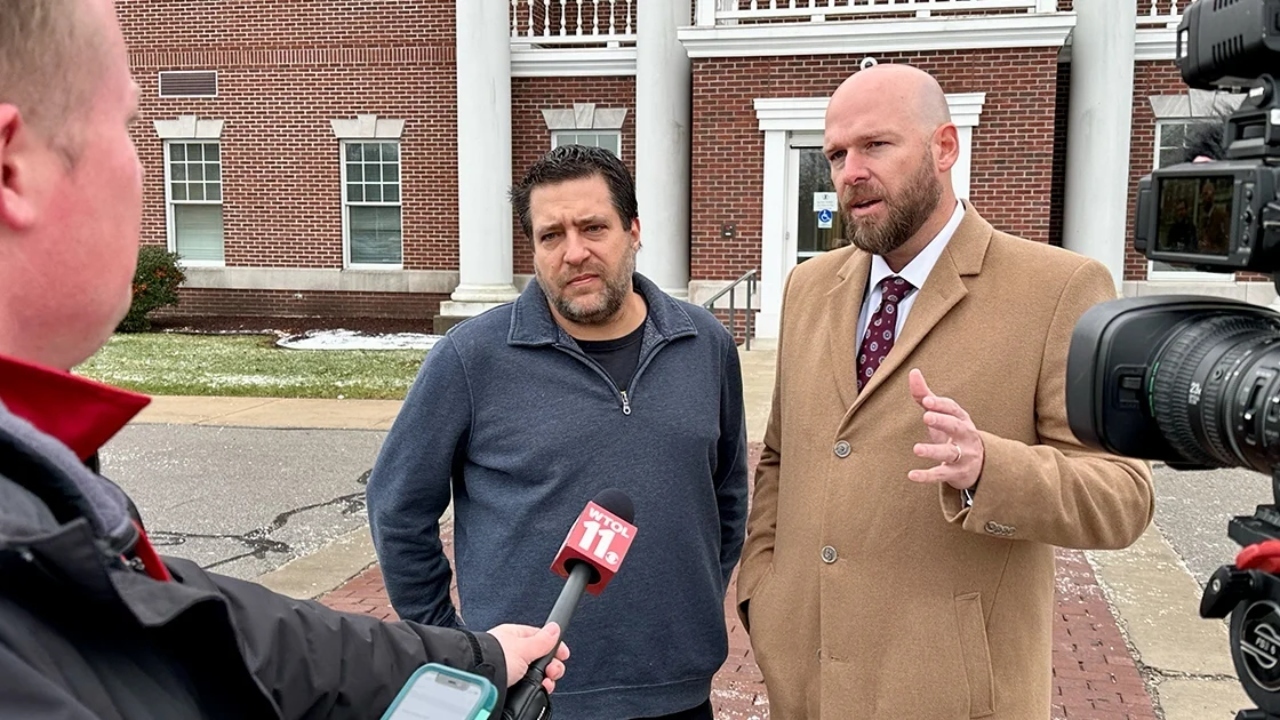
By Michael Gryboski, Editor Friday, April 03, 2026Pastor Chris Avell (L) and his attorney Jeremy Dys (R) speak to reporters outside Bryan Municipal Court in Bryan, Ohio, on Jan. 11, 2023. | First Liberty InstituteA judge has permanently dismissed an Ohio city’s lawsuit against a pastor who ran a 24/7 homeless ministry at his church property.Judge James D. Bates of the Court of Common Pleas of Williams County issued a final order earlier this week in the case of Fire Chief Douglas Pool, City of Bryan Fire Department v. Dad's Place and Riehle Rentals, LLC. At issue was the homeless ministry that Pastor Chris Avell offered at Dad’s Place in Bryan, which city officials charged was violating several zoning and building requirements.This included a demand from Bryan Fire Chief Douglas Pool to have the church install a sprinkler system, even though the church could not afford such an exorbitant expense.In his order, Bates wrote that Bryan Fire Chief Douglas Pool “has not identified a specific interest here that would justify shutting down Dad's Place because it lacks a sprinkler system” and that “his decision to wait years before enforcing the fire code confirms that no such interest exists.”“Pool has also failed to prove that the City's fire-code enforcement against Dad's Place is the least restrictive means of achieving the City's interests,” Bates continued. “Here, there are multiple alternatives to forcing the Church to shut down its ministry for lack of a sprinkler system, any one of which is fatal to Chief Pool's case under strict scrutiny.”The order explained that an “injunction would inflict irreparable harm on the Church by shutting down its ministry” and that the “balance of harms therefore tips decidedly against the injunction.”“Chief Pool has failed to prove that the public interest would be advanced by the issuance of a permanent injunction enjoining Dad's Place from continuing to live out its faith by serving the vulnerable population of Bryan,” Bates added.The complaint against the church was dismissed with prejudice, meaning it cannot be refiled, and the lawsuit is permanently concluded.Jeremy Dys, senior counsel at First Liberty Institute, which helped to represent the church, said in a statement released Thursday that the ruling “should put an end once and for all to the city’s relentless attacks on Dad’s Place and Pastor Chris.”“All Pastor Chris ever wanted to do was keep the doors of his church open to those in desperate need of temporary shelter,” Dys continued. “It’s past time for the city to end its mean-spirited, three-year campaign of harassment of this church.”In 2023, Avell launched the 24/7 ministry to the homeless at his church. Months later, Bryan city officials filed 18 criminal charges against the church over building code issues.Although officials agreed to drop the charges in exchange for Dad’s Place actively working to get the necessary certifications and permits, the church faced additional criminal charges after the city fire chief conducted a surprise inspection in April 2024.In January of last year, a Bryan Municipal Court Judge ordered Avell to pay a $200 fine and gave him a 60-day suspended jail sentence. However, the Sixth Appellate District on the Court of Appeals of Ohio stayed the sentence.Follow Michael Gryboski on Twitter or Facebook

JERUSALEM, Israel – Easter reminds us that after being crucified, Jesus Christ then rose from the dead to reign with His Father in Heaven. Forty days earlier at the Transfiguration, Jesus gave a preview of the inheritance His followers will receive. The gospels describe the Transfiguration of Jesus on a mountain before his death. Matthew writes: "There he was transfigured before them. His face shone like the sun, and his clothes became as white as the light." (Matthew 17:2) Luke recounts: "The appearance of his face changed, and His clothes became as bright as a flash of lightning. Two men, Moses and Elijah, appeared in glorious splendor, talking with Jesus." (Luke 29:31) It's a preview of how He'd be transformed after the resurrection, yet also how believers in Him will be transfigured. As John puts it, "When He appears, we shall be like Him."  (1 John 3:2) Bible teacher Georgian Banov explained, "So, that powerful manifestation is just a prelude of what's going to happen with us." Banov and his wife, Coco, head the Global Celebration ministry. They travel around the world, many times to dangerous places, emphasizing the huge benefits Jesus brought us through His death and resurrection. Coco Banov told us, "That glory is also ours...that Resurrection life, glory, joy, happiness, peace." According to the Apostle Paul, we will have glorified bodies like Moses and Elijah did when they met with Yeshua at the Transfiguration. In the book of Philippians, Paul says, "He will take our mortal bodies and change them into glorious bodies like his own." (Philippians 3:21) "The scripture says we go from glory to greater, greater glory," Coco remarked. That means we go from being like Adam to being like Jesus. As Paul says, "Just as we have borne the image of the man of dust, we shall also bear the image of the Man of Heaven." (1 Corinthians 15:49) It would be the only way that humans can stand in the presence of the all-powerful, pure, and holy God. Even the Israelites quaked in terror when witnessing God at Mount Sinai. "We're going to have a body that can handle His glorious presence," Coco Banov declared. She added, "When the children of Israel...when He came on the mountain, they were terrified. They said, 'We can't handle this.'   So, the glorified body is going to help us. It's going to enable us to behold His glory and rejoice forevermore." These bodies will leave our flesh behind, and even now, believers can see some of the benefits. As Coco put it, "We're much more than forgiven.  We're washed, we're cleansed, we're able to be indwelt by His Holy Spirit, who heals us; heals hearts, minds, souls, bodies." Jesus's glory and healing will belong to His followers for all of eternity. As John writes in Revelation 21:4, "He will wipe every tear from their eyes. There iwill be no more death or mourning or crying or pain." "In heaven, no more pain, suffering. But certainly it starts here," Coco said. "It's our inheritance. We're co-heirs with Christ." The appearance of Moses and Elijah at the Transfiguration suggests we'll see those who have gone before us in Heaven.   The book of Hebrews reveals that they're already watching us. Coco noted, "It says we're surrounded with a cloud of witnesses." Georgian Banov observed, "That's huge. I'm looking forward to seeing my mom." ***Please sign up for CBN Newsletters and download the CBN News app to receive the latest news from a Christian perspective.*** As the Transfiguration ended, God came down in a cloud. Georgian quoted the scripture found in Matthew, Mark, and Luke: "This is My beloved Son, with whom I am well pleased. Listen to him." He points out that it's easier than you may think, since Christ dwells in us. "We need to listen to His voice," he explained. "Because His voice is inside. We have the mind of Christ and the thoughts of Christ.  And we can hear the voice of God inside. That's huge." Right after God said, "Listen to Him," Jesus told his terrified disciples, "Rise and have no fear." (Matthew 17:7) That is the Bible's most frequent command, written hundreds of times, and it's the best advice for living well, because fear can cripple the soul and breaks the spirit. John states that "Perfect love casts out fear." (1 John 4:13) Free of fear, we can enjoy the benefits so richly bestowed on us by the Resurrection. Georgian admonished, "Be not afraid, because He's always with us...never leave us, never forsake us." Coco exhorted, "Christ is in us. We've joined Him in His death, we've joined Him in his burial, and now we certainly join Him in His Resurrection." Now, we're free to live our lives in God's joy, peace, and love.

It was after midnight when I arrived at church, unlocked the doors, and locked myself in. I didn’t have peace, and I couldn’t sleep, so I went to the place I needed to be the most. I went to seek Jesus because I needed Him and His presence more than anything else. I needed to worship, surrender, and pour everything out before Him. My cheeks were flushed and wet with tears. For the next two hours, I lay on the carpet of the church sanctuary, endlessly crying under the weight of the season I was in. I prayed, worshipped, and cried until I had nothing left. Worship isn’t always packaged neatly and adorned with a pretty bow. It’s messy, raw, and sometimes ugly, but it’s necessary. In Luke 7, we see the story of a sinful woman who anoints Jesus with expensive perfume. The mere fact that she was there in the first place was scandalous enough. She didn’t have to do anything other than be present to make Simon the Pharisee squirm. When he saw her weeping and washing Jesus’ feet with her tears and her hair, he was shocked, and when she opened the alabaster jar full of perfume and anointed Jesus, he couldn’t hold back his judgment any longer. “If Jesus is who he says he is, he would know she is an immoral woman,” Simon pridefully thought. (see Luke 7:36-39) The truth is, Jesus did know her. He knew all about her past, her present, and her future. She came to willingly pour out everything before Him as an act of worship and love, and she was not worried about the other people in the room. It was as if she and Jesus were the only ones there, and it was powerful. Then Jesus answered his thoughts. “Simon,” he said to the Pharisee, “I have something to say to you.” “Go ahead, Teacher,” Simon replied. Then Jesus told him this story: “A man loaned money to two people—500 pieces of silver to one and 50 pieces to the other. But neither of them could repay him, so he kindly forgave them both, canceling their debts. Who do you suppose loved him more after that?” Simon answered, “I suppose the one for whom he canceled the larger debt.” “That’s right,” Jesus said. (Luke 7:40-43) Jesus continued, “I tell you, her sins—and they are many—have been forgiven, so she has shown me much love. But a person who is forgiven little shows only little love.” Then Jesus said to the woman, “Your sins are forgiven.” (Luke 7:47-48) Jesus doesn’t need us to clean ourselves up and make ourselves more presentable before we come to Him. He doesn’t want us to be concerned with how we look to others when we come to Him, either. He wants us to come just as we are, no hesitations, no distractions, and lay it all out before Him. He knows everything about us—past, present, and future. He loves us no more and no less than He does at this moment right now.  Do you need peace in this season? When was the last time you brought everything before Him, withholding nothing? Jesus invites you to come to Him. As I lay on the carpet of the sanctuary with tissues strewn about me, I sighed and felt His peace begin to wash over me. I was desperate to pour it all out before the One who knew me fully and loved me more than anyone else possibly could. He took every burden away from me. I sat up, wiped away my tears, and was overwhelmed with gratitude for all He had done. Another sigh of relief escaped me, and now, I had peace. And Jesus said to the woman, “Your faith has saved you; go in peace.” (Luke 7:50) ~ Scripture quotations are taken from the Holy Bible, New Living Translation, copyright © 1996, 2004, 2015 by Tyndale House Foundation. Used by permission of Tyndale House Publishers, Inc., Carol Stream, Illinois 60188. All rights reserved.

Not wanting to break the Sabbath and leave the bodies on the cross, Pilate commanded that their legs be broken to speed up their deaths. Our Lord had been on the cross for several hours when the soldiers came. Seeing that he was already dead, one of the soldiers took a spear and pierced his side, and then blood and water flowed.The gospel of John explains: “These things took place that the Scripture might be fulfilled: ‘Not one of his bones will be broken.’ And again another Scripture says, ‘They will look on him whom they have pierced’” (John 19:36-37).While none of us physically put the spear into the side of Christ, it was our sin that brought about the need for him to go to the cross. He faced such brutality for our sin. So, in that sense, we drove the nails in his hands and we pierced his side.You are guilty, and so am I. Each one of us will look on the one to whom we have pierced.But when we look to the one we pierced, and in what manner we look to him, makes an eternal difference. There are two different options.Looking On The One You Pierced For SalvationFirst, we must ask ourselves why the sinless Christ was being pierced at all. Isaiah 53:5 makes it clear: “But he was pierced for our transgressions; he was crushed for our iniquities; upon him was the chastisement that brought us peace, and with his wounds we are healed.”It was our sin he was bearing on the cross. He was pierced for our iniquities. At the cross, Christ provides a worthy substitutionary sacrifice for our sins. Until our sin is rightly and justly dealt with, we cannot have peace with God.Zechariah 12 says that some will look to the one whom we pierced and mourn. Why would we mourn? Because in that passage, God has poured out a spirit of grace. As he does so, we recognize our sin and mourn. This is a mourning of repentance. It’s not a superficial, bad feeling for getting caught. Instead, it’s true grieving that we have offended a holy God. “For godly grief produces a repentance that leads to salvation without regret” (2 Cor. 7:10).Salvation isn’t merely repeating a prayer; it’s having a broken heart over our sin and calling out to Christ for salvation. It’s looking to the one we pierced as we recognize our sin and believe that only his atoning work can truly provide forgiveness.Fountain of ForgivenessThe passage in Zechariah goes on to say: “On that day there shall be a fountain opened for the house of David and the inhabitants of Jerusalem, to cleanse them from sin and uncleanness” (13:1).God provides a fountain so that those who are broken, those who recognize they’re dirty, can be cleansed from sin and uncleanness.Many people feel inadequate or guilty. Some won’t go to church because it brings about more feelings of unworthiness. There is something deep within us, a conscience, that bears witness that we are sinners. However, that conscience can lead us to utter despair if we don’t find a cure for our sin. That’s why this promise of a fountain is so refreshing, because it provides the cleansing we long for when we recognize our sin.We celebrate Good Friday even though it’s a weighty, solemn day. Thinking of our Lord on the cross is almost too much to bear, but it’s the reason we have hope today.You can try to clean yourself, but you can’t do it. Jesus prayed, “If there is any other way, let this cup pass from me…” But there was no other way. Jesus had to die. He had to be pierced for our transgressions. The hymn “There is a Fountain Filled with Blood” comes from Zechariah 13:1. You are likely familiar with the lyrics:“There is a fountain filled with blood, Drawn from Immanuel’s veins; And sinners, plunged beneath that flood, Lose all their guilty stains.The dying thief rejoiced to see That fountain in his day; And there have I, as vile as he, Washed all my sins away.”Those who look to him in faith will find a fountain of forgiveness waiting for them. However, not everyone will look to the pierced one for forgiveness of sin...some will only look upon him when it is too late.Looking On The One You Pierced Who Comes In JudgmentSpeaking of Christ’s return, the Apostle John wrote: “Behold, he is coming with the clouds, and every eye will see him, even those who pierced him, and all tribes of the earth will wail on account of him. Even so. Amen” (Rev. 1:7).In this life, those who look on the one they pierced with godly sorrow will be redeemed and washed in the fountain. However, Revelation warns that one day every eye will look upon him—even those who rejected him will see the one they pierced—yet it will be too late for salvation.When the Son of Man returns, those who are not cleansed will face the righteous judgment of the God they have rejected. Because of this, all tribes of the earth will wail on account of him. This is a warning of judgment for those who don’t look, in this life, to Christ.Everyone will bow their knee to him. Everyone will look to the one they have pierced. We can look to him now for salvation and forgiveness, or we can look to him after our death, where we will only receive judgment.Look now to the one you have pierced and be washed in the fountain he has provided for cleansing and forgiveness!

In most public forums these days, everyone is shouting. Everyone is certain. Everyone assumes the worst about those who disagree. stephanie phillips/Getty Images “Your audience probably won’t read anything I’ve written.” I hear that more often than you might expect from guests considering joining me on my podcast. It is usually said politely, almost in passing, but the assumption behind it is unmistakable. They expect hostility. They assume a conservative Christian platform means confrontation, not conversation. That assumption can be frustrating, but it is also revealing. It says less about me and more about the cultural climate we now inhabit. Turn on cable news, doom scroll on social media, or listen to commentary on political podcasts. The same pattern emerges. Everyone is shouting. Everyone is shouting. Everyone is certain. Everyone assumes the worst about those who disagree. Sadly, Christians are not immune. We are tempted either to retreat into silence, convinced the culture is too hostile to engage, or to enter the fray with the same anger, suspicion, and venom that shape the world around us. Neither response reflects our role as an ambassador for Christ. We cannot sit quietly while truth is redefined around us. For years, I have urged believers not to surrender the public square, but to engage it with conviction shaped by Christ. Our faith requires public courage. We cannot sit quietly while truth is redefined around us. But boldness is not the same as belligerence. One way I try to live that out is by inviting guests onto my show with whom I strongly disagree. Most of my guests share my convictions, but occasionally someone accepts the invitation from a very different perspective. Most popular media outlets reward outrage and suspicion. The few who do often say something revealing. They expect confrontation rather than conversation. That expectation reflects what our culture has taught them here in the USA. Most popular media outlets reward outrage and suspicion. It trains people to expect attack, not dialogue. Christians should resist that pattern. Even those outside the faith have recognized something we often forget. During the Leopold and Loeb trial in Chicago, lawyer Clarence Darrow argued that he could hate the sin without hating the sinner. Though he rejected Christianity, the idea reflects a deeply Christian truth, one Augustine also captured: “We are called to love people while opposing sin.” To love someone is not to affirm everything they believe or do. But that idea is often misunderstood: To love someone is not to affirm everything they believe or do. It is to tell the truth without denying their humanity. If we truly believe every person is made in the image of God, then we must learn to separate error from the person who holds it. The Bible does not call believers to choose between conviction and gentleness. It calls us to both. Paul reasoned with people in synagogues and marketplaces. Jesus corrected Pharisees, tax collectors, and even his own disciples. He did not affirm falsehood. He exposed it. But He did so through conversation. He asked questions. He listened. He answered. He had to reveal truth. Too often we assume those who disagree with us must be malicious or foolish. Years ago I complained to my pastor about how obvious certain truths seemed to me. He responded with a simple observation: “When you say, ‘Can’t they see?’ it means they can’t.” That changed how I think. My responsibility is to speak truth faithfully, with clarity and love. If someone cannot see what seems obvious to us, shouting will not restore their sight. Spiritual blindness is real. My responsibility is to speak truth faithfully, with clarity and love, and to trust God with what I cannot control. This is especially important for Christians with platforms. Engaging someone with a different view is not the same as endorsing them. When I invite progressive or atheist guests onto my show, some conservatives accuse me of platforming. Conversation is not endorsement. It can expose error. It can clarify it. And it can model how to disagree without contempt. The alternative is an echo chamber. If we only speak to those who already agree with us, we create spaces that harden assumptions rather than test them, and that is not faithfulness, but insulation. Christians are called to bear witness to the truth and trust the Holy Spirit, not to manufacture agreement through pressure or performance. Engagement requires courage. It also requires humility. Engagement requires courage. It also requires humility. Christians should speak clearly about what is true. We should refuse to compromise what God has revealed. But we must also remember that the person across from us is not an enemy to defeat but a human being made in God’s image. That means asking questions. Listening carefully. Disagreeing honestly without contempt. In an age defined by outrage, Christians have an opportunity to model something different. Not softer convictions. Not weaker truth. But steadier character. The world does not need louder Christians. It needs faithful ones. Peter Demos is the president and CEO of Demos’ Brands and Demos Family Kitchen. A Christian business leader from Tennessee, Demos uses his biblical perspective and insight gained from his own struggles to lead others to truth and authenticity in a broken world. Demos is the author of “On the Duty of Christian Civil Disobedience,” “Afraid to Trust” and new book “Bold Not Belligerent.” To learn more, visit peterdemos.org.

Help your children learn about the hope of eternal life with Jesus. The best Easter gifts ever given are what Jesus did at Easter time. shuang paul wang/Getty Images When people think about giving gifts for a holiday, most think of Christmas. But what about Easter? Christmas may be the time we exchange gifts and even consider God giving the gift of his Son, Jesus, but Easter is so much more than bunnies, egg hunts and small gifts of candy. In fact, the best gift ever given for each of us came as a result of those critical events surrounding the first Easter. Three of the best Easter gifts God gave us. To help children celebrate the true meaning of Easter this year, consider these three of the best Easter gifts God gave us and how you can share them with your children. 1. The Easter gift of humility Jesus modeled humility through His life and even in his death. The Thursday before Easter is when Jesus celebrated Passover with His disciples and instituted the Lord’s Supper. It’s when Jesus washed the disciples’ feet (John 13) — the job only a servant would do. Later, in Gethsemane, he fervently prayed to the Father, “Not my will, but yours be done.” Jesus modeled humility through his life and even in his death, and it’s what we need to practice ourselves as we come before God. This is why the first, best Easter gift God gave us is the gift of humility. While humility usually doesn’t sound very appealing to children and, truthfully, most adults, without it, we’d be in big trouble. Philippians 2:3-8 describes how we should humble ourselves like Jesus, who lowered Himself as God to become a man, lived as a servant and willingly died on a cross. As you celebrate Easter, take time to read about these events starting in Matthew 26, Mark 14 and Luke 22 and discuss them with the children in your life. One way to do this is with resurrection eggs, where each plastic egg contains a symbol that represents a part of Jesus’ story, serving as a visual aid for the gospel message. Another way you can help children learn the Easter gift of humility is through service projects. This can be as simple as volunteering as a family or making cookies and delivering them to senior centers or older members of your church who live alone. Services like these help kids to consider others and not just think about themselves, while kids can find great joy in serving others, which will stick with them into adulthood. 2. The Easter gift of forgiveness Good Friday services are often a somber remembrance of Jesus’ death on the cross. But the great sacrifice of Jesus, although serious, also provides reason for great rejoicing. Which is why the second Easter gift from God in our list is the gift of forgiveness. Forgiveness sets you free from all guilt and shame and can even restore relationships. Do you want to carry the weight of your mistakes and sins with you every day of your life? Of course not! Forgiveness sets you free from all guilt and shame and can even restore relationships. Forgiveness is a precious gift, and one God offers freely to us. Nothing compares to the forgiveness made available to us through Jesus. We were all born separated from God, wanting to go our own way, but Jesus came to change that and did so for those willing to accept it, which is why we can rejoice at Easter. To explain this Easter gift of forgiveness to children, you can take two glass jars—one with bleach and the other with water and liquid food coloring added to make it look dark. Show children the dark jar and talk about how sin makes their lives unclean before God, while also hurting their relationships with him and the other important people in their lives.  Then, show the jar with bleach and explain that although Jesus lived a perfect life, he willingly died on a cross to take the punishment for our sin upon himself. Next, pour the bleach into the dark jar so it becomes clear, and explain to your children that when you believe in Jesus as the only way for your sin to be forgiven, cleansed, and made right with God. Lastly, close with the principle that since Jesus willingly suffered to offer forgiveness to us, we should also willingly forgive others. 3. The Easter gift of eternal life Finally, the Easter Sunday celebration of Jesus’ resurrection points to the gift of eternal life. Of all the great people who have lived, only Jesus rose from the dead, never to die again, and he now reigns in heaven as King. The moment you believe in Jesus, you become a child of God. The moment you believe in Jesus, you become a child of God, and he will help you live for him. Then, after death, you will live forever with God—free from sin, sickness, suffering, and death. You will live with Jesus knowing perfect love, joy, peace, and goodness. The hope of eternal life provides confidence knowing that, despite any suffering you may face, something far greater will come. Help your children learn about the hope of eternal life with Jesus by asking them to recall one of their happiest moments or when they felt most at peace. Then, explain how heaven is a place where they’ll feel more of that same kind of joy and excitement, but in its greatest form, and without end. Their happiest moment will be nothing compared to the happiness they’ll feel when they go home to Jesus in heaven—the greatest destination of all time. And the reason we can go there is all wrapped up in the best Easter gifts ever given because of what Jesus did at Easter time. Fred Pry is the Vice President of Administration at Child Evangelism Fellowship® (CEF®), the most impactful child evangelism ministry in the world, reaching over 27.4 million children with its face-to-face ministry in 2024. Fred joined CEF in 2003 as director of a local chapter in Pennsylvania before being appointed state director of Virginia. Later, he was invited to lead USA Ministries, and since 2024, he has been serving in the role of Vice President of Administration and providing further leadership to the organization as one of CEF’s executive staff.

(LifeSiteNew) — An 84-year-old Canadian Catholic woman who was offered euthanasia while at a hospital despite not being deathly sick has spoken out, saying there was “no way” she was going to “take measures to end” her life. The case concerns Miriam Lancaster, whose recent stay at Vancouver’s General Hospital was less than ideal. As reported by LifeSiteNews, Lancaster was asked by doctors if she wanted “MAiD” (Medical Assistance in Dying). In a recent interview with “EWTN News Nightly,” Lancaster noted how “the very first thing” a young doctor told her at the hospital was “I would like to offer you MAID.” In reply, she said “No, thank you,” adding, “I was certainly taken aback, and there were so many other things on my mind.” Lancaster said she was “feeling fine” one day but the next day she got out of bed not feeling well and was in “horrendous pain.” She mentioned that her husband was offered MAiD as well three years ago but refused. “As practicing Catholics, there is no way that we are going to take measures to end our life. That is in the hands of the Lord,” she said. “So he turned down MAID when he was in hospital, and a few years later, there I am in the same hospital, and I gave the same response.” Lancaster said that after being moved to another hospital, she was told she had a tiny crack in a bone in her spine and that surgery wasn’t possible. She later got well enough to go home, noting that she thought, “I’ve been given a second chance here. I am going to make the most of whatever time is left.” As a result of getting better and refusing Canada’s death regime scheme, she went on trips to Mexico and Cuba with her daughter. Stories like Lancaster’s have become commonplace in Canada since euthanasia was made legal in 2016 under the Liberal government of former Prime Minister Justin Trudeau. Indeed, as reported by LifeSiteNews, a Canadian man was euthanized just because he had partial blindness. Some provinces, such as Alberta, are doing what they can to limit the availability of MAiD, which is federally mandated. As reported by LifeSiteNews, recently, Alberta Premier Danielle Smith’s United Conservative Party (UCP) government was the first in a Canada to introduce a bill that would severely limit who can get euthanasia and ban it for minors. The UCP said that the bill is to “strengthen protections for vulnerable Albertans” as well as allow doctors and hospitals to refuse to offer assisted suicide. In February 2024, the federal government delayed the mental illness expansion until 2027 after pushback from pro-life, medical, and mental health groups, as well as most of Canada’s provinces. The Liberal government under Trudeau and current Prime Minister Mark Carney, however, has worked to expand euthanasia 13-fold since it was legalized in 2016. Canada now has the fastest-growing assisted-suicide program in the world. Meanwhile, Health Canada released a series of studies on advanced requests for assisted suicide. Euthanasia is now the sixth-highest cause of death in Canada after it was not listed in Statistics Canada’s top 10 leading causes of death from 2019 to 2022.

OTTAWA (LifeSiteNews) — Canada’s Public Health Agency (PHAC) officially took over the nation’s vaccine injury compensation program and changed the name by removing the word “injury” after admitting the COVID shots have caused harm to no less than 10,000 people.  In a recent announcement, the PHAC said it now controls what used to be called the Vaccine Injury Support Program (VISP), which as of April 1 is now known as the Vaccine Impact Assistance Program (VIAP). As VISP did before, VIAP will be responsible for providing monetary compensation to those who have suffered a “serious and permanent injury” from any vaccine administered after December 8, 2020, the date that COVID jabs started to be rolled out across Canada. The government claims that VIAP “aims to better support those who need it” and will work through a massive backlog of claims. Canadian Minister of Health Marjorie Michel admitted that under the old program, and even the new one, people who “who apply to this program are going through a difficult time.” So, starting April 1, the government took direct control over the program from Oxaro Inc., which to date has only paid out $18 million to jab-injured Canadians. As reported by LifeSiteNews, news that VISP would be replaced came to light in January. Over 11,000 “serious” cases have been reported, including 442 deaths outright, spontaneous abortions, and hundreds of heart attacks, strokes, organ damage, and facial paralysis. However, this data only goes until 2024. Canada’s government continues to purchase the COVID shots, although its own data shows that most Canadians are flat-out refusing a COVID booster injection. VISP was launched in December 2020 after the Canadian government gave vaccine makers a shield from liability regarding COVID-19 jab-related injuries. However, mismanagement within the program has led to many injured Canadians still waiting to receive compensation while government contractors grow richer. The Public Health Agency has already admitted that it had kept incomplete data regarding “adverse events” from the mRNA shots. The mRNA shots have also been linked to a multitude of negative and often severe side effects in children, and all have connections to cell lines derived from aborted babies. LifeSiteNews has published an extensive amount of research on the dangers of the experimental COVID mRNA jabs that include heart damage and blood clots. Despite the damage caused by the COVID shots in Canada and worldwide, former and current Canadian politicians have failed to take ownership of the fact that thousands were injured under their watch. For example, former Canadian Prime Minister Justin Trudeau appeared to laugh at the suggestion that a COVID shot had killed the mother of a media outlet’s cameraman who was asking him questions on the streets of Davos during the World Economic Forum gathering earlier this month. Trudeau had disparaged Canadians who chose not to get the COVID shots, saying those opposing his measures were a “small, fringe minority” who hold “unacceptable views” and do not “represent the views of Canadians who have been there for each other.”

(LifeSiteNews) — Cardinal Pierbattista Pizzaballa, the Latin Patriarch of Jerusalem, celebrated Mass for Holy Thursday at the Church of the Holy Sepulchre after being denied access by Israeli police on Palm Sunday. On the morning of April 2, Pizzaballa celebrated the Mass of the Lord’s Supper and washed the feet of 12 friars inside the Church of the Holy Sepulchre. Just four days earlier, on Palm Sunday, Israeli police had stopped the cardinal and Father Francesco Ielpo, Custodian of the Holy Land, from entering the Church of the Holy Sepulchre in Jerusalem, preventing them from celebrating Mass at the location on apparent security grounds linked to the ongoing war. After the incident, the Latin Patriarchate of Jerusalem and local Israeli authorities reached an agreement allowing the liturgical celebrations for Holy Week and Easter Sunday inside the church. This morning in the Church of the Holy Sepulchre in Jerusalem, His Beatitude Pierbattista Cardinal Pizzaballa, Latin Patriarch of Jerusalem, celebrated the Holy Sacrifice of the Mass of the Lord’s Supper on Holy Thursday and washed the feet of 12 friars. pic.twitter.com/zuaahmlEWm — Catholic Sat (@CatholicSat) April 2, 2026 In Pizzaballa’s homily at the Mass, he noted that the challenges the faithful face as the ancient Church of the Holy Sepulchre remains closed to the public in the war-torn region but emphasized that the Word of God can give us peace even under these circumstances. “We are in the place where a stone once sealed death. And yet today we are here to celebrate life,” the cardinal said. “There is a tension we cannot ignore: outside, the doors of the Holy Sepulchre are closed. War has turned this place into a refuge, an ‘inside’ cut off from an ‘outside’ weighed down by fear and strain.” READ: Israeli police block Cdl. Pizzaballa from Holy Sepulchre on Palm Sunday “We are here as within a womb of peace, while the world around us is being torn apart, and we wish we could change all of this,” he added. “And yet, here and now, the Word of God places before us a gesture that overturns all our human ways of thinking.” Pizzaballa and Ielpo were stopped on Palm Sunday while proceeding privately, without a procession or public ceremony, and were compelled to turn back. As a consequence, for the first time in centuries, the heads of the Catholic Church in the Holy Land were unable to celebrate Palm Sunday Mass at the Church of the Holy Sepulchre. “This incident is a grave precedent,” the Latin Patriarchate of Jerusalem and the Custody of the Holy Land said in a joint press release, adding that the measure was “manifestly unreasonable and grossly disproportionate” and constituted “an extreme departure from basic principles of reasonableness, freedom of worship, and respect for the Status Quo.” The Patriarchate further underscored that, since the beginning of the war, Church authorities had “complied fully with all imposed restrictions: public gatherings were canceled, attendance (at liturgies) was prohibited, and arrangements were made to broadcast the celebrations” worldwide to ensure participation by the faithful. Israeli police initially defended the clerics being blocked from entering the Holy Sepulchre, and Israeli Ambassador to Italy Jonathan Peled went further, insisting that Pizzaballa had been clearly informed in advance that access to places of worship was not permitted for security reasons and stressing that the Latin patriarch nevertheless chose not to comply with those instructions. Later, Israeli President Isaac Herzog reported that he had spoken directly with the patriarch to express regret over the incident, attributing the situation to ongoing war threats, including missile attacks allegedly targeting Israeli territory. After public reaction and diplomatic engagement, Prime Minister Benjamin Netanyahu announced that measures were being put in place to allow access for religious authorities in the coming days. Netanyahu later confirmed that he had instructed relevant authorities to grant Pizzaballa “full and immediate access” to the Church of the Holy Sepulchre. The next day, March 30, the Latin Patriarchate and the Custody of the Holy Land issued a further joint statement confirming that “the matters concerning the Holy Week and Easter celebrations at the Church of the Holy Sepulchre have been addressed and resolved in coordination with the relevant authorities.” Access for Church representatives was secured to allow the continuation of Holy Week and Easter liturgies at the Holy Sepulchre while “the existing restrictions on public gatherings remain in force for the time being.” READ: Israeli ambassador expresses regret over ‘unfortunate incident’ at Holy Sepulchre That same day, Israeli Ambassador to the Holy See Yaron Sideman expressed “regret” over the “unfortunate incident” of Pizzaballa being denied entry into the church during a meeting with Vatican Secretary of State Cardinal Pietro Parolin and Archbishop Paul R. Gallagher, the Vatican’s Secretary for Relations with States and International Organizations.

Loading...
Loading...
Confirmation
Are you sure?
Cancel Continue