For the best experienceDownload the Mobile App

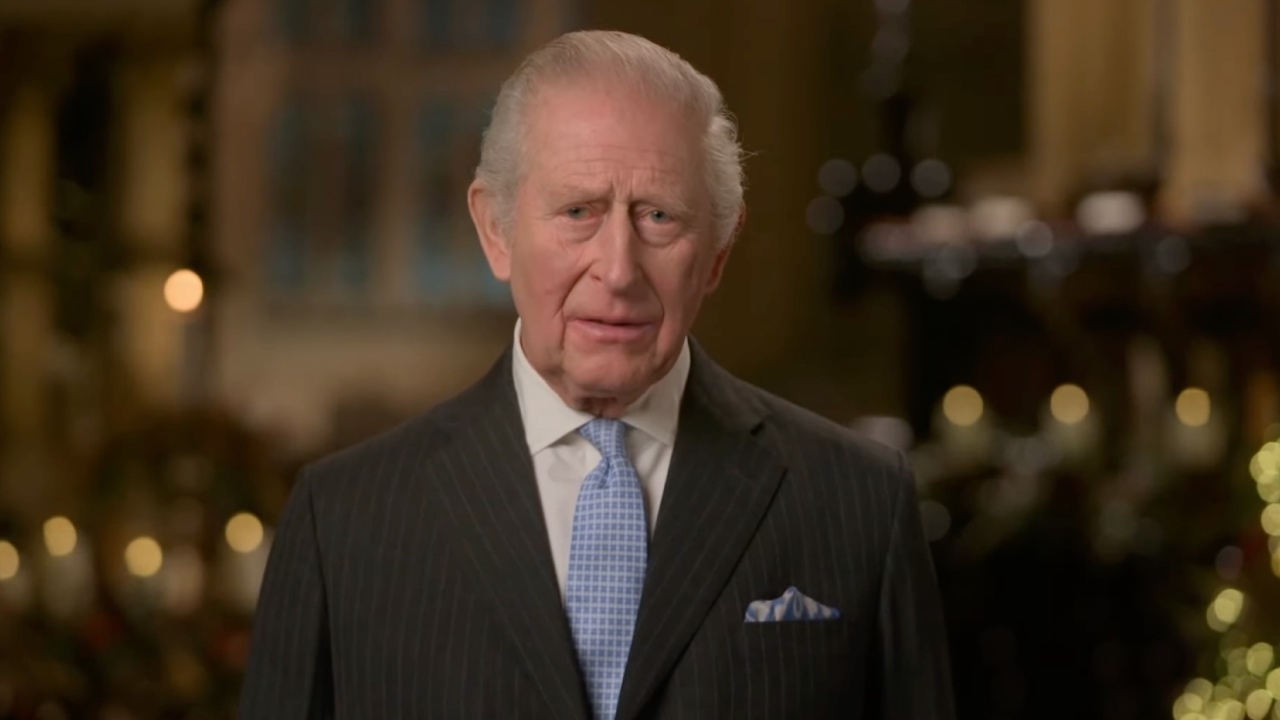
By Jon Brown, Christian Post Reporter Friday, December 26, 2025King Charles III delivers his annual Christmas speech from Westminster Abbey on Dec. 25, 2025. His message emphasized unity, but drew criticism from some who noted he promoted diversity during a time when the U.K. is struggling with mass immigration. | YouTube/Screenshot/The Royal Family ChannelKing Charles III and the incoming archbishop of Canterbury, the Most Rev. Sarah Mullally, delivered Christmas messages that emphasized diversity and immigration as the U.K. faces simmering tensions over the issue.The king opened his address by highlighting his historic meeting with Pope Leo XIV in October, during which he participated in an ecumenical worship service in the Sistine Chapel that featured both Anglican and Roman Catholic liturgy. "A few weeks ago, the queen and I were delighted to make a state visit to the Vatican, where we prayed with Pope Leo in a historic moment of spiritual unity," he said.The event marked the first time a reigning British monarch has attended such a service since the English Reformation nearly 500 years ago.While some claimed that the service was a symbolic healing of the rift from the Reformation, which manifested politically in England when King Henry VIII broke with Rome in 1534, others found it to be an affront to historic English Protestantism and indicative of the king's syncretism that also seeks to appease Islam.During his Christmas address, King Charles III went on to emphasize the importance of the Vatican's 2025 Jubilee Year theme, "Pilgrims of Hope.""Pilgrimage is a word less used today, but it has particular significance for our modern world, and especially at Christmas. It is about journeying forward into the future while also journeying back to remember the past and learn from its lessons," he said, going on to praise the sacrifices of those who fought for Great Britain in the World Wars, before appearing to pivot back to present-day issues."Journeying is a constant theme of the Christmas story. The Holy Family made a journey to Bethlehem and arrived homeless, without proper shelter. The Wise Men made a pilgrimage from the East to worship at the cradle of Christ; and the shepherds journeyed from field to town in search of Jesus, the Savior of the World. In each case, they journeyed with others, and relied on the companionship and kindness of others," he said.“Journeying is a constant theme of the Christmas Story. The Holy Family made a journey to Bethlehem and arrived homeless without proper shelter. The Wise Men made a pilgrimage from the East to worship at the cradle of Christ; and the Shepherds journeyed from field to town in… pic.twitter.com/j0wbYdPWa9— The Royal Family (@RoyalFamily) December 25, 2025 "Through physical and mental challenge, they found an inner strength. To this day, in times of uncertainty, these ways of living are treasured by all the great faiths and provide us with deep wells of hope; of resilience in the face of adversity, peace through forgiveness, simply getting to know our neighbors, and by showing respect to one another, creating new friendships.""Indeed, as our world seems to spin ever faster, our journey may pause to quieten our minds — in T.S. Eliot's words — 'at the still point of the turning world,' and allow ourselves to renew.""In this, with the great diversity of our communities, we can find the strength to ensure that right triumphs over wrong. It seems to me that we need to cherish the values of compassion and reconciliation, the way our Lord lived and died," he said.The king later reiterated his admiration for different faiths, suggesting they have much in common."As I meet people of different faiths, I find it enormously encouraging to hear how much we have in common, a shared longing for peace and a deep respect for all life. If we could find time in our journey through life to think on these virtues, we could all make the future more hopeful," he said.The king's Christmas address was met with mixed reactions on social media, with some praising him for mentioning Jesus Christ and calling for unity, while others criticized him for promoting "diversity" in the wake of mass migration that is putting a strain in the economy and public services, and has sparked protests that have roiled the U.K. this year, including the "Unite the Kingdom" march in London that drew more than 100,000 people in September."King Charles used his Christmas message to gush about Islam, Judaism, Hinduism, and the 'diversity of our communities,'" said Connor Tomlinson, a U.K.-based Gen Z political commentator. "He appealed to the Boomer mythology about the Second World War and 'our values' to overcome 'division at home.' Give it a rest, it's Christmas. Today is about Christ, our traditions, and not foreign religions or liberal platitudes. Take our side, for a change."U.K.-based journalist Joseph Robertson criticized the king for "leaning into the 'diversity is our strength' bollocks — almost verbatim.""Delivered without a flicker of self-awareness. Our Christmas message to the monarch is very simple — you stand for nothing. Least of all your subjects," he added.Mullally, who currently serves as bishop of London and will be formally installed as the first female archbishop of Canterbury in January, delivered a Christmas sermon at the historic St. Paul's Cathedral that also drew on the Nativity story to warn that the debate over immigration in the U.K. has grown too divisive, according to The Guardian."Joy is born exactly where despair expects to triumph. As joy breaks through in our lives it gives us the opportunity to become people who make room," she said. "Room in our homes. Room in our churches. Room in our public conversations and in the attitudes we hold."Mullally went on to imply that those concerned over the scale of immigration to the U.K. are exhibiting the same attitude that shut the Holy Family out of the guest rooms in Bethlehem.Britain's new Archbishop of Canterbury-designate, Sarah Mullally, poses for a photograph in The Corona Chapel at Canterbury Cathedral, southeast England on Oct. 3, 2025, following the announcement of her posting. | BEN STANSALL/AFP via Getty Images"The joy asks us to allow our lives to be interrupted by the needs of others, just as the people of Bethlehem were interrupted," she said."This insight matters because our own society carries uncertainties that can wear us down. Many feel the weight of economic pressure. Some feel pushed to the margins.""Our national conversations about immigration continue to divide us, when our common humanity should unite us," she added.After the announcement in October that Mullally would serve as the Church of England's next ceremonial head, the GAFCON movement of orthodox Anglicans announced its intention to renounce the spiritual leadership of the archbishop of Canterbury and launch the Global Anglican Communion founded on the Bible alone.The impending installation of Mullally, who has openly affirmed abortion and homosexuality, prompted some in the global Anglican Communion to claim that the Church of England has been given over to apostasy.

(LifeSiteNews) — Dear friends, I pray you had a joyful and blessed Christmas Day celebrating Our Lord’s birth. Each year, I am always struck that the day after Christmas is a day of blood. Today, on the Feast of St. Stephen, we remember the Church’s first martyr – an outstanding example of faith, forgiveness, and courage in the face of persecution. And in a few days, we will celebrate the feast of the Holy Innocents – the little babies and toddlers of Bethlehem who were slain at the command of the wicked tyrant Herod. How long before we – all of us, including YOU – could be called to shed our own blood in witness to Christ, as well as life, faith, family, and freedom? As St. Stephen was on the verge of death, stoned mercilessly for proclaiming the Gospel, he cried out: “Lord, do not hold this sin against them.” What a profound example of forgiveness and trust in Christ. At LifeSiteNews, we proclaim the truth of the Gospel – and we aim to do so with the same courage and conviction as St. Stephen – to millions around the world. That might be why 2025 was such a tumultuous year not just for the Church, but also for LifeSiteNews. Bad actors tried to take LifeSiteNews down – and if they had succeeded, they would have shut down your access to faithful Catholic journalism. Truth-based journalism, rather than that based on narratives and agendas, is always a threat to the powerful. But God, His Holy Mother – and your prayers and support – saw us through. Our Christmas Campaign helped us raise 90% of what we need for 2026. Unfortunately we still have a shortfall of 10% If we cannot make up that shortfall before the clock strikes twelve on New Years Day, we could be forced to… Cut our Vatican reporting and the Rome Life Forum in 2026. Cut our investigative Catholic coverage at the very moment the Church needs it most. Cut our pro-life, pro-family team. Cut our video coverage and analysis of domestic and international threats of tyranny and war. Although we have not yet been called to shed our blood in witness to Christ and His law, you can witness to His truth today. If you haven’t already, please consider donating $50 or $100 or $250 or $1,000 or $10,000 – or any amount you can afford – today: DONATE TODAY For our friends in the U.S., your gift is tax-deductible and year-end giving to LifeSiteNews may also provide other tax benefits. Thank you for your generosity and prayers. Together, let us continue to proclaim Christ to the world, even to the point of shedding our blood, if He calls us to do so. May God bless you and your loved ones this Christmas season. In Christ and His beloved Mother, John-Henry Westen CEO & Editor-in-Chief LifeSiteNews Sign of the Cross Media P.S. If you prefer, you can mail your donation to our U.S. or Canadian offices or call (800) 775-7009. But please send your checks SOON. If you postmark your check before December 31, our generous benefactor will have them included in the DOUBLE YOUR IMPACT matching gift opportunity. US MAILING ADDRESS LifeSiteNews.com 4 Family Life Lane Front Royal, VA 22630

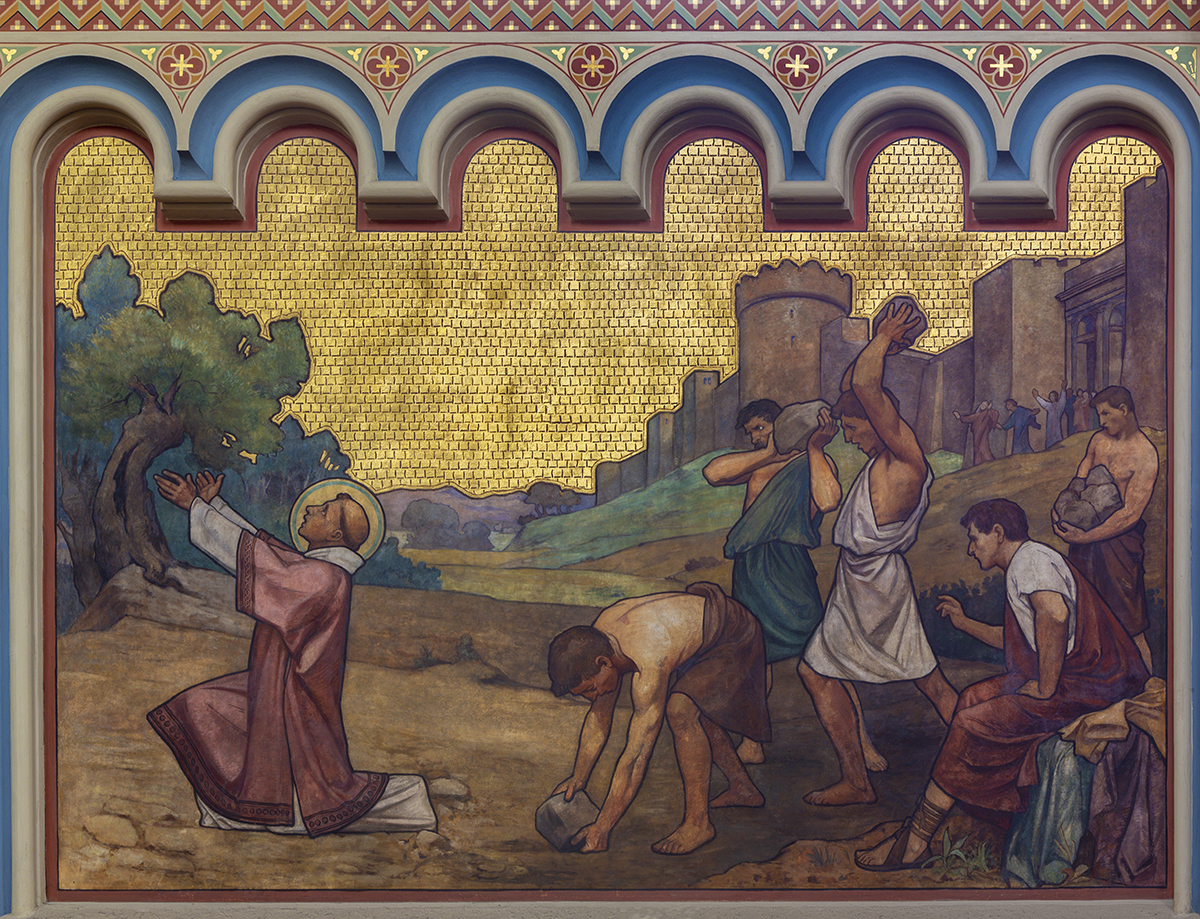
By Christian TodayFriday, December 26, 2025The stoning of St. Stephen fresco in the church kostel Svatého Cyrila Metodeje by S. G. Rudl (1896) in Prague, Czech Republic. | Getty ImagesThe carol says, “Good King Wenceslas last looked out on the Feast of Stephen.” In many countries, Dec. 26, also known as Boxing Day, is better known as St. Stephen’s Day. Stephen was the first Christian martyr. This is the story …The name Stephen The name Stephen in English comes from the Greek Στέφανος (Stephanos), where it means wreath or crown. In English use, variants include Steven and Stefan, and it is often abbreviated as Steve. The female version is Stephanie.In other languages, it appears in different forms, such as Étienne in French, Esteban in Spanish, Stefano in Italian, Štěpán in Czech, Štefanije in Croatian, Fan in Albanian, and Steffan in Welsh. It's a popular name in many countries of Orthodox, Catholic and Protestant heritage. Stephen was considered an honorable name and was the name of a king of England from 1135 to 1154. It was also used by five kings in Hungary and by 10 popes.Stephen of JerusalemThe name Stephen is only used for one person in the Bible. He comes into the New Testament story in Acts Chapters 6 and 7.His story is set in the early years of the Church, when it was growing. There were Christians who were Greek-speaking Jews and others who were Hebrew Jews. These first Christians, mostly from a Jewish heritage, held property in common, with the wealthier sharing what they owned with the poorer members of the community. At this time, there were many widows in need of charity. The Greek-speaking Christians, also called the Hellenists, complained that their widows were being discriminated against in the daily distribution of food (Acts 6:1–6).As a result, the apostles called the Jerusalem community together. They asked them to select seven reputable men who would be appointed to minister to the task. The seven men who were chosen were Stephen, Philip, Prochorus, Nicanor, Timon, Parmenas, and Nicolaus of Antioch (Acts 6:5). The apostles laid their hands upon them and set them apart to serve those who were overlooked in the community. Stephen was first in the list and was appointed because he was “a man full of faith and of the Holy Spirit” (Acts 6:5).Stephen the MartyrLuke wrote that Stephen performed great wonders and signs (Acts 6:8), and that the number of disciples in Jerusalem increased rapidly, including many Jewish priests (Acts 6:7). As a result, this caused consternation among the Jewish authorities. Opposition arose and false accusations were brought against him, especially from the Synagogue of the Freedmen, which was a Greek-speaking synagogue for Diaspora Jews now living in Jerusalem. The text specifically mentions that it included Jews of Cyrene and Alexandria in North Africa, and Jews from the Roman provinces of Cilicia and Asia. They argued with Stephen, who seems to have preached at the synagogue, and he may well have been a member or former member of the synagogue himself.Some members of the synagogue made false accusations against him, claiming that he had spoken blasphemous words against God and Moses (Acts 6:11). He was hauled before the Sanhedrin on charges of speaking against “this holy place and the law” (Acts 6:13). Luke notes that in that hostile courtroom, “all who were sitting in the Sanhedrin looked intently at Stephen, and they saw that his face was like the face of an angel” (Acts 6:15).In Acts 7 we read that the High Priest spoke to Stephen (Acts 7:1), who responded not with self-defence but with a sweeping retelling of Israel’s story, from Abraham through Moses and the prophets. Stephen showed how God has always been on the move, not confined to one land or one building, and how God’s people have repeatedly “resisted the Holy Spirit” and rejected the messengers sent to them (Acts 7:1–53). Perhaps the part that annoyed them most was that Stephen confronted them and said that they had “betrayed and murdered” the “Righteous One” about whom the prophets had spoken (Acts 7:52), meaning Jesus. The reaction was fury (Acts 7:54).Luke’s narrative in Acts then turns from Stephen’s words to his vision. He looked up “and saw the glory of God, and Jesus standing at the right hand of God” (Acts 7:55). He cried out and said, “Look, I see heaven open and the Son of Man standing at the right hand of God” (Acts 7:56). The implications of this were outrageous and blasphemous to those present.StoningThe crowd dragged him outside the city and stoned him. As the stones fell, he prayed, “Lord Jesus, receive my spirit” (Acts 7:59), echoing Jesus’s cry, “Father, into your hands I commit my spirit” (Luke 23:46) when he was on the cross. Then Stephen fell on his knees and cried out, “Lord, do not hold this sin against them” (Acts 7:60), echoing Jesus’s prayer, “Father, forgive them, for they do not know what they are doing” (Luke 23:34). After he was killed, he was buried and the church mourned for him (Acts 8:2–3).PersecutionThe book of Acts describes how, following the stoning, great persecution broke out, and most believers fled Jerusalem and were scattered throughout Judea and Samaria. This was prophesied by Jesus when he said that some people would kill them, flog them in the synagogues, and pursue them from town to town (Matthew 23:35), and that in Jerusalem they would stone some of them (Matthew 23:37).Saul at the StoningLuke added a small detail that the “witnesses laid their coats at the feet of a young man named Saul” (Acts 7:58), who “approved of their killing him” (Acts 8:1). Saul began to try to destroy the church by going from house to house and dragging off men and women and putting them in prison. This man who witnessed the death was Saul of Tarsus, who later had a dramatic conversion and is better known today as St Paul. Tarsus is in Cilicia, and Luke specifically mentions that the Synagogue of the Freedmen included Jews from Cilicia, which seems to indicate that Saul was from this synagogue. Paul later stated, “When the blood of your martyr Stephen was shed, I stood there giving my approval and guarding the clothes of those who were killing him” (Acts 22:20). The first martyr’s death thus becomes the catalyst for Saul’s journey to faith in Christ.Traditions about St. StephenStephen is considered the first Christian martyr and one of the first deacons of the Christian Church. The site of his death is not specified in the Bible, but by tradition it was east of Jerusalem, outside Lion’s Gate, which leads to one of the quarters of the city. Christians have thus traditionally known it as St Stephen’s Gate.His death occurred a few years after the start of the Church at Pentecost and is dated variously as AD 33, 34, 35, or 36. Stephen was never formally canonised, but he is known as St Stephen. St Stephen’s Day is traditionally on December 26 in the Western Church, December 25 in the Armenian Church, and December 27 in the Eastern Orthodox world. He is considered the patron saint of deacons and stonemasons. There are many churches around the world dedicated to St Stephen, including 145 in the Church of England. The most famous is Stephansdom, the cathedral in Vienna, Austria.St Stephen’s DaySt Stephen’s Day, also called the Feast of Stephen, is an official public holiday in many Central European countries such as Austria, Germany, Poland, and the Czech Republic, where it is the second day of Christmas and a time for visiting family and friends.The Christmas song about Good King Wenceslas was inspired by Duke Václav of Bohemia, who lived in Prague. In the song he goes out “on the Feast of Stephen,” which is December 26. The parallel with St Stephen is that both men were concerned with the poor and both were martyred.In the UK and many Commonwealth countries, the day is a bank holiday but is instead called Boxing Day, from the tradition of giving boxes or gifts to servants and the poor — a practice that draws on Stephen’s role in serving the needy.CollectThe traditional Anglican collect prayer for St Stephen’s Day is: “Grant, O Lord, that in all our sufferings here upon earth, for the testimony of thy truth, we may steadfastly look up to heaven, and by faith behold the glory that shall be revealed; and, being filled with the Holy Ghost, may learn to love and bless our persecutors, by the example of thy first Martyr Saint Stephen, who prayed for his murderers to thee, O blessed Jesus, who standest at the right hand of God to succour all those that suffer for thee, our only Mediator and Advocate. Amen.”This article was originally published at Christian Today 

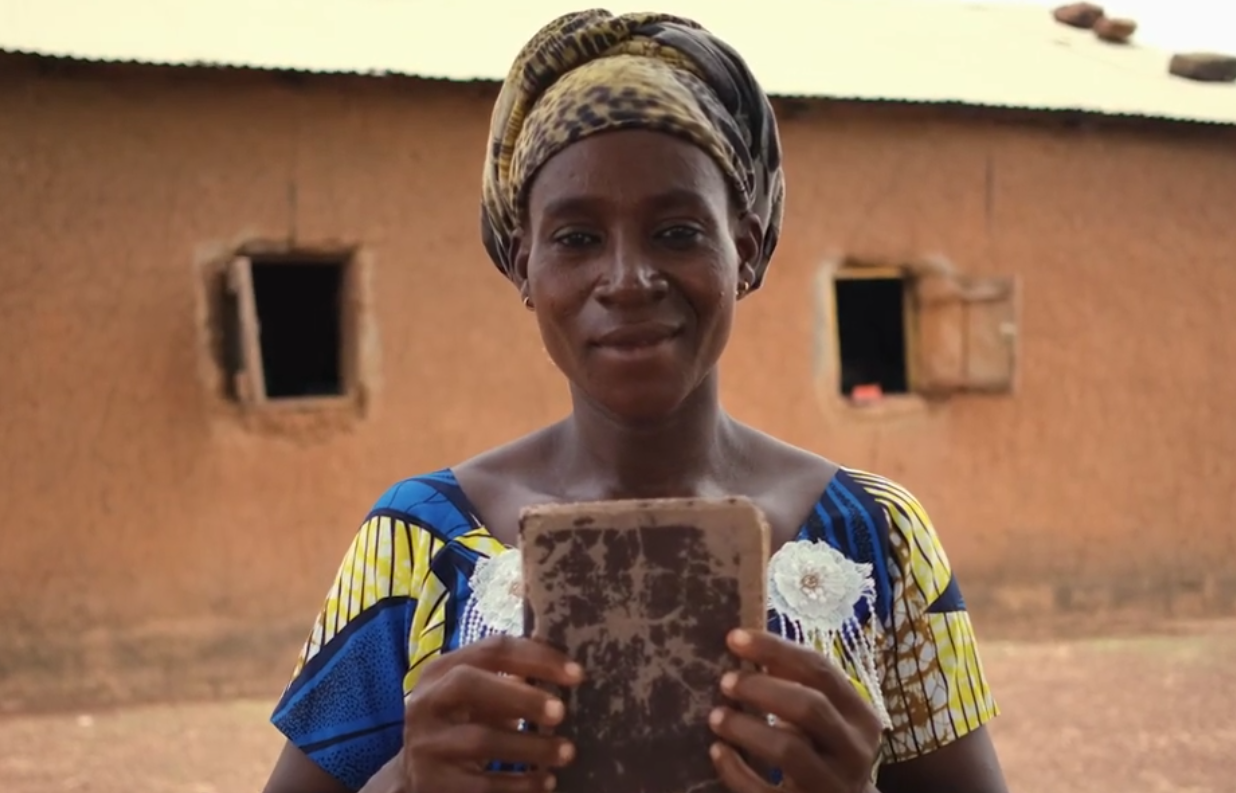
Lutheran Bible Translators reported that the community played a vital role in the translation, ensuring the work not only conveyed God's Word but addressed the community's needs. Lutheran Bible Translators Ghana's Komba people received their complete Bible after 16 years of dedicated translation work. Speaking during the launch event last month, Rev. Dr. John Kwesi Addo Jnr., General Secretary of the Bible Society of Ghana (BSG), emphasized that this Bible will deepen faith while serving as a major repository to preserve the Komba language and culture from extinction. "This was more than a dedication. It was a cultural event that united the entire community: Christians, Paramount Chiefs, elders, and Muslims, all celebrating 16 years of tireless translation work," BSG noted in a statement. BSG partnered with the Lutheran Bible Translators to deliver the Komba Bible in the hope that the Bible “will shape lives, strengthen families, and combat moral decay.” The Komba people live in Ghana's northeast region. Unlike many neighboring groups with centralized chieftaincy structures, the Konkomba traditionally organized themselves without a central ruling authority. Social life centers around lineages, clans, village elders, and local religious and spiritual leaders. Historically, their worldview embraced traditional spiritual beliefs: reverence for ancestral spirits, belief in natural spirits inhabiting rivers, trees, and land, plus rituals led by traditional healers or priests. Many Konkomba have since adopted Christianity, while others follow Islam. Traditional beliefs and practices still influence some communities. According to Lutheran Bible Translators, Baptist missionaries established the first congregation among the Komba in Namong during the 1950s. In the early 1980s, Lutheran missionaries Tim and Beth Heiney moved to Ghana to serve the Konkomba area. In 1968, church authorities assigned Reverend Walter Demoss and his wife Helena to plant churches and train local leaders in Northern Ghana. Though called specifically to serve the Moba people, Reverend Demoss also mentored a young Komba man, Reverend Samuel Konlaan. Rev. Konlaan later voiced concern that the only existing Bible translation remained difficult for his people to understand because of the many dialects within the Komba language. After years of preparation, organizers fully launched the New Testament translation effort in 2005 and assembled the team to translate the New Testament. Members included Mr. Elijah Matibin, project coordinator with expertise in Scripture engagement and literacy; Mr. David Federwitz, literacy and Scripture engagement advisor; Rev. Samson Bilafanim, translator; Rev. Emmanuel Mananyina, translator; Mr. James Adongo Wajak, translator; Rev. Nathan Esala, linguist and translation advisor; and Dr. Fabian Dapila, translation consultant. Lutheran Bible Translators reports that the community played a vital role in the translation, ensuring the work not only conveyed God's Word but addressed the community's needs. "The translation team sends them a printed copy. In some translation projects, reviewers choose to meet in a group, but the Komba reviewers decided to make their suggestions independently," LBT explained. On November 1, 2014, the Komba community gathered for a joyful celebration when they finally received the New Testament. Lutheran Bible Translators On Nov. 1, 2014, the Komba community gathered for a joyful celebration when they finally received the New Testament. Rev. Mananyina expressed his delight: "Reading the Bible has become part of my people. They are reading it day in and day out, and they have taken it upon themselves to do so. They have learned to read, and now they can go out and preach because they can read the Bible, something they were unable to do in the past." Soon after the dedication, work on the Old Testament translation began in 2015. Mr. Elijah Matibin took on leadership of the project as KOLIBITRAP Coordinator. Lutheran Bible Translators, the Evangelical Lutheran Church of Ghana, KOLIBITRAP, and the Bible Society of Ghana signed a Memorandum of Understanding (MOU) to launch the Old Testament translation effort. During this period, the team also recorded the New Testament in audio form and integrated it with the text to create a smartphone app. One Way Africa has now produced the full Bible in audio format to enhance Bible engagement. Earlier on Nov. 2, the Bible Society of Ghana launched the Dagaare Bible after 18 years of work. Today, many Dagaare people, located in North West Ghana, are Catholic or other Christian denominations, while a number also practice Islam. "The vast grounds of St. Andrew's Cathedral overflowed with people from every corner of the Upper West Region: men, women and children, Reverend Ministers, and the Regional Minister, all eager to witness this historic moment," the society reported. In a 2023 report, BSG revealed that lack of financial support hinders their work to translate the Bible into numerous languages. The organization estimates that translating a single verse costs $20, bringing the overall cost to complete one language to $622,040 (GH¢7.2 million) over 10 to 15 years.

Books are important. They fashion the way we think, learn, grow, and understand the world. With the omnipresence of social media and video shorts the need to sit and ponder a “bit of theology,” as C.S. Lewis calls it, seems slow and outdated. Yet, the Lord has chosen to reveal himself and his salvation through the written word. He did not disclose himself in a meme, TikTok reel, or YouTube short. He did so through the Word. This makes reading a precious and profound experience when books engage with, explain, and help us apply the Word of God in our lives. Discipleship that is gospel-centered must have reading as one of its practices. We need to have the gospel developed in our hearts and minds and reading books is a noble means to that end. This year the GCD Team has recommended some of our favorite books read in 2025 that have helped us grow in grace and faith. We hope you’ll pick these up and be encouraged by them. Jeremy Writebol, Executive DirectorDo You Believe? by Paul David Tripp Buy on Amazon Do You Believe? makes theology both approachable and practical. It provides a good summary of each doctrine it addresses. However, that is not the real strength of the book. Its strength is found in a chapter devoted to the application of each doctrine wherein Tripp asks the question, “If we deeply believed this doctrine in light of the Gospel, how would that belief shape the lives we live?” I found myself personally challenged and encouraged to move doctrine not only from head to heart, but then out to my handsDave Carlson   A Bit of Earth: A Year in the Garden with God by Andrea Burke Buy on Amazon When I say I savored this book, I mean I savored it all year long. Season by season, I picked it up. In the dead of winter when I felt as frozen as the ground, it was as if Andrea handed me a cozy blanket and a hot cup of coffee and said, “Hang in there. Spring is coming.” When I pushed through back pain and exhaustion stripping diseased leaves off a hundred zinnias in the summer heat, I found a friend who had been there, and like me, still felt the work was worth it to reap the harvest. I was not just encouraged in earthly matters, but in matters of the soul. And to top it all off, her writing is beautiful. I'll come back to this one often.Brittany Allen   The Language of Rivers and Stars: How Nature Speaks of the Glories of God by Seth Lewis Buy on Amazon This book caught me by surprise as Seth Lewis describes the world we thought we knew in what seems like a brand new way. He begins with Psalm 19 and the Genesis account as the biblical backdrop for his masterpiece. But then, he pulls out a magnifying glass to examine each day of creation as he marvels at the wonders of God. Lewis helps us to see again these ordinary themes such as land and sea, sky and stars, animals and plants. He shows without just telling. As God once said of his own creation, this book is “very good" because it feeds your soul. I even recommend reading it outdoors so you can feel the sun on your face and the stiffness of the breeze.Tom Sugimura   From the Rising of the Sun by Tim Challies and Tim Keesee Buy on Amazon Tim Challies and Tim Keesee cross mountain ranges and oceans in From the Rising of the Sun: A Journey of Worship Around the World, making the notion of the global Church visible. Each chapter features a church “made up of people who are native to the country,” with each church worshiping in "their unique cultural setting.” This book, along with its accompanying videos, helped grow my love for God and people. I enjoyed the occasion to consider the histories and cultures of eleven places where Jesus is known.Timarie Friesen   Waiting Isn't a Waste by Mark Vroegop Buy on Amazon Addresses a real-life issue that we all face, yet rarely speak about in Christian community. Our church staff worked through it together this summer and found it to be richly biblical and practically helpful. Vroegop has blessed the body of Christ as we wait for our Savior's return!Rob Bentz   When Life Feels Empty by Issac Serrano Buy on Amazon My former-professor-turned-friend has written an excellent book for generations to come. Serrano engages with the inconsistent assumptions our materialistic world hands us from birth and shows how the gospel of Jesus gives us a better reality full of meaning and truth. Pastors and parishioners alike will benefit from reading this and would do well to keep a few copies on hand to give out.Matt Boga   Identity Theft: Reclaiming the Truth of Who We Are in Christ, edited by Melissa Kruger; with Jen Wilkin, Hannah Anderson, and more Buy on Amazon Earlier this year, a friend gave me Identity Theft, and in the months that followed my life seemed to tilt and rock through one upheaval after another. When an unexpected hospitalization separated me from my family—including my then two-week-old son—for a few days this fall, it felt as though every inch of my misplaced identity was suddenly exposed. I could no longer find any security in my own strength during the sleepless nights in a hospital bed, but it was this book that I paged through in those dark hours. The wise words within each chapter gently reoriented my heart and pointed me back to where my true identity is found—Christ, the Rock of Ages.Hillary Nelson   Blessed: Experiencing the Promise of the Book of Revelation by Nancy Guthrie Buy on Amazon I have always believed that God gave us the book of Revelation for our good. How could a Christian think otherwise? But all the imagery, all the debates, and all the confusion sometimes make that belief difficult and have given me hesitation from teaching the vision John received on Patmos. Guthrie’s book, however, made it easier to see how Revelation, with all its twists and turns, is not only eminently preachable by ordinary pastors to ordinary believers but also eminently believable and livable.Benjamin Vrbicek  

(LifeSiteNews) — St. Peter Damian thus begins his sermon for this feast: We are holding in our arms the Son of the Virgin, and are honoring, with our caresses, this our Infant God. The holy Virgin has led us to the dear Crib. The most beautiful of the Daughters of men has brought us to the most beautiful among the Sons of men, (Psalm 44:3) and the Blessed among women to Him that is Blessed above all. She tells us … that now the veils of prophecy are drawn aside, and the counsel of God is accomplished … Is there anything capable of distracting us from this sweet Birth? On what else shall we fix our eyes? … Lo! while Jesus is permitting us thus to caress him; while he is overwhelming us with the greatness of these mysteries, and our hearts are riveted in admiration – there comes before us Stephen, full of grace and fortitude, doing great wonders and signs among the people. (Acts 6:8) Is it right that we turn from our King to look on Stephen, his soldier? No – unless the King himself bid us do so. This our King, who is Son of the King, rises … to assist at the glorious combat of his servant … Let us go with him and contemplate this standard-bearer of the martyrs. The Church gives us, in today’s Office, this opening of a sermon of St. Fulgentius for the feast of St. Stephen: Yesterday, we celebrated the temporal Birth of our eternal King: today, we celebrate the triumphant passion of his Soldier. Yesterday, our King, having put on the garb of our flesh, came from the sanctuary of his Mother’s virginal womb, and mercifully visited the earth: today, his Soldier, quitting his earthly tabernacle, entered triumphantly into heaven. Jesus, while still continuing to be the eternal God, assumed to himself the lowly raiment of flesh, and entered the battlefield of this world: Stephen, laying aside the perishable garment of the body, ascended to the palace of heaven, there to reign forever. Jesus descended veiled in our flesh: Stephen ascended to heaven amidst the shower of stones, because Jesus had descended on earth midst the singing of Angels. Yesterday, the holy Angels exultingly sang, Glory be to God in the highest; today, they joyously received Stephen into their company … Yesterday was Jesus wrapped, for our sakes, in swaddling clothes: today was Stephen clothed with the robe of immortal glory. Yesterday a narrow crib contained the Infant Jesus: today the immensity of the heavenly court received the triumphant Stephen. Thus does the sacred liturgy blend the joy of Our Lord’s Nativity with the gladness she feels at the triumph of the first of her martyrs. Nor will Stephen be the only one admitted to share the honors of this glorious octave. After him, we shall have John, the Beloved Disciple; the Innocents of Bethlehem; Thomas, the Martyr of the Liberties of the Church; and Sylvester, the Pontiff of Peace. But the place of honor amid all who stand round the crib of the newborn King belongs to Stephen, the protomartyr, who, as the Church sings of him, was “the first to pay back the Savior, the death suffered by the Savior.” It was just that this honor should be shown to martyrdom; for martyrdom is the creature’s testimony, and return to his Creator for all the favors bestowed on him: it is man’s testifying, even by shedding his blood, to the truths which God has revealed to the world. In order to understand this, let us consider what is the plan of God, in the salvation He has given to man. The Son of God is sent to instruct mankind; He sows the seed of His divine word; and His works give testimony to His divinity. But after His sacrifice on the cross, He again ascends to the right hand of His Father; so that His own testimony of Himself has need of a second testimony, in order to its being received by them that have neither seen nor heard Jesus Himself. Now, it is the martyrs who are to provide this second testimony; and this they will do, not only by confessing Jesus with their lips, but by shedding their blood for Him. The Church, then, is to be founded by the Word and the Blood of Jesus, the Son of God; but she will be upheld, she will continue throughout all ages, she will triumph over all obstacles, by the blood of her martyrs, the members of Christ: this their blood will mingle with that of their Divine Head, and their sacrifice be united to His. The martyrs shall bear the closest resemblance to their Lord and King. They shall be, as He said, like “lambs among wolves.” (Luke 10:3) The world shall be strong, and they shall be weak and defenseless: so much the grander will be the victory of the martyrs, and the greater the glory of God who gives them to conquer. The Apostle tells us that Christ crucified is “the power and the wisdom of God”; (1 Corinthians 1:24) – the martyrs, immolated, and yet conquerors of the world, will prove, and with a testimony which even the world itself will understand, that the Christ whom they confessed, and who gave them constancy and victory, is in very deed the power and the wisdom of God. We repeat, then – it is just that the martyrs should share in all the triumphs of the Man-God, and that the liturgical cycle should glorify them as does the Church herself, who puts their sacred relics in her altar stones; for thus the sacrifice of their glorified Lord and head is never celebrated without they themselves being offered together with Him in the unity of His Mystical Body. Now, the glorious martyr-band of Christ is headed by St. Stephen. His name signifies the Crowned – a conqueror like him could not be better named. He marshals, in the name of Christ, the white-robed enemy, as the Church calls the martyrs; for he was the first, even before the apostles themselves, to receive the summons, and right nobly did he answer it. Stephen courageously bore witness, in the presence of the Jewish Synagogue, to the divinity of Jesus of Nazareth; by thus proclaiming the truth, he offended the ears of the unbelievers; the enemies of God became the enemies of Stephen and, rushing upon him, they stoned him to death. Amid the pelting of the blood-drawing missives, he, like a true soldier, flinches not, but stands (as St. Gregory of Nyssa so beautifully describes it) as though snowflakes were falling on him, or roses were covering him with the shower of their kisses. Through the cloud of stones, he sees the glory of God – Jesus, for whom he was laying down his life, showed Himself to His martyr, and the martyr again rendered testimony to the divinity of our Emmanuel, but with all the energy of a last act of love. Then, to make his sacrifice complete, he imitates his divine master, and prays for his executioners: falling on his knees, he begs that this sin be not laid to their charge. Thus, all is consummated – the glorious type of martyrdom is created and shown to the world, that it may be imitated by every generation to the end of time, until the number of the martyrs of Christ shall be filled up. Stephen sleeps in the Lord, and is buried in peace – in pace – until his sacred tomb shall be discovered, and his glory be celebrated a second time in the whole Church by that anticipated resurrection of the miraculous invention of his relics. Stephen, then, deserves to stand near the crib of his King, as leader of those brave champions, the martyrs, who died for the divinity of that Babe, whom we adore. Let us join the Church in praying to our saint, that he help us to come to Our Sovereign Lord, now lying on his humble throne in Bethlehem. Let us ask him to initiate us into the mystery of that divine Infancy, which we are all bound to know and imitate. It was from the simplicity he had learned form that mystery, that he heeded not the number of the enemies he had to fight against, nor trembled at their angry passion, nor winced under their blows, nor hid from them the truth and their crimes, nor forgot to pardon them and pray for them. What a faithful imitator of the Babe of Bethlehem! Our Jesus did not send His angels to chastise those unhappy Bethlehemites, who refused a shelter to the Virgin Mother, who in a few hours was to give birth to Him, the Son of David. He stays not the fury of Herod, who plots His death – but meekly flees into Egypt, like some helpless bondsman, escaping the threats of a tyrant lordling. But it is under such apparent weakness as this that He will show His divinity to men, and He the Infant-God prove Himself the strong God. Herod will pass away, so will his tyranny; Jesus will live, greater in His crib, where He makes a king tremble, than is, under His borrowed majesty, this prince-tributary of Rome; nay, than Cæsar Augustus himself, whose worldwide empire has no other destiny than this – to serve as handmaid to the Church, which is to be founded by this Babe, whose name stands humbly written in the official registry of Bethlehem. To read the remainder of Dom Guéranger’s reflection on the Feast of St. Stephen, see the Ecu-Men website HERE. This text is taken from The Liturgical Year, authored by Dom Prosper Guéranger (1841-1875). LifeSiteNews is grateful to The Ecu-Men website for making this classic work easily available online.

While in a deep, peaceful sleep shortly after midnight a couple of years ago, a blaring tornado alarm and a message saying to take cover startled me awake. My home was shaking and I heard howling winds and debris hitting the windows so I ran to my bathroom to take cover. I knelt on the floor and prayed for protection and peace as I waited for the EF-3 tornado to pass. Even with the thunderous winds intensifying, a calming peace overtook me. As I continued to kneel on the bathroom floor, I remembered a rainstorm-induced flood that I survived in the city several years prior. Our neighborhood was evacuated as rising floodwaters quickly approached our area. Throughout the evacuation, God gave me peace by whispering to my spirit that His presence was with me, so I did not need to be afraid. "My Spirit remains among you, just as I promised when you came out of Egypt. So do not be afraid." (Haggai 2:5 NLT) Through the prophet Haggai, God reminded the people that His Spirit was with them—just as His Spirit was with them in the past when they came out of Egypt. God referenced His past record, indicating His current ability to perform a miracle while providing peace. He let them know they had no reason to fear because of His presence and ability. Similarly, God brought me out of the local flood before and He was reminding me that He would also bring me out of the tornado, so I did not need to be afraid. Sometimes in our lives we face physical storms and sometimes we face spiritual storms. No matter the storm, if we are children of God, He is with us during any storm we face. Exodus 29:46 states, "And they will know that I am the LORD their God. I am the one who brought them out of the land of Egypt so that I could live among them. I am the LORD their God." When God’s presence lives with us, we can walk in faith and in peace knowing that His Holy Spirit guides us. As the psalmist said in Psalm 51:11-12, may our prayer also be, "Do not banish me from your presence, and don’t take your Holy Spirit from me." Prayer: God, I am facing storms and trials in my life that threaten my peace. I choose to trust that Your presence is with Your children, and I ask for peace as You walk with me through my storms. I trust you, Lord. In Jesus’s name, amen. ~ Scripture is quoted from the Holy Bible, New Living Translation, copyright © 1996, 2004, 2015 by Tyndale House Foundation. Used by permission of Tyndale House Publishers, Inc., Carol Stream, Illinois 60188. All rights reserved.

(LifeSiteNews) — This year has been one of unintended revelation for me, as it has been for the staff, supporters, and readers of LifeSiteNews. In the summer, we saw a palace coup which failed to reputationally assassinate John Henry Westen. This unpleasantness also seems to have been an attempt on the life of LifeSite itself. A beastly business whose fallout resulted in my presence onstage at a hastily reconvened Rome Life Forum. I have a wife, and so am used to being used. I was in the army reserve, and so am used to dressing up and doing my duty. Marshalled by a woman from LifeSiteNews on very good terms with my wife, I was posted to Rome as Master of Ceremonies. From the speaker’s point of view, the MC is a sort of well-dressed brute who cuts you off just as you are revving up for the second hour of your speech. To the audience, the MC is the swine who deprives you of the microphone when you decide to deliver a speech of your own in place of a question. To me, this was a duty – that of balancing the interests of everyone present. I came to Rome to do this duty as best I could and hoped not to blunder into some accidental disgrace. The scene was set, and I was in it long enough to be bemused by the lack of rotten tomato feedback. Looking back, perhaps this was because the real action took place offstage, with a plot twist that revealed the majesty and awesome wonder at the center of Christmastime. Rome is full of majestic buildings and the Scala Sancta is housed in one which is relatively modest. John Henry led us out on a rosary tour which took us there. I was not prepared for what happened that day. I daresay no one could be. When in Rome you get used to swanning in and out of impressive doors – such as the Holy Door of the Apostolic Palace – and so I drifted over the threshold with an eye on the signs saying, “No photos.” An attendant shushed us as we shuffled toward the wooden steps, which have been laid over the stone staircase removed here from Jerusalem. Christ walked up this staircase to Pontius Pilate. Blood spots revealed by glass portholes show the route he took back down. As you edge closer, something shifts. It is time and the Presence – in the present. Of course God is always here – everywhere – but it can be quite discomfiting to be suddenly aware of Him. The stage and the scenery vanish in that instant. There is Him, and He is everything. We know this, of course, but it is quite something to realize that God was a man, and He was once where you are, right now. The momentum of the moment arrested time. Here I was following the footsteps of Christ Himself. You go up the Holy Stairs on your knees, which is not only a sign of reverence but the best way to deal with the weight that hits you. This is a place like no other. It has a door and walls, is painted beautifully, and is chock full of pilgrims and tourists. Yet here time stops around the still point: He who makes sense of all mankind, before and after Him. It was as if a bell jar had descended over the murmur of prayers and the hiss and thrum of traffic outside. There was nothing here but Everything, and at the center of all was silence. Peace in this predicament is disturbing: this is the route Christ took to His condemnation by man. This is the path God chose to redeem men like me, offering His only Son to pay with His bloody Passion for our sins. All time is present in Christ, and all times indicate Him. For most, Christmas is the time above all in which Christ is present in our lives. To follow Christ’s path as best we can is to find Him again and again, closer each time, until you wonder you might feel His breath at your ear. I understood that I had never before realized what it meant that Christ was a man, was and is God, and walked among us. I have read the Word and I go to Mass, I read about the teachings of the Church and try to understand its luminous metaphysics. None of this prepared me for the simple, sudden shock. He is real. He is. The experience I struggle to describe is awe. I have seen so many portraits of the crucifixion of our Lord, but on that staircase the portrait and the subject combined in a profound understanding beyond words. I do not really know what to make of it, if I am honest, but I know that it has changed me in a way that will not change back. This year I saw what I thought I had seen before, and found something I believed but never knew was really there. It is the Word made flesh, the stunning and sometimes terrible fact that God came to earth in order to save us from ourselves. I am glad there were no photos allowed as I expect my mouth made a gaping “O” to mark this eureka moment. It can be bemusing to find you have approached God by accident, and not only for what this makes of all your best intentions. In my case the happy shock that Christ was one of us for a time was surprising because it was a surprise. Despite all I thought I knew, I did not really know Him as I now do. I realize this Christmas that to seek the presence of God is to beseech Him for an answer, and the answer is the gift that says I am, and I am with you, now and forever.

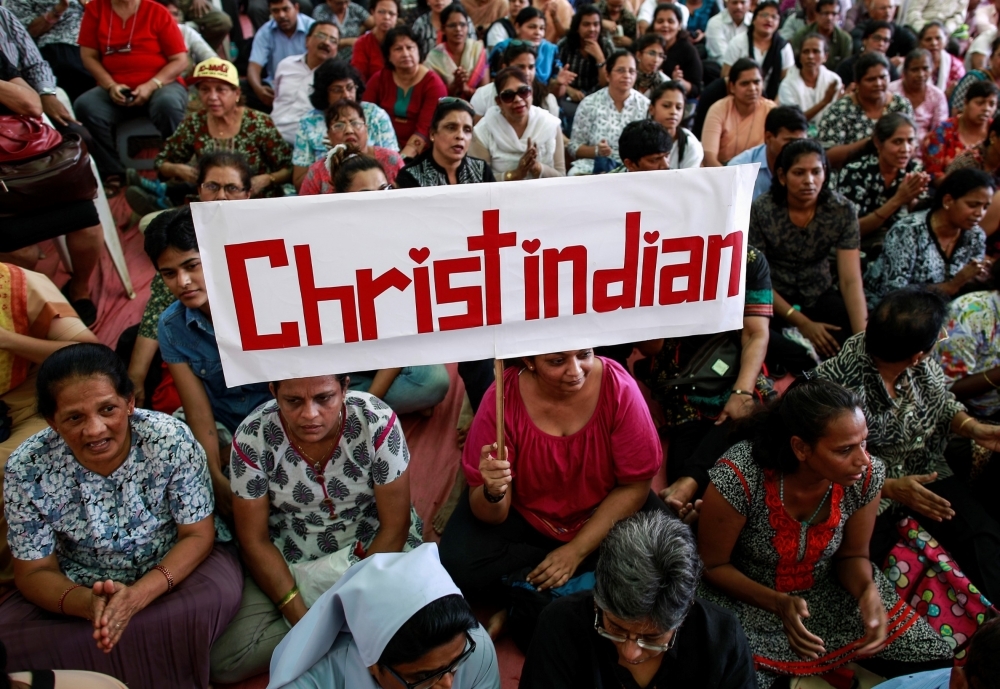
By Morning Star NewsThursday, December 25, 2025Reuters/Danish SiddiquiNEW DELHI — A Hindu extremist mob in northern India assaulted two Christian couples and an attorney for several hours, accusing them of forced conversion. In Haryana state’s Titoli village, 5 miles from the city of Rohtak, the mob forced one of the Christians, a pastor, to set fire to a heap of Bibles while the Hindu extremists recorded videos that immediately went viral, resulting in 32 complaints to the police. Pastor Jehovah Das, 65, and Vinod Masih, 42, along with their wives, had been invited to a Christian family’s home in the village to pray and bless the arrival of their second child on Nov. 7, sources said.About 10 to 12 members of the Arya Samaj (Noble Society), a Hindu reform movement, learned of the Christians’ visit. They phoned several of their associates and gathered a mob of about 50 people that barged into the house.“They began to beat us with slaps, punches, elbows, kicked us with their legs and held us hostage,” Masih told Morning Star News, adding that they beat the Christians from 10:30 a.m. until 3 p.m.The Hindu extremists, whose number had then reached 80, searched their car, pulled out all Bibles and tracts and cast them onto the ground into a heap. They shot videos that showed the two couples, disoriented and in shock, forced to repeat that they intended “conversion” in the village and that they would never return.The mob kicked the Bibles and spoke disrespectfully about Christ, Masih said.Pastor Das was forced to write a letter of apology that the video shows in his hand. A member of the mob then took a bottle of flammable liquid from the hands of a boy standing with the mob and forced three of the Christians to sprinkle it on the Bibles and literature. After forcing Pastor Das to set the Bibles on fire, the mob then shouted praises to the Hindu god Rama.The mob dragged the Christians to their car and locked them inside.“We were locked in our car for two hours. We were not allowed food, water or to relieve ourselves during this time,” said Masih.While held hostage, Masih’s wife, Reena, called attorney Satish Arya for help. Arya, who once belonged to the Arya Samaj sect, has been a practicing Christian for five years. He quickly drove 10 kilometers (6 miles) to reach Titoli village.“While on my way to the village, I called the police helpline and informed them about the hostage situation and requested that any inquiry against the Christians be taken up in the police station, and that they should not let the mob take the law into their own hands,” Arya told Morning Star News. “Police assured me that they will arrive soon.”When Arya reached the village, he saw that the Christians were gathered at one area and about 20 to 25 Hindu women were assaulting the two Christian women.“They were slapping the Christian women, pulling their hair, punching them. The scene was terrible,” said Arya. “The Hindu men were assaulting the Christian men likewise.”Arya stood at some distance waiting for the police, but they did not arrive, he said. The mob called police, and responding officers soon arrived, he added.One of the Hindu extremists noticed Arya and the words, “Jai Masih Ki [Praise the Lord]” written on his car’s back window, and about 12 of them approached and asked about his background. They quickly learned that he was a Christian.Arya told them that he was an attorney and insisted that they take the Christians to the police station and let officers, rather than the mob, question them.“I objected to their act of holding the Christians hostage for four hours and questioned their inhumane behavior,” Arya said.Wearing his black court robe, he was dragged to the site where the other Christians were being beaten and assaulted.“They tore my black gown, my shirt and my innerwear,” he said. “They stripped my upper body and continued to beat me for 25 minutes, and that too in the presence of the police.”The mob proposed that they put all five Christians in a car and set them on fire within, and Arya told them the law would not spare them for such a horrendous act.A man from among the Hindu mob somehow managed to set Arya free, and the attorney left and called his wife, asking her to bring him a fresh set of clothes.Officers responding to Arya’s initial helpline call finally arrived, detained the Christians and took them to the police station, sources said. After Arya went to a doctor and received first aid, he then went to the police station.“By the time I reached the police station, the Christians were pressured to give a written statement that they did not want to press charges against the mob and promised that they would not enter that village in the future,” he said.Arya wanted to take legal action, but when he held a meeting with the host family in Titoli village, he learned Hindu residents had threatened to drive them from the area if they sided with the Christians.“This family, though in faith for almost 18 years, came under pressure from the Hindu extremists,” Masih told Morning Star News.The following day, about 80 Haryana pastors met with Arya and registered a police complaint against the assailants. They also submitted a written complaint on Nov. 10 with the Superintendent of Police, demanding strict action against the perpetrators. Though the administration assured full cooperation and necessary action in the matter, no arrests were made and no action taken.Arya gave statements to local media outlets, disclosing the hostage-taking and assault. Police summoned the Christians to the station and pressured them to reach a compromise with the assailants on Nov. 23, pre-empting any arrests of either party.“The police came under obligation to act and called together the village council and the perpetrators,” Arya said. “The village head apologized for their action in writing, kissed the Bible and placed it on his head.”Christians submitted 32 complaints at different police stations for hurting religious feelings after the video of the burning Bibles went viral.Both couples were severely traumatized. Pastor Das left the district to reside with his children in Bangalore (officially Bengaluru), Karnataka state.The hostile tone of the National Democratic Alliance government, led by the Hindu nationalist Bharatiya Janata Party, against non-Hindus has emboldened Hindu extremists in several parts of the country to attack Christians since Prime Minister Narendra Modi took power in May 2014, religious rights advocates say.India ranked 11th on Christian support organization Open Doors’ 2025 World Watch List of the countries where it is most difficult to be a Christian, up from 31st in 2013 before Modi came to power.This article was originally published at Morning Star News

(LifeSiteNews) — As people around the world prepare to celebrate the birth of Christ on Christmas morning, our minds are drawn back to the first Christmas and the miraculous story of Jesus’ birth in a stable. As magical as it sounds, with the star of Bethlehem overhead and shepherds and Wise Men coming to adore the newborn, the first Christmas is more a story of Mary and Joseph’s total abandonment and trust in God rather than a perfect fairy tale. This theme begins at Christ’s conception, when Mary told the angel, “Be it done unto me according to God’s word.” While Mary understood the gravity of her “yes,” she could never have imagined what God had in store for her Child. Nevertheless, Mary risked everything when she told Joseph that she was expecting a baby. In much the same way, Joseph placed blind trust in God’s providence when he determined to care for Mary and her Child. Even Jesus’ birth required total trust in God. While most couples are able to plan their birth in advance, along with necessary medical and practical provisions, any plans made by the couple were discarded when they learned that they must travel to Bethlehem at the same time as Jesus was due to be born. Doubtless the couple worried that Jesus would be born along the way to Bethlehem and they would not make it to the city. Likewise, when they were told there was no room at the inn, they must have wondered if they would find shelter at all. However, even in the foreign town of Bethlehem, God provided for the Holy Family, leading them to the stable where Christ was born and laid to rest in the manger among the animals. Shortly after, Joseph again blindly followed the angel’s directions and fled with Mary and Jesus to Egypt to escape King Herod’s massacre of male children under two years old. Doubtless Joseph questioned how he would provide for his family in a pagan and foreign country, but nevertheless he trusted in God’s providence. In much the same way, Christians journey through life as through a dark tunnel which is illumined by the light of Christ. However, Christ does not light the entire path, but rather each step, forcing us to place our trust in His providence. Often we can feel discouraged when trying to navigate a world overcome by sin and intent on destroying the Christian family. However, we should take comfort in the fact that we do not have to know every step of our journey to heaven. Nor do we need to confront every evil in the world, but rather to follow Mary and Joseph’s example and carry out our duty of the moment. While it may seem significant at the time, its effect on the world could have eternal consequences. Mary and Joseph could not have imagined that their acceptance of Jesus would lead to His crucifixion and the redemption of humanity. Even more hidden was how Christ’s establishment of the Catholic Church would transform the world. Just as the Holy Family was unaware of God’s plan for them, likewise we must not expect to know every turn that our life will take, but rather place our trust in God. Indeed, perhaps if we could see everything that God has in store for us, we would find it overwhelming. However, God, in His knowledge, only gives us the trials which we can face in that moment. So as we navigate our way through the snares of the world, let us remember Mary and Joseph’s abandonment and trust in God which led to the birth of Jesus Christ and the salvation of the world.

(LifeSiteNews) — One night as I began composing this year’s Christmas message, I reflected upon the day, upon the past year with gratitude for God’s presence, yet my heart was heavy amid the ups and downs of a world in crisis. I felt like a man walking under a dark cloud of sorrow and oppression. As a Catholic journalist, this happens often while covering deeply troubling events in the world and the Church.   The 11th movement in Part One of George Frideric Handel’s Messiah began running across my mind and I sang along: “The people walking in darkness have seen a great light; on those living in the land of deep darkness a light has dawned” (Isaiah 9:2).  At that moment I knew what I would write about this Christmas: Christmas itself, where we worship the Lord for the gift too marvelous for words. This year I share with you my Christmas meditation and pray that it blesses you. The mystery of the Incarnation The Incarnation is a mystery. Mystery, in the Church, does not mean a conundrum to be solved nor an impenetrable enigma.  “Mystery” is the term the Church uses to designate the depths of God’s heart in who He is and how He saves us. We apprehend these truths through revelation as the Holy Spirit enlightens us through grace.  St. Thomas Aquinas writes that everything Christ did in His life is for our instruction, revealed through “the mysteries” of His life: His coming, His earthly life, His departure, and His impending return (Summa Theologica Part III, Question 34).  The mystery of the Incarnation is that the Word of God, who contains the whole of the Father’s Wisdom, assumed human flesh as the Son of God, revealing in space and time the Image of God in all of His splendor. The humility of the Incarnation In the Incarnation we see Christ’s humanity in light of His divinity. I am awed by God’s love in this wondrous manifestation of His humility. “The Son of God was made the Son of Man, making the sons of men sons of God” (St. John Chrysostom, Homily 11).  Gregory of Nazianzen writes of this meekness through contrasting Christ’s divinity with His humanity. Jesus Christ was: miraculously begotten of God in a virgin, yet born of a woman; recognized by John the Baptist in Elizabeth’s womb while the Savior was still in Mary’s womb; cast off His burial cloth at His resurrection yet was wrapped in swaddling clothes in the manger; was glorified and exalted by angels even as He lay in the manger; came from David’s royal house as the fairest of all – later transfigured bright as lightning, more luminous than the sun – but came as an infant with no beauty or majesty to attract us to Him, nothing in His appearance to make us desire Him (Gregory of Nazianzen, Oration 29:20; see Isaiah 53:2). Jesus the Light As this meditation filled my heart, I walked outside and gazed at the winter sky. This time of year the moon shines brightly, but one star shines brighter than others.  I realized that this moon is the same moon that was shining in that night of nights when the light of God appeared.  On that night certain men were drawn to the scene through God’s grace, for “no one comes to me unless the Father draws him” (John 6:44). Faith in the prophets’ promises drew their hearts to that sight as they joined the Virgin’s lullaby.  Wise men came to seek the wisest of all in the child who imaged Wisdom Himself.  Shepherds sought the shepherd of their souls. They worshipped this child laid on hay in a feeding trough who would one day feed their souls as the Bread of Life. They worshipped and gave thanks to this hope of all mankind. The light shines in the darkness and the darkness will not overcome it The moon that shone through the darkness of my sight and my soul is the same moon that shined on the Incarnation. It stands as a reminder that the Savior will return in His glory.  Yes, the Light of God shines upon this world. And tonight’s chance to hear Him is the same chance that was given on that first night of the New Creation.  At His return, His throne will shine for all to see: Jesus the Light has come!  Every movement of God toward man is one of love emanating from He who is love. For God so loved the world that He gave His only begotten Son that we might have eternal life. It is not words that come to us; God Himself comes to us in His fullness.  Wisdom filled Mary’s soul through her “yes,” and the Light of the World issued forth.  In this same way, the Light of the World issues forth from us when we love the Lord and proclaim His name, His presence within us effulgent and splendorous. Christ’s light has destroyed the night of darkness. The profound mystery of the Incarnation transcends space and time; Christ dwells within us.  When our hearts grow weary as we walk through the darkness, let us turn to the great light of Christ and wonder at His mercy and love. This is the faith we proclaim as we move toward our end desire, glorification in heaven where we worship the King of Kings, Christ Jesus our Lord.

(LifeSiteNews) — What concrete impact on the human experience did the Incarnation of the Son of God have on humanity? We may sometimes be tempted to believe that what is recorded in Sacred Scripture is a collection of nice stories to help us deal with the challenges of daily life in a healthier way, providing some level of psychological support or the like. But are these stories true, and how might we demonstrate a fundamental change in the world due to the birth of a helpless child in a Bethlehem cave who impacted history to the degree that He split it in two: the period of time prior to His birth, and the succeeding centuries after which we all date our calendars. Having previously worked as a high school teacher at a Catholic classical education academy, I had the honor and pleasure of sharing with my students foundational texts in Western civilization, and this included Aristotle’s Nicomachean Ethics. A pagan Greek philosopher who lived in the 4th century B.C., many of Aristotle’s texts were rediscovered in the 13th century and served as a foundation for the theology of the greatest Catholic theologian in history, St. Thomas Aquinas. In his Summa Theologiæ, the saint merely refers to Aristotle as “the Philosopher” and quotes him over 2,000 times. Eventually, these concepts of Greek wisdom became adopted as a tool for the Catholic Church in articulating the nature of man, the harmony between faith and reason, including a certain demonstrable knowledge of God based on reason, and the means of the human person achieving happiness through a virtuous life. The experience of pouring through these ancient texts with my students was one of amazement as we unpacked “the Philosopher’s” articulation of the nature of the human soul, of the virtues, particularly what we call the primary natural virtues of prudence, justice, fortitude, and temperance. We also focused on Aristotle’s description of how the human intellect and will train the passions and emotions to properly order them toward that which is good and virtuous as a means of building character within ourselves, leading to happiness. Of course, individuals do not always choose virtuous actions but can instead foster vices which lead to what Aristotle calls incontinent or vicious (self-indulgent) moral states of character. In reviewing these concepts with my students we marveled at how a pagan Greek philosopher, living centuries before Christ, was able to grasp and articulate with such precision so many aspects of truth which are continually confirmed as such by the life experience of the individual. As with St. Thomas Aquinas, repeatedly my students experienced the writings of Aristotle ringing true in their hearts and souls, until we reached one passage which seemed problematic. In Book III, Chapter 5 of the Nicomachean Ethics, the Philosopher is explaining how individuals have it in their power to make deliberate repeated choices as a means of building virtue, or, on the contrary, of forging a character of vice through repeated acts of injustice or incontinence. With regard to the latter scenario, where a person makes repeated deliberate choices building a vicious character which is driven by the lower passions and appetites, a point arrives, Aristotle teaches, where such a person can never change. Using the analogy of one throwing and releasing a stone, Aristotle explains that once the rock is released from the hand, it cannot be retrieved, and in like manner this individual’s deliberate acts of injustice or incontinence have forged a vicious character which will remain as a permanent burden: Just as when you have let a stone go it is too late to recover it; but yet it was in your power to throw it, since the moving principle was in you. So, too, to the unjust and to the self-indulgent man it was open at the beginning not to become men of this kind, and so they are unjust and self-indulgent voluntarily; but now that they have become so it is not possible for them not to be so. At this point I would ask my students if, like everything else we had studied from Aristotle, they agreed that this also was true. Of course, unanimously, they would reject this description saying it is not true as even the worst of us in humanity always have the possibility of changing for the better. Such change for the better is their clear experience and, thus, they concluded that Aristotle was obviously wrong on this point. I would then ask how he could possibly be precisely right on so much and wrong to such a great degree on this aspect of the human experience for which they unanimously felt absolutely certain. Eventually they arrived at the conclusion that Aristotle could only represent the state of humanity prior to the Incarnation of the Son of God in the Person of Jesus Christ, where now we may even take for granted His grace which may continually serve to transform our lives when we make even modest efforts to receive it. And thus, from this one ancient source we are given a glimpse of the state of humanity prior to the life, death, and resurrection of Jesus Christ the Son of God. For these reasons, the Catechism of the Catholic Church confirms that grace sufficient for all of humanity to not only be forgiven for their sins but transformed interiorly from a life of vice to one of virtue, in service to God, has been merited by the Passion of Jesus Christ. This grace ordinarily available in the sacraments of the Church, renews the interior man, purifies his heart of sin, heals and frees him from enslavement to sin, giving him the ability to follow the example of Christ. “Healing the wounds of sin, the Holy Spirit renews us interiorly through a spiritual transformation,” the Catechism reads. “He enlightens and strengthens us to live as ‘children of light’ through ‘all that is good and right and true’” (1695). So, this Christmas, when we may hear the Gospel of Matthew’s representation of the Nativity, and the angel’s command to St. Joseph in a dream to name the son born of his wife Mary “Jesus, for he will save his people from their sins” (1:21), we can perhaps better appreciate the enormous impact of this central event in world history and the infinite gifts it has bestowed upon each one of us.

(LifeSiteNews) — Perhaps the most beautiful thing about the scene of the Nativity is its expression of Christ’s desire to give Himself to us as divine food. I remember being astonished to learn, not until after Catholic school, that mangers are where animals fed, and that Christ intentionally chose this resting place to foreshadow the Eucharist.  Simply put, Christ was laid in a manger – a word derived from the Old French “mangier,” meaning “to eat” – to show that He wanted to be our own food in the Eucharist!  To emphasize that He wished to be our “daily bread” after becoming Incarnate, Christ chose to be born in Bethlehem, which means “House of Bread.”   I was already gravitating toward writing on this subject for Christmas, and the importance of receiving the Eucharist often, when a friend of mine wrote to me out of the blue pointing out that Jesus Christ told us in the Our Father to receive Holy Communion daily.  We all know that we pray “Give us this day our daily bread” in the Our Father. But, while people perhaps more often think of this as meaning, “give us what we need to physically survive” – which it does – it has a deeper and even more important meaning. “If bread = Eucharist, and it does, according to the missal, then Jesus told us to be daily communicants,” my friend pointed out. There it is – we could not have a more authoritative counsel to seek daily Holy Communion than from our Lord Himself!  We can receive this first as a consoling confirmation from our Lord of His immense love for us. A love so profound, He comes to us, totally vulnerable, under the appearance of a wafer of bread in order to be physically united with us, even daily, despite our sinfulness. This fact, once processed, becomes an anchor of our peace and joy. Jesus wants to be that close to me! He wants to be my closest friend and confidant. He wants to sustain me and nourish me, in every way. And He wants to bless me with abundant graces to strengthen my soul in virtue, to grow closer to Him every day, so that eventually my will and soul will be entirely united with Him.  If we are lacking in the desire to receive Him daily, it may be because we have let our worldly concerns overshadow God in our life. Just taking the action of going to Mass and receiving Our Lord, and in doing so overcoming an attachment to some other activity that we would otherwise be engaged in, can help scrub the barnacles of the world from our soul and reawaken our thirst for God. When we prioritize God and subordinate everything else to Him, our heart will begin to follow. Being united with Him in Holy Communion and spending time with Him thereafter becomes the greatest joy of our life, beyond words.  Now, some of you Latin Mass-goers may be thinking: “But I have no daily Latin Mass nearby.” You may not want to go to a Novus Ordo Mass, or you may think it is impermissible to go. If you have a choice between the two, it is clear that the Traditional Latin Mass is preferable, since it is more reverent to God, it gives emphatic witness to the Mass’ essence as the Sacrifice of Christ, it properly forms the dispositions of the soul, and it procures more graces. But is it true that we should avoid the Novus Ordo entirely even if we have no other options?  The powerful sign that this should not be our approach is the ongoing phenomenon of Eucharistic miracles, which overwhelmingly take place at Novus Ordo Masses. Our Lord is reminding us that this is still the Sacrifice of the Mass, that His Body, Blood, Soul, and Divinity is present, to be adored and received by those attending. It is true that belief in the Real Presence is much less prevalent at Novus Ordo Masses than at Latin Masses. Perhaps this is in part why Christ physically manifests the reality of His True Presence there. But we may also reasonably conclude that He would not manifest Himself in Eucharistic miracles at Novus Ordo Masses if they were in and of themselves an offense to God! Priests of the Society of St. Pius X (SSPX) – which I hold in the highest esteem and firmly believe preserves the fullness of the Catholic faith – will sometimes argue, as Father Paul Franks has, that the new Mass signals an “implicit denial of the Catholic faith.” This is a very slippery, and ultimately untenable claim. We may justifiably question the motives and intentions of those responsible for the new Mass, but the new Mass cannot be avoided when there are no TLM alternatives merely because of the intentions of its creators. If its creators intended to obscure the truths of the faith, obscure the Mass’ sacrificial nature, and decrease reverence toward God, then they are indeed guilty of an offense toward Him.  But the new Mass, in and of itself, must be assessed for what it is, objectively. And objectively speaking, it is the Sacrifice of the Mass, the Sacrifice of Christ to God the Father, which is of infinite precious value. And in fact, it explicitly gives witness to its nature as sacrifice. As an example of this: The Orate Fratres is virtually the same. In the new Mass, the priest prays. “Pray, brethren (brothers and sisters), that my sacrifice and yours may be acceptable to God, the almighty Father. And the faithful respond: “May the Lord accept the sacrifice at your hands for the praise and glory of His name, for our good and the good of all His holy Church.” The new Mass also, notably, does not inherently contain anything blasphemous, sacrilegious, or heretical (although a priest may make it so, and that is another question). That is, it is still a Catholic Mass which does not dishonor God in and of itself. I have not yet been able to find an SSPX priest who can point to any “red line” drawn in the Novus Ordo that renders it an offense to God. In other words, they cannot explain what precisely needs to be added or taken away from it in order to render it permissible to attend. This is not even to say the Novus Ordo should not be replaced by the Traditional Latin Mass entirely. I believe the Church urgently needs a full return to the TLM. This is only to say that a lack of traditional Masses in our area should not prevent us from attending the Holy Sacrifice of the Mass and receiving our Lord in the Eucharist.  There are ample stories of people, including those I know personally, who even overcame serious sins by attending the Novus Ordo Mass and receiving the Eucharist there as often as possible. As St. Ignatius of Loyola said: One of the most admirable effects of Holy Communion is to preserve the soul from sin, and to help those who fall through weakness to rise again. It is much more profitable, then, to approach this divine Sacrament with love, respect, and confidence, than to remain away through an excess of fear and scrupulosity. At the end of our life, when its true value will come into focus, we will regret ever having missed the chance to receive our Lord in the Eucharist. It is so important, Christ showed as soon as He was born that He wishes to be our daily Bread. So let’s seize every opportunity for Holy Communion we have from this moment forward. He awaits us with abundant treasures to bestow on our soul. 

(LifeSiteNews) — It has been just under two years since my sister died unexpectedly from a medical emergency. As you might imagine, life for our family looks slightly different now – especially around Christmastime. Her absence is felt most sharply during this season when her joy and bubbly personality shined through the most. My sister was what you might call a Christmas fanatic. By that, I mean she possessed an almost inexhaustible enthusiasm for the holidays, coupled with an unmatched generosity that defines it. Among other things, she couldn’t help herself when it came to buying gifts. Whether you were her sibling, cousin, neighbor, or an old friend she met in college 20 years ago, my sister had the uncanny ability to buy – or often times make – the perfect gift for you. Once you were her friend, she made sure to remind you of it. Christmas wasn’t complete for her unless she found some way – no matter how small – to make everyone she knew feel remembered. One of the most meaningful Christmas gifts she ever gave me was a handmade rosary. I did not know she was planning to make it, nor did I expect it. Just one month earlier, during our family’s Thanksgiving get together, she casually asked me what my two favorite colors were. I didn’t give it much thought and flippantly replied, “Orange and blue.” She just replied “okay, good to know” and changed the subject. I never thought she would do anything with that information. Lo and behold, on Christmas Day in 2024, she handed me a rosary that she had made herself, strung together with orange and blue beads. It was a simple, personal, and deeply intentional gift. My sister was the most creative person in our family, and her artistic spirit shone through in that gift. But more than creativity, that rosary reflected her generosity. She was always thinking of others, and was always attentive to how she could bring joy into someone else’s life. She knew I took my faith seriously and that it would mean a lot to me to receive something like that. My sister also loved to decorate. Aside from the candy canes and tinsel she put up around the house, the Christmas tree at my parents’ home always went up far too early and came down far too late in the new year thanks to her. She would spend hours arranging the lights, positioning ornaments, and ensuring everything felt just right. She even created ornaments herself for me and my family members. Each one was unique and made with love, which was a reflection of who she was. And then there were the movies. During Christmastime, my sister always had something playing on the television, for better or worse. Whether it was A Christmas Story, National Lampoon’s Christmas Vacation, It’s a Wonderful Life, or one of her other seasonal favorites, she made sure every year to watch all of them. She did this, mind you, curled up on the couch with a warm cup of coffee or hot chocolate topped off with whipped cream and sprinkles in her hand. A bowl of buttery popcorn was within arms length, too, as was the crackling of burning wood in the fireplace. This Christmas will be the second one without my sister. As time passes, different thoughts and emotions emerge. It’s easy given the daily grind of life and the natural inclination to “move on” and forget to pause and remember those who have gone before us. Too often, we neglect not only to think about our loved ones who have died, but also – and more importantly – to pray for them. Yet there are things I will never forget about my sister. Her love for Christmas, her generosity, her creativity, and her joy-filled outlook on life are some of the things my memory will never let go of. In remembering her, I am reminded that Christmas is not merely about decorations, gifts, or movies. It is about love freely given, joy shared without reservation, and the quiet ways we choose to care for and show our appreciation for one another. In that sense, my sister still teaches me something at Christmastime and perhaps always will. To learn more about my sister, click here.

Loading...
Loading...
Confirmation
Are you sure?
Cancel Continue