For the best experienceDownload the Mobile App

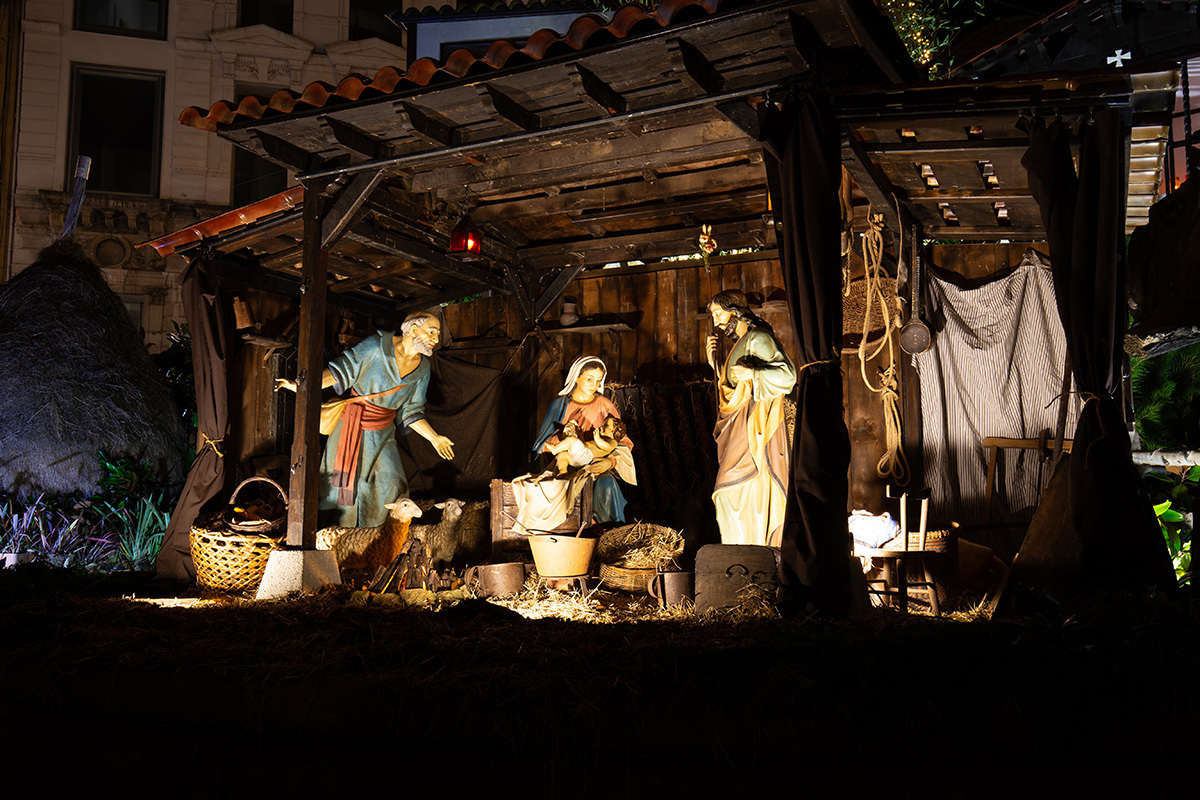
(LifeSiteNews) — As people around the world prepare to celebrate the birth of Christ on Christmas morning, our minds are drawn back to the first Christmas and the miraculous story of Jesus’ birth in a stable. As magical as it sounds, with the star of Bethlehem overhead and shepherds and Wise Men coming to adore the newborn, the first Christmas is more a story of Mary and Joseph’s total abandonment and trust in God rather than a perfect fairy tale. This theme begins at Christ’s conception, when Mary told the angel, “Be it done unto me according to God’s word.” While Mary understood the gravity of her “yes,” she could never have imagined what God had in store for her Child. Nevertheless, Mary risked everything when she told Joseph that she was expecting a baby. In much the same way, Joseph placed blind trust in God’s providence when he determined to care for Mary and her Child. Even Jesus’ birth required total trust in God. While most couples are able to plan their birth in advance, along with necessary medical and practical provisions, any plans made by the couple were discarded when they learned that they must travel to Bethlehem at the same time as Jesus was due to be born. Doubtless the couple worried that Jesus would be born along the way to Bethlehem and they would not make it to the city. Likewise, when they were told there was no room at the inn, they must have wondered if they would find shelter at all. However, even in the foreign town of Bethlehem, God provided for the Holy Family, leading them to the stable where Christ was born and laid to rest in the manger among the animals. Shortly after, Joseph again blindly followed the angel’s directions and fled with Mary and Jesus to Egypt to escape King Herod’s massacre of male children under two years old. Doubtless Joseph questioned how he would provide for his family in a pagan and foreign country, but nevertheless he trusted in God’s providence. In much the same way, Christians journey through life as through a dark tunnel which is illumined by the light of Christ. However, Christ does not light the entire path, but rather each step, forcing us to place our trust in His providence. Often we can feel discouraged when trying to navigate a world overcome by sin and intent on destroying the Christian family. However, we should take comfort in the fact that we do not have to know every step of our journey to heaven. Nor do we need to confront every evil in the world, but rather to follow Mary and Joseph’s example and carry out our duty of the moment. While it may seem significant at the time, its effect on the world could have eternal consequences. Mary and Joseph could not have imagined that their acceptance of Jesus would lead to His crucifixion and the redemption of humanity. Even more hidden was how Christ’s establishment of the Catholic Church would transform the world. Just as the Holy Family was unaware of God’s plan for them, likewise we must not expect to know every turn that our life will take, but rather place our trust in God. Indeed, perhaps if we could see everything that God has in store for us, we would find it overwhelming. However, God, in His knowledge, only gives us the trials which we can face in that moment. So as we navigate our way through the snares of the world, let us remember Mary and Joseph’s abandonment and trust in God which led to the birth of Jesus Christ and the salvation of the world.

(LifeSiteNews) — One night as I began composing this year’s Christmas message, I reflected upon the day, upon the past year with gratitude for God’s presence, yet my heart was heavy amid the ups and downs of a world in crisis. I felt like a man walking under a dark cloud of sorrow and oppression. As a Catholic journalist, this happens often while covering deeply troubling events in the world and the Church.   The 11th movement in Part One of George Frideric Handel’s Messiah began running across my mind and I sang along: “The people walking in darkness have seen a great light; on those living in the land of deep darkness a light has dawned” (Isaiah 9:2).  At that moment I knew what I would write about this Christmas: Christmas itself, where we worship the Lord for the gift too marvelous for words. This year I share with you my Christmas meditation and pray that it blesses you. The mystery of the Incarnation The Incarnation is a mystery. Mystery, in the Church, does not mean a conundrum to be solved nor an impenetrable enigma.  “Mystery” is the term the Church uses to designate the depths of God’s heart in who He is and how He saves us. We apprehend these truths through revelation as the Holy Spirit enlightens us through grace.  St. Thomas Aquinas writes that everything Christ did in His life is for our instruction, revealed through “the mysteries” of His life: His coming, His earthly life, His departure, and His impending return (Summa Theologica Part III, Question 34).  The mystery of the Incarnation is that the Word of God, who contains the whole of the Father’s Wisdom, assumed human flesh as the Son of God, revealing in space and time the Image of God in all of His splendor. The humility of the Incarnation In the Incarnation we see Christ’s humanity in light of His divinity. I am awed by God’s love in this wondrous manifestation of His humility. “The Son of God was made the Son of Man, making the sons of men sons of God” (St. John Chrysostom, Homily 11).  Gregory of Nazianzen writes of this meekness through contrasting Christ’s divinity with His humanity. Jesus Christ was: miraculously begotten of God in a virgin, yet born of a woman; recognized by John the Baptist in Elizabeth’s womb while the Savior was still in Mary’s womb; cast off His burial cloth at His resurrection yet was wrapped in swaddling clothes in the manger; was glorified and exalted by angels even as He lay in the manger; came from David’s royal house as the fairest of all – later transfigured bright as lightning, more luminous than the sun – but came as an infant with no beauty or majesty to attract us to Him, nothing in His appearance to make us desire Him (Gregory of Nazianzen, Oration 29:20; see Isaiah 53:2). Jesus the Light As this meditation filled my heart, I walked outside and gazed at the winter sky. This time of year the moon shines brightly, but one star shines brighter than others.  I realized that this moon is the same moon that was shining in that night of nights when the light of God appeared.  On that night certain men were drawn to the scene through God’s grace, for “no one comes to me unless the Father draws him” (John 6:44). Faith in the prophets’ promises drew their hearts to that sight as they joined the Virgin’s lullaby.  Wise men came to seek the wisest of all in the child who imaged Wisdom Himself.  Shepherds sought the shepherd of their souls. They worshipped this child laid on hay in a feeding trough who would one day feed their souls as the Bread of Life. They worshipped and gave thanks to this hope of all mankind. The light shines in the darkness and the darkness will not overcome it The moon that shone through the darkness of my sight and my soul is the same moon that shined on the Incarnation. It stands as a reminder that the Savior will return in His glory.  Yes, the Light of God shines upon this world. And tonight’s chance to hear Him is the same chance that was given on that first night of the New Creation.  At His return, His throne will shine for all to see: Jesus the Light has come!  Every movement of God toward man is one of love emanating from He who is love. For God so loved the world that He gave His only begotten Son that we might have eternal life. It is not words that come to us; God Himself comes to us in His fullness.  Wisdom filled Mary’s soul through her “yes,” and the Light of the World issued forth.  In this same way, the Light of the World issues forth from us when we love the Lord and proclaim His name, His presence within us effulgent and splendorous. Christ’s light has destroyed the night of darkness. The profound mystery of the Incarnation transcends space and time; Christ dwells within us.  When our hearts grow weary as we walk through the darkness, let us turn to the great light of Christ and wonder at His mercy and love. This is the faith we proclaim as we move toward our end desire, glorification in heaven where we worship the King of Kings, Christ Jesus our Lord.

(LifeSiteNews) — What concrete impact on the human experience did the Incarnation of the Son of God have on humanity? We may sometimes be tempted to believe that what is recorded in Sacred Scripture is a collection of nice stories to help us deal with the challenges of daily life in a healthier way, providing some level of psychological support or the like. But are these stories true, and how might we demonstrate a fundamental change in the world due to the birth of a helpless child in a Bethlehem cave who impacted history to the degree that He split it in two: the period of time prior to His birth, and the succeeding centuries after which we all date our calendars. Having previously worked as a high school teacher at a Catholic classical education academy, I had the honor and pleasure of sharing with my students foundational texts in Western civilization, and this included Aristotle’s Nicomachean Ethics. A pagan Greek philosopher who lived in the 4th century B.C., many of Aristotle’s texts were rediscovered in the 13th century and served as a foundation for the theology of the greatest Catholic theologian in history, St. Thomas Aquinas. In his Summa Theologiæ, the saint merely refers to Aristotle as “the Philosopher” and quotes him over 2,000 times. Eventually, these concepts of Greek wisdom became adopted as a tool for the Catholic Church in articulating the nature of man, the harmony between faith and reason, including a certain demonstrable knowledge of God based on reason, and the means of the human person achieving happiness through a virtuous life. The experience of pouring through these ancient texts with my students was one of amazement as we unpacked “the Philosopher’s” articulation of the nature of the human soul, of the virtues, particularly what we call the primary natural virtues of prudence, justice, fortitude, and temperance. We also focused on Aristotle’s description of how the human intellect and will train the passions and emotions to properly order them toward that which is good and virtuous as a means of building character within ourselves, leading to happiness. Of course, individuals do not always choose virtuous actions but can instead foster vices which lead to what Aristotle calls incontinent or vicious (self-indulgent) moral states of character. In reviewing these concepts with my students we marveled at how a pagan Greek philosopher, living centuries before Christ, was able to grasp and articulate with such precision so many aspects of truth which are continually confirmed as such by the life experience of the individual. As with St. Thomas Aquinas, repeatedly my students experienced the writings of Aristotle ringing true in their hearts and souls, until we reached one passage which seemed problematic. In Book III, Chapter 5 of the Nicomachean Ethics, the Philosopher is explaining how individuals have it in their power to make deliberate repeated choices as a means of building virtue, or, on the contrary, of forging a character of vice through repeated acts of injustice or incontinence. With regard to the latter scenario, where a person makes repeated deliberate choices building a vicious character which is driven by the lower passions and appetites, a point arrives, Aristotle teaches, where such a person can never change. Using the analogy of one throwing and releasing a stone, Aristotle explains that once the rock is released from the hand, it cannot be retrieved, and in like manner this individual’s deliberate acts of injustice or incontinence have forged a vicious character which will remain as a permanent burden: Just as when you have let a stone go it is too late to recover it; but yet it was in your power to throw it, since the moving principle was in you. So, too, to the unjust and to the self-indulgent man it was open at the beginning not to become men of this kind, and so they are unjust and self-indulgent voluntarily; but now that they have become so it is not possible for them not to be so. At this point I would ask my students if, like everything else we had studied from Aristotle, they agreed that this also was true. Of course, unanimously, they would reject this description saying it is not true as even the worst of us in humanity always have the possibility of changing for the better. Such change for the better is their clear experience and, thus, they concluded that Aristotle was obviously wrong on this point. I would then ask how he could possibly be precisely right on so much and wrong to such a great degree on this aspect of the human experience for which they unanimously felt absolutely certain. Eventually they arrived at the conclusion that Aristotle could only represent the state of humanity prior to the Incarnation of the Son of God in the Person of Jesus Christ, where now we may even take for granted His grace which may continually serve to transform our lives when we make even modest efforts to receive it. And thus, from this one ancient source we are given a glimpse of the state of humanity prior to the life, death, and resurrection of Jesus Christ the Son of God. For these reasons, the Catechism of the Catholic Church confirms that grace sufficient for all of humanity to not only be forgiven for their sins but transformed interiorly from a life of vice to one of virtue, in service to God, has been merited by the Passion of Jesus Christ. This grace ordinarily available in the sacraments of the Church, renews the interior man, purifies his heart of sin, heals and frees him from enslavement to sin, giving him the ability to follow the example of Christ. “Healing the wounds of sin, the Holy Spirit renews us interiorly through a spiritual transformation,” the Catechism reads. “He enlightens and strengthens us to live as ‘children of light’ through ‘all that is good and right and true’” (1695). So, this Christmas, when we may hear the Gospel of Matthew’s representation of the Nativity, and the angel’s command to St. Joseph in a dream to name the son born of his wife Mary “Jesus, for he will save his people from their sins” (1:21), we can perhaps better appreciate the enormous impact of this central event in world history and the infinite gifts it has bestowed upon each one of us.

(LifeSiteNews) — Perhaps the most beautiful thing about the scene of the Nativity is its expression of Christ’s desire to give Himself to us as divine food. I remember being astonished to learn, not until after Catholic school, that mangers are where animals fed, and that Christ intentionally chose this resting place to foreshadow the Eucharist.  Simply put, Christ was laid in a manger – a word derived from the Old French “mangier,” meaning “to eat” – to show that He wanted to be our own food in the Eucharist!  To emphasize that He wished to be our “daily bread” after becoming Incarnate, Christ chose to be born in Bethlehem, which means “House of Bread.”   I was already gravitating toward writing on this subject for Christmas, and the importance of receiving the Eucharist often, when a friend of mine wrote to me out of the blue pointing out that Jesus Christ told us in the Our Father to receive Holy Communion daily.  We all know that we pray “Give us this day our daily bread” in the Our Father. But, while people perhaps more often think of this as meaning, “give us what we need to physically survive” – which it does – it has a deeper and even more important meaning. “If bread = Eucharist, and it does, according to the missal, then Jesus told us to be daily communicants,” my friend pointed out. There it is – we could not have a more authoritative counsel to seek daily Holy Communion than from our Lord Himself!  We can receive this first as a consoling confirmation from our Lord of His immense love for us. A love so profound, He comes to us, totally vulnerable, under the appearance of a wafer of bread in order to be physically united with us, even daily, despite our sinfulness. This fact, once processed, becomes an anchor of our peace and joy. Jesus wants to be that close to me! He wants to be my closest friend and confidant. He wants to sustain me and nourish me, in every way. And He wants to bless me with abundant graces to strengthen my soul in virtue, to grow closer to Him every day, so that eventually my will and soul will be entirely united with Him.  If we are lacking in the desire to receive Him daily, it may be because we have let our worldly concerns overshadow God in our life. Just taking the action of going to Mass and receiving Our Lord, and in doing so overcoming an attachment to some other activity that we would otherwise be engaged in, can help scrub the barnacles of the world from our soul and reawaken our thirst for God. When we prioritize God and subordinate everything else to Him, our heart will begin to follow. Being united with Him in Holy Communion and spending time with Him thereafter becomes the greatest joy of our life, beyond words.  Now, some of you Latin Mass-goers may be thinking: “But I have no daily Latin Mass nearby.” You may not want to go to a Novus Ordo Mass, or you may think it is impermissible to go. If you have a choice between the two, it is clear that the Traditional Latin Mass is preferable, since it is more reverent to God, it gives emphatic witness to the Mass’ essence as the Sacrifice of Christ, it properly forms the dispositions of the soul, and it procures more graces. But is it true that we should avoid the Novus Ordo entirely even if we have no other options?  The powerful sign that this should not be our approach is the ongoing phenomenon of Eucharistic miracles, which overwhelmingly take place at Novus Ordo Masses. Our Lord is reminding us that this is still the Sacrifice of the Mass, that His Body, Blood, Soul, and Divinity is present, to be adored and received by those attending. It is true that belief in the Real Presence is much less prevalent at Novus Ordo Masses than at Latin Masses. Perhaps this is in part why Christ physically manifests the reality of His True Presence there. But we may also reasonably conclude that He would not manifest Himself in Eucharistic miracles at Novus Ordo Masses if they were in and of themselves an offense to God! Priests of the Society of St. Pius X (SSPX) – which I hold in the highest esteem and firmly believe preserves the fullness of the Catholic faith – will sometimes argue, as Father Paul Franks has, that the new Mass signals an “implicit denial of the Catholic faith.” This is a very slippery, and ultimately untenable claim. We may justifiably question the motives and intentions of those responsible for the new Mass, but the new Mass cannot be avoided when there are no TLM alternatives merely because of the intentions of its creators. If its creators intended to obscure the truths of the faith, obscure the Mass’ sacrificial nature, and decrease reverence toward God, then they are indeed guilty of an offense toward Him.  But the new Mass, in and of itself, must be assessed for what it is, objectively. And objectively speaking, it is the Sacrifice of the Mass, the Sacrifice of Christ to God the Father, which is of infinite precious value. And in fact, it explicitly gives witness to its nature as sacrifice. As an example of this: The Orate Fratres is virtually the same. In the new Mass, the priest prays. “Pray, brethren (brothers and sisters), that my sacrifice and yours may be acceptable to God, the almighty Father. And the faithful respond: “May the Lord accept the sacrifice at your hands for the praise and glory of His name, for our good and the good of all His holy Church.” The new Mass also, notably, does not inherently contain anything blasphemous, sacrilegious, or heretical (although a priest may make it so, and that is another question). That is, it is still a Catholic Mass which does not dishonor God in and of itself. I have not yet been able to find an SSPX priest who can point to any “red line” drawn in the Novus Ordo that renders it an offense to God. In other words, they cannot explain what precisely needs to be added or taken away from it in order to render it permissible to attend. This is not even to say the Novus Ordo should not be replaced by the Traditional Latin Mass entirely. I believe the Church urgently needs a full return to the TLM. This is only to say that a lack of traditional Masses in our area should not prevent us from attending the Holy Sacrifice of the Mass and receiving our Lord in the Eucharist.  There are ample stories of people, including those I know personally, who even overcame serious sins by attending the Novus Ordo Mass and receiving the Eucharist there as often as possible. As St. Ignatius of Loyola said: One of the most admirable effects of Holy Communion is to preserve the soul from sin, and to help those who fall through weakness to rise again. It is much more profitable, then, to approach this divine Sacrament with love, respect, and confidence, than to remain away through an excess of fear and scrupulosity. At the end of our life, when its true value will come into focus, we will regret ever having missed the chance to receive our Lord in the Eucharist. It is so important, Christ showed as soon as He was born that He wishes to be our daily Bread. So let’s seize every opportunity for Holy Communion we have from this moment forward. He awaits us with abundant treasures to bestow on our soul. 

(LifeSiteNews) — It has been just under two years since my sister died unexpectedly from a medical emergency. As you might imagine, life for our family looks slightly different now – especially around Christmastime. Her absence is felt most sharply during this season when her joy and bubbly personality shined through the most. My sister was what you might call a Christmas fanatic. By that, I mean she possessed an almost inexhaustible enthusiasm for the holidays, coupled with an unmatched generosity that defines it. Among other things, she couldn’t help herself when it came to buying gifts. Whether you were her sibling, cousin, neighbor, or an old friend she met in college 20 years ago, my sister had the uncanny ability to buy – or often times make – the perfect gift for you. Once you were her friend, she made sure to remind you of it. Christmas wasn’t complete for her unless she found some way – no matter how small – to make everyone she knew feel remembered. One of the most meaningful Christmas gifts she ever gave me was a handmade rosary. I did not know she was planning to make it, nor did I expect it. Just one month earlier, during our family’s Thanksgiving get together, she casually asked me what my two favorite colors were. I didn’t give it much thought and flippantly replied, “Orange and blue.” She just replied “okay, good to know” and changed the subject. I never thought she would do anything with that information. Lo and behold, on Christmas Day in 2024, she handed me a rosary that she had made herself, strung together with orange and blue beads. It was a simple, personal, and deeply intentional gift. My sister was the most creative person in our family, and her artistic spirit shone through in that gift. But more than creativity, that rosary reflected her generosity. She was always thinking of others, and was always attentive to how she could bring joy into someone else’s life. She knew I took my faith seriously and that it would mean a lot to me to receive something like that. My sister also loved to decorate. Aside from the candy canes and tinsel she put up around the house, the Christmas tree at my parents’ home always went up far too early and came down far too late in the new year thanks to her. She would spend hours arranging the lights, positioning ornaments, and ensuring everything felt just right. She even created ornaments herself for me and my family members. Each one was unique and made with love, which was a reflection of who she was. And then there were the movies. During Christmastime, my sister always had something playing on the television, for better or worse. Whether it was A Christmas Story, National Lampoon’s Christmas Vacation, It’s a Wonderful Life, or one of her other seasonal favorites, she made sure every year to watch all of them. She did this, mind you, curled up on the couch with a warm cup of coffee or hot chocolate topped off with whipped cream and sprinkles in her hand. A bowl of buttery popcorn was within arms length, too, as was the crackling of burning wood in the fireplace. This Christmas will be the second one without my sister. As time passes, different thoughts and emotions emerge. It’s easy given the daily grind of life and the natural inclination to “move on” and forget to pause and remember those who have gone before us. Too often, we neglect not only to think about our loved ones who have died, but also – and more importantly – to pray for them. Yet there are things I will never forget about my sister. Her love for Christmas, her generosity, her creativity, and her joy-filled outlook on life are some of the things my memory will never let go of. In remembering her, I am reminded that Christmas is not merely about decorations, gifts, or movies. It is about love freely given, joy shared without reservation, and the quiet ways we choose to care for and show our appreciation for one another. In that sense, my sister still teaches me something at Christmastime and perhaps always will. To learn more about my sister, click here.

VIENNA (LifeSiteNews) — Where I’m from, we believe in the Christ child, not some old bearded man invented by Coca Cola! You may hear this sentence (or a variation of it) from Austrian or German Catholics who are proud of their Christmas traditions and want to take a shot at American traditions. Well, as you may know, Coca-Cola did not actually invent the modern version of Santa Claus (more of that later), but it’s true that in Austria, Germany, and Switzerland, especially in the Catholic parts, we believe the Christkind (Christ child) is the one putting the presents under the Christmas tree. When I was growing up, it was typical for my dad to take my brother and me out for a short trip on the afternoon of December 24. In the meantime, my mother would prepare the Christmas tree and the presents, so that when we came back, my parents could tell us that the Christkind had been there. In Austria and other German-speaking countries, we receive our presents on the eve of Christmas. This is because, in the Catholic Church, feast days traditionally begin on the vigil, i.e., the evening preceding the feast day. The Christkind is a mythical figure that is usually invisible and hidden. However, when depicted, he is usually shown as an angel with a white dress and blonde, curly hair. Sure, Christ was not an angel, but you know how it goes, these traditions take funny turns sometimes. Ironically, the tradition of the Christkind dates back to none other than Martin Luther, who sought to counter the veneration of saints. Before the Protestant Reformation, the main day for presents was December 6, the feast of St. Nicholas. Naturally, Luther wanted to focus on Christ instead of the 4th-century saint, and therefore moved the main occasion for presents to Christmas. Today, we still celebrate St. Nicholas’ Day in Austria. The Nikolo (St. Nicholas) visits schools dressed in red robes and rocking a long white beard (much like Santa Claus). Children usually receive small gifts, chocolate, and nuts. But only if they were nice that year, otherwise, the Krampus will get them! (Just Google “Perchtenlauf”… but be warned, it’s very scary.) However, the main occasion for presents has been shifted to Christmas Eve, and ironically, the Christkind remains a tradition in Catholic regions to this day, while much of Protestant Europe and the U.S. adopted some version of Santa Claus or Father Christmas later on. To get back to where we started, the modern-day Santa Claus was not “invented” by Coca-Cola and actually does go back to St. Nicholas of Myra, although he underwent many transformations along the way. The Dutch brought their tradition of Sinterklaas (Santa Claus, loosely based on St. Nicholas) to New Amsterdam (now New York). In the 19th century, Santa Claus was transformed through popular literature into a secular figure, depicted as an old, round man with red robes and a white beard. The Coca-Cola commercials of the 1930s then made the depiction famous around the world. So, in a strange way, perhaps Santa Claus is a more Catholic figure than the Christkind? I’ll let you be the judge of that. Merry Christmas!

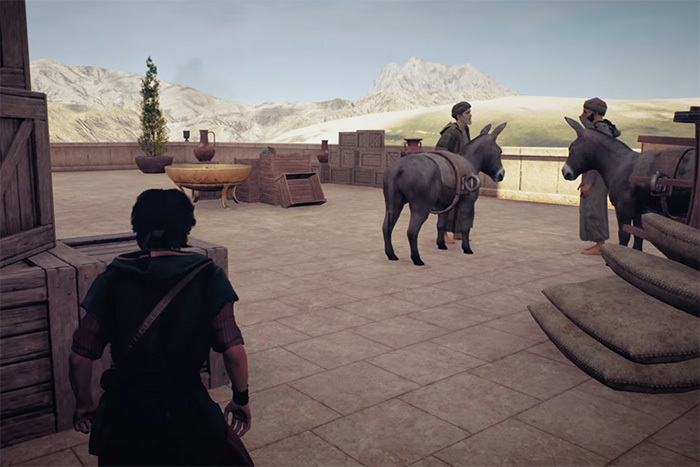
By Christian Daily InternationalThursday, December 25, 2025Gate ZeroVideo game publisher Templar Media has acquired Norway-based development studio Bible X, securing the future of “Gate Zero,” a forthcoming Bible-based, time-travel video game aimed at a global audience of younger players.Announced in a Dec. 17 press release, the acquisition brings Bible X — founded in 2020 under the nonprofit Christian media organization BCC Media — under the umbrella of the Atlanta-based publisher. Templar Media said the deal ensures long-term ownership of the "Gate Zero" intellectual property while providing expanded resources for development, marketing and distribution, including confirmed plans to launch the game on PlayStation 5 and Xbox Series X|S, with a particular focus on reaching Generations Z and Alpha. “'Gate Zero' is a historical, semi-open world action-adventure with sci-fi elements, set in a dystopian future where a ruthless global regime is the sole arbiter of truth,” according to Templar Media.“From the moment we saw 'Gate Zero,' we knew it had enormous potential as a high-quality game that was being created for a massive, yet underserved gaming audience,” added John Gibson, CEO and founder of Templar Media. “With this acquisition, we can now apply the full experience, support and resources of Templar Media into creating the incredible ‘Entertainment First’ experience that gamers worldwide have been asking for.”Read: Innovative Bible video game ‘Gate Zero’ raises $271K on Kickstarter in less than 79 hoursGibson, a games industry veteran, saw the acquisition as a cornerstone investment for the new publisher. The business deal complements the company’s “entertainment first” philosophy. “Templar Media gives us the stability and strategic support to fulfill our original vision and expand on it,” said Arve Solli, studio head of Bible X based in Moss, a city near Oslo, Norway. “Our goal from the very beginning of the project has been to take players on a fun and engaging journey back in time, allowing them to experience firsthand the events of the Bible during one of the most pivotal and significant moments in history. Now, we have even greater tools and resources to bring this vision to life in an even more powerful, immersive, and high-quality way. "As proven by the commercial success of TV and movies like 'The Chosen' and 'The King of Kings,' there’s a massive audience seeking top-tier content that explores their values. With 'Gate Zero,' we plan to meet that demand with a full-featured, story-rich video game that allows the player to explore the history and stories found in the Bible, in a grounded and historically accurate way."The development of Bible X is part of a wider rise in popularity and engagement by players with Christian and Gospel genres in the video games space, according to Templar Media.Solli has been working in Christian media and production since 2011. His involvement has seen him create content for children, and he has been working for that target audience for years as a producer and director, mostly for BCC Media.In late 2019, he began working on an interactive Bible study tool complementing an international youth camp planned for 5,000 young people, creating an imaginative virtual tour inside the temple in Jerusalem. However, the COVID-19 pandemic cancelled the project, and Solli and his team had to rethink the whole concept and came up with the idea of creating a video game.All the young people in the youth club were invited to play the prototype of the new video game. They were divided into 900 groups of four to seven people, and played the game together.“They were [virtually] ‘living’ in Jerusalem, celebrating Easter and learning all the stories, and interacting for two months before [physically] returning to the camp two years later,” Solli previously told Christian Daily International. The first prototype of the game was completed in 2022.  Solli said the project plan had two purposes. First, to present the prototype at a mass Christian youth camp in post-pandemic Norway, involving youngsters from around the world. They had a tradition of doing a Bible study project together. “The first prototype was meant to be that Bible study project,” Solli explained, “for then in groups but also interactive all over the world, competing inside the game and building up towards their youth camp in 2022. The other purpose was to confirm the assumption that a Christian Bible-based video game would be a really good idea.”The manner of gauging interest was achieved by analyzing the interaction between the youngsters and the game with developers: “studying those results, and we also went specifically to the U.S. and interviewed youth ministries in several different churches with differing denominations to gather insight and validate our reasons for making this game. "Our goal is that if you read the Bible, you can play the game. It’s basically playing the Bible so it’s for all denominations.”Further development and changes were made to enhance gameplay, storyline, and graphics. The game's quality subsequently improved. The first iteration was for groups playing, but an updated version caters to single players with an additional cellphone or tablet application facility to enable more players to join in the game.The game's storyline is 100% Bible-based, according to Solli, and participants play as “Max,” a teenager from the future, within a narrative created by the Bible X team. Solli compared the tone of "Gate Zero" to George Orwell’s dystopian novel, 1984. Set in 2072, the game's storyline says a governing power called “DeForce” controls every aspect of life to serve its own self-beliefs. As Max, the game player is not convinced and sets out to learn the truth of history, thanks to his grandmother Charlotte with her Bible. Cousin Hector, with a time scanner, helps and Max becomes something of a “cyber archaeologist,” according to Solli, who wants to “bring back the history of the world.” “They travel back in time to confirm and find evidence of that world, so they can rediscover the history of it, and by that people can learn about Jesus.”This article was originally published at Christian Daily International Christian Daily International provides biblical, factual and personal news, stories and perspectives from every region, focusing on religious freedom, holistic mission and other issues relevant for the global Church today.

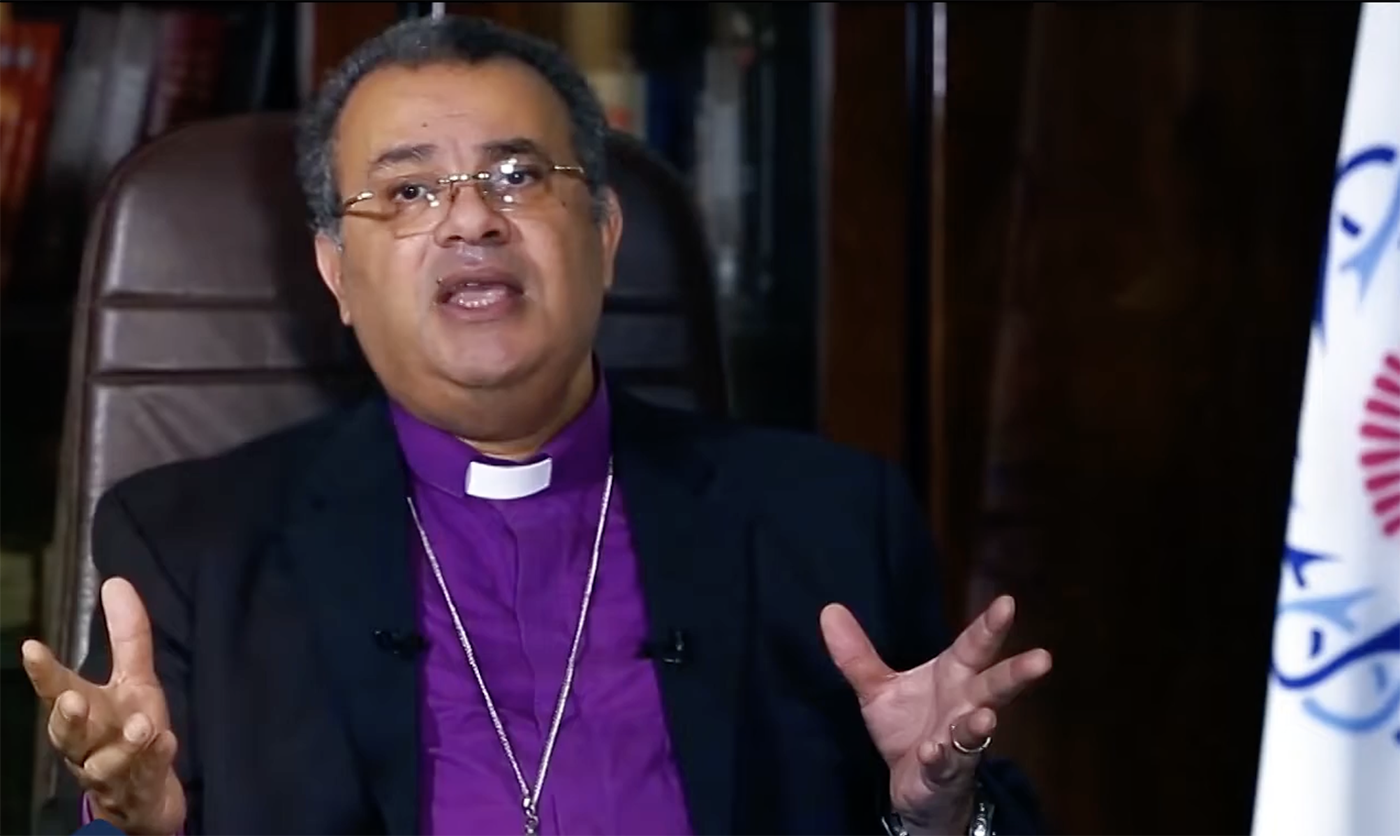
Rev. Dr. Andrea Zaki, head of the Evangelical Community in Egypt, said the country’s evangelical churches reject any association with Christian Zionism and affirm their commitment to justice and peace. (Screenshot from unrelated video.) Youtube Screenshot / Sat7 Egypt’s evangelical leadership has issued a public clarification distancing the country’s 1.5 million evangelicals from Christian Zionism, responding to a recent Egyptian television report that linked global evangelical support for Israel with churches in Egypt amid the war in Gaza, which entered a fragile ceasefire in October. Rev. Dr. Andrea Zaki, head of Egypt’s evangelical community, told Christian Daily International (CDI) that the country’s 19 evangelical denominations unanimously reject the use of the Bible to justify the war on Palestinians, stressing that Egyptian evangelicals do not share the politically motivated ideology often associated with Christian Zionism in the United States. Zaki acknowledged that worldwide, dispensationalism includes a branch known as Christian Zionism, which blends religion and politics. “It is important to emphasize that all evangelical denominations in Egypt, regardless of their theological orientation, do not adopt or believe in this branch of Christian Zionism,” he said. The statement followed a media report by Egyptian anchor Hind El-Dawy on Al-Qahera W Al-Nas, which detailed mass campaigns by Christian Zionists in the United States supporting Israel amid its war in Gaza. Commenting on the TV report, Zaki told CDI, “The report blurred the lines between evangelicals in Egypt and those in the United States, which prompted us to issue this clarification.” He added that the statement reflects a clear position of Egyptian evangelicals: “All denominations that adhere to either Covenantal or Dispensational Theology do not embrace the concept of Christian Zionism but rather reject it entirely.” Khalaf Barakat Fahmy, president of the Baptist Evangelical Assembly in Egypt, said the clarification was “necessary” to prevent political or ideological exploitation of the Evangelical Church’s name. “The statement was not a luxury or an unnecessary step, but rather a church and national necessity,” he said, noting the heightened sensitivity of public opinion in light of the escalation of the Palestinian-Israeli conflict over the past two years. Fahmy added that supporters viewed the statement as “a responsible and balanced stance that preserved the image of the Church and its moral and national witness,” while some critics saw it as “weak or unnecessary, arguing that the Evangelical Church in Egypt does not need to justify its patriotism, historically known for its support of the Egyptian people and the cause of justice and peace.” He emphasized that the statement wisely avoided theological debates, noting that Christian Zionism is fundamentally “a political movement” that emerged in a Western context, supporting the modern state of Israel through literal interpretations of biblical passages. “In Egypt, the Evangelical community encompasses a wide spectrum of denominations, which may differ in eschatological interpretations—such as the Millennial Kingdom or the nature of Christ’s return—but they all agree on the core of the Christian faith and on rejecting injustice, violence, and killing, whatever its source,” Fahmy said. Below is the full text of the statement issued in Cairo on Dec. 20, 2025: Statement from the Presidency of the Evangelical Community in Egypt The Evangelical community in Egypt, in all its denominations, under the leadership of Rev. Dr. Andrea Zaki, affirms that its ministry in Egypt is a national one, spanning nearly two centuries, through its churches and national institutions, in service to humanity and society. The Evangelical community also affirms its categorical rejection of any association between itself and what is called Christian Zionism. The Evangelical community reaffirms its commitment to defending the legitimate rights of all peoples and advocating for a just and lasting peace, founded on justice and the preservation of human dignity. We pray that peace will be achieved in Palestine, our region and the entire world. Rev. Dr. Andrea ZakiHead of the Evangelical Community in Egypt

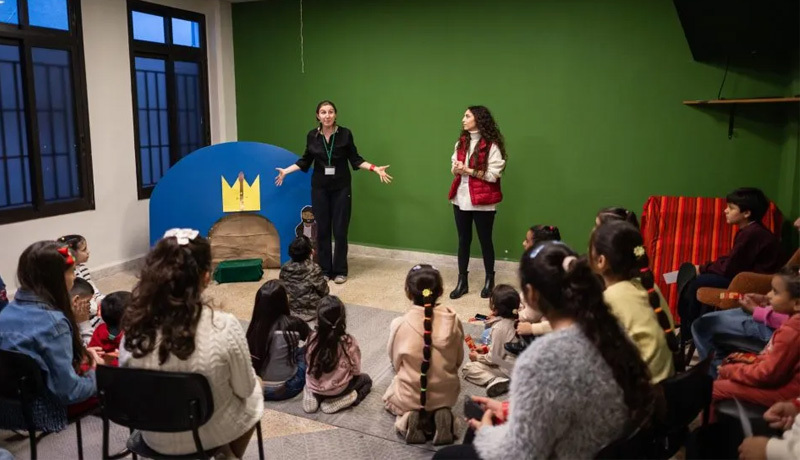
Children engaged in a Christmas story. Thimar LSESD (Supplied) This Christmas, partners of THIMAR LSESD around the Middle East are celebrating Christmas amid varying circumstances and challenges. Some are celebrating this holiday freely with church services, gift exchanges, carols, and family gatherings. Others are celebrating more quietly, festivities subdued by conflict and crises. As with previous Christmases, we are coming alongside our partners this year to help with Christmas celebrations in their communities. Through this initiative, our church discipleship ministry, Salt & Light, is supporting more than four dozen churches and ministries with Christmas events in Lebanon and Syria, providing them with gifts for thousands of children.   The true story of Christmas continues to bring hope and light to communities longing for peace with God and neighbor.   As we support our partners in celebrations, we also want to highlight the ways they are remembering the birth of Christ. Amid the unique challenges and circumstances they face, we see how the true story of Christmas continues to bring hope and light to communities longing for peace with God and neighbor.   Lebanon: another Christmas in another challenging year  The roads are buzzing and full of traffic in Beirut, Lebanon’s capital city, as people rush to buy gifts for Christmas. In Christian towns elsewhere in Lebanon, Christmas decorations draw visitors from across the country with their colorful lights and markets. The festivity gives some life and cheer to a country still on the edge of war.  But the Christmas scene is not the same everywhere.  In a village in Lebanon’s eastern Beqaa Valley where one of Thimar’s church partners is located, the signs of Christmas are easy to miss. There are few decorations amid ongoing hostilities and the remnants of last year’s full-scale war between Israel and Hezbollah. Recovery efforts have been slow in the area. Economic hardships persist, and many shops and streets feel lifeless.  Still, local believers are celebrating Christmas.  The village kicked off the holiday season with a special Christmas program for 180 Syrian students. Our partner in the village kicked off the holiday season with a special Christmas program for 180 Syrian students studying at the church’s informal education center, sharing with them the story of Jesus’ birth and gifts from Salt & Light. Later this month, the church will host a similar Christmas celebration for around 100 local children and those from nearby villages.   These events reflect the church’s longstanding commitment to its community. For more than 12 years, Thimar has come alongside it to meet the needs of people without discrimination. This Christmas, amid lingering hardship, the church continues its witness.  Churches bring Christmas joy to children in Syria  One year since Syria’s former regime was toppled, challenges and violence continue. But in a village in the country’s west where one of Thimar’s church partners serve, people are experiencing a more hopeful atmosphere. Streets are being decorated, and a Christmas village has been set up, drawing visitors from nearby areas with its exhibitions, markets, and programs.  Our church partner is preparing two Christmas events to bring together hundreds of children, teenagers, and young adults. At the heart of both gatherings is a Christmas play that shares the message of the gospel. Church members are also visiting homes throughout the village, singing carols, praying with families, and bringing the meaning of Christmas directly to people.  People are happy because someone is checking on them. “People are worried and afraid because of everything they hear and see on the news,” said Pastor Fadi*, the head pastor of our church partner. “But when we come to their homes, everyone opens their doors and watches. It’s so nice to see the sparkle in their eyes. People are happy because someone is checking on them, asking about them, caring for them, and remembering them.”  Iraq: Christmas amid relative stability  In Iraq’s capital, Baghdad, Christmas decorations and a festive atmosphere are visible in several parts of the city. Churches are preparing for their celebrations and anticipating the holiday season. Earlier in December, one of Thimar’s partner churches organized a children’s event, welcoming more than 190 children from different religious backgrounds along with their parents. The church also hosted a charity market for the surrounding community.  The birth of Christ is for the salvation of humanity. During the event, Pastor Boulos* shared a message centered on “Glory to God in the highest, peace on earth, and joy to people,” emphasizing that the birth of Christ is for the salvation of humanity, so that all people may experience peace, joy, and salvation. Families who attended expressed happiness and appreciation for the time spent together.  Reflecting on recent years, Pastor Boulos noted that the past few years have been better than those before, describing a sense of relative stability in the country. The church is also preparing to spend New Year’s Eve together, welcoming the new year in prayer as a congregation, and continues regular home group visits where the pastor encourages members and prays with them.  “At that time, when Jesus was born, humanity was experiencing great pain, and God incarnated and created hope for a new change. This is the hope we hold onto today. With the relative stability in Iraq, we look forward to a better tomorrow, by the grace of Christ,” Pastor Boulos said.  Sudan: celebrating Christmas during war  Elsewhere in the region, our partners are celebrating Christmas in more restrictive circumstances. Christmas is being celebrated under the weight of ongoing war and fear.  Among Sudanese believers, Christmas is being celebrated under the weight of ongoing war and fear. In the war-torn capital of Khartoum, a Sudanese alumni of Thimar’s Arab Baptist Theological Seminary (ABTS) notes that programs at the church he pastors are modest this year.  The church will host various events and programs throughout Christmas week, including children’s events, carols, prayers, and biblical games. But public celebrations are limited, the pastor said. Christmas marches and decorations, once part of the season before the war, are no longer possible. Random gunfire and the presence of extremist groups have created an atmosphere of fear.  “This year is different from last year,” Pastor Youssef* shared. “Last Christmas was extremely hard. Any gathering could be attacked. This year, there is slightly more space to gather, but the fear is still there.”  Amid challenging circumstances, the meaning of Christmas resonates more deeply with Youssef.  When we reflect on the Christmas story, we see both pain and hope. “When we reflect on the Christmas story, we see both pain and hope,” Youssef said. “Jesus is the Prince of Peace. In the middle of our challenges, the story of his birth gives us a glimpse of hope and joy.”  Yemen: believers gather for quiet Christmas celebrations  For believers in Yemen, Christmas celebrations happen within tight limits.   “Society rejects public Christmas ceremonies and celebrations,” said Saleh*, an ABTS alumni. “Some people post on social media that it is forbidden to greet someone for Christmas or even to post about it.”   Believers in Yemen celebrate Christmas privately with their families at home, often in small groups of four or five households. Other families step outside the city to sit in nature and enjoy the day. Whether at home our outside, it is a time to rest and remember the true joy of Christmas.   Christian celebration is about sacrifice and giving. “Christian celebration is about sacrifice and giving,” Saleh said. “It gives a glimmer of hope to society, letting them see a different color of Christmas, a new opportunity for peace, something they are already deprived of.”   Despite all the hardship engulfing Yemen, Saleh remains hopeful. He believes God is at work in Yemen in ways that often go unseen.   “God is reaching people in Yemen,” he said. “More than you can imagine, with or without us.”  His prayer this Christmas is that the Lord will protect churches and their congregations as they persevere in their faith amid the challenges they face.   “Christ is powerful,” Saleh said. “This is His church, and He will not abandon it. He is responsible for protecting it, and it will always exist.”  *Pseudonyms Originally published by Thimar LSESD. Republished with permission. Ghinwa Akiki joined Thimar LSESD in April 2023 as a communications coordinator. With her profound love for writing, she discovered a platform to nurture her literary passion and communication skills. At Thimar LSESD, Ghinwa engages in various facets of communication, allowing her to grow and refine her writing abilities across different domains. Ghinwa pursued her BA in Arts in Modern Languages and Translation at the Holy Spirit University of Kaslik (USEK). Her early career in education began at Beirut Baptist School, where she gained rich experience working with students. Ghinwa is a member of City Bible Church in Beirut, where she is actively involved in children’s ministry and singing. Thimar LSESD is a Lebanese nonprofit organization (NGO) that seeks to strengthen the witness of the Church in the Arab World through inclusive education, community development, and church discipleship. Thimar works alongside local schools, ministries, and churches throughout the Arab World. Through these relationships, we see God at work, even in times of war and crisis. Come share in His miraculous, life-giving work of transforming communities and changing lives.

By Samantha Kamman, Christian Post Reporter Thursday, December 25, 2025The Holy Bible. | artplus/iStockOne of the most-studied Bible verses of the year is from 2 Timothy in the New Testament, according to an analysis of millions of Bible study sessions that tracked how believers worldwide are engaging with Scripture. On Monday, the Bible study platform Logos released Logos Chronicled, a new report aggregating 76 million Bible study sessions from 2025. The report provided information about trends among 4 million people across 164 countries and 35 territories, including Brazil, Germany, Mexico, South Korea and Singapore. “These findings confirm what we’ve always believed: People are hungry for more than surface-level Bible reading,” Chris Migura, president of Logos, said in a statement provided to The Christian Post. “They want tools that help them read Scripture in depth — with the help of the Bible’s original languages, centuries of theological insight, and the ability to trace themes across the entire canon. That’s exactly what Logos provides,” Migura added.According to the report, the top Bible verse of the year was 2 Timothy 3:16, which states, “All Scripture is God-breathed and is useful for teaching, rebuking, correcting and training in righteousness.” The report suggested that this means most users of Logos’ platform began their Bible studies by affirming that Scripture is divinely inspired and not derived from human consensus. As for the most-studied book, Matthew claimed the top spot, with John and Luke also appearing in the top five, according to Logos’ report. Another recurring pattern highlighted in the report is that the most-searched Greek term among users was “Logos,” which can mean “word,” “reason” or “message.” Among the most preferred Bible translations, the Nestle-Aland 28: Novum Testamentum Graece — the standard and globally preeminent critical edition of the Greek New Testament — ranked 10th in most opens. The trend led the report to conclude that most Logos platform users were committed to engaging with Scripture in its original languages. Reina Valera Revisada (1960), a Spanish translation of the Bible, ranked seventh on the list of most-opened Bible translations, which Logos cited as potential evidence of a growing Spanish-speaking user base.The report also noted that users appeared to seek the Lord, with “God” among the most-searched terms, followed by “Jesus” and “Spirit.” The word “Dios,” a Spanish word for “God,” ranked sixth in the list of most-searched terms. “We at Logos are building technology to increase biblical literacy and accessibility for every Christian around the world,” Migura added. “Our vision is as far-reaching as the Great Commission, and we know it will take continued effort. Still, we’re overjoyed to see the progress we’ve made in equipping believers everywhere to go deeper in light of the Bible.”A separate study released earlier this year, known as the "State of the Church" initiative, which assessed people's Bible-reading habits, concluded that more Americans are reading the Bible. The initiative, a collaboration of Barna Group and Gloo, collected data from 12,116 online interviews conducted between January and October 2025. Researchers found that approximately 50% of self-identified Christians report reading the Bible weekly, the highest level of Bible reading among Christians in more than a decade.While women have traditionally been more likely to read the Bible weekly, the latest data show that younger men are leading younger women in this practice. Weekly Bible reading rates were 54% for Gen Z men and 57% for millennial men, compared to 46% for Gen Z women and 43% for millennial women.Despite more Americans reporting consistent Bible reading, fewer maintain that the Bible is 100% accurate, with only 36% of Americans believing that the Bible is 100% accurate. Only 44% of self-identified Christians strongly affirmed the accuracy of the Bible.

By Christian TodayThursday, December 25, 2025Getty ImagesWhen we think of Christmas, the Nativity scene usually comes to mind. And most of us can picture the scene instantly — Mary and Joseph, a manger, shepherds, angels and a bright star overhead. Maybe you even played one of the characters as a child. It’s a story we know so well that we sometimes overlook the depth, beauty and unexpected details woven into it.Yet the birth of Jesus is full of quiet surprises. Layered beneath the familiar narrative are cultural, historical and theological details that reveal just how intentional God was in sending His Son into the world. Here are seven often-missed details in the Nativity story — each one adding new richness to our understanding of Christmas.Page 2 By Christian TodayThursday, December 25, 20251. The first Christmas wasn't silent or calmWe all know the beloved carol “Silent Night.” It paints a serene picture of Jesus’ birth — but the reality was far messier. Mary gave birth during a census in a crowded town, likely surrounded by noise, smells and feeling exhausted (Luke 2:1-7). It was a scene marked by vulnerability, scarcity, and yet remarkable faith (Luke 1:38; Matthew 1:24). Jesus’ humble entrance into the world foreshadowed the shape of His life and, ultimately, His sacrificial death on the cross (2 Corinthians 8:9; Philippians 2:6-8; Luke 9:58). More than that, it reveals the way God so often chooses to meet us — not in polished perfection, but right in the middle of our ordinary, chaotic lives.

(LifeSiteNews) — Hello my friends, I’m John-Henry Westen, co-founder and CEO of LifeSiteNews. From all of us here at LifeSiteNews and Sign of the Cross Media, I wish you a happy and holy Christmas. What a year it has been. So many ups and downs. So much has happened that it can be hard to take it all in. There is so much confusion and uncertainty in the world — and even in the Church. At times, the forces arrayed against Jesus Christ and His Truth seem insurmountable. The faithful remnant who refuse to be silent in defense of Christ and His Truth often find themselves unwelcome — not only in the halls of power in Washington or Ottawa, but even in the Vatican and many cathedrals. Those who strive for holiness are often misunderstood and shunned — sometimes by other good people — through misunderstandings, false rumors, or fear. It’s hard to know who to trust any more, with lies and falsehoods abounding. It seems the hearts of many have grown cold. Does that sound familiar? It should. These were the conditions before the Messiah came the first time — when many of the religious leaders who were called to recognize Him did not. Instead, it was simple shepherds and wise men from afar who saw reality much more clearly. Even the holy Saint Joseph, in his distress, considered quietly putting Mary away when he discovered she was with child — until the angel of the Lord intervened. They were turned away from every inn, from every place of shelter, even as Our Lady was about to give birth — because hearts had grown cold… cold enough to turn away a mother about to give birth! They found refuge in a poor and lowly stable to give birth to the Savior of the world. But what glory came. Angels announced His birth to the shepherds, their song filled the night air. The Holy Family and the poor little ones rejoiced in their poverty, in their littleness, because they had the only real Treasure on earth – the Pearl of great price was before them, with them, in them, as He is in us. They could see and touch the King of Kings – God Almighty – the whole goal and purpose of their lives. And we can still do that today at every Mass – we can have Jesus and touch Him and hold Him. But at this present time, like never before, we can relate to the coming of the Babe of Bethlehem. Shunned by the Church and by the world for fidelity to Christ and His Truth we are a small remnant, but it is beautiful and even joyful to see the baby Jesus reflected in one another, to see Him alive in those who believe, in those who despite the attacks and the shunning refuse to be silent, refuse to accept the lies, refuse to shake their beliefs about life, about family and most importantly about the one true faith. We see you faithful and holy ones who pray and support this mission. We see in your gifts, your prayers and your comments the love and the warmth of Jesus Christ – as powerful and alive today as ever, in fact the darkness of our times makes His presence in you shine all the more brightly. I can’t tell you the joy it gives me to see you – to see Him in you – to recognize Him so clearly shining from you. You are a beacon of truth in a very dark world, you support this work to shine the light of His truth for everyone to see. Pray with us that many will accept, believe and live His Truth. Thank you with all my heart. And from all of us here at LifeSiteNews and Sign of the Cross Media, have a happy and holy Christmas, and may the New Year bring us even closer to Our Savior.

(LifeSiteNews) — It is now time to offer the Great Sacrifice, and to call down our Emmanuel from heaven: He alone can fully pay the debt of gratitude which mankind owes to the Eternal Father. He will intercede for us on the altar, as He did in His crib. We will approach Him with love, and He will give Himself to us. But such is the greatness of today’s mystery, that the Church is not satisfied with only once offering up the Holy Sacrifice. The long-expected and precious gift deserves an unusual welcome. God the Father has given His Son to us; and it is by the operation of the Holy Ghost that the grand Portent is produced: let there be, then, to the ever Blessed Three, the homage of a triple sacrifice! Besides: this Jesus who is born tonight is born thrice. He is born of the Blessed Virgin in the stable of Bethlehem; He is born by grace in the hearts of the shepherds who are the first fruits of the Christian Church; and He is born eternally from the Bosom of the Father in the brightness of the saints – to this triple Birth, therefore, let there be the homage of a triple sacrifice! The first Mass honors the Birth according to the flesh which, like the other two, is an effusion of the Divine Light. The hour is come: the people that walked in darkness, have seen a great Light; Light is risen to them that dwelt in the region of the shadow of death. (Isaiah 9:2) Outside the holy place, where we are now assembled, there is dark night: material night, caused by the absence of the sun; spiritual night, by reason of the sins of men, who either sleep in the forgetfulness of God, or wake to the commission of crime. At Bethlehem, round the Stable, and in the city, all is deep in darkness; and the inhabitants, who would not find room for the Divine Babe, are sleeping heavily: will they waken when the angels begin to sing? Midnight comes. The Holy Virgin has been longing for this happy moment. Her heart is suddenly overwhelmed with a delight, which is new even to Her. She falls into an ecstasy of love. As her Child will one day, in His almighty power, rise through the unmoved barrier of his sepulcher, so now, as a sunbeam gleaming through purest crystal, He is born, and lies on the ground before her. With arms outstretched to embrace her, and smiling upon her – this is her first sight of her Son, who is Son also of the Eternal Father! She adores, takes Him into her arms, presses Him to her heart, swaths His infant limbs, and lays Him down in the manger. Her faithful Joseph unites his adoration with hers, and so too do the angels of heaven, for the Royal Psalmist had sung this prophecy of their adoring Him on His entrance into the world. (Psalms 96:7, Hebrews 1:6) Heaven opens over this spot of earth, which men call a Stable; and from it there mount to the Throne of the Eternal Father the first prayer, the first tear, the first sob, of this his Son, our Jesus, who thus begins to prepare the world’s salvation. The eyes of the faithful are now riveted on the sanctuary, where the same Jesus is to be their Holy Sacrifice. The procession of the sacred ministers has entered the Holy of Holies, and the priest comes with them to the foot of the altar. The Choir is singing its opening canticle, the Introit; where we have our God Himself speaking to His Son, and saying: This Day, have I begotten thee. Let the Nations rage, if they will, and be impatient of the yoke of this Babe of Bethlehem; he shall subdue them and reign over them, for he is the Son of God. INTROIT (Psalms 2:1, 7) The Lord hath said unto me: Thou art my Son; this day have I begotten thee. Ps. Why have the nations raged, and the people devised vain things? ℣. Glory, etc. The Lord hath said, etc. The angelic Hymn is preceded by the Kyrie eleison; but these nine supplications for mercy over, it bursts forth with those sublime words: Gloria in excelsis Deo; et in terra pax hominibus bonæ voluntatis! Let us unite, heart and voice, in this the chant of the angels: Glory be to God! Peace be to men! These, our heavenly brethren, first intoned it, and they are at this moment round our altar as they were round the crib; they are singing our happiness. They are adoring that divine Justice, which gave not a Redeemer to their fallen fellow angels, yet to us gives the very Son of God to be our Redeemer. They are magnifying that deep humiliation of Him who made both angels and men, and who so lovingly favors the weaker of the two. They know that our gratitude needs help, and so they lend us their sweet voices to give thanks to Him who, by this mystery of love and magnificence, is enabling us poor mortals to one day fill up the thrones left vacant by the rebel Spirits. Oh! yes, let us all, men and angels, Church of earth and Church of heaven, let us sing: Glory be to God! and Peace to men! The more the Son of the Eternal Father has had to humble Himself in order to enrich and exalt us, the more fervently must we cry out our warmest praise, and hymn this Mystery of the Incarnation: Tu solus Sanctus! Tu solus Dominus! Tu solus altissimus, Jesu Christe! Thou only, O Jesus! art Holy! Thou only art Lord! Thou only art Most High! The Collect then follows, summing up all our prayers in one: COLLECT Let us pray. – O God, who hast enlightened this most sacred Night by the brightness of Him, who is the true Light: grant, we beseech thee, that we who have known the mysteries of this Light on earth, may likewise come to the enjoyment of it in heaven. Who liveth, etc. EPISTLE Lesson of the Epistle of St. Paul the Apostle to Titus 2:11-15 Dearly beloved, the grace of God our Savior hath appeared to all men; Instructing us, that, denying ungodliness and worldly desires, we should live soberly, and justly, and godly in this world, Looking for the blessed hope and coming of the glory of the great God and our Savior Jesus Christ, Who gave himself for us, that he might redeem us from all iniquity, and might cleanse to himself a people acceptable, a pursuer of good works. These things speak, and exhort, in Christ Jesus our Lord. This God our Savior hath at length appeared! and with such grace and mercy! He alone could deliver us from dead works, and restore us to life. At this very hour, he appeareth to all men, laid in his narrow crib, and fastly wrapped, as a babe, in swaddling clothes. Yea, here have we the Blessed One, whose visit we had so long hoped for! Let us purify our hearts that He may be pleased with us; for though he is the Infant Jesus, He is also, as the Apostle has just told us, the Great God and the Son of the Eternal Father, born from all eternity. Let us unite with the angels and the Church in this hymn to our Great God, Jesus of Bethlehem. GRADUAL (Psalms 109:1, 3) With thee is the principality in the day of thy strength; in the brightness of the Saints: from the womb, before the Day-star, I begot thee. ℣. The Lord said to my Lord: Sit thou at my right hand, until I make thine enemies my footstool. Alleluia, alleluia. ℣. The Lord hath said to me: Thou art my Son, this day have I begotten thee. Alleluia. GOSPEL Sequel of the holy Gospel according to St. Luke 2:1-14 At that time, there went out a decree from Caesar Augustus, that the whole world should be enrolled. This enrolling was first made by Cyrinus, the governor of Syria. And all went to be enrolled, every one into his own city. And Joseph also went up from Galilee, out of the city of Nazareth into Judea, to the city of David, which is called Bethlehem: because he was of the house and family of David, To be enrolled with Mary his espoused wife, who was with child. And it came to pass, that when they were there, her days were accomplished, that she should be delivered. And she brought forth her firstborn son, and wrapped him up in swaddling clothes, and laid him in a manger; because there was no room for them in the inn. And there were in the same country shepherds watching, and keeping the night watches over their flock. And behold an angel of the Lord stood by them, and the brightness of God shone round about them; and they feared with a great fear. And the angel said to them: Fear not; for, behold, I bring you good tidings of great joy, that shall be to all the people: For, this day, is born to you a Savior, who is Christ the Lord, in the city of David. And this shall be a sign unto you. You shall find the infant wrapped in swaddling clothes, and laid in a manger. And suddenly there was with the angel a multitude of the heavenly army, praising God, and saying: Glory to God in the highest; and on earth peace to men of good will. O Divine Infant! We too must needs join our voices with those of the angels and sing with them: Glory be to God! and Peace to men! We cannot restrain our tears at hearing this history of thy Birth. We have followed thee in thy journey from Nazareth to Bethlehem; we have kept close to Mary and Joseph on the whole journey; we have kept sleepless watch during this Holy Night, waiting thy coming. Praise be to thee, sweetest Jesus, for thy mercy! and love from all hearts, for thy tender love of us! Our eyes are riveted on that dear crib, for our salvation is there; and there we recognize thee as the Messias foretold in those sublime prophecies, which thy Spouse the Church has been repeating to us, in her solemn prayers of this night. Thou art the Mighty God, the Prince of Peace, the Spouse of our souls, our peace, our Savior, our Bread of Life. And now, what shall we offer thee? A good will? Ah! dear Lord! thou must form it within us; thou must increase it, if thou hast already given us; that thus, we may become thy brethren by grace, as we already are by the human nature thou hast assumed. But, O Incarnate Word! this Mystery of thy becoming man, works within us a still higher grace – it makes us, as thy apostle tells us, partakers of that divine nature (1 Peter 1:4) which is inseparable with thee in the midst of all thy humiliations. Thou hast made us less than the angels in the scale of creation; but in thy Incarnation, thou hast made us Heirs of God, and joint Heirs with thine own divine Self! (Romans 8:17) Never permit us, through our own weaknesses and sins to be degenerated from this wonderful gift, whereby thy Incarnation exalted us, and oh! dear Jesus, to what a height! After the Gospel, the Church triumphantly chants the glorious Symbol of our Faith, which tells, one by one, the mysteries of the Man-God. At the words: Et Incarnatus est de Spiritu Sancto ex Maria Virgine, et Homo factus est, profoundly adore the great God who assumed our human nature, and became like unto us, His poor creatures; let your adoration and love repay Him, if it were possible, for this His incomprehensible abasement. In each of today’s Masses, when the choir comes to these words in the Credo, the priest rises from the sedilia, and remains kneeling, in humble adoration, at the foot of the altar, while they are being sung. You must unite your adorations with these of the Church, which is represented by the celebrant. During the offering of the bread and wine, the Church tells us how the Birth of Jesus Christ filled heaven and earth with joy. In a few short moments, there will be on our altar, where we now see mere bread and wine, the body and blood of this same Jesus, our Emmanuel. OFFERTORY (Psalms 95:11, 13) Let the heavens rejoice, and the earth be glad, in the presence of the Lord, for that he is come. SECRET Receive, O Lord, the offerings we make to thee, on this present solemnity: that by thy grace, through the intercourse of these sacred mysteries, we may be conformable to Him, in whom our nature is united to thine. Who liveth, etc. The Preface then gives expression to the thanksgiving of the people, and finishes with the triple Sanctus to the God of Sabaoth. At the Elevation, when, in the midst of the mysterious silence, your Savior, the Incarnate Word, descends upon the altar, you must see, with the eye of your faith, the crib, and Jesus stretching out His hands to His Eternal Father, and looking upon you with extreme tenderness, and Mary adoring Him with a Mother’s love, and Joseph looking on and weeping with joy, and the holy angels lost in amazement at the mystery. You must give your heart to the New-Born Babe, that He may fill it with what He wishes to see there; nay, beg of Him to fill it with Himself, and make Himself its Master and its all. After the Communion, the Church – which has just been united to the Infant God by partaking of the sacred mysteries – once more celebrates the Eternal Generation of that Divine Word who was born from the Bosom of the Father before any creature existed, and who has appeared to the world this night, before the Day-Star has risen. COMMUNION In the brightness of the Saints, from the womb, before the day-star, I begot thee. The Church terminates this her first sacrifice, by praying for the grace of indissoluble union with the Savior, who is born to her. POSTCOMMUNION Grant, we beseech thee, O Lord our God, that we, who celebrate with joy the Birth of our Lord Jesus Christ, by partaking several times of these sacred mysteries, may, by a worthy conduct of life, come to be united with him. Who liveth, etc. The sacred night is passing quickly on; and will soon bring us to the Second Mass, which is to sanctify the hour of daybreak, or the Aurora. Every day in the year, the Church passes the hour before sunrise in prayer, for the rising of the sun is a beautiful figure of the mystery of Jesus’ coming to this earth, to give it light. This portion of the Divine Office is called Lauds, on account of its being wholly made up of praise and joy. On Christmas Day, however, she somewhat anticipates the usual hour, in order that she may begin, at the precise time of the Aurora, a more perfect and more divine Sacrifice of Praise – the Eucharistic Oblation, which satisfies all the obligations we owe to the Divine bounty. The Office of Lauds is celebrated with the same solemnity as that of Vespers; and altogether, the two Offices are much alike. Both of them tell us of the Divine Sun of Justice; Lauds celebrate his glorious rising, while Vespers – which are said as sunset, when the shades of evening are beginning to fall upon the earth – remind us how we must long for that eternal Day which shall have no night, and whose Lamp is the Lamb. (Revelation 21:23) Lauds are the morning, Vespers the evening, incense. The mysteries of the liturgical day begin with the first and end with the second. This text is taken from The Liturgical Year, authored by Dom Prosper Guéranger (1841-1875). LifeSiteNews is grateful to The Ecu-Men website for making this classic work easily available online.

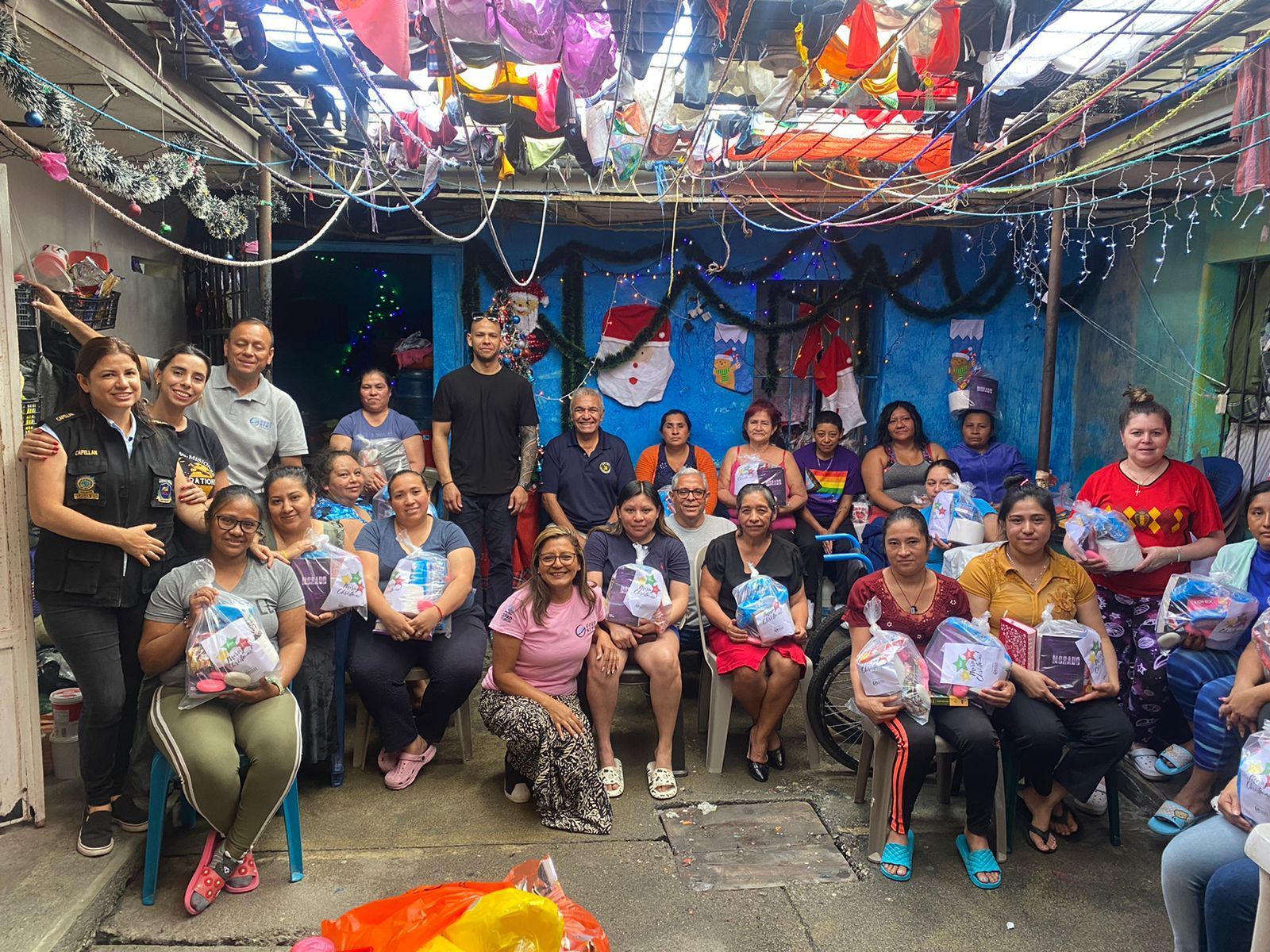
By CP StaffThursday, December 25, 2025The "Hope Pack & Presence" initiative aims to provide encouragement and share the love of Jesus during Christmas and year-round, reaching 170 correctional facilities in 20 U.S. states and 20 countries. | Courtesy Good News GlobalA Virginia-based ministry plans to deliver nearly 75,000 "Hope Packs" containing devotionals, hygiene items and the Gospel message to incarcerated people, correctional staff and inmates' families worldwide this year, expanding an effort to combat holiday isolation behind bars.Good News Global, founded in 1961, announced the growth of its "Hope Pack & Presence" initiative, which launched in 2021 with 50,000 packs. The program aims to provide encouragement and share the love of Jesus during Christmas and year-round, reaching 170 correctional facilities in 20 U.S. states and 20 countries. The initiative began when former inmate and chaplain Richard Van Arsdale contacted Willow Creek Community Church in suburban Chicago about its Hope Pack program, leading to an ongoing collaboration supported by churches and donors.Nearly 300 chaplains from the organization serve in facilities year-round, fostering relationships for spiritual growth and discipleship. Personal visits accompany the packs, which vary by region but typically include a Christmas bag, greeting card, 2026 calendar and a Gospel presentation."Hope Packs represents our greatest direct Gospel outreach to incarcerated people and those impacted by incarceration,” said Jon Evans, president of Good News Global. “We can put the Gospel message in the hands of receptive inmates this Christmas."In the U.S., most packs feature "Armor," a 200-page book with devotionals, poems, artwork and activities for those behind bars. International versions may contain Bibles, tracts or devotionals. Practical items like cookies, chips, socks, toothbrushes and toothpaste in the U.S., or staples such as rice, flour or sugar abroad are also provided. “We’re not just handing out a bag,” Evans said. “We’re delivering hope.”Inmates have praised the project’s impact. “The book has given me hope and peace to my heart,” wrote one inmate from Visalia, California, referencing the Armor resource. “I’ve learned from the activities and stories and feel the love of God from everyone that has helped with this book.”Virginia Gov. Glenn Youngkin also commended the ministry, saying, “Good News has decided to shine a light on a very simple, yet profound truth that there is hope and there is value in every single person on this planet.”The effort addresses the plight of a lonely Christmas for more than 11 million incarcerated individuals worldwide, who often face deepened loneliness amid limited family contact.Good News Global ministers to more than 400,000 incarcerated men, women and youth daily in over 300 facilities across the U.S. and 23 countries, partnering with corrections officials on the belief in every person's inherent worth.

Loading...
Loading...
Confirmation
Are you sure?
Cancel Continue