For the best experienceDownload the Mobile App

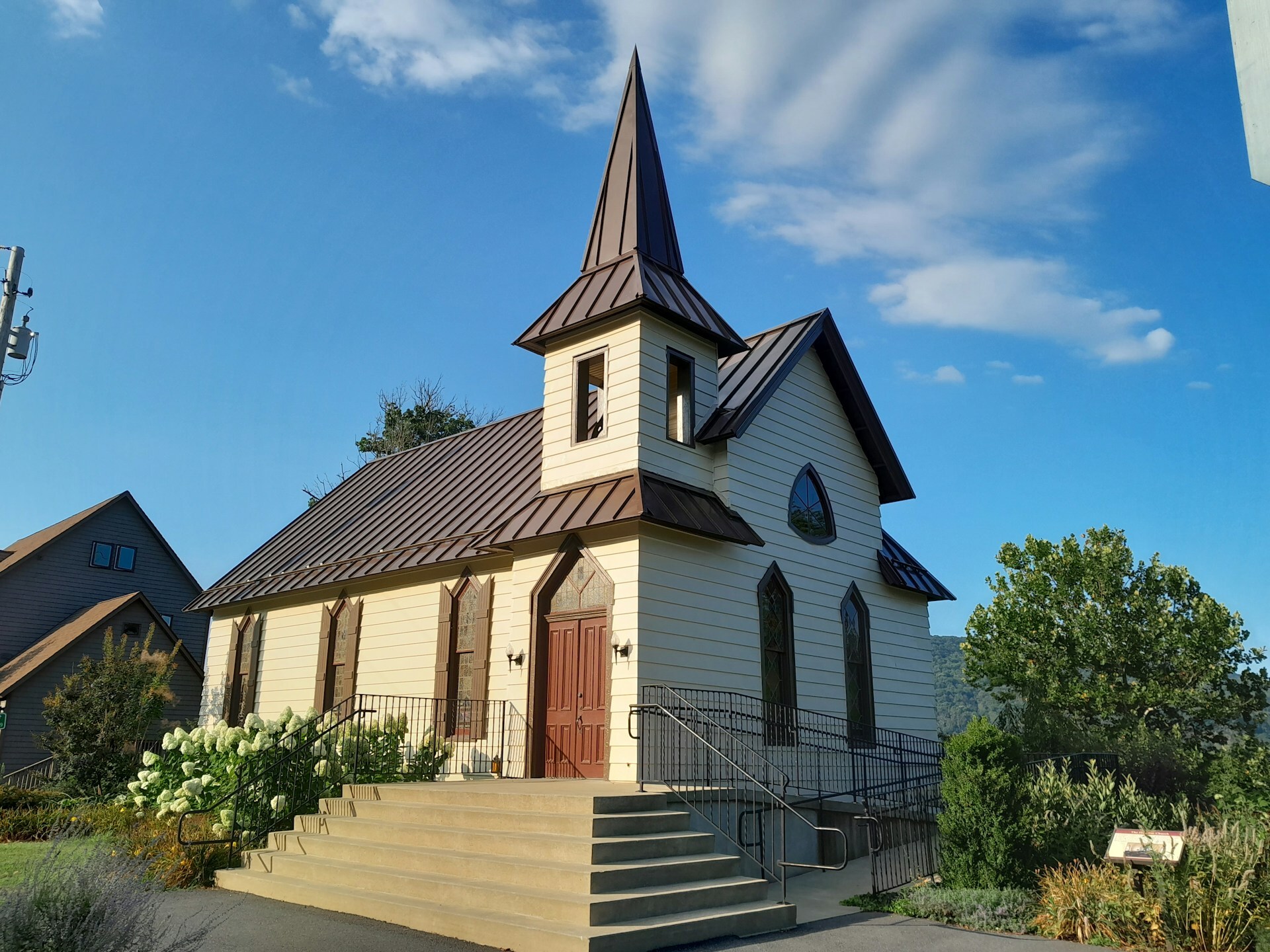
 Photo by Judith Chambers / Unsplash The Assemblies of God Theological Seminary has reached more than 1,200 churches and trained about 6,000 pastors and lay leaders in the first year of a nationwide initiative aimed at supporting rural congregations in the United States, according to a recent report by AG News. The effort, known as the Rural Church Ministry Partnership, is funded by a grant from Lilly Endowment Inc. and focuses on equipping churches in towns of 10,000 or fewer residents with resources, training and connections tailored to their context. The initiative has engaged congregations across 31 states in its first year. According to AG News, the partnership brings together denominational leaders, educational institutions and ministry organizations to develop training opportunities, internships and a centralized resource hub designed to address challenges commonly faced by rural pastors and churches. Keith Jones, director for the Rural Grant Partnership, said the initiative seeks to strengthen the role of churches within their communities. “AGTS wants to see healthy, vibrant churches equipped to be resource centers within their communities, providing an anchor of real hope and assistance,” Jones said. Partners in the initiative include the Assemblies of God USA, Rural Compassion, Trinity Bible College & Graduate School and Rural Advancement, along with 13 regional Assemblies of God network partners that help connect local churches with available resources. The partnership aims to reach 6,040 churches by the end of 2029. The first year’s engagement represents roughly 20% of that target, according to the report. Christopher L. Coble, vice president for religion at Lilly Endowment, said the initiative addresses gaps in support for rural congregations. “Rural and small-town congregations play critical roles in supporting the vitality of their local communities,” Coble said. “Yet many resources available to support congregations do not adequately address the particular challenges faced by churches in rural settings. “Our hope is that these grants will provide much-needed resources and support to rural and small-town churches to help them address their challenges and enhance and extend the many ways they serve their communities.” The update on rural ministry efforts comes as the Assemblies of God USA reports broader growth trends in recent decades. According to its 2024 Annual Church Ministries Report, average church worship attendance increased 6.2% compared to 2023. The number of adherents in the United States has more than doubled since 1975, rising from 1.2 million to more than 3 million. The denomination has also become more diverse. Churches identified as primarily ethnic minority or immigrant congregations grew from 2,260 in 1989 to 5,081 in 2024 and now account for about 40% of all Assemblies of God congregations in the United States.

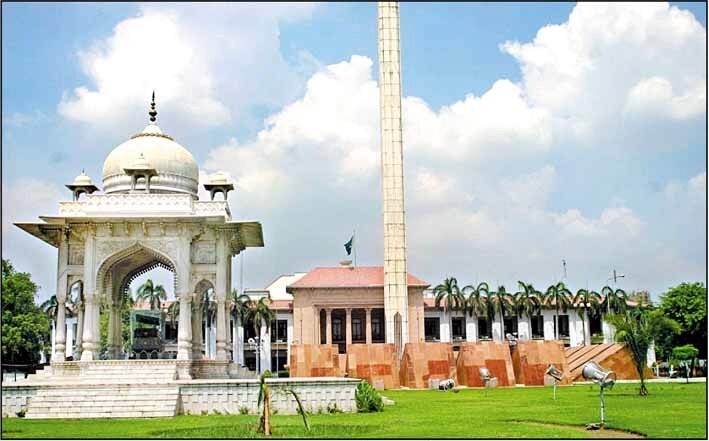
Punjab Assembly building in Lahore, Pakistan. Sunni Person, Creative Commons A Christian lawmaker on Tuesday (March 31) introduced a bill in the Punjab Assembly seeking to criminalize forced religious conversions with penalties of up to five years in prison, Falbous Christopher, chairman of the assembly’s Standing Committee on Minority Affairs, submitted the Punjab Protection of the Rights of Religious Minorities Bill 2026 in a renewed attempt to address a long-standing human rights challenge affecting Pakistan’s religious minorities, particularly Christian and Hindu women and underage girls. The bill aims to establish a comprehensive legal framework to curb forced conversions, forced marriages and systemic discrimination against minority communities. It comes amid heightened scrutiny following cases such as that of Maria Shahbaz, a 13-year-old Christian girl whose abduction and forced conversion/marriage sparked nationwide protests and renewed calls for stronger legal safeguards for vulnerable minority girls. Under the proposed legislation, anyone who “compels or attempts to compel” a person belonging to a religious minority to convert through threats, coercion or undue influence would face up to five years’ imprisonment and a fine. The bill clearly distinguishes between forced and voluntary conversions, excluding the latter from punishment. Christopher said the formal recognition of forced conversion as a specific crime could help address longstanding gaps in Pakistan’s legal framework, where such cases are often pursued under broader provisions that do not explicitly address religious coercion. “While legislation is essential, its real impact will depend on effective implementation, coordination among institutions and protection mechanisms for vulnerable individuals, especially women and girls,” Christopher told Christian Daily International-Morning Star News. Beyond criminal penalties, the bill grants courts expanded authority to intervene in cases involving forced marriages of religious minorities in the 96-percent Muslim country. Judges would be empowered to issue protection orders and conduct independent inquiries, ensuring that victims are not pressured into remaining in abusive or unlawful relationships. The proposed law stipulates that marriages involving minorities can only be declared void through court orders, aligning such decisions with existing marriage, child protection and guardianship laws. It also classifies offenses motivated by religious hatred as aggravated crimes, requiring courts to consider such motives during sentencing. Christopher said these provisions are intended to address recurring patterns seen in previous cases, where girls have struggled to access timely legal remedies or adequate protection from kidnappers. Systemic Discrimination The legislation extends beyond forced conversions to tackle broader structural discrimination faced by minority communities in Punjab, Pakistan’s most populous province and home to a significant Christian population. It proposes a prohibition on religious bias in employment, education, access to public services and entry to public spaces, while mandating state protection of minority places of worship and religious property. “No person shall damage, desecrate or unlawfully occupy any place of worship or religious property belonging to a religious minority,” the bill states. In addition, the proposed law calls for a review of educational curricula to remove material that promotes hatred, intolerance or discrimination, an issue frequently highlighted by rights groups as a key driver of societal prejudice. Christopher emphasized that legal reform must be accompanied by broader societal change. “We must also address the root causes of intolerance through education reform and community engagement to build a more inclusive and peaceful society,” he said. Introduction of the bill follows a series of controversial cases involving the alleged forced conversion of minority girls, particularly from Christian and Hindu communities. The case of Maria Shahbaz drew widespread attention after rights groups alleged that the Christian teenager had been abducted, forcibly converted to Islam and married to a Muslim man twice her age. Courts, including the Federal Constitutional Court, upheld the marriage, prompting outrage among the Christian community and activists who argued that questions of coercion and age determination were not adequately examined. Such cases have become emblematic of broader concerns about the vulnerability of minority women and girls, who advocacy groups say are often targeted due to socio-economic marginalization and weak legal protections. History of Opposition Efforts to enact laws against forced conversions in Pakistan have historically faced strong political and religious opposition. In 2021, a federal bill aimed at preventing forced conversions was effectively shelved following resistance from Islamist parties during the government of former prime minister Imran Khan. Critics argued that the proposed legislation could be misused or infringe upon religious freedoms, while supporters maintained it was necessary to protect vulnerable minorities. The Council of Islamic Ideology, which advises the government on religious matters, and various religious groups raised objections to provisions such as minimum age requirements for conversion and mandatory judicial oversight, contributing to the bill’s withdrawal before it could be passed. The Punjab bill will now be referred to the Standing Committee on Minority Affairs for review and deliberation. If approved, it will be tabled in the provincial assembly for debate and a vote. If enacted, the legislation would represent one of the most comprehensive provincial frameworks aimed at protecting religious minorities in Pakistan addressing not only forced conversions but also discrimination, hate-motivated offenses and the protection of religious sites. Rights advocates, however, caution that legislation alone will not be sufficient to bring meaningful change. “The real test will be implementation,” said prominent Christian attorney Lazar Allah Rakha, noting that police inaction, social pressures and prolonged legal proceedings have historically undermined protections for minority victims. International advocacy groups continue to highlight the challenges faced by religious minorities in Pakistan. In its 2026 World Watch List, Open Doors ranked Pakistan eighth among the 50 countries where it is most difficult to practice Christianity, underscoring the urgency of legal and institutional reforms.

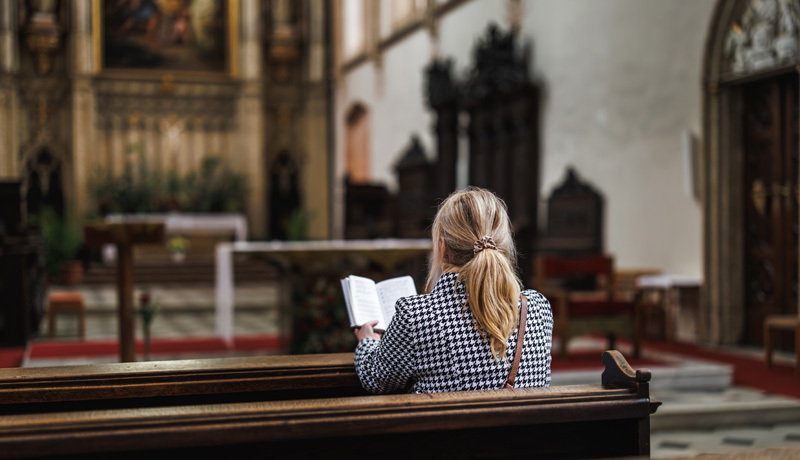
“The Quiet Revival,” a report by the British Bible Society, claimed that church attendance in England and Wales was surging, especially among young men aged 18 to 24, where monthly attendance appeared to have quadrupled from 4% in 2018 to 16% in 2024. That report has now been withdrawn. Zbynek Pospisil/Getty Images Last week, the British Bible Society quietly withdrew one of the most celebrated religious data stories of recent years. Its April 2025 report, “The Quiet Revival,” had claimed that church attendance in England and Wales was surging, especially among young men aged 18 to 24, where monthly attendance appeared to have quadrupled from 4% in 2018 to 16% in 2024. The story spread rapidly, was embraced by evangelical commentators and media outlets worldwide, and was treated as a counternarrative to the long-documented decline of Christianity in the West. It was too good to be true. It was too good to be true. And it was. YouGov, which conducted the surveys, has now admitted that the 2024 data sample contained fraudulent responses and that key anti-fraud quality controls had not been activated. YouGov’s CEO issued a public apology and accepted full responsibility. The Bible Society pulled the report. The “quiet revival” never happened, at least not in the way the data claimed. This episode is instructive on several levels. But its lessons apply more broadly than to Christians alone. The methodology problem nobody wanted to see The first lesson is about method. The Quiet Revival relied on opt-in online polling, a technique long known to be vulnerable to panel contamination, particularly when studying hard-to-reach or socially desirable groups. Pew Research Center raised concerns about the methodology almost immediately after the report was published. Humanists UK and leading demographers, including UCL’s David Voas, called attention to the implausibility of the findings months before the retraction. Objective records from the Church of England and the Catholic Church showed no corresponding growth. Objective records from the Church of England and the Catholic Church showed no corresponding growth. And yet for nearly a year, the Bible Society vigorously defended the report, repeatedly seeking and receiving assurances from YouGov. The problem was not just that the method was flawed. The problem was that very few people asked hard questions about it, because the conclusion was so welcome. Confirmation bias runs in both directions It confirmed what many Christians hoped was true. This brings us to the second and more uncomfortable lesson. The quiet revival narrative spread fast not because the evidence was strong, but because it confirmed what many Christians hoped was true. The story resonated emotionally. It was shared, celebrated, and cited in sermons and strategy documents across denominations. Some church leaders used it to push back against what they saw as the relentlessly negative narrative of secularization research. When data confirms our hopes, we treat it as evidence; when it challenges them, we question the method. Even now, after the retraction, the Bible Society’s CEO has insisted there is “other evidence” that more people are finding faith, and that the wider story of spiritual renewal remains valid. That may or may not be true. But it illustrates a recurring pattern: when data confirms our hopes, we treat it as evidence; when it challenges them, we question the method. The problem, however, is not uniquely Christian. Supporters of secularization theory are equally susceptible. In August 2025, a study published in Nature Communications by Stolz, de Graaf, Hackett, and colleagues proposed a three-stage model of religious decline, tested across 111 countries: first participation declines, then the personal importance of religion, and finally religious belonging. The study received enormous attention, covered widely by outlets including Religion News Service and Pew Research Center, and was widely read as a definitive vindication of classic secularization theory. But the authors themselves urge caution, noting that “we recommend caution in interpreting longitudinal claims, due to limited data.” More importantly, the model has a structural problem. When a theory can absorb any counterevidence by reclassifying it as a temporary deviation, it risks becoming unfalsifiable. It treats every counterexample, whether Eastern Europe, Israel, or the Pentecostal and Islamic revivals, as countries either at an early stage of the transition or as exceptions requiring further investigation. When a theory can absorb any counterevidence by reclassifying it as a temporary deviation, it risks becoming unfalsifiable. That is not a strength of the model. It is a warning sign. Steve Bruce and Tony Glendinning made a related move in their 2023 article in the journal Religions, titled “Secularization Vindicated,” arguing that the accumulated evidence now decisively supports the secularization thesis for the West. That may well be right for the specific Western contexts they examine. But declaring the debate settled, and extrapolating the conclusion globally, is a different claim, and one the data does not yet fully support. Both sides, in other words, are reading the data they want to see. Christians seized on a flawed poll to announce a revival. Secularization theorists have been too quick to declare religion’s global retreat inevitable and irreversible. Neither position is well supported by the evidence as it currently stands. What the data actually tells us There is no credible evidence of a Christian revival in the West. The honest summary is more modest than either camp would like. There is no credible evidence of a Christian revival in the West. Long-term survey data, church attendance records, and generational trends all point in the opposite direction. The Quiet Revival was a story people wanted to believe, and that desire made them appear too ready to believe anything that confirmed their hopes. There is equally no credible evidence that religion is disappearing globally. But there is equally no credible evidence that religion is disappearing globally. Religious vitality in the Global South, the persistence of faith even in highly modernized societies, and the ongoing role of religion in political and social life across Latin America, Africa, the Middle East, and Asia all complicate any simple narrative of irreversible decline. The secularization thesis, even in its more sophisticated sequenced forms, still struggles to account for these realities without special pleading. What the data tells us is that religious change is real, uneven, context-dependent, and poorly served by grand unified theories. What this means for religious freedom research For those of us who work at the intersection of religion, data, and advocacy, the Quiet Revival episode is a useful case study. It illustrates three dynamics we should guard against regardless of our priors. A compelling narrative. First, the seduction of a good story. A revival among young men is a compelling narrative, just as the inevitable march of secularization is a compelling narrative. Both have cultural traction. Neither should substitute for rigorous evidence. Inconvenient evidence. Second, the slow response to inconvenient evidence. Pew flagged problems with the Quiet Revival data early. UCL’s David Voas raised questions publicly, as did NatCen’s John Curtice. The British Social Attitudes Survey showed continued decline. It still took nearly a year for the retraction to happen. Institutions are not neutral processors of evidence; they have interests, donors, and constituencies. That applies to Christian organizations and to secular research institutions alike. Residual belief. Third, the residual belief after refutation. Even after withdrawing the report, the Bible Society maintained that a revival may still be occurring, citing Bible sales and baptism numbers. Secularization theorists, similarly, tend to fold counterexamples into their models rather than question the models themselves. In both cases, the theory survives contact with disconfirming evidence a little too easily. Reliable data about religion is not just an academic concern. It shapes policy, informs advocacy, and influences how governments and institutions respond to the needs of religious communities. The standard we apply to evidence should not depend on whether we like the conclusion. That is true for Christians hoping for revival. It is equally true for researchers hoping to have solved the secularization debate. Caution and nuance are not signs of weakness. They are what good scholarship looks like. Originally published by Five4Faith Substack. Republished with permission. Dennis P. Petri, PhD is the International Director of the International Institute for Religious Freedom and Founder and scholar-at-large of the Observatory of Religious Freedom in Latin America. He is a Professor in International Relations at the Latin American University of Science and Technology. He is the author of The Specific Vulnerability of Religious Minorities, a book on undetected religious freedom challenges in Latin America. The International Institute for Religious Freedom (IIRF) was founded in 2005 with the mission to promote religious freedom for all faiths from an academic perspective. The IIRF aspires to be an authoritative voice on religious freedom. They provide reliable and unbiased data on religious freedom—beyond anecdotal evidence—to strengthen academic research on the topic and to inform public policy at all levels. The IIRF's research results are disseminated through the International Journal for Religious Freedom and other publications. A particular emphasis of the IIRF is to encourage the study of religious freedom in tertiary institutions through its inclusion in educational curricula and by supporting postgraduate students with research projects.

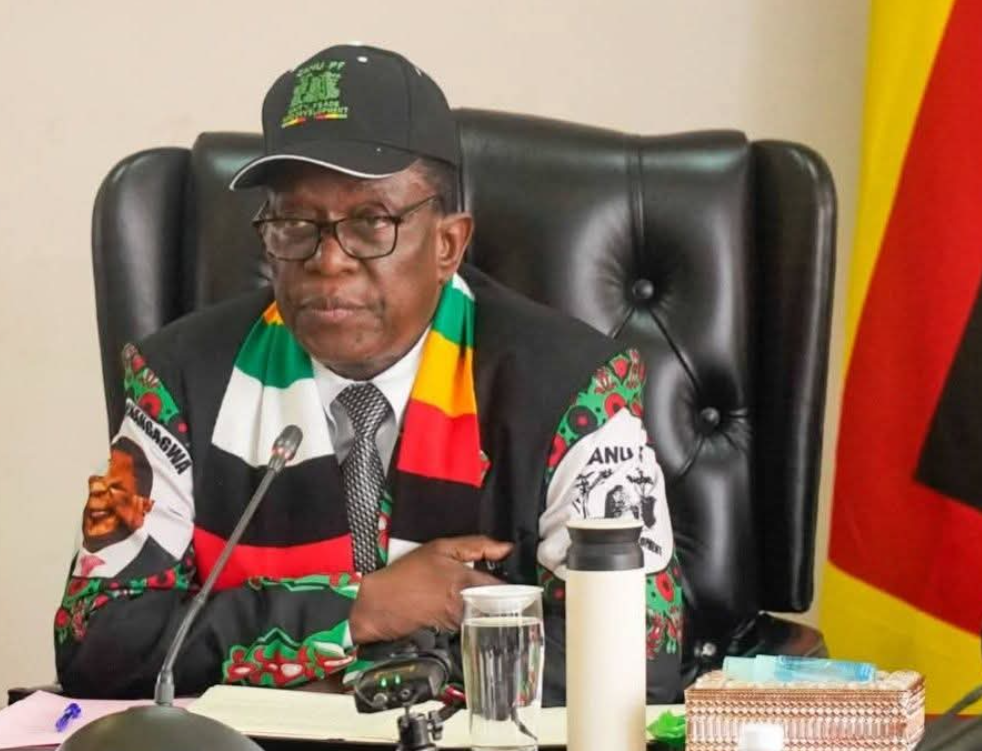
Zimbabwe President Emmerson Mnagagwa at the 391st Ordinary Session of the ZANU (PF) Politburo at Party Headquarters in Harare. A proposed legislation could extend presidential and parliamentary terms, delay elections, and reshape how leaders are chosen. President Mnagangwa Facebook Churches in Zimbabwe’s Mudzi district were told to suspend worship services on Sunday, March 29, and attend a ruling ZANU-PF political rally, placing them at the center of a growing political storm. The instruction, contained in a letter dated March 25 and addressed to local pastors, called on churches to cancel services so congregants could participate in a party meeting at Kotwa High School.  “In light of this important meeting, you are kindly encouraged to suspend church service on that day to allow congregants to attend,” the letter stated.  In a formal statement dated March 28, the Zimbabwe Council of Churches issued a direct response. “The Zimbabwe Council of Churches (ZCC) expresses its deep concern, strong displeasure and profound dismay at a communication issued in Mudzi District… encouraging churches to suspend worship services… to attend a political party meeting.” “This development is unacceptable and a direct affront to religious freedom, particularly as it coincides with Palm Sunday… the most solemn and spiritually important season for Christians worldwide.” The council said the Church exists as a sacred place for worship, spiritual growth and moral guidance, and should never be placed under partisan political influence. It added that any effort to disrupt or interfere with church life threatens both religious freedom and the dignity of citizens.  The council also pointed to Section 60 of Zimbabwe’s Constitution, emphasizing that freedom of conscience, religion and belief is a fundamental right that must be protected at all times without exception. “We therefore encourage all Christians to continue to observe Palm Sunday and Holy Week faithfully, without fear or intimidation,” their statement concluded.  The rally was part of an ongoing campaign to build support for Constitutional Amendment Bill No. 3, a controversial proposal that has triggered widespread concern among church leaders and civil society groups. Reports indicate the proposed legislation could extend presidential and parliamentary terms, delay elections, and reshape how leaders are chosen.  For many believers, the timing of the directive was especially troubling. The affected Sunday coincided with Palm Sunday, a central moment in the Christian calendar marking the beginning of Holy Week. The disruption of worship on such a significant day has raised deep concerns about religious freedom and the relationship between church and state in Zimbabwe. The incident in Mudzi does not stand alone. It unfolds against a broader national debate over constitutional changes that church leaders have already warned could alter Zimbabwe’s democratic foundations. Earlier in March, a coalition of Christian bodies under the Zimbabwe Heads of Christian Denominations issued a strong warning about the proposed amendment. “The proposed constitutional amendments raise serious concerns about the protection of democratic principles and the will of the people,” the church leaders said in a pastoral statement.  They cautioned that the reforms could weaken accountability and reduce citizen participation, particularly if changes affect how presidents are elected and how long they remain in office. “Parliament is a sacred trust intended to serve the collective good of the nation,” the statement said. “It must not become an instrument for extending political power.”  The proposed bill includes provisions that would shift presidential elections from a direct public vote to a parliamentary process and extend the election cycle from five years to seven. Church leaders warned that such changes risk undermining the principle that political authority flows from the people. “The constitution is the people’s covenant,” the statement said. “Any amendments must reflect the will of the citizens.”  These concerns have intensified in recent days as political mobilization efforts have reached into spaces traditionally reserved for worship and spiritual life. For many Christians in Zimbabwe, the reported instruction to halt church services represents more than a logistical disruption. It is seen as a direct challenge to the independence of the church and the sanctity of worship. The church has historically played a significant role in Zimbabwe’s public life, including during the formation of the 2013 Constitution, which emphasized fundamental rights and democratic governance.  That history has shaped the current response, with religious leaders framing the issue not only as political, but as moral and spiritual. The attempt to redirect worshippers from church gatherings to a political rally has been widely interpreted as an encroachment into sacred space. As Zimbabwe debates constitutional reform, the events in Mudzi have sharpened a more urgent question about the limits of political power and the protection of religious freedom.

If I say I’ll pick you up from the airport, I’ll be there on time. If you ask me to make something for your party, consider it done! If you ask me to help watch your kids while you run out, I’ll be there when you need me! As a writer, I value the power words hold. A phrase I use often is, “Words matter.” If I say I’m going to do something, I mean it. It’s not just because I’m a writer that I mean what I say, but because I want to be known as trustworthy. If I say something is true, you can be sure that I have hours of research or experience to back it up! If someone asks me to do something, I want them to have complete confidence that my yes is a guarantee (barring any extenuating circumstances). In Luke 7:1-10, we read about the faith of the Roman officer. His beloved slave was sick and near death, so he sent out some respected Jewish elders to beg Jesus to heal the man. Jesus went to meet the officer, but the officer sent someone ahead to tell Jesus that he didn’t think he was worthy of the honor of having Jesus in his home, saying, “Lord, don’t trouble yourself by coming to my home, for I am not worthy of such an honor. I am not even worthy to come and meet you. Just say the word from where you are, and my servant will be healed. I know this because I am under the authority of my superior officers, and I have authority over my soldiers. I only need to say, ‘Go,’ and they go, or ‘Come,’ and they come. And if I say to my slaves, ‘Do this,’ they do it” (Luke 7:6-8). The Roman officer trusted that Jesus’ word was good as done. He knew the authority Jesus held and respected His word as complete. He trusted that, on Jesus’ command, his slave would be healed. If Jesus said it, he was fully confident that it was a guarantee. The officer’s faith knew that nothing could stop Jesus’ word from coming to fulfillment. When Jesus heard this, he was amazed. Turning to the crowd that was following him, he said, “I tell you, I haven’t seen faith like this in all Israel!” And when the officer’s friends returned to his house, they found the slave completely healed. (Luke 7:9-10) With Jesus, words matter. We can be assured that whatever He says will be done. When we read in 2 Corinthians 5:17 that there is new life in Christ, you can be sure that "the old life is gone; a new life has begun!" When Jesus says don’t worry about your needs, God will provide, He means it. (Matthew 6:31-33). In fact, all of God’s promises are yes in Christ, according to 2 Corinthians 1:20: For all of God’s promises have been fulfilled in Christ with a resounding “Yes!” And through Christ, our “Amen” (which means “Yes”) ascends to God for his glory. Are you weary? Jesus promises rest in Matthew 11:28-30. Do you want eternal life? Jesus promises eternal life with the Father for those who believe in Him in John 4:14 and that He would return for us in John 14:2-3. Do you feel alone? Jesus promised a Helper by way of the Holy Spirit in Acts 1:8. Jesus’ words are yes and amen! Whatever He says will be done. We can count on that. With Jesus, His Words always matter! King Jesus, thank You for always being true to Your Word. Thank You for leaving us with these beautiful promises to rest in on this side of heaven. Help us to mirror Your trustworthiness in our lives; let us be the type of people who do exactly what they say they’re going to do. Amen! ~ Scripture is quoted from the Holy Bible, New Living Translation, copyright © 1996, 2004, 2015 by Tyndale House Foundation. Used by permission of Tyndale House Publishers, Inc., Carol Stream, Illinois 60188. All rights reserved.

(LifeSiteNews) – Pope Leo XIV will commemorate the first Good Friday of his pontificate by carrying the cross for all 14 stations during the customary “Via Crucis” (Way of the Cross) at the Roman Colosseum himself. Pope Leo will notably be the first pontiff since Pope John XXIII revived the practice of celebrating the Via Crucis inside the Colosseum more than 60 years ago to carry the cross himself for each station, per Vatican News. While each pope since Paul VI has continued the custom of leading the Way of the Cross at the Colosseum on Good Friday, most have carried the cross for some of the stations, whereas Leo’s predecessor, Pope Francis, did not carry it at all. The meditations for this year’s Way of the Cross will be written by Father Francesco Patton, OFM, who served as Custodian of the Holy Land from 2016 to 2025 and is known for speaking out on the suffering of the faithful in Gaza. The late Pope Francis had prepared the meditations for the previous two Good Friday services, though he was unable to attend last year’s due to health issues in the final days of his life. Celebrating the Via Crucis in the Colosseum dates back to the 18th century when Pope Benedict XIV approved Saint Leonardo da Porto Maurizio’s request to build stations inside the former arena. The Way of the Cross inside the Colosseum quickly became a popular practice; however, it fell out of favor after the Colosseum’s cross was removed in the 1870s. READ: We cannot follow Christ without sharing in His suffering The practice was restored in the Colosseum in 1959 by Pope John XXIII, and Pope Paul VI made it a custom to pray the stations each Good Friday at sunset. However, recent pontiffs such as Popes John Paul II and Benedict XVI would typically only carry the cross themselves at the beginning and end of the Viva Crucis. 🇮🇹 This year will be Pope Leo XIV’s first as pope He will take part in the Via Crucis at the Colosseum, as Pope Benedict XVI can be seen doing in 2006 pic.twitter.com/CQyZa0cHY8 — Catholic Arena (@CatholicArena) March 22, 2026 Pope Francis, however, had not carried the cross himself at all during his 12-year pontificate, only presiding over the Good Friday Way of the Cross, making Leo’s decision to carry the cross for all 14 stations a clear contrast from his predecessor’s customs. The late Argentine pontiff was also unable to attend last year’s stations during the final days of his life as he dealt with health issues. Cardinal Baldassarre Reina, the cardinal Vicar of the Diocese of Rome, had presided instead. Pope Leo has made another significant break from his predecessor’s Holy Week customs, restoring the tradition of washing the feet of 12 priests on Holy Thursday in the Basilica of St. John Lateran. READ: Pope Leo XIV restores Holy Thursday tradition of washing priests’ feet after 14-year break Francis had broken with tradition by celebrating the Holy Thursday Mass in alternative locations such as prisons and migrant reception centers, and by regularly washing the feet of laypeople rather than priests. LifeSiteNews has previously reconstructed the full chronology of all the foot‑washing ceremonies performed by Francis.

CALGARY, Alberta (LifeSiteNews) — Organizers behind a petition calling for a referendum to make Alberta its own nation say they now have enough signatures to legally force a vote later next year.  On Wednesday, Alberta Prosperity Project (APP) legal counsel Jeffrey Rath said that 177,000 people have signed a petition that is enough to trigger a referendum under Alberta’s new Citizen Initiative Act. The petition will still need to be approved by Elections Alberta. Alberta’s new Citizen Initiative Act states that at least 10 percent of eligible voters need to sign the petition in order for it to go ahead. The petition needs to be sent to Elections Alberta by May 2. The question on the proposed referendum asks: “Do you agree that the Province of Alberta should cease to be part of Canada to become an independent state?” Should enough of the signatures be verified and validated, the above question will be considered but not guaranteed to be put to a province-wide referendum on October 19. The APP bills itself as a sovereignty advocacy group. As reported by LifeSiteNews, about three-in-10 Albertans have said they are open to separating from Canada, with the majority of support coming from young citizens. As reported by LifeSiteNews, Alberta Premier Danielle Smith said her conservative government will allow but not support a citizen-led referendum on independence. Last year, thousands of Albertans marched on the province’s capital of Edmonton in the “I Am Alberta Rally,” calling for the province to immediately secede from Canada in light of increasing frustration with the Liberal federal government. The calls for Alberta’s independence have grown since Liberal Prime Minister Mark Carney defeated Conservative rival Pierre Poilievre, who also lost his seat in Parliament in the 2025 federal election. In Alberta, almost all of the seats except two went to conservatives. Carney, like former Prime Minister Justin Trudeau, said he is opposed to new pipeline projects that would allow Alberta oil and gas to be unleashed. Also, his green agenda, like Trudeau’s, is at odds with Alberta’s main economic driver, its oil and gas industry.

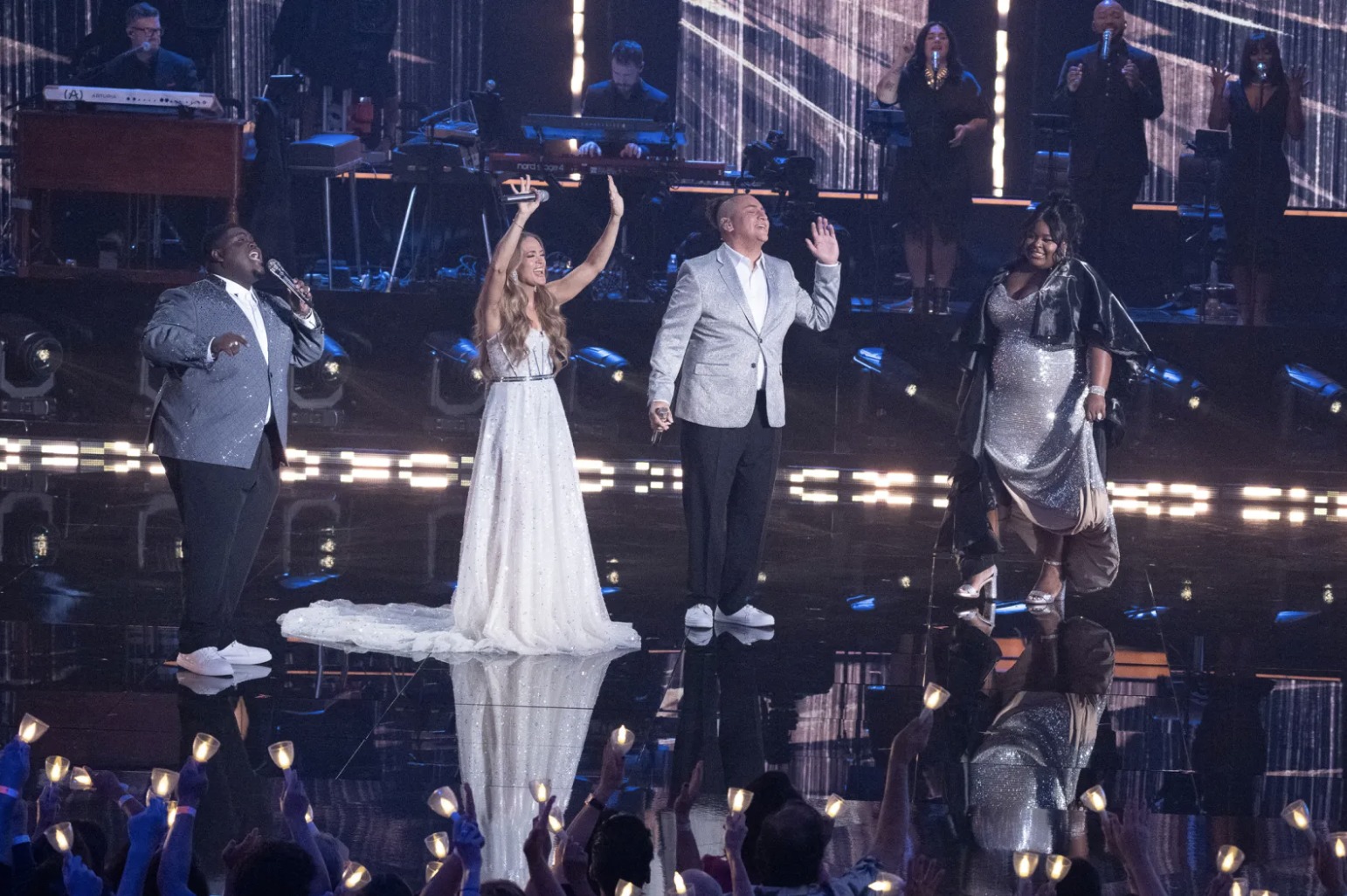
"I remember there's a point in time when it was East Coast, West Coast, every church, every, name it, and I would be afraid at some point to go to visit churches because right in the middle of the service, they said, Lionel, would you come and join the choir? And I said, you know, 'I'll just sit and listen' because everyone takes it to another level. But to do it on American Idol was such an honor," he told CBN News' Studio 5.    During the event, American Idol Judge Carrie Underwood performed the famous hymn "How Great Thou Art" with 2025 American Idol contestants Filo, Canaan James Hill, and Kolbi Jordan. She described the emotions behind performing it   "I mean, more than anything, it's joyful. It is having that... We get so wrapped up in our day to day and our frustrations and our lives, and I feel like we're really good at getting distracted. And that's a tool. That's a tool of the devil. So just to be able to have a moment to say, 'I think of all the things that You've made, how great Thou art,' how great is that? How wonderful," she told CBN News' Studio 5. American Idol contestant Kyndal Inskeep shared with CBN News' Studio 5 what was happening inside for her during the event.   Kyndal said, "I was weeping every other sentence and every other song, and I really just felt like the Holy Spirit just moved tonight."   American Idol Host Ryan Seacrest shared his thoughts on the event, too. "I look forward to this, starting with the Faith Night. And I look forward to this. My mother looks forward to this... Yes, what a twist. At the end, I was reaching for the results card, and they said, we're going to have to postpone it. With so many votes coming. So, we got to get it right. It's a live show, that's what happens."   The elimination results will be revealed next Monday, April 6th.

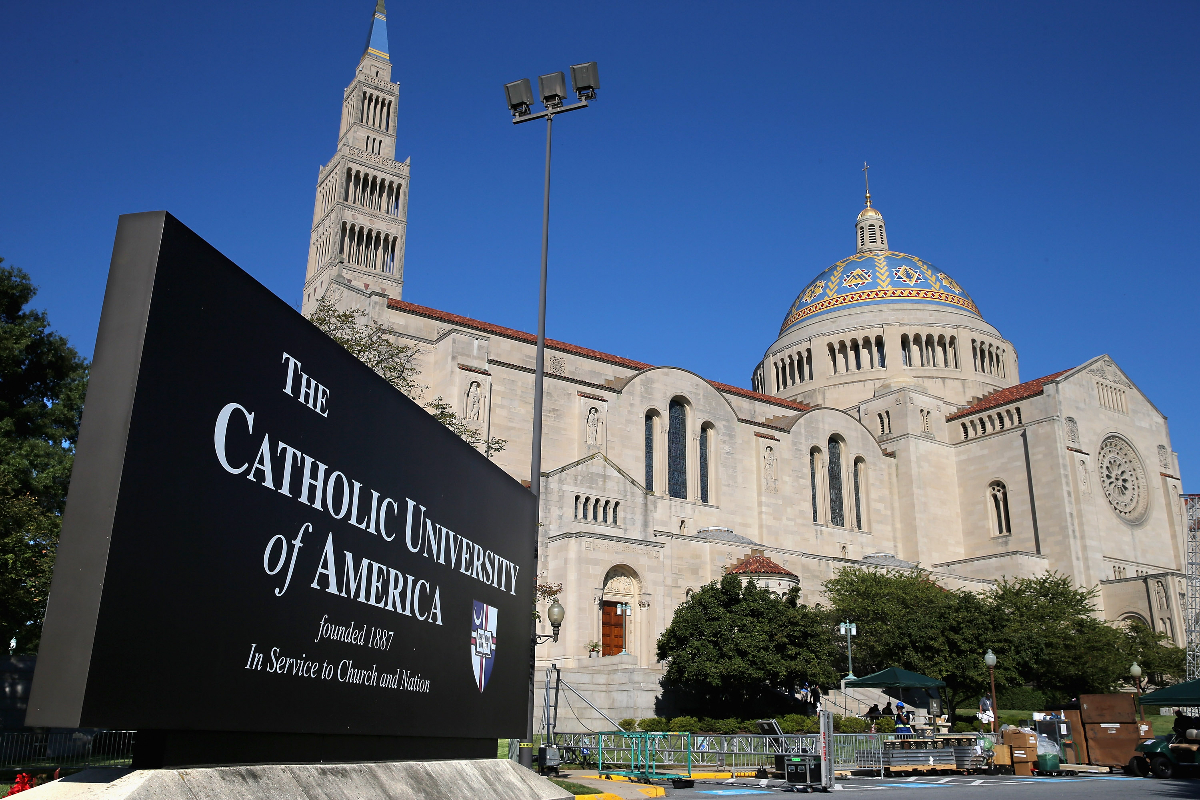
By Samantha Kamman, Christian Post Reporter Wednesday, April 01, 2026The Basilica of the National Shrine of the Immaculate Conception sits adjacent to the campus of Catholic University of America in Washington, D.C. | Chip Somodevilla/Getty ImagesCatholic University of America denied a request from a Students Supporting Israel chapter to host two events on campus, citing a lack of balanced perspectives — a requirement the group's leader called “deeply concerning.”Felipe Avila, a nursing student at CUA and president of the school's SSI chapter, maintains that the Washington-based university has "selectively" applied the opposing viewpoints requirement, calling it a "double standard."  “It is deeply concerning that Catholic University selectively applies equal-time policies, uniquely burdening Jewish and pro-Israel students,” Avila told The Christian Post. “When we host programming to discuss our community and its security, we shouldn't be forced to platform competing viewpoints as a condition of participating in campus life.”“It is a double standard no other student group is forced to navigate. Students Supporting Israel will continue to vigorously defend its right to speak out against antisemitism, in the very spirit of the Church's own teachings in Nostra Aetate,” the nursing student added, referencing the Second Vatican Council declaration that transformed Jewish and Catholic relations.Avila requested approval in January to host two events on campus, but CUA rejected the requests “on the basis of its Presentation Policy’s ‘balanced presentation’ requirement." The university invited SSI to “restructure the event and resubmit a request to have speakers representing both sides of this issue.”In a March 18 letter sent to CUA President Peter Kilpatrick, the nonpartisan advocacy group Foundation for Individual Rights and Expression urged the university to approve the events and issue a public statement assuring students “the university will not compel speech as a condition for approval of student-hosted events.”“While CUA is a private university and therefore not bound by the First Amendment, it is legally and morally bound to adhere to the institutional commitments it has voluntarily made to protect students’ freedom of speech,” FIRE’s letter stated.FIRE requested that CUA respond by Wednesday, confirming it will approve the SSI chapter’s event requests and issue a statement assuring student organizations that the administration will allow them to host speakers and events of their choosing.The first event Avila requested permission for would have featured U.S. Rep. Randy Fine, R-Fla., who would have spoken about the documented rise of antisemitism across the United States, “with a specific focus on the complex climate currently facing institutions of higher education,” as the letter noted.Avila also requested permission to host Israel Defense Forces Col. (res.) Dany Tirza, a chief architect of Israel’s security fence in Judea and Samaria. Tirza would have spoken to students about the reason for the fence’s construction and the difficult choices involved in balancing national security with the daily lives of people in the region.Leo Terrell, chair of the U.S. Department of Justice’s task force on combating antisemitism, also commented on the situation in a March 18 X post, writing, “Is this a joke?”In a statement to CP, a spokesperson for CUA said the university “welcomes people of all faiths and stands firmly against antisemitism.”“We take seriously the safety and dignity of our Jewish students and every member of our community,” the spokesperson said. “Antisemitism is repellent and dangerous. We are committed to confronting it in ways consistent with our Catholic mission and belief in the dignity of every human person.”Several recent events at CUA have focused on antisemitism and the Catholic Church’s relationship with the Jewish community.On March 4, Catholic Law’s Center for Religious Liberty hosted a discussion about rising antisemitism on college campuses. Last November, CUA’s School of Theology and Religious Studies also held a dialogue to mark the Second Vatican Council's “Nostra Aetate” declaration.The declaration condemned antisemitism, repudiating the charge of collective Jewish guilt for the death of Christ. It also affirmed the spiritual connection between Christianity and Judaism, as well as God’s enduring covenant with the Jewish people.“We have invited Students Supporting Israel to submit a restructured proposal and to work within university processes to host a thoughtful conversation. As a private, religious institution, Catholic University is well within its rights to approve or deny any speaker request,” the CUA spokesperson continued. “We welcome SSI’s outreach and are confident we’ll reach a resolution quickly through good-faith dialogue.”The situation between CUA and the SSI chapter comes as several Catholic speakers, such as Candace Owens and Carrie Prejean Boller, have recently generated attention for their anti-Israel rhetoric.Avila told CP he believes it is important to distinguish between individuals who happen to be Catholic and those who hold ecclesiastical roles and shape Church teaching.“Every religion has its outliers, but Catholic dogma is clear: antisemitism and any form of racial discrimination are reprehensible. Those who purport to be Catholic while spreading anti-Jewish hatred are not following Church teaching,” the SSI president said.“Antisemitism is undeniably on the rise within Catholic communities, and we are seeing anti-Jewish ideology seep directly into our college campuses,” he continued. “We need university administrators to step up and definitively root out anti-Jewish hatred whenever and wherever it appears.”

By Leah MarieAnn Klett, Assistant Editor Wednesday, April 01, 2026Courtesy American IdolHOLLYWOOD, Calif. — The name of Jesus was boldly proclaimed from the stage of "American Idol" on Monday night, as the long-running competition show leaned fully into its second annual “Songs of Faith” night.The live broadcast, timed ahead of Easter, featured the Top 14 contestants performing songs centered on faith and was marked by prayer, gospel music and repeated references to Jesus before a national audience. Judges Lionel Richie and Luke Bryan opened the show with “Jesus Is Love,” joined by contestants who filled the stage in a choir-like formation. Later, viral child preacher Luke Tillman delivered a prayer, while contestants and the audience alike lifted their hands in worship during performances.By the end of the night, Carrie Underwood closed the show with “How Great Thou Art,” joined by former contestants, a performance that host Ryan Seacrest told The Christian Post “vibrated” through the studio.“I think I felt the Holy Spirit a few times,” Seacrest told CP. “When Carrie had her performance, it really … it vibrated this massive studio. It was incredible.”Underwood, who has been largely credited for the increased visibility of faith themes on the hit reality show, told CP that contestants weren't required to sing explicitly Christian songs, though many chose to. Standout songs of the night included “Nothing But the Blood of Jesus,” “Gratitude,” “I Can Only Imagine” and “At the Cross.”“I respect ABC and 'American Idol' so much for being bold in this theme, because it’s not easy,” she said. “But I love that we were able to … have some moments of just worship in front of the world.”Bryan, who grew up in a Southern Baptist church in Georgia, described the night as a return to something foundational — both for the contestants and for the country — pointing out that many of the night's performers began singing in church.“When you hear people praising Jesus in this light, it’s something that I feel like maybe the country’s gotten away from,” he said. “It’s a great platform.”Keyla Richardson, a pastor’s daughter, music teacher and mother from Pensacola, Florida, opened the night with “Jireh,” Maverick City Music’s worship anthem, which she said was born out of intimate, tearful moments with God.“There were times in my life where I would sit with God in my room … and tears would just fall,” Richardson said. “God has been everything I need Him to be.”The 29-year-old artist told CP that her faith has been the sustaining force throughout the competition. “My faith is the only thing that has kept me this far, and that’s the only thing that’s going to keep me,” she said. “All my help comes from the Lord.”For Kyndal Inskeep, the night carried the weight of personal testimony. After performing a rousing rendition of the classic hymn “Nothing But the Blood of Jesus,” she reflected on a past battle with depression and how her faith saved her.“I almost lost my fight,” the 29-year-old Indiana native told CP, adding that the presence of the Holy Spirit was "overwhelming" during the night's performances. “And He swooped in … and brought me here. Why wouldn’t I want to be a billboard for His kingdom?”She added a message to viewers struggling with anxiety or hopelessness: “Keep going … you are beautifully and wonderfully made. … You’re not what you do, but who He says you are.”Lucas Leon, who performed Brandon Lake’s “Gratitude,” prompting the audience to raise their hands in worship, said his song choice was an act of thanksgiving to God.“I’ve got a roof over my head, food to eat, breath in my lungs every morning,” he said. “How could I not be thankful? … I love that we’re able to get out here and sing about Jesus.”For Jordan McCullough, worship director of Zeal Church in Nashville, the moment felt like a return home. He emphasized that faith isn’t something confined to church buildings, but is something active and outward.“I definitely felt like home again,” said McCullough, a pastor’s son, describing the night as a "full-on worship service." “I do this every week. … We can wait for people to go to church all day. But if I am the church, I can go and bring it to them.”“Faith is going forth in things that may look scary … doing it scared.”Jesse Findling, who performed “Bless the Broken Road,” pointed to the universality of faith themes. “That lyric — ‘God bless the broken road that led me straight to you’ — I feel like no matter what your definition of faith is, people can connect to that,” he said.Other contestants spoke about the communal aspect of the night. Singer Raye, whose rendition of Patty Griffin’s "    Up to the Mountain" earned high praise from the judges, spoke of castmates praying together backstage: “We’ve had them pray over me. We’ve prayed together,” she told CP. “This night just brought us all closer.”Philmon Lee connected his performance of Lynyrd Skynyrd’s “Simple Man” to biblical lessons instilled by his family.“It’s about staying humble, staying grounded and leaning on your faith in troubled times,” he said. “I rely on faith every single day. … I lay awake at night praying.”Daniel Stallworth, who performed Blessing Offor’s “Brighter Days,” said his goal was to encourage viewers.“I’ve had some tough moments in my life, and I was searching for a brighter day,” he said. “If you’re going through it right now … keep holding on. You’ll get to the other side.”Braden Rumfelt described faith as something forged through struggle.“I’ve had setbacks that made it hard to have faith,” he said. “It’s fighting through that and trusting Him anyway, that’s what faith is.”For Julian Kalel, a 19-year-old artist from El Paso, Texas, the theme of faith and God's sovereignty intersected with mental health.“I can look back on times when I felt lost and broken … just calling out to God, ‘help me, fix me,’” he said. “If it weren’t for my faith, I wouldn’t have been able to continue.”He added that he hopes to use his platform to raise awareness. “That’s not my work … that’s all Him.”Hannah Harper, who has been involved in ministry since childhood and consistently used her time on “Idol” to point viewers to Jesus, was visibly moved throughout the night. She told CP she “cried the whole time,” with makeup artists stepping in repeatedly as she struggled to compose herself.“Getting to be this open about my relationship with the Lord on a platform like this is an incredible honor to me,” she said.Harper, who performed Chris Tomlin’s “At the Cross (Love Ran Red),” said she saw the moment as an “opportunity to give an invitation.”“At the cross, at the cross/ I surrender my life/ I’m in awe of you/ I’m in awe of you,” she sang. “Where your love ran red/ And my sin washed white/ I owe all to you/ I owe all to you, Jesus.”“From the beginning, you’ve been one of my absolute favorites,” Underwood told Harper after her performance. “I loved your version of that. I could feel your heart in it, and I was right there with ya.”Harper told CP that while she feels “spiritual warfare” in Hollywood, her faith has kept her grounded. “Every single day … we’ve been in a dressing room having Bible study,” she said. “The entire competition is scary, and there’s a lot of spiritual warfare … so it’s been really nice to have somebody like-minded.”“I think it’s important for people to know you’re never too far gone,” Harper said. “He can meet you anywhere … no matter what walk of life you’re in.”Jake Thistle, reflecting on the broader meaning of the night, called faith “a connector.”“It’s such a divided world,” he said. “Anything that can bring people together and create a common thread … that’s powerful.”Chris Tungseth, who performed “By Your Grace,” described the opportunity to sing openly about faith on national television as deeply personal.“I never knew if I’d get a chance to sing a song like this on the show,” he said. “To spread the Gospel in front of millions … that’s such a cool opportunity.”Richie told CP he hopes that after watching the "Songs of Faith" broadcast, viewers will be inspired to reach out to God in prayer for healing and hope: “We are in need of prayer. We are in need of power,” he said. “We’re all God’s children … let’s treat each other like our family ... God is in control."

(LifeSiteNews) — Bishop Robert Barron published an article advocating for the view that Judas Iscariot, the betrayer of Jesus Christ, is not in hell. On March 29, Barron’s article, entitled “Even Judas? Rethinking sin, despair and divine mercy this Palm Sunday,” appeared on the Fox News website. While acknowledging that Saint Augustine of Hippo, Saint Thomas Aquinas, and “most theologians” have believed Judas went to hell either for betraying Christ or for self-murder, Barron presented a “counter-view”: a 12th century carving apparently showing the Good Shepherd carrying the dead Judas over his shoulders. “Pope Francis was so fond of this image that he had a reproduction of it over his desk in his papal office. It showed, for him, the hope that even Judas might have been saved by the overwhelming mercy of the Lord,” Barron wrote. The bishop asked readers not to send him letters, as he knows “that we cannot embrace a simple-minded universalism, which says that we are perfectly confident that all people will be saved. We do indeed have to admit to the very real possibility of an eternal rejection of God.” The rest of Barron’s article focuses on the topic of people who commit suicide and how we need not despair for them but “pray for them and commend them to God’s mercy” instead. Barron’s initial argument for the possibility that Judas has been spared damnation was his clear contrition, as witnessed by the Gospel of Matthew. However, the bishop does not address the fact that the Gospel does not state that Judas repented of his despair. In response to Barron’s article, pundit Matt Gaspers pointed out that the traditional teaching of the Roman Catholic Church, found in the Catechism of the Council of Trent, is that Judas “lost soul and body.” Respectfully, Your Excellency, the Roman Catechism teaches that Judas “lost soul and body” (full quote below), not to mention Our Lord’s own words: “The Son of man goes as it is written of Him, but woe to that man by whom the Son of man is betrayed! It would have been better for… — Matt Gaspers (@MattGaspers) March 30, 2026 Canon lawyer Ed Peters observed, “Acknowledgment of having sinned, and repentance for having sinned, are two different things.” Acknowledgment of having sinned, and repentance for having sinned, are two different things. — Edward Peters (@canonlaw) March 30, 2026 Barron has previously faced criticism for suggesting that hell may be empty, a theological speculation popularised by theologian Hans Urs von Balthasar in his 1988 work Dare We Hope ‘That All Men Be Saved’?  Barron also scandalized faithful Catholics by describing Jesus as the “privileged route” – rather than the only way (Acts 4:12) – to salvation, praising a book by notorious LGBT activist Father James Martin, S.J., and telling a “married” homosexual commentator that he would not seek to reverse homosexual “marriage,” among other incidents. “I don’t think I want to press it further,” Barron told Dave Rubin about homosexual “marriage” in a 2017 interview. “I think it would probably cause much more problems and dissension and difficulty if we keep pressing it.”

JOS, Nigeria (LifeSiteNews) — Gunmen killed more than ten people in a Palm Sunday attack in northern Nigeria, prompting authorities to impose a curfew to restore order. On March 29, Palm Sunday, gunmen attacked the Gari Ya Waye community in Angwan Rukuba, within Jos North Local Government Area in Plateau State, Nigeria. The assault targeted civilians in an area served by the Catholic Archdiocese of Jos and, although the motives and the perpetrators of the attack, as well as the exact number of victims, remain uncertain to this day, the likelihood that it was an Islamist‑inspired terrorist attack is high. Archbishop Matthew Ishaya Audu has urged people not to turn it into “a matter of religions.” “There were talks … that after [Ramadan] fasting, they are going to attack us, the Christians. Is it one that they are carrying? Is it even a community clash? I don’t know what it is,” he said. Audu, the ordinary of the Archdiocese of Jos, has urged people not to believe all the information circulating online that assigns responsibility for the massacre to various actors, fueled in part by the many ethno-religious tensions tearing the region apart. “I think the details are not there. If I make a statement, I should do so with conviction and provide a clearer position,” he said. The exact number of victims is still unknown, but according to Audu, “the reports are saying about 11 people were killed.” Verification has been made difficult by the fact that the Plateau State Government imposed a curfew across the affected area immediately after the attack. Several sources, however, suggest that the death toll is between 11 and 30. Some witnesses point to the Nigerian jihadist group Boko Haram as the direct perpetrator, but so far there has been no official claim of responsibility for the attack. The victims are largely Christians, targeted on Palm Sunday in an area that has been struck before by Islamist‑inspired groups. Audu warned that the curfew could create more problems than it solves. “There is heavy restriction, not even movement of anybody, except maybe the police. They don’t even want to see you walking. As a result, if they don’t manage the curfew well, others may take advantage of the situation and then more killings will occur, and more innocent people will die,” he cautioned. In response, the archbishop called on the faithful to pray amid the uncertainty, framing the situation within the spiritual context of Holy Week. “Let them pray: that is what we need now. The Cross is only a way to the resurrection,” he added. “We believe all the challenges of life, including what we are facing now, will become a thing of the past

(LifeSiteNews) — The head of the German Bishops’ Conference (DBK) has handed over the statutes of a proposed “Synodal Conference,” a body that would enable Catholic laity to share in the bishops’ authority, to the Vatican for approval. Bishop Heiner Wilmer submitted the statutes for a future Synodal Conference of the Catholic Church in Germany for recognition by the Vatican on Tuesday. These statutes were first adopted by the General Assembly of the Central Committee of German Catholics (ZdK) and by the General Assembly of the German Bishops’ Conference. The Synodal Conference was conceived as a continuation of the heretical Synodal Way that seeks to change Church doctrine. In the conference, bishops, other clergy, and laity will discuss and decide on ecclesiastical matters together. According to the statutes, the Synodal Conference will consist of the 27 diocesan bishops of Germany, 27 lay members of the ZdK, and 27 other Catholics (potentially clergy or laity) voted for by the Synodal Assembly. This structure, which grants the laity authority in ecclesiastical matters, clearly violates the hierarchical and sacramental nature of the Catholic Church. Some conservative German bishops, like Cardinal Rainer Maria Woelki, Bishop Rudolf Voderholzer, and Bishop Stefan Oster, have therefore decided not to participate in the Synodal Assemblies anymore. READ: German bishops adopt text of ‘Synodal Conference’ seeking to give Church authority to laity “In my discussion with Archbishop Filippo Iannone, O.Carm., prefect of the Dicastery for Bishops, I explained the statutes, building on the work of my predecessor, Bishop Dr. Georg Bätzing, as well as the numerous preliminary discussions conducted by Bishop Dr. Franz-Josef Overbeck,” Wilmer said after handing over the statutes. “Recognition is requested so that we may apply the statutes and establish a synodal conference for the Church in Germany. I am glad and grateful that today we have taken another step forward on this long journey of the Synodal Path. I am equally grateful for how closely this process in Germany has been integrated with the global synodal movement over the past months,” he continued. The Vatican needs to approve the statutes in order for the Synodal Conference to move forward. However, Vatican officials have expressed concerns about the plan, stating that the authority for a diocese must remain solely with the diocesan bishop.

COLOGNE (LifeSiteNews) — Cardinal Rainer Maria Woelki has criticized the increasing replacement of the sacrifice of the Holy Mass with a liturgy of the Word. In his homily at the Chrism Mass in the Cologne Cathedral, German Cardinal Woelki emphasized the central importance of the Eucharist for priests and the Church. The daily celebration of Mass is “constitutive of our priestly being and ministry” and spiritually “absolutely vital,” he said during the homily on Monday evening, addressing in particular the assembled priests of the Archdiocese of Cologne, who also renewed their ordination vows as part of the celebration. “If the liturgy, as the Second Vatican Council put it, is the summit toward which the activity of the Church is directed and at the same time the source from which all her strength flows, then for us priests, too, the celebration of the Mass is the summit toward which all our other activities are directed and the source from which all our strength must flow,” the cardinal said. “The Church therefore strongly recommends the daily celebration of Holy Mass, especially to us priests.” “Even if only a few faithful, or even none at all, should come to join in the celebration, its daily celebration is meaningful for us priests and, spiritually speaking, essential for our survival,” Cardinal Woelki stressed. “The daily celebration of Holy Mass is constitutive of our priestly being and ministry,” he stated. Cardinal Woelki said that it fills him with great concern that “more and more frequently on Sundays, services of the Word – often with the distribution of Holy Communion – are replacing the celebration of the Eucharist.” “I therefore wish to share my deep concern with you once again today, emphatically and urgently, that through such a practice we are in danger of losing our Catholic identity more and more.” “From places where this practice is already in place, I hear that some faithful travel on Sundays to where Holy Mass is celebrated… while others simply stay away. And still others say that it is enough for them, in any case, to simply participate in a Liturgy of the Word.” “Yes, it seems there are even places now where they say they are doing everything to become independent of the priest for the future, so that they no longer need him or his ministry,” the German cardinal said. “That, dear confreres, dear sisters and brothers, is quite simply no longer Catholic. And I urge you to counteract this from the very beginning.” “The celebration of the Eucharist on Sunday is ultimately irreplaceable and non-interchangeable,” he concluded.

Loading...
Loading...
Confirmation
Are you sure?
Cancel Continue