 Your post is being uploaded. Please don't close or refresh the page.


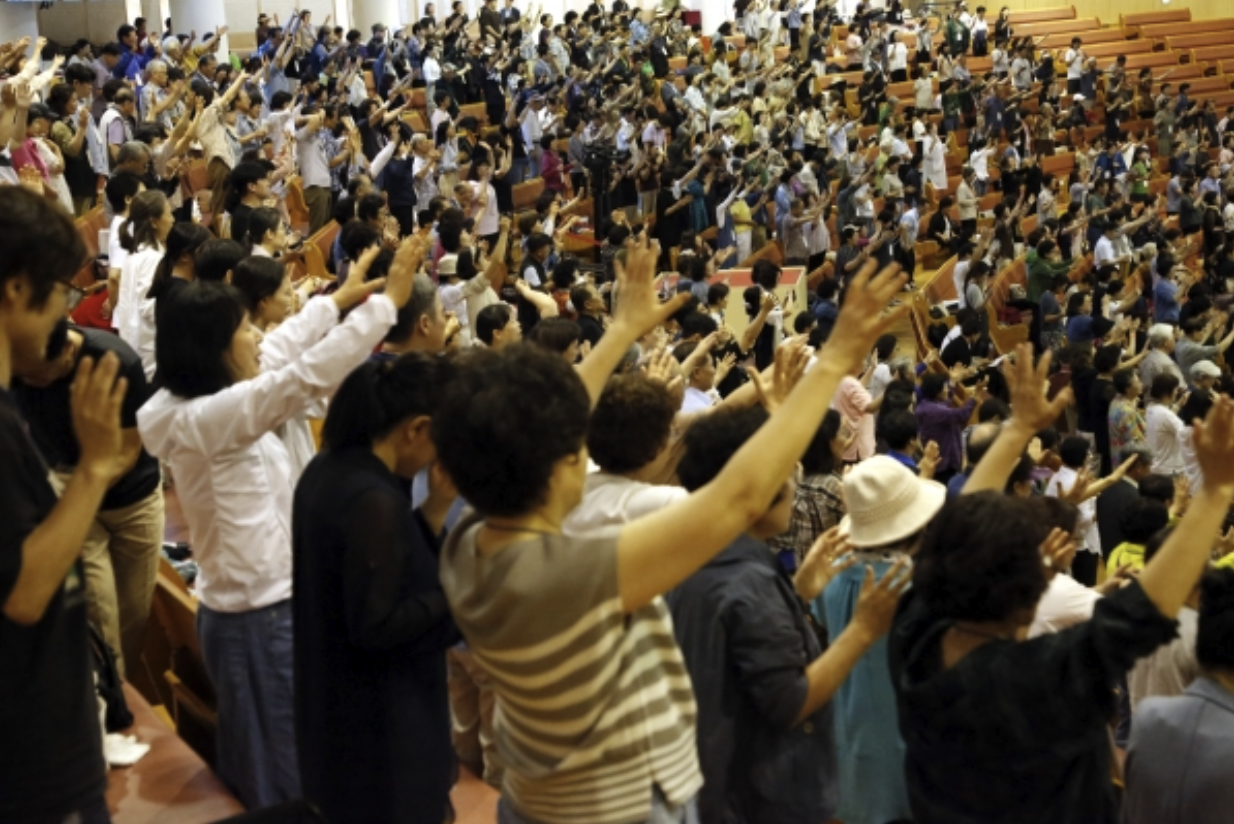
Christianity in South Korea records lower public favorability than Buddhism and Catholicism, but Christians report significantly stronger personal impact and perceived benefits from their faith, according to an analysis released by the Korea Church Media Association.
The association issued a commentary Dec. 26 on the “2025 Religious Perception Survey” conducted by Hankook Research, concluding that Christianity demonstrates comparatively high influence on believers’ daily lives and a strong sense of religious effectiveness, despite weaker overall public appeal, according to reporting by Christian Daily Korea.
The nationwide survey was carried out from Nov. 21 to 26 among 2,000 adults aged 18 and older. It examined attitudes toward Protestant Christianity, Buddhism, Catholicism, Won Buddhism and Islam.
According to the survey, overall favorability toward Christianity stood at 34.7 points. Favorability was slightly higher among women, at 35.8 points, compared with 33.6 points among men. By age group, scores were lowest among people in their 30s, at 26.8 points, and increased steadily with age, reaching 49.0 points among respondents aged 70 and older.
The association noted that favorability toward Christianity was particularly low among followers of other religions. Catholics rated Christianity at 28.0 points, Buddhists at 22.9 points and respondents with no religious affiliation at 23.2 points. The association said this indicates that perceptions of Christianity tend to be formed independently from views of other faiths.
That pattern was reflected in interreligious favorability correlations. Christianity showed low correlations with Catholicism (0.077), Buddhism (-0.182) and Won Buddhism (0.093). By contrast, stronger correlations were found between Buddhism and Catholicism (0.482), Won Buddhism and Buddhism (0.504), and Islam and Won Buddhism (0.607).
Ideological orientation also influenced attitudes toward Christianity. Favorability among self-identified progressives was 28.5 points, compared with 35.1 points among moderates and 41.5 points among conservatives. Compared with the previous year’s survey, favorability declined by 5.8 points among progressives, while rising by 0.4 points among moderates and 2.5 points among conservatives.
Despite relatively low favorability, Christians reported the strongest sense that religion affects their lives. Overall, 37% of respondents said religion influences their daily life, including 32% of men and 43% of women. By religious affiliation, 84% of Christians said religion affects their lives, compared with 62% of Catholics and 47% of Buddhists.
Christians also scored highest on measures of religious efficacy. Across all respondents, 82% said religion provides emotional stability as something they can rely on, while 78% said it fosters positive emotions. Seventy-four percent said religion helps with ethical behavior, interpersonal relationships and a sense of belonging.
Among Christians specifically, 92% said their faith helps with ethical behavior, while 91% said it provides emotional stability, fosters positive emotions and helps them form proper values. High levels were also reported for interpersonal relationships and belonging (84%) and identity formation (83%).
The Korea Church Media Association said the findings show that Christians derive clearer goals and values from their faith than followers of other religions. While public favorability toward Christianity remains lower than that of Buddhism, at 54.4 points, and Catholicism, at 52.7 points, the association said Christianity’s perceived benefits and influence on personal life were “markedly higher.”
The association urged South Korean churches to work toward improving public perceptions while continuing to strengthen the positive influence of faith on individual lives, calling on churches to more fully fulfill their role as “salt and light” in society.
News Source : https://www.christiandaily.com/news/christianity-in-south-korea-shows-lower-favorability-but-stronger-impact-on-daily-life-survey-finds