For the best experienceDownload the Mobile App

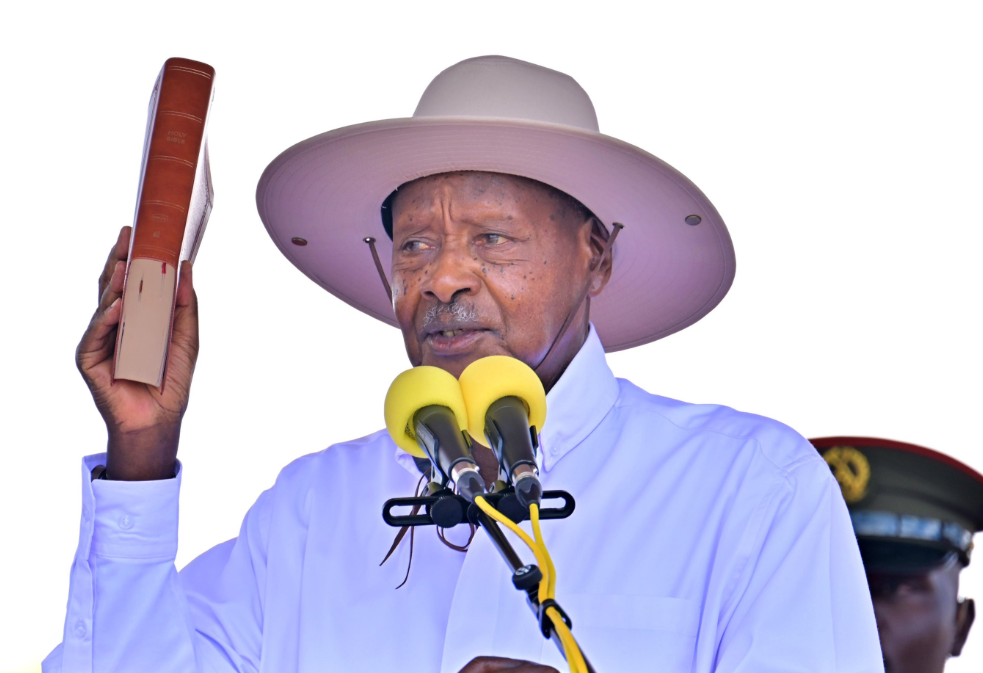
President Yoweri Kaguta Museveni was sworn in for a seventh consecutive term on May 12, 2026. President Museveni has been in power since 1986. @KagutaMuseveni X Governments in East Africa are increasingly turning to churches and religious institutions as partners in promoting morality, social stability and economic development, even as faith leaders continue to challenge state power on governance and human rights concerns. Recent statements from leaders in Tanzania and Uganda highlighted the close relationship between governments and the church, reflecting a long-standing dynamic in the region where religious institutions often serve both as allies of the state and critics of political authority. In Tanzania, Prime Minister Mwigulu Nchemba said religious organizations play a key role in strengthening moral values and social cohesion, which he described as necessary for national development.  Speaking during a church service organized by the Evangelical Lutheran Church of Tanzania in Iringa Region, Nchemba praised churches for helping preserve peace, discipline and unity in society. “Religious institutions continue to be pillars of morality and national unity,” he said. He warned that growing competition for resources and outside influence could divide communities if citizens fail to remain united.  The statement echoed similar remarks made in Uganda by President Yoweri Museveni, who recently acknowledged the long-standing partnership between the government and the church in transforming Ugandan society. Speaking during a church gathering, Museveni said religious institutions had contributed to education, health care and economic development alongside spiritual guidance. He urged churches to encourage productivity and economic self-reliance among their followers. “The church has not only preached the Gospel but has also helped communities move out of poverty,” Museveni said in remarks published by Uganda State House. The comments come at a time when governments across East Africa continue to rely on religious institutions for social influence. Churches remain among the most trusted public institutions in many African countries, especially where political polarization and economic hardship have weakened confidence in political systems. But the relationship between church and state has often been complicated. In both Uganda and Tanzania, Anglican, Pentecostal and Catholic leaders have at times openly challenged governments over democracy, human rights and political freedoms. In Uganda, retired Anglican Bishop Zac Niringiye became one of the country’s most outspoken religious critics of Museveni’s administration during periods of political unrest and contested elections. Niringiye defended the role of clergy in political debates after government officials accused church leaders of interfering in politics.  Other Anglican bishops have also publicly criticized the treatment of opposition politicians and political detainees. Earlier this year, bishops in Uganda called on the government to release political rivals and warned against criminalizing political competition.  Religious leaders in Uganda have repeatedly spoken out against election violence and restrictions on civil liberties. During previous election cycles, church leaders questioned security crackdowns on opposition supporters and warned against attempts to silence dissent.  At the same time, some critics argue that parts of the church establishment have grown too close to political power. Donations and speeches from politicians in church services have fueled debate about whether some religious leaders have become reluctant to criticize authorities. In Tanzania, tensions between the government and religious leaders became more visible during the administration of former President John Magufuli and have continued in different forms under President Samia Suluhu Hassan. Last year, Tanzanian authorities deregistered a church linked to Pentecostal preacher and politician Josephat Gwajima after he criticized alleged human rights abuses and enforced disappearances. Officials said the church had violated regulations governing religious organizations, while critics described the move as politically motivated.  Researchers and political observers say churches in East Africa continue to occupy a delicate position, balancing cooperation with governments while also attempting to preserve their role as moral voices in society. In Kenya, church leaders have also sought to redefine the relationship between religion and politics amid growing concerns over political polarization. The National Council of Churches of Kenya recently announced that politicians will no longer be allowed to use church altars to advance political agendas during worship services.  The council said the decision followed increasing cases of political leaders using church gatherings to trade accusations and deepen divisions among congregants. Church leaders said the restriction is intended to preserve the sanctity of worship spaces, lower political tensions within churches and restore respect for the altar as a place of prayer rather than partisan debate.  A 2025 study published by Cambridge University Press noted that churches in several African countries have played major roles in defending democratic institutions, though their influence and willingness to confront governments vary from country to country.  Despite periodic tensions, governments across the region continue to publicly embrace religious institutions as important partners in maintaining peace and shaping national identity. For millions of East Africans, the church remains more than a place of worship. It is also a center of political conversation, community organization and public accountability, a role that continues to place religious leaders at the center of national debates about power, morality and the future of democracy.

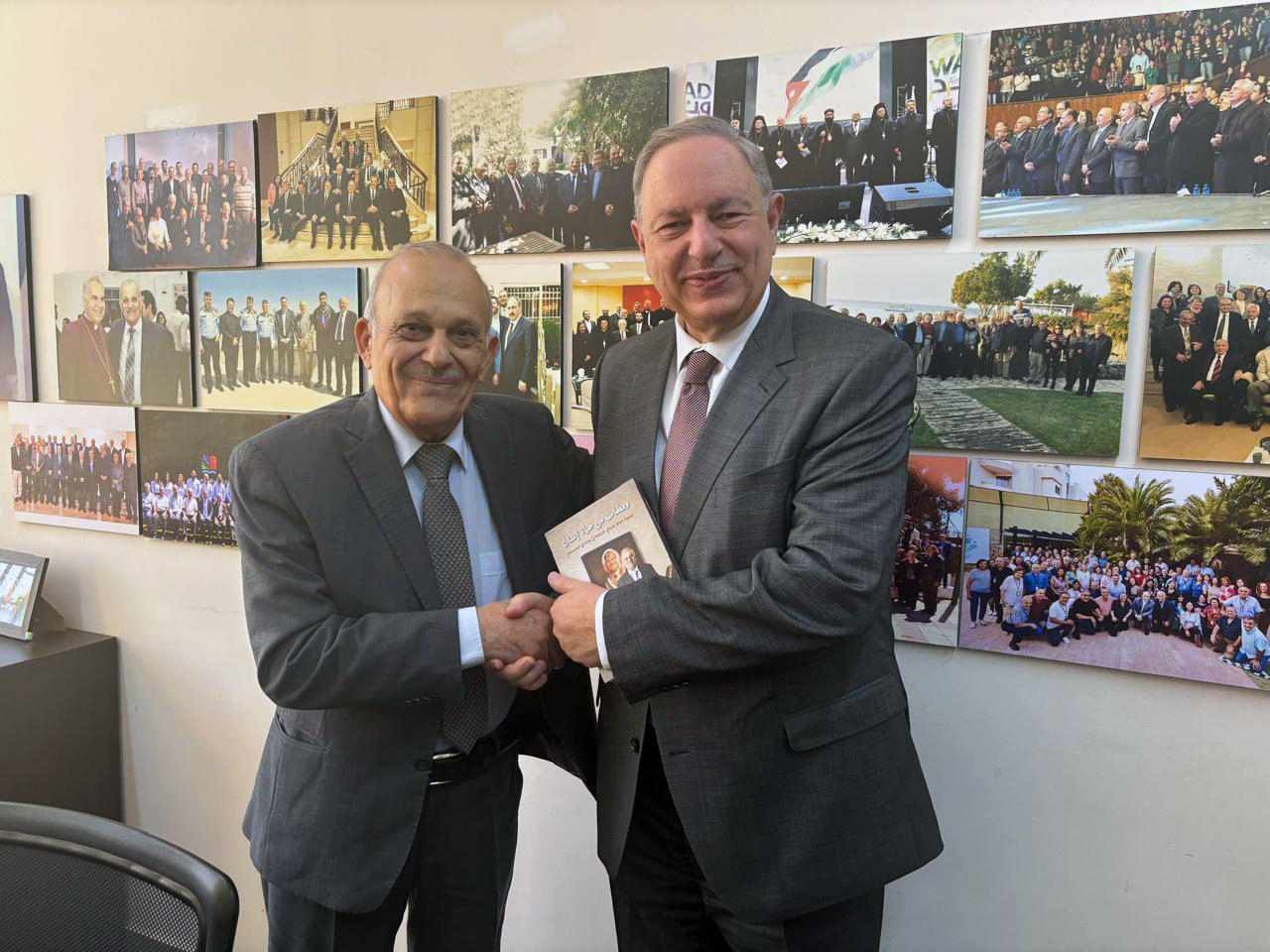
Retired Maj. Gen. Imad Ma'ayah (left), president of Jordan's Evangelical Council, shakes hands with Sen. Michael Nazzal following their meeting in Amman. Daoud Kuttab for Christian Daily International A senior Jordanian senator visited the country's Evangelical Council last week, offering a gesture of outreach after evangelicals were left out of an earlier parliamentary meeting with Christian church leaders. Sen. Michael Nazzal, who chairs the Tourism Committee in Jordan's upper house, met with Retired Maj. Gen. Imad Ma'ayah, president of the Evangelical Council, and members of the council's board at the council's headquarters at the Evangelical Free Church in Amman's Khalda neighborhood on Monday, May 11. The earlier meeting, held at the Parliamentary Senate offices, had brought together Catholic and Orthodox church leaders to map out plans for Jordan's 2030 millennium celebrations marking the anniversary of Jesus's baptism. Evangelicals were not included. Nazzal said his office had asked the Council of the Heads of Churches to invite relevant church leaders, but that body does not include evangelicals and generally opposes their participation in public events. Ma'ayah briefed Nazzal on the history of evangelicals in Jordan, which he traced to the late 19th century — predating the modern Hashemite Kingdom. He described how five evangelical denominations — Baptist, Evangelical Free Church, Assemblies of God, Nazarene and Christian & Missionary Alliance — formed the council in 2007. Today the council encompasses 57 churches across the country, along with institutions and parachurch organizations that provide educational, medical and humanitarian services to Jordanians and refugees, including prison ministry. Ma'ayah also noted that he chairs the Alliance of Evangelical Councils in Palestine and Israel, and spoke of the World Evangelical Alliance's recent selection of Rev. Botrus Mansour — a Nazareth-born pastor and advocate — as its secretary general at a general assembly in Korea last October. From left: Engineer Nidal Qaqish, Rev. George Zananiri, Sen. Michael Nazzal, Evangelical Council President Retired Maj. Gen. Imad Ma'ayah and Rev. Moutasm Dababneh during their meeting in Amman. Daoud Kuttab for Christian Daily International Nazzal said he was unaware of the breadth of evangelical ministry in Jordan. He encouraged evangelicals in Jordan and internationally to support the country's pilgrimage initiative and the planned 2030 event at the site traditionally identified as the location of Jesus's baptism on the east bank of the Jordan River. Ma'ayah, who commanded the Jordanian army's royal engineering unit, told Nazzal that following the 1994 Jordan-Israel peace treaty he led the effort to clear landmines from the former border area west of the Jordan River. He also gave Nazzal a copy of his autobiography. Ma'ayah welcomed the visit and said he hopes it signals a shift. "We hope that decision makers in Jordan will understand the value and importance of being open to all Christians and work with us as a bridge to the evangelical world," he told CDI.

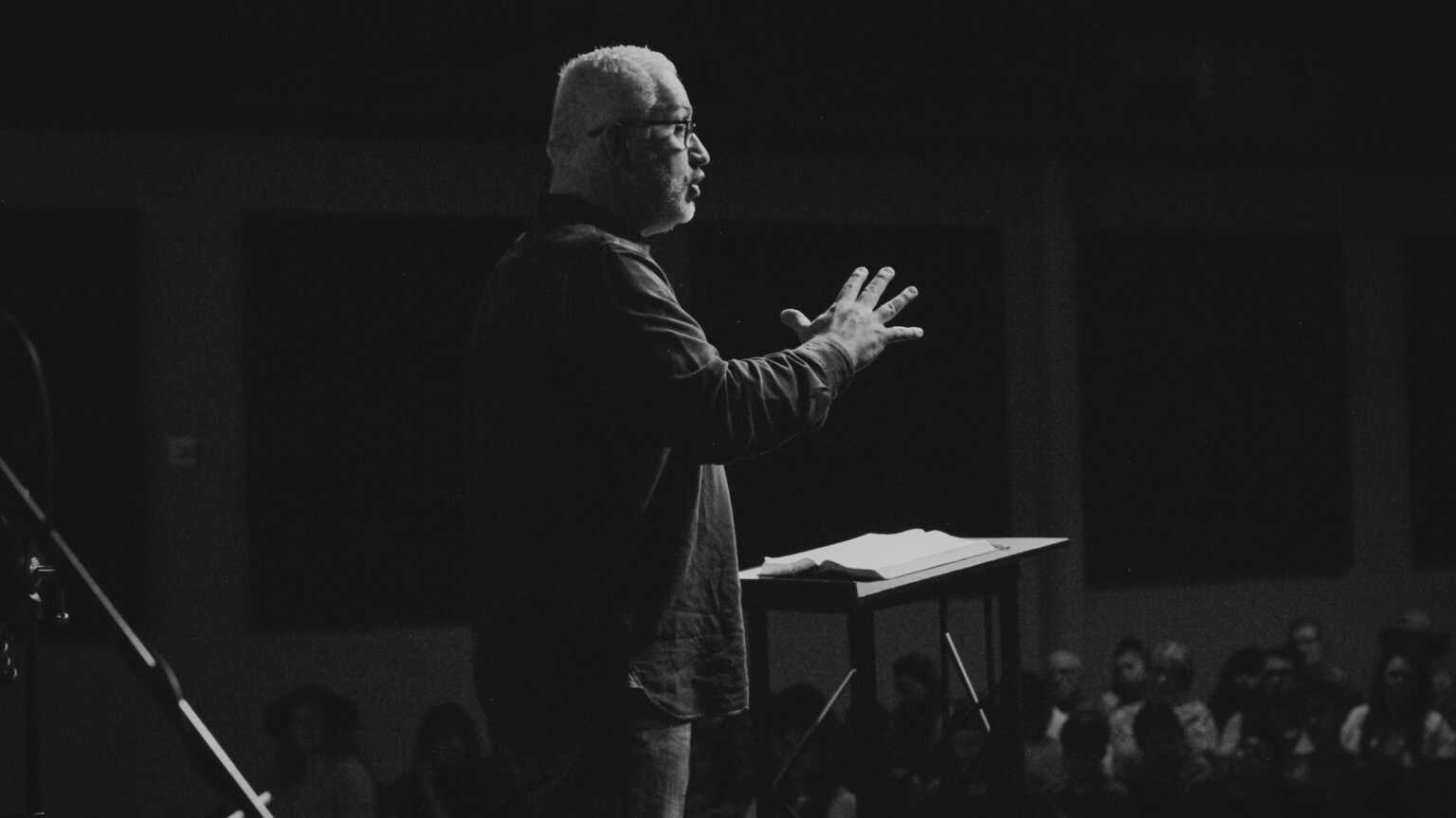
Attendees worship and hear Scripture at the 19th UBF World Mission Conference at KINTEX in Goyang, Gyeonggi Province, South Korea, reaffirming their commitment to global mission. UBF Korea University Bible Fellowship held its 19th World Mission Conference last Saturday at KINTEX convention center in Goyang, drawing roughly 4,000 members from across South Korea and more than 700 missionaries from multiple countries. It was the organization's first in-person global gathering in approximately 10 years, following disruptions caused by the COVID-19 pandemic, according to Christian Daily Korea. About 1,000 attendees — most of them university students — responded to a mission commitment call during the event, filling out pledge cards indicating their intention to serve as long-term or short-term missionaries, the report said. The conference centered on Isaiah 6, using the passage's question "Whom shall I send?" as its theme. UBF World Representative Rev. Ranward addressed the gathering, saying that "God is calling people even today for the work of world mission," and urged young attendees to respond to that call through campus evangelism and missionary service. Ron Ward, UBF world representative pastor, delivers a sermon titled "Who Will Go for Us?" at the 19th UBF World Mission Conference at KINTEX in Goyang, Gyeonggi Province, South Korea, on May 17. UBF Korea Four young adults from Kazakhstan, Japan, Mexico and the United States gave testimonies during the event. Each described lives they said were marked by aimlessness before encountering the gospel through Korean missionaries, and all four said they are now engaged in evangelism among university students in their home countries. The conference also featured a drama and dance performance drawn from the Book of Isaiah, choral and orchestral music, and a video marking UBF's 65th anniversary that reviewed the organization's history and ministry trajectory. Young college students and missionaries gather at the UBF World Mission Conference — the first in-person convening in roughly a decade since the COVID-19 pandemic — to share their vision for campus evangelization. UBF Korea Following the conference, UBF planned a Missionary Shepherd Retreat at Alpensia Resort in Gangwon Province from May 18 to 20, with roughly 800 participants expected, including missionaries and Korean members. The retreat's agenda includes presentations on continental ministry direction and strategies for developing the next generation of missionaries, Christian Daily Korea reported. Separately, a K-Mission Camp for about 100 overseas young people and university students was scheduled to run concurrently at a facility in Hwaseong, Gyeonggi Province, giving participants exposure to Korean church and campus ministry contexts. UBF was founded in 1961 by the late Rev. Samuel Lee and American Southern Presbyterian missionary Sara Barry, beginning with Bible study groups at two universities in southern South Korea. The organization now operates through roughly 90 chapters across more than 120 campuses nationwide and says it has sent approximately 2,000 missionaries to 94 countries.

 Photo by Mi Pham / Unsplash At the D6 Asia Online Family Conference 2026 on May 15, Pastor Sharon Chong, founder and head coach of Gen Brave International and co-author of “Planted with Purpose”, encouraged parents, grandparents, and ministry leaders to intentionally cultivate emotional resilience and spiritual grounding in children by focusing on everyday discipleship rather than performance or perfection. The D6 Family movement, based on Deuteronomy 6, seeks to equip churches and families for generational discipleship by connecting church and home. Supported by the Asia Evangelical Alliance Family & Children Commission, D6 Asia conferences encourage families and churches across Asia to work together in passing on faith to the next generation amid growing concerns over generational faith decline. Speaking during a session titled “Strong Inside: Building Emotionally Resilient and Spiritually Grounded Gen Alpha Kids,” Chong described resilience not as toughness or emotional suppression, but as the ability to recover, persevere and continue trusting God through difficulty. “Resilience is not built in big moments,” Chong said. “It is built in small everyday moments.” Using the metaphor of a garden, Chong told participants that every parent is “a gardener,” continually planting seeds into the hearts of children through words, attitudes and responses. “The question is, what are you planting?” she said. Chong warned that parents cannot build confidence while constantly criticizing, nor can they develop resilience while removing every struggle from a child’s life. “You cannot plant faith while modeling fear,” she said. Throughout the session, Chong outlined five “seeds” parents should intentionally plant in children. The first was identity before achievement. She said many children silently ask whether they are enough or whether they matter, and tying identity solely to performance can make failure emotionally devastating. “I love you for who you are,” Chong encouraged parents to tell their children. “I’m proud of your effort.” A second key principle was allowing children to struggle appropriately rather than rescuing them from every difficulty. “A child who is always rescued never becomes resilient,” she said. Chong also emphasized emotional coaching, encouraging parents to notice emotions, name them and normalize them rather than dismissing children’s feelings. “When we dismiss emotions, children don’t learn regulation,” she said. “They learn suppression.” She repeatedly stressed the importance of “connection before correction,” encouraging parents to build emotional safety and trust before attempting discipline. Faith, she said, must also become part of everyday family life rather than something reserved only for Sundays. “If faith only appears on Sunday, it won’t appear in crisis,” Chong said. “Let your children see you pray. Let them see you trust God.” The final “seed” focused on prioritizing character over image by celebrating qualities such as integrity, honesty, courage and perseverance. In contrast, Chong identified several “weeds” parents should remove, including overcorrection, overprotection, fear-based parenting, comparison and emotional reactivity. “Children absorb our atmosphere more than our advice,” she said. She also offered practical tools for families, including maintaining five positive interactions for every correction, creating one-on-one connection time without devices and teaching emotional regulation skills such as breathing exercises and positive self-talk. “The voice children hear most becomes the voice they carry inside,” Chong said. During the Q&A session, participants raised concerns about perfectionism, anxiety and emotional struggles among children and teenagers. Responding to a grandparent’s question about a perfectionist granddaughter, Chong explained how negative thought patterns often fuel emotional distress. She introduced the concept of “ANTs” — automatic negative thoughts — and encouraged caregivers to help children identify and replace destructive internal messages with “PETs,” or positive empowering thoughts. She also emphasized emotional coaching techniques that include noticing emotions, naming feelings and validating children’s experiences before offering correction or solutions. “Catch the emotion before correcting the behavior,” she said. Chong further addressed questions about discipline, explaining that biblical correction should aim to correct behavior while preserving relationship and protecting identity. “We can discipline without damaging a child’s spirit,” she said. She cautioned parents against fear-based discipline that produces outward compliance while fostering inward resentment. Instead, she encouraged parents to apologize when necessary and to model humility and restoration within family relationships. Addressing concerns about Gen Alpha children and their ability to focus in an increasingly digital environment, Chong challenged the common assumption that younger children have inherently short attention spans. She argued that if children truly had short attention spans, they would not be able to spend hours engaged on their devices and gadgets. Instead, she said many children today are highly overstimulated by constant exposure to fast-paced media and information. Chong cautioned parents and adults against approaching children with negative assumptions, saying children are often highly perceptive and can sense criticism or disapproval through tone and body language. Despite growing digital distractions, Chong said children still deeply value genuine human connection. Drawing from her experience working with Gen Alpha, Gen Z and millennials, she emphasized that meaningful connection does not always require long conversations, but can be built through small, intentional moments such as hugs, encouragement and brief but focused interactions. She encouraged parents to create more positive than corrective interactions and to understand each child’s unique emotional needs and love language. Even a few minutes of sincere connection, she said, can leave a lasting impact on a child’s emotional and spiritual development. “They still long for human connection,” she said. Simple acts such as hugs, short conversations and intentional presence can leave lasting spiritual and emotional impact, she added. Chong also encouraged children’s ministry workers and teachers not to underestimate the influence of small acts of faithfulness toward children from non-Christian homes. Sharing her own testimony of attending church for the first time through a school teacher’s invitation, Chong said those early experiences left a lasting spiritual imprint on her life. “You are sowing seeds,” she said. “Every act of love, every prayer, every moment matters.” The session concluded with a reminder that parenting and discipleship are long-term spiritual investments whose results may not always be immediately visible. “You are not just raising children,” Chong said. “You are discipling hearts.”

When approaching Bible study, my first step is to pray for understanding of narratives set in Old Testament times. In our present-day world, it can be hard to relate to some values of a culture thousands of years before us, such as the significance of the rights of the firstborn. First Chronicles records the descendants of the tribes of Israel—the sons of Jacob, where they settled, who they married, who they begat. The long lists of unpronounceable names are occasionally broken up by some passages that seem anecdotal: Jokim, Joash, and Saraph were potters. Jabez was more honorable than his brothers. The descendants of Simeon “attacked the Hamites in their dwellings.” And in 1 Chronicles 5:1-2 (NIV): The sons of Reuben the firstborn of Israel (he was the firstborn, but when he defiled his father’s marriage bed, his rights as firstborn were given to the sons of Joseph son of Israel; so he could not be listed in the genealogical record in accordance with his birthright, and though Judah was the strongest of his brothers and a ruler came from him, the rights of the firstborn belonged to Joseph). When Jacob (renamed Israel) was near death, he blessed his 12 sons. The firstborn was Reuben, who forfeited his birthright due to his sinful conduct. Joseph, the eleventh son, was sold into slavery by his brothers but ended up saving all their lives during a severe famine. The above passage establishes that, though Judah was “the strongest,” the rights of the firstborn were transferred to Joseph. Judah was the fourth son. His blessing was this: “Judah, your brothers will praise you. … You are a lion’s cub, Judah. … The scepter will not depart from Judah, nor the ruler’s staff from between his feet, until he to whom it belongs shall come and the obedience of the nations shall be his.” (Genesis 49: 8, 9, 10) Judah’s blessing didn’t come to fruition until the era of kingship in Israel. David, anointed king by Samuel, was descended from the tribe of Judah. When the kingdom split into two parts, the southern part became known as the kingdom of Judah. It was here, in Jerusalem, that the Temple was located, the center of worship for God’s people. It was here that the Israelites came to celebrate the great feasts of Passover and Tabernacles. When the king of Babylon conquered Judah, its people were taken captive to live in exile. During this time, they preserved their identity by keeping their faith and the laws God had given them. They also remained true to His Word and to one another by remaining a faithful community in a godless culture. Hundreds of years later in the land of Judah, a descendant of King David gave birth to the King of Kings—the promised Messiah, the Lion of Judah (see Revelation 5:5). We have much in common with the people listed in Chronicles: We have a lineage; we live in a culture. Where we came from and what our ancestors did helped form our place in the culture. Jesus, the Lion of Judah—our Redeemer—has reconciled us to His own Father that we might share in His promised blessings, and the Father’s promises always come to fruition. We have the freedom to live as children of God—to worship Him, to keep His ways, to hold fast to His Word, to remain in the Body of Christ. This redeemed life of faith—a blessing in itself—is the Father’s way of preserving our identity as His own people. He will ultimately position us to receive the fulfillment of His promises. ~ Scripture is quoted from THE HOLY BIBLE, NEW INTERNATIONAL VERSION®, NIV® Copyright © 1973, 1978, 1984, 2011 by Biblica, Inc.® Used by permission. All rights reserved worldwide. 

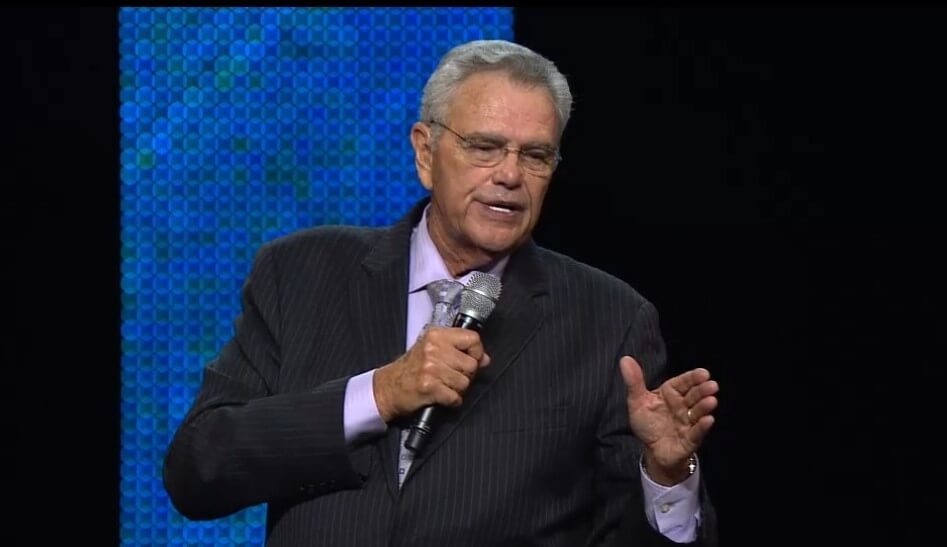
By Anugrah Kumar, Christian Post Contributor Monday, May 18, 2026James Robison, the founder and president of LIFE Outreach International, speaks at The Gathering held at Gateway Church in Southlake, Texas, September 21, 2016. | Screenshot:The GatheringJames Robison, the Texas-based televangelist who founded LIFE Outreach International, died Sunday. No cause of death had been disclosed at the time of the announcement. He was 82.The ministry’s board of directors confirmed the death in a statement posted to social media, saying the mission Robison devoted his life to would continue. “James devoted his life to sharing the Gospel and bringing hope, help, and healing to those in need around the world,” the board wrote, adding that the organization would press forward with food and clean water programs and broader outreach efforts.Robison was the host of “LIFE Today,” a long-running Christian television program. He helped build LIFE Outreach International into a ministry known for feeding programs, clean-water initiatives, disaster relief and outreach to vulnerable communities worldwide.He had spoken publicly throughout his career about being born under difficult circumstances and raised in hardship. Robison had a life-altering encounter with Jesus at age 14 and was called to be an evangelist at 18. According to his website, more than 20 million people have heard him preach throughout his career in ministry. He is survived by his wife, Betty Robison; son Randy; and daughter Rhonda. A daughter, Robin, predeceased him, according to Bunny Pounds, president of Christians Engaged, in a tribute posted to Facebook.James and Betty Robison married in 1963 and partnered in over 60 years of ministry together.Notable Christian leaders offered their remembrances of Robison on social media, including U.S. Ambassador to Israel Mike Huckabee, who formerly served as a Baptist pastor. "I worked for James Robison in the 70's as Dir of Comms. He & wife Betty were huge influences in my life," Huckabee wrote on X. "My middle son's middle name is 'James' after him. His death hits hard. He mentored me in so many ways."Pounds, who said Robison served on the advisory board of Christians Engaged, recalled him as a formative influence. She said he wrote the foreword to her book Jesus and Politics and that his encouragement sustained the organization through difficult early years.“If it wasn’t for James … I wouldn’t have understood John 17 and Jesus’ passion for His Body to be One and His passion for the lost and hurting. If it wasn’t for James, I wouldn’t have discovered the Holy Spirit as a 14-year-old. … If he hadn’t been like a father to me, speaking identity over me at key moments of my journey, I would not have had the courage to go on,” she wrote.LIFE Outreach International’s board asked supporters to pray for Betty Robison and the ministry family in the days ahead.

New data on pastors in America suggests a deepening dissonance between calling and contentment. In its 2026 State of the Church survey, Barna, in partnership with faith-based technology company Gloo, found pastors’ mental health and their confidence in their ability to do their jobs has rebounded significantly over the past decade, all while their satisfaction in ministry has trended downward. Ten years ago, three-quarters of pastors reported feeling burnout. That number has since fallen to just over 60% of pastors reporting emotional and mental exhaustion. Additionally, the share of pastors who feel inadequately prepared to do their jobs has fallen by 20% over the last three years, from 64% in 2023 to 44% in 2026. The metrics on satisfaction in ministry, however, tell a different story. Listen to the latest episode of “Quick Start” When asked how satisfied they are in their “vocation as a pastor,” just north of half (52%) described themselves as “very satisfied” today — a staggering decline from the 72% of ministers who said the same in 2015. The percentage of pastors who reported themselves as “somewhat satisfied” has increased from 26% to 40% over the same time period. Fewer than half of pastors (43%) reported being “very satisfied” with “your ministry at your current church” compared to 53% a decade ago. Over the same 10-year period, the share of pastors who described themselves as “somewhat satisfied” with the ministry at their current churches has climbed to 45%. “Pastors are in the most emotionally healthy place they’ve been in a while regarding vocation,” Daniel Copeland, vice president of research for Barna, said in a statement. “But the satisfaction data suggest they may be settling into a more sustainable — but less deeply fulfilling — experience of the work itself.” Supplemental data from Barna suggests the chasm between calling and contentment may center, at least in part, on whether pastors’ roles and responsibilities align with their unique strengths and passions. “The confidence rebound and declining feelings of inadequacy are genuinely encouraging,” said Copeland. “But if the job itself isn’t working — and the satisfaction data suggest it may not be — the right response is to listen to pastors, then empower them to show us what ministry could look like.” For context, data released by Barna in 2023 showed that, when asked what they enjoy most, pastors overwhelmingly — 60% — said preaching and teaching is their favorite part of their jobs. In a distant second and third place was discipling believers at 8% and practical pastoral care (like visiting the sick or elderly) at 7%.

Pastor Jentezen Franklin is on a transformational mission to explore the power of prayer — and it comes at a time of chaos and uncertainty in American culture and across the globe. Franklin, who has a new book, “The Power of Short Prayers,” said he released the project because he believes a lot of people “don’t understand what prayer is all about.” “Jesus made a comment in Matthew 7, verse 6 — He said, ‘Don’t pray like the Pharisees pray, because they think because of their many words that they will be heard,'” he said. “And so He was saying that longer prayers, that’s not what I’m looking for. I’m looking for your heart. I want to hear your heart.” Franklin continued, “The greatest miracles in the New Testament happen and the Old Testament when people simply prayed short prayers.” These prayers, he said, came with “great purpose, great passion, great urgency,” elements the preacher believes are important to the success of these invocations. “It’s the urgency behind a prayer and the faith connected to it,” he said. “It’s not how long you pray, it’s how short you believe, and if you pray and believe the power of short prayers. … People feel like if they don’t pray an hour a day, they’ve really failed the Lord.” So, Franklin focuses on short prayers from the Bible and encourages people to pray them over their families — their children, marriages, businesses, and other elements. When people start with these shorter prayers, Franklin said they eventually graduate to longer ones as they “pray continually.” In his own journey, the preacher has seen how God has worked through his prayers for his family, ministry, and other life issues. Franklin believes prayer isn’t only a fixture to heal and help individual lives, but one that can also help our culture. And “The Power of Short Prayers” comes at a time when culture is experiencing what many believe to be a spiritual renewal. “I think there is a revival that is taking place,” Franklin said. “We certainly have seen it at our ministry and at our church.” Listen to the latest episode of “Quick Start” Conservative commentator Charlie Kirk’s assassination seemed to spark, among young people, what Franklin described as a “stirring.” Prayer is a tool that can help people navigate these changes and many others. “Every one of these moves of God that seems like they’re breaking forth and mighty moves on campuses and things, it is the result of many prayers that have been stored up, I believe, and prayed,” Franklin said. “It’s an exciting time, and I think pastors are being called to shepherd and steward mighty moves of the Spirit, and this is a great time to be alive.” The preacher wasn’t done there, as he implored Christians to take action. “The end times are not happening to the people of God,” Franklin said. “The people of God are happening to the end times, and His hand is on us now, but we’ve gotta pray and we’ve gotta fast, and when you pray, you are storing up those prayers, and God can do great things.”

One night at my church, a lady approached me and said that she had a word from God for me. I quickly heard the voice of the Holy Spirit warning me in my spirit, “Pray before she speaks!” and I prayed. Her words declared things about me that were far from true. At that moment, I felt very confused—because nothing she said made sense to me or to those who knew me best. Jesus said: “If I were to testify on my own behalf, my testimony would not be valid. But someone else is also testifying about me, and I assure you that everything he says about me is true.” (John 5:31-32) The Holy Spirit had indeed warned me about this person who was speaking falsely. He knew that my identity in Himself would be confronted by the enemy, but I know that God knows me and confirms my acts done in faith. When we do things according to God’s will, our fruit speaks for itself (see Matthew 7:20). At that moment, I remembered these words of Jesus, “And the Father who sent me has testified about me himself. You have never heard his voice or seen him face to face.” (John 5:37)  An intimate and genuine relationship with the Father will bear consistent spiritual fruit evident to others. We don’t have to accept someone who wants to speak—on God’s behalf or their own—into our lives just because they do it in a church setting. Someone who genuinely knows our character and maturity will not go where they are not invited. Perhaps many people have tried to label you according to your past: lazy, a thief, good-for-nothing, liar, crazy, or even unfaithful. Your heavenly Father does not identify you according to what you’ve done. He is always waiting for you to turn back to Him and receive a new identity in Christ. It is important to know and discern what God says about you and hold steadfast to the truth of your genuine relationship with the Father. When needed, God can and does bring loving, humble correction through another; this will always be consistent with biblical truth. In my daily work at CBN Guatemala, I have the privilege of praying for many people who are going through difficult situations. Others have gone through terrible things and have overcome them. Having a genuine relationship with the Father, and my identity grounded in Him, is my greatest strength to help and guide others. The good news today and forever is that God loves you so much that He sent His only Son, Jesus, to die for you on a cross. God has faith in you and has plans for your life. Give your life to the Father today and you will see how false and degrading words toward you will come to nothing. You will see how the roads in the middle of the desert open up and you will see His hand move in your favor. God loves you simply because it pleases Him! And that is more than enough reason to love Him in return. Remember: “For I know the plans I have for you,” says the Lord. “They are plans for good and not for disaster, to give you a future and a hope.” (Jeremiah 29:11) ~ Scripture is quoted from the Holy Bible, New Living Translation, copyright © 1996, 2004, 2015 by Tyndale House Foundation. Used by permission of Tyndale House Publishers, Inc., Carol Stream, Illinois 60188. All rights reserved.

By Ryan Foley, Christian Post Reporter Sunday, May 17, 2026Photo of a stressed-out young mother sipping coffee on her messy bed while her three daughters jump around her. | Getty Images/Davin G. PhotographyLess than a third of American parents pray with their children, according to new research from the American Bible Society, even as younger parents remain more likely than non-parents to identify as Christian.The American Bible Society released the second installment of its “State of the Bible: USA 2026” report on Thursday. Titled “Parenting with the Bible,” the chapter examines the spiritual practices of American parents and their experiences with the Church. The data for the chapter is based on a subset of parents within a larger sample of 2,649 U.S. adults surveyed Jan. 8 to 27. The full survey has a margin of error of plus or minus 2.5 percentage points.A combined total of 29% of American parents said they pray with their children daily (16%) or often (13%). Twenty-one percent of parents surveyed said they pray with their children sometimes, while the remaining respondents either pray rarely (15%) or never (35%)."Most American parents are open to the Bible, but behavior hasn't kept pace with that openness. They're curious but not deeply engaged," John Farquhar Plake, American Bible Society's chief innovation officer and editor-in-chief of the "State of the Bible" series, said in a statement. "These same individuals are navigating the pressures of work, family, and the sheer exhaustion of caregiving." While parents were less likely than non-parents to be “Bible disengaged” (46% to 59%), they were less likely to qualify as “Scripture engaged" (16% to 18%), according to the report. Plake urged churches to "intentionally invest" in parents facing a "demanding season of life.""With support from their church, these caregivers can establish life-giving rhythms of prayer and Scripture engagement with their children, and in their own personal discipleship," he said. "Parents are carrying a heavy load, and all of us in the Church can help them carry it."A solid majority of practicing Christians (72%) — defined as those who self-identify as Christian, attend church at least once a month and consider their faith “very important” — pray with their children either often or daily.Meanwhile, a combined total of 14% of parents said they read the Bible with their children daily (5%) or often (9%). Twenty-five percent of those surveyed said they sometimes read the Bible with their children, while a combined total of 62% either rarely (46%) or never (16%) do so. Daily or frequent Bible reading was most common among practicing Christians (45%), followed by casual Christians (15%) and nominal Christians (7%).When asked whether their children enjoy going to church, a majority of churchgoing parents answered in the affirmative. Seventy-two percent of churchgoing parents with children ages 2 to 5 reported that their children enjoyed attending services, along with 66% of churchgoing parents with children ages 6 to 12 and 61% of parents with children ages 13 to 17.The survey also asked churchgoing parents whether they feel "supported by our church.”Ninety-two percent of practicing Christian parents reported feeling supported by their church, as did 91% of Evangelical Protestants, 84% of Generation X parents, 80% of parents who attend historically black Protestant churches, 78% of mothers, 77% of casual Christian parents and 72% of parents with children ages 2 to 17.Seventy-one percent of Generation Z parents, 69% of Catholic parents, 68% of millennial parents, 68% of fathers, 64% of parents with newborn or 1-year-old children, 59% of Mainline Protestant parents and 50% of nominal Christian or non-Christian parents said the same.When asked about the challenges they face, 10% of the full subset of American parents identified “addressing the spiritual needs” of their children as one of their top two sources of stress.“Addressing the spiritual needs” of their children was the second least-selected option among the sample of parents, ahead of only “other” at 3%. More commonly selected options included “managing work-family balance” (42%), “preventing fatigue or exhaustion” (27%), addressing their family’s financial needs (27%), giving their children “wise guidance or counsel” (23%), providing boundaries for their children (19%) and disciplining their children (19%).An analysis of the religious demographics of both parents and non-parents by generation found that a significantly higher share of younger parents identify as Christian compared to younger non-parents. Among Generation Z — the youngest group of American adults born in 1997 or later — 62% of parents identify as Christian compared to 44% of non-parents. The share of Generation Z non-parent Christians is identical to the percentage of Generation Z non-parents who do not identify with any religion (44%).Among millennials (born between 1982 and 1996), 64% of parents identify as Christian compared to 49% of non-parents. The difference in Christian identification is considerably smaller among Generation X adults (born between 1964 and 1981). Sixty-seven percent of non-parents in this age group identify as Christian, along with 63% of parents.

By Anugrah Kumar, Christian Post Contributor Saturday, May 16, 2026Cory Asbury, known for the hit single "Reckless Love" | Bethel Music/Cory AsburyWorship artist Cory Asbury has said a direct confrontation from fellow Christian musician Forrest Frank brought an end to five years in which he had deliberately walked away from his faith and ministry.Asbury made the disclosure in a social media post saying his departure began after completing the song “Homecoming,” which he called the last worship project he finished before stepping back from ministry. He said he made a conscious decision to leave despite knowing, in his words, “where home was.”The musician compared his experience to the biblical parable of the prodigal son, saying the period of absence more closely resembled that story than the one that had inspired his widely performed song "Reckless Love."“This running, and His pursuit of my heart in that time, was much more of a true ‘prodigal son’ story than the one that originally birthed Reckless Love,” he wrote.Asbury said he came to recognize that his public stance and personal conduct during the years away from ministry had caused harm within church communities. He wrote that he had been “doing Saul’s work, persecuting the church, supposing I had the moral high ground even though I was chest deep in my own pig sty.”The turning point, he said, came through an exchange with Frank that he characterized as a brotherly rebuke. He cited Proverbs 27:6, a verse that reads “Faithful are the wounds of a friend,” as the frame for that encounter. He credited Frank directly, writing that “the rebuke of my brother (Forrest) gained heaven another soul.” He closed the post with the words “I am The One. Thank you, Jesus.”Asbury is best known for “Reckless Love,” a worship song released in 2017 that became one of the most performed congregational songs in American churches over the following years. His music has been widely used in church services internationally.The period he described walking away from ministry would have run roughly from 2019 or 2020 through late 2025, though he did not give specific years in his post. His return, he said, took place in the autumn of 2025.Frank was named Artist of the Year at the 56th GMA Dove Awards in 2025, an annual ceremony recognizing achievements in Christian and gospel music.Asbury's disclosure comes months after he and Frank had announced, and then abandoned, plans to collaborate with Turning Point USA, the conservative organization co-founded by the late Charlie Kirk, on a faith-based alternative to the Super Bowl halftime show.In November 2025, Asbury said in a video posted to social media that the two had joined a call with the TPUSA team but concluded the visions were “incompatible.”The two musicians had floated the idea of a faith-based event they called a “Jesus Bowl” after it was announced that Puerto Rican artist Bad Bunny, known for sexually explicit lyrics, would headline the 2026 Apple Music Super Bowl halftime show.TPUSA subsequently announced its own production, called the All-American Halftime Show, which led fans to assume the two efforts were connected. Asbury said they were not.“We want this to be a Jesus moment,” Asbury said in the video. “We’re glorifying the name of Jesus, worshiping, praying. I almost see it like a Billy Graham crusade, a call to the altar, mass salvation across the nation.” He and Frank said they planned to proceed independently and were seeking donors and sponsors, with Asbury estimating the event would cost “legitimately millions of dollars.” He said neither he nor Frank would take payment from the venture.

(LifeSiteNews) — Acting Food and Drug Administration (FDA) commissioner Kyle Diamantas has promised he will be the “most pro-life FDA commissioner that the FDA has ever had.”   Diamantas made his promise to Students for Life president Kristan Hawkins, according to The Daily Signal.  Shortly after his appointment as acting FDA head, Diamantas reached out to pro-life leaders, including Hawkins, Live Action president Lila Rose, and March for Life president Jennie Lichter.  Diamantas was responding to concerns about his past legal work on behalf of Planned Parenthood, insisting he is pro-life and that he sought to be removed from the pro-abortion assignment.  On Tuesday, the White House confirmed the resignation of FDA chief Marty Makary amid a storm of issues, including internal staff turmoil and his handling of abortion pills, vaccines, and nicotine products. READ: March for Life confirms acting FDA leader regretted Planned Parenthood work On Wednesday, Lila Rose revealed she had spoken with Diamantas, who sought to answer pro-life fears. “He told me he regrets work he performed as an outside attorney for Planned Parenthood in Planned Parenthood of Greater Orlando v. MMB Properties,” Rose said. “He shared that he was assigned to the case by his law firm, performed work on it, and ultimately regretted his involvement because of his moral opposition to abortion. He then asked his superiors to remove him from the case. He said that he is pro-life and cares deeply about the pro-life cause.” “I also raised the urgent crisis of the abortion pill,” she added. “Nearly 11% of women who take mifepristone experience serious adverse events, and the abortion pill has killed millions of American babies. Diamantas told me that reviewing the abortion pill is a top priority for him and the administration.” Today I spoke directly with Acting FDA Commissioner Kyle Diamantas. He told me he regrets work he performed as an outside attorney for Planned Parenthood in Planned Parenthood of Greater Orlando v. MMB Properties. He shared that he was assigned to the case by his law firm,… — Lila Rose (@LilaGraceRose) May 13, 2026 March for Life president Jennie Lichter said she too is now optimistic about Diamantas taking the helm at the FDA.  “Had a great convo last night with Kyle Diamantas, the new acting FDA Commissioner. In other words, within hours of being handed this big new job, he was on the phone with pro-life leaders – which is an encouraging sign of where his priorities lie,” she wrote on X on May 13. “I’m optimistic that the cause of life will get a full and fair hearing at the FDA, incl. real movement on the mifepristone safety study,” Lichter stated. The March for Life is “looking forward to working with” the FDA “in this new era to make sure abortion drug companies can’t continue to lie to women about their drugs that are NOT ‘safer than tylenol,’” Lichter wrote. Had a great convo last night with Kyle Diamantas, the new acting FDA Commissioner. In other words, within hours of being handed this big new job, he was on the phone with pro-life leaders – which is an encouraging sign of where his priorities lie. After talking w him I’m… — Jennie Bradley Lichter (@JennieMFL) May 13, 2026 While Diamantas’ recent comments are encouraging, Rose stressed, “Now we need to see action. The FDA must urgently take action on mifepristone, confront the mounting evidence of harm to women, and address the abortion pill regime that has killed millions of preborn children. We and millions of Americans across the nation who value the right to life expect this administration to advance strong pro-life protections for both mothers and their children.”

 Photo by Siwawut Phoophinyo / Unsplash At the D6 Asia Conference 2026, parenting expert Dr. Scott Turansky urged Christian parents to take a more intentional and heart-centered approach to managing children’s screen time, warning that unchecked dependence on electronics can shape a child’s character, emotional health and spiritual growth. Turansky spoke on May 15 during a session titled “A Heart-Based Approach to Parenting: Managing Screen Time Without Losing Your Mind,” where he addressed the growing challenge of electronics addiction among children and teenagers. The session was part of the broader mission of the D6 Family Ministry, a movement inspired by Deuteronomy 6 that seeks to connect church and home while equipping families and church leaders to disciple the next generation together. The annual D6 Asia online family conference organized by the Asia Evangelical Alliance Family & Children Commission brings together pastors, ministry leaders and families across the region to strengthen intergenerational discipleship and provide practical tools for nurturing faith at home. Turansky described electronics addiction as a condition in which children become anxious when separated from devices for even short periods of time. “Moments of quiet don’t result in peace, but generate anxiety to get back to devices,” he said. He pointed to online gaming, social media and constant digital stimulation as major contributors to the problem, noting that many children feel pressured to stay connected continuously. He also observed similar behaviors among adults. “We see adults stopped at a red light,” Turansky said. “They pull out their phones and start scrolling.” Throughout the session, Turansky emphasized that parents must remain the “architects” of family life rather than allowing children or devices to control the household rhythm. “Parents are the architect of the family calendar, schedule and activity options,” he said. He acknowledged that managing electronics is difficult for many parents because it requires consistency, emotional energy and conflict management. Some parents, he said, avoid addressing screen-related issues because children often react with anger or resistance. Turansky grounded much of his teaching in Scripture, referencing passages including 1 Corinthians 6:12, 1 Corinthians 15:33 and Titus 2:12 to encourage parents to avoid being “mastered” by technology and to teach children self-control. “It teaches us to say no,” he said, referring to the gospel message in Titus. Rather than focusing only on restriction, Turansky encouraged parents to pursue balance in their children’s lives. He said healthy development includes physical activity, face-to-face interaction, spiritual growth, school responsibilities and family participation. He also urged parents to operate from convictions rather than personal preferences. “It’s one thing to say, ‘I wish my kids wouldn’t sleep with their phones,’” Turansky said. “It’s another thing to say, ‘I believe sleep is important, so we’re parking the phone at 9 p.m.’” The speaker encouraged parents to remain firm without becoming harsh and warned against taking children’s emotional reactions personally. “Kids are going to say, ‘You’re the worst parent in the world,’” he said. “But we’re making decisions based on convictions.” Turansky also recommended several practical strategies for families, including using parental controls, keeping devices in common areas, establishing technology-free family times, limiting screen access through structured schedules, and teaching children accountability and self-control. One strategy he highlighted involved transferring responsibility to children by requiring them to monitor and manage their own gaming schedules rather than relying solely on parental reminders. One strategy he highlighted involved transferring responsibility to children by requiring them to monitor and manage their own gaming schedules rather than relying solely on parental reminders. He said the goal is not simply behavior modification but character development. “We can use electronics to build character,” Turansky said, pointing to qualities such as integrity, obedience, unselfishness and the ability to manage boredom. A central theme throughout the session was the danger of elevating pleasure above spiritual maturity. “When pleasure becomes your god, addiction is the result,” he said. Turansky challenged parents to reconsider common cultural messages that prioritize entertainment and happiness as life’s primary goals. Instead of telling children to “have fun,” he suggested parents emphasize values such as responsibility, wisdom and caring for others. The session concluded with an encouragement for parents to view screen management as part of discipleship rather than merely rule enforcement. “Children need parents who are going to step in and help provide self-control,” Turansky said. He urged families and churches to work together in forming healthy digital habits rooted in biblical values, character formation and spiritual growth — goals that align closely with the mission of the D6 Family Movement to strengthen faith across generations.

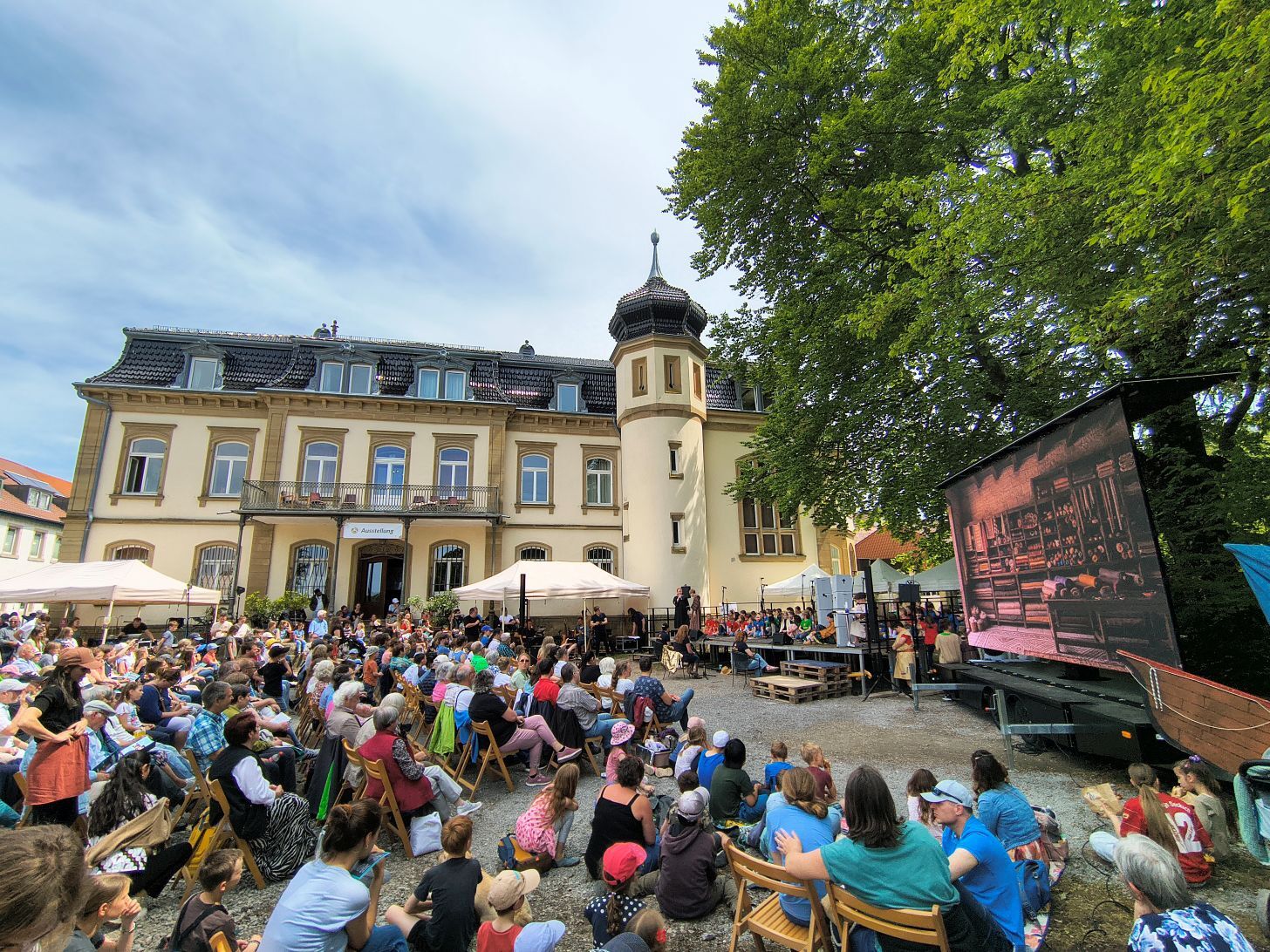
Visitors gather in the courtyard of the Buchenauerhof during the 75th anniversary event hosted by the German missions organization DMG, which drew more than 3,000 attendees for intercultural worship services, exhibitions and mission-related activities. DMG More than 3,000 people attended a 75th anniversary event hosted by the German missions organization DMG on May 10, as the group transformed its headquarters in southwest Germany into a daylong showcase of international worship, mission work and community activities. According to a press release from the Deutsche Missionsgemeinschaft (DMG), visitors gathered at the Buchenauerhof near Sinsheim for what the organization called an “Experience Day,” featuring multilingual church services, cultural exhibitions, food stands and presentations by missionaries serving in more than 60 countries. The event reflected the organization’s emphasis on intercultural engagement and practical forms of mission work, while also highlighting concerns among some Christian leaders about declining church participation in Europe. Three international worship services — Latin American, African and Arabic-language gatherings — were each held twice during the day. Organizers intentionally did not include a traditional German-language service. During the African service, a Kenyan Christian identified only as Dan commented on Christianity in Europe. “Germany has many large churches, but there seem to be few people inside them,” he said. “Many years ago, it was Germans who translated the Bible into my country. Today, I hope that people here in Germany and Europe will once again engage with this message.” An African-themed worship service was among several international gatherings held during DMG’s 75th anniversary event in Germany, reflecting the missions organization’s focus on intercultural ministry and global Christian partnerships. DMG In the Latin American service, the youth band from the Iglesia de Mannheim led Spanish-language worship songs. Former DMG missionary and pastor Bernhard Grupp spoke about 25 years of ministry among the indigenous Canela people in Brazil, describing how local cultural concepts helped shape conversations about the Christian message. An Arabic-language service with live translation focused on biblical parables and the meaning of mission work. A speaker identified as Baker, from the Middle East, said Christian mission involves both international outreach and engagement with people in local communities. Throughout the grounds, visitors encountered displays designed to simulate aspects of missionary life and service. Missionaries demonstrated activities ranging from teaching and bicycle repair to pizza baking and taekwondo instruction. One exhibit challenged participants to place their hands in ice water to experience the cold temperatures of Alaska’s Yukon River. Another featured discussions about agriculture and irrigation projects in North Africa. According to the organization, about 200 visitors joined guided tours tracing the 75-year history of the Buchenauerhof and DMG itself. Local official Manfred Wiedl of Sinsheim-Weiler said the growing campus had effectively become “a real little district of its own.” DMG mission director Simon Bohn said the organization wanted visitors to experience mission work firsthand rather than only hear about it. “Many people long for hope, love and forgiveness,” Bohn said in the statement. “Mission does not mean that we know something better, but that we invite people to encounter God.” Children’s activities included a LEGO city, escape room, inflatable games and tree climbing exercises organized with the Adelshofen Life Center. The children’s choir “Königskinder” from Hüttenberg performed a musical based on the life of the Apostle Paul. The organization also noted that some visitors questioned the concept of mission work during conversations with DMG staff, while others asked about the organization’s Christian identity. Organizers described the event as an opportunity for open discussion alongside presentations about Christian faith and missionary service. According to DMG, the organization currently has around 430 staff members serving in more than 60 countries. The morning after the anniversary event, the organization commissioned 10 new missionaries for overseas assignments following their preparation period.

Loading...
Loading...
Confirmation
Are you sure?
Cancel Continue