 Your post is being uploaded. Please don't close or refresh the page.




- Supreme Court declines to hear Will McRaney's lawsuit against Southern Baptist Convention entity.
- Lower court ruling against McRaney remains in effect, ending the litigation.
- McRaney expresses disappointment, claiming the decision impacts millions of Baptists and religious groups.
An artificial intelligence-powered tool created this summary based on the source article. The summary has undergone review and verification by an editor.
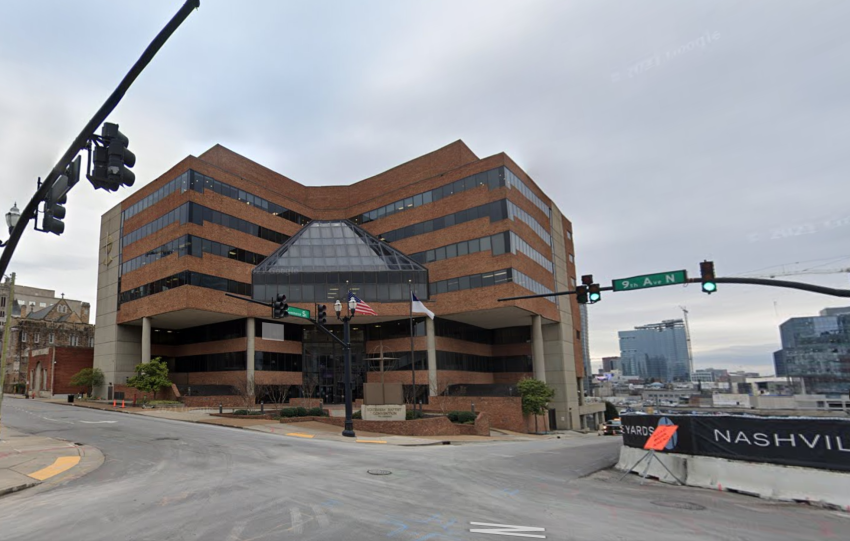
The U.S. Supreme Court has refused to hear former Southern Baptist state convention leader Will McRaney’s lawsuit against a Southern Baptist Convention missions entity, allowing a lower court ruling against him to stand.
In an orders list released Monday, the Supreme Court declined, without comment, to hear oral arguments in Will McRaney v. North American Mission Board, Inc.
The Supreme Court's refusal to hear the case allows a ruling against McRaney by the 5th U.S. Circuit Court of Appeals last September to stand, effectively ending the litigation.
McRaney said he is “disappointed” by the decision, believing that it was “a historic loss in multiple ways.”
“This decision will have an impact on millions of Baptists and other religious groups,” he claimed in a statement shared with Baptist Press. “Today after nine years in the courts, NAMB won and secured their right to do what God forbids, to defame and interfere with Baptist ministers, partners and financial supporters.”
Responding to the decision, NAMB noted in a statement that it has “consistently disputed any claims of wrongdoing in this matter” and “remain committed to serving churches and pastors.”
“The outcome both respects Baptist distinctives and reaffirms that Baptists and other nonhierarchical faith groups are no less entitled to the First Amendment’s protections against secular intrusion into ministry affairs,” stated NAMB.
“We respect the right of others to express differing views, but civil courts are not the proper forum for resolving disagreements like this among churches, ministries, or ministry leaders. The Constitution rightly protects against such government entanglement.”
In 2012, NAMB and the Baptist Convention of Maryland/Delaware entered into a Strategic Partnership Agreement centered on better evangelizing nonbelievers in the region.
McRaney, who was executive director of the BCMD at the time, disagreed with NAMB over how to properly implement the agreement, with the missions agency taking issue with his leadership.
In June 2015, the BCMD board unanimously voted to dismiss McRaney, reportedly citing his leadership abilities. McRaney sued NAMB in 2017, claiming that he was defamed and the agency influenced the 2015 decision to remove him.
While a Mississippi judge ruled against McRaney in April 2019, a three-judge panel of the 5th Circuit unanimously reversed the decision in 2020 and remanded it to the lower court.
NAMB filed a petition with the U.S. Supreme Court in February 2021, arguing that it was protected legally by a ministerial exemption. However, the highest court in the land declined the petition.
Last September, a three-judge 5th Circuit panel ruled 2-1 to uphold a lower court dismissal of McRaney’s lawsuit, with Circuit Judge Andrew S. Oldham authoring the majority opinion.
“Civil courts cannot adjudicate ecclesiastical matters,” wrote Oldham. “The church autonomy doctrine also forbids courts from adjudicating matters of church governance, including church discipline and the church’s understanding of its own membership.”
“On the merits, the church autonomy doctrine bars all of McRaney’s claims against NAMB. Although his claims are facially secular, their resolution would require secular courts to opine on ‘matters of faith and doctrine’ and intrude on NAMB’s ‘internal management decisions that are essential to [its] central mission.’”
Circuit Judge Irma Carrillo Ramirez dissented, writing that McRaney’s “secular claims against a third-party organization do not implicate matters of church government or of faith and doctrine.”
“Determining whether NAMB acted ‘willfully or wantonly’ does not implicate religious beliefs, procedures, or law,” wrote Ramirez in her dissent.
“Determining the veracity of these claims would not require any inquiry into Baptist religious beliefs, nor would it require assessing whether McRaney fulfilled his gospel calling. His defamation claim does not fail in its entirety.”
News Source : https://www.christianpost.com/news/supreme-court-refuses-will-mcraneys-lawsuit-against-sbc-entity.html