For the best experienceDownload the Mobile App

I’m one of those moms with twenty years between my oldest and my youngest child. When our first child was born in 2000, mom blogs were in their infancy. There was no Facebook, TikTok, or curated feeds. Having parented in two eras, one thing is unmistakable: the number of voices has multiplied. Yet amid the digital explosion, there is a lack of wisdom. Young women are influenced but unknown. For believers, Paul’s challenge to older women to teach sound doctrine remains a necessary cultural anchor.The Change of InfluenceThe major influences on my mothering in the early years were friends and books. If I had a question about parenting, I phoned a friend or my grandmother. They most likely gave me suggestions, prayed for me, and possibly recommended a book. When I finished the book, we would have more conversations. Life happened over shared playdate sandwiches and dinners with heaping servings of ziti. There was accountability. If my struggles continued, my friends knew. My sphere of friends was small but true. Mothering was done in this context—trusted people and godly wisdom in relationships.My youngest children were born in 2020. I gave birth to our daughter the week before shut-downs began. Nine months later, we picked up our son from the hospital. If our phones were already drowning us in information before COVID, the overload now permeated every quiet corner of life. Surfing TikTok and Instagram became a means for seeking out mothering companionship and wisdom. Instead, I encountered a deluge of information. Beige-washed accounts, crunchy mamas, mamas screaming on either side of the vaccine debate, gentle-parenting, and helicopter parenting—literally every genre of motherhood could be referenced in the phone in my hand at a moment’s notice. The noise of it all was dizzying. Where was the wisdom? In a crowd of self-proclaimed experts, no one seemed to know.Lockdowns eventually ended, but that experience of solitude was deafening to me. Whatever happened to folding laundry while on the phone with a girlfriend, talking about everything from diaper rash to birthday parties? By this time, my grandmother had gone to be with Jesus. I missed the wisdom of a spirited older voice on the phone, telling me things would be alright and this too would pass. During the year our youngest children joined our family, I realized I had become the older woman. Experiencing both sides of the coin, I knew new moms were lonely and looking to a screen for belonging. On the flip side, being an older woman was not trendy in an age when trends seemed key. The good news is the gospel transforms women from being fixated on trends to fixing our eyes on Christ and his ways. The call to obedience is not powered by trends but by his Spirit.Influenced but UnknownConsider that one recent scroll of social media displayed a fifty-year-old woman shaking her hips at the camera, a mom pouring herself a glass of wine because she frantically got her kid onto the bus just in time, and another unboxing clothing while standing in a closet that rivaled a boutique. Contrast that scrolling experience with Paul’s words in Titus 2:1, 3–5: But as for you, teach what accords with sound doctrine . . .Older women likewise are to be reverent in behavior, not slanderers or slaves to much wine. They are to teach what is good, and so train the young women to love their husbands and children, to be self-controlled, pure, working at home, kind, and submissive to their own husbands, that the word of God may not be reviled.We don’t align with these instructions simply to offer a cure for loneliness. What is at stake is not loneliness; it is the reputation of the gospel.Social media can be a helpful tool when used wisely, but discipleship was never meant to happen over a screen between strangers. We are made for relationship. In an age of disconnect, the need for discipleship is stronger than ever. “The internet and smartphones are fantastic for connections, communication, and knowledge. But connections are not friends, communication is not intimacy, and knowledge is not wisdom” (Justin Whitmel Earley, Made for People, 112).Ask a young mom who is helping her in motherhood, and she’ll probably list three influencers she has never met. She is being influenced but she is not known. Ask a single woman who is mentoring her, and there will be silence. Is there a difference between being a follower and being discipled? For one, followers have no accountability. They may or may not take advice. They might let the trends take them one direction this week and be swayed differently the next. Discipleship requires relationship and genuine connection. In relationship, we grow. In following, we float aimlessly. Gospel-Inspired ConnectionPresented with this conundrum, we can take hope. The gospel holds the answer to the disconnect. Old or young, if we desire to be discipled and not just influenced, we need to clear the commotion. Consider the voices we’ve given the right to daily speak into our lives. How do they speak about their kids, spouse, or lives in general? Are they continually pointing hearts to gospel hope? Media weeding is a great place to start turning down the noise level of voices that shouldn’t be speaking into our lives. The cure for the silence we have been filling is presence. If, like me, you fall somewhere in the older woman spectrum, invite a younger mom over with her kids. Make sandwiches and embrace sticky fingers while you ask about her life. Go for a walk—movement greases conversation and tires out children. If you are a younger woman, feel encouraged to seek out an older woman. Nothing is more encouraging to an older woman than to hear, “Hey, I really need friends and I’m not sure what I’m doing. Can I come over and hang out?” This is an easy “yes” on our part. As older women, we don’t need to feel like we did it all right. Younger women are open to learning from our mistakes. Presented with my own disconnection, I began inviting a small group of women over on Tuesday nights. We were mostly all strangers of varying ages, some who knew Christ and some who did not, but it was a time for coffee, a devotional book, and intentional efforts for connection. For a few hours every week, we hashed out a way to silence the voices of social media and breathe deep into something real and tangible where relationships deepened.Paul could not have foreseen algorithms or influencers, but the same Spirit that instructed him what to write did know all of our days. Trends may change. (They always do.) Technology advances. What remains unchanged is the Word of God that instructs women to enter into relationship with one another with the goal of glorifying Jesus and becoming more like him. The antidote to a perfectly curated feed is the reality of relationship. We welcome women into being known because that is what Christ has done for us. Discipleship isn’t cultivated within “likes” on social media. It is cultivated through life together, empowered by the Spirit, one ordinary day at a time. 

By Leonardo Blair, Senior Reporter Monday, April 06, 202660% of church leaders surveyed by Barna report using artificial intelligence a few times a month.But many pastors worry that AI technology could replace their guidance. Concerns also include plagiarism and loss of congregants' trust. An artificial intelligence-powered tool created this summary based on the source article. The summary has undergone review and verification by an editor.Unsplash/Solen FeyissaWhile a majority of pastors are personally reaping benefits from the use of artificial intelligence, some remain troubled by a raft of concerns about the technology's impact on ministry, including the displacement of pastoral spiritual guidance and the erosion of congregants’ trust, a new study shows.In Technology for Missional Impact: State of Church Tech 2026, produced by Barna in partnership with Pushpay, around 60% of church leaders report using AI for personal use at least a few times a month, while only 24% say they never use the technology. “When church leaders do adopt AI, they primarily use it as a tool to support creativity and efficiency. The most common use cases involve generating or editing written materials, graphics, emails, social media posts, and, in some cases, sermons,” the report states. “This aligns with church leaders’ general approach to technology as a communication aid.”The findings in this new report come just months after researchers highlighted in "The 2025 State of AI in the Church Survey Report" last December that a majority of pastors use AI to prepare their sermons, with ChatGPT and Grammarly as the top two AI tools.As they continue to use the technology, the latest Barna-Pushpay study highlights several practical and pastoral concerns church leaders have about the use of AI in ministry, including plagiarism.About 51% of church leaders said they were "very concerned" about plagiarism and "compromised message integrity," with another 30% being "somewhat concerned."  Nearly half of them, 49%, said they were "very concerned" about losing the authenticity of their preaching and teaching, while 83% were either "very concerned" or "somewhat concerned" about data privacy.Despite the findings, most pastors reported that they have not yet incorporated AI into their ministry or operations. Some 58% of church leaders said their church was not using AI as far as they knew, while 33% said their church is using AI in some capacity. Another 8% said they were unsure.Just last month, Barna’s "State of the Church" initiative, produced in partnership with Gloo, found that about a third of practicing American Christians said the spiritual advice they get from AI is just as good as that from a pastor, with practicing Christians more likely to agree with this notion than non-practicing Christians and non-Christians.Church leaders in the Barna-Pushpay study expressed concern about the impact of AI on American spirituality. While only a few pastors expressed concern that AI would replace them outright, some 65% worry that AI could displace their spiritual guidance. Another 70% worry that the technology could diminish congregants’ trust in them.“Clear guidance could help address these tensions. Most church leaders believe it is important for churches to establish policies governing AI use (24% extremely, 40% somewhat),” the researchers noted.“Yet few churches have taken this step. Only 5% of church leaders say their church currently has an established AI policy — revealing a significant gap between leaders’ sense of responsibility and their organizational readiness.”Despite their caution, however, some 79% of church leaders reported in the study that technology has significantly or moderately improved connections among congregants. A majority of church leaders, 61%, also believe that technology has helped their congregation deepen their faith.“When it comes to fostering congregants’ connections to God and to each other, church leaders regard digital tools as supplemental, not essential,” the researchers note. “Even so, as noted earlier, the operational benefits are clear: 78% say technology has made ministry life at least somewhat easier.”

HOUSTON (AP) — The Artemis II astronauts are already the champions of a fresh new era of lunar exploration. Now it’s time to set a new distance record. Launched last week on humanity’s first trip to the moon since 1972, the three Americans and one Canadian are chasing after Apollo 13’s maximum range from Earth. That will make them our planet’s farthest emissaries as they swing around the moon without stopping on Monday and then hightail it back home. Their roughly six-hour lunar flyby promises views of the moon’s far side that were too dark or too difficult to see by the 24 Apollo astronauts who preceded them. A total solar eclipse also awaits them as the moon blocks the sun, exposing snippets of shimmering corona. “We’ll get eyes on the moon, kind of map it out and then continue to go back in force,” said flight director Judd Frieling. The goal is a moon base replete with landers, rovers, drones and habitats. A look at Artemis II's up-close and personal brush with another world — our constant companion, the moon. Apollo 13 holds the distance record from Earth Apollo 13’s astronauts missed out on a moon landing when one of their oxygen tanks ruptured on the way there in 1970. With the three lives in jeopardy, Mission Control pivoted to a free-return lunar trajectory to get them home as fast and efficiently as possible. This routing relies on the gravity of Earth and the moon, and minimal fuel. It worked for Apollo 13, turning it into NASA’s greatest “successful failure.” (For the record, flight director Gene Kranz never uttered “Failure is not an option.” The line is pure Hollywood, originating with the 1995 biopic starring Tom Hanks.) How Artemis II will surpass Apollo 13 Commander Jim Lovell, Fred Haise and Jack Swigert reached a maximum 248,655 miles (400,171 kilometers) from Earth before making their life-saving U-turn on Apollo 13. Artemis II’s astronauts are following the same figure-eight path since they are neither orbiting the moon nor landing on it. But their distance from Earth should exceed Apollo 13’s by nearly 3,400 miles (5,400 kilometers). Artemis II’s Christina Koch said late last week that she and her crewmates don’t live on superlatives, but it’s an important milestone “that people can understand and wrap their heads around,” merging the past with the present and even the future when new records are set. Artemis II astronauts take shifts for prime lunar views During the flyby, the astronauts will split into pairs and take turns capturing the lunar views out their windows with cameras. At closest approach, they will come within 4,000 miles (6,400 kilometers) of the moon. Because they launched on April 1, the rendezvous won’t have as much of the far lunar side illuminated as other dates would have. But the crew still will be able make out “definite chunks of the far side that have never been seen” by humans, said NASA geologist Kelsey Young, including a good portion of Orientale Basin. They’ll call down their observations as they photograph the gray, pockmarked scenes. There's a suite of professional-quality cameras on board, and each astronaut also has an iPhone for more informal, spur-of-the-minute picture-taking. Young’s team made lunar geography flashcards for the astronauts to study before the flight. “They’ve practiced for many, many, many months on visualizations of the moon,” she said over the weekend, “and getting their eyes on the real thing, I’m really, really looking forward to them bringing the moon a little closer to home on Monday.” A total solar eclipse is in store during the moon flyby The upside of the April 1 launch is a total solar eclipse. The eclipse won’t be visible from Earth — only from the Orion capsule — treating the astronauts to several minutes’ worth of views of the sun's outermost, radiating atmosphere, the corona. The astronauts will be on the lookout for any unusual solar activity during the eclipse, Young said, and will use their “unique vantage point” to describe the features of the solar corona, or crown. All four astronauts packed eclipse glasses to protect their eyes. How long the brief blackout behind the moon lasts Orion will be out of contact with Mission Control for nearly an hour when it’s behind the moon. The same thing happened during the Apollo moonshots. NASA is relying on its Deep Space Network to communicate with the crew, but the giant antennas in California, Spain and Australia won’t have a direct line of sight when Orion disappears behind the moon for approximately 40 minutes. These communication blackouts were always a tense time during Apollo although, as Frieling points out, “physics takes over and physics will absolutely get us back to the front side of the moon.” It's homeward bound for Artemis II after the moon flyby Once Artemis II departs the lunar neighborhood, it will take four days to return home. The capsule will aim for a splashdown in the Pacific near San Diego on April 10, nine days after its Florida launch. During the flight back, the astronauts will link up via radio with the crew of the orbiting International Space Station. This is the first time that a moon crew has colleagues in space at the same time and NASA can’t pass up the opportunity for a cosmic chitchat. The conversation will include both members of the first all-female spacewalk in 2019: Koch aboard Orion and Jessica Meir, on the station.

“Go back to your home, and tell all that God has done for you.” (Luke 8:39 CSB) During one quiet morning with the Lord, I read a passage of Scripture that sent me on a journey of remembering all the ways He had healed me in the past. As I read Luke 8:26-56, I was captivated by Jesus healing a man possessed by demons, a woman who had bled for 12 years, and a 12-year-old girl who was dying. These accounts filled me with awe and caused me to reflect on the countless times He had healed me too. I pondered memories of recovering from painful athletic injuries, navigating the fear of mysterious illnesses, and the slow, steady mending of a broken heart. During this time of reflection, I realized God doesn’t just help us through the storm for our own comfort. On the other side of each ailment, He uses our healing as a testimony of His faithfulness. There was a season when my unused running shoes were a silent reminder of an athletic injury to my knee that threatened to end my long-distance running. The ailment was not only physical—but a mental struggle of potentially losing a part of life I thoroughly enjoyed. ​Years prior, I lost several loved ones in a brief span of time. While the knee injury challenged my body, my personal grief crushed my spirit.  During both of these seasons, Jesus was the only foundation that never shifted. In one season, He mended my knee so I could run. In another, He mended my broken heart. Today, I not only run with my legs; I run with a story of a Savior who specializes in creating testimonies. In Luke 8:39, the Bible tells us how Jesus liberated a man from a life of mental torment and spiritual oppression. Jesus instructed him, ​“Go back to your home, and tell all that God has done for you.” The man followed this command, "proclaiming throughout the town how much Jesus had done for him." He understood that his healing was meant to show others the way to the Savior. I can imagine his joy as he shared the goodness of his newfound freedom. Take a moment to think of the ways God has helped you through a tremendously difficult season. Perhaps you have suffered deep heartbreak because of a broken relationship. Maybe you have battled mental health struggles that felt like walking through a dark tunnel with no end in sight. It’s easy to want to leave those memories in the past, but there is power in sharing your story to encourage others. Your history of healing is a roadmap of His grace in your life. Heavenly Father, thank You for being the Great Physician of our souls and bodies. We ask You to quiet our hearts so that we can clearly see the trail of Your goodness in our lives. Help us remember the obstacles we once faced and how You brought us through to the other side. Give us the courage to speak up and tell others about Your healing power, just as Your Son commanded. In Jesus’ name, we pray. Amen. ~ Scripture is quoted from The Christian Standard Bible. Copyright © 2017 by Holman Bible Publishers. Used by permission. Christian Standard Bible®, and CSB® are federally registered trademarks of Holman Bible Publishers, all rights reserved.

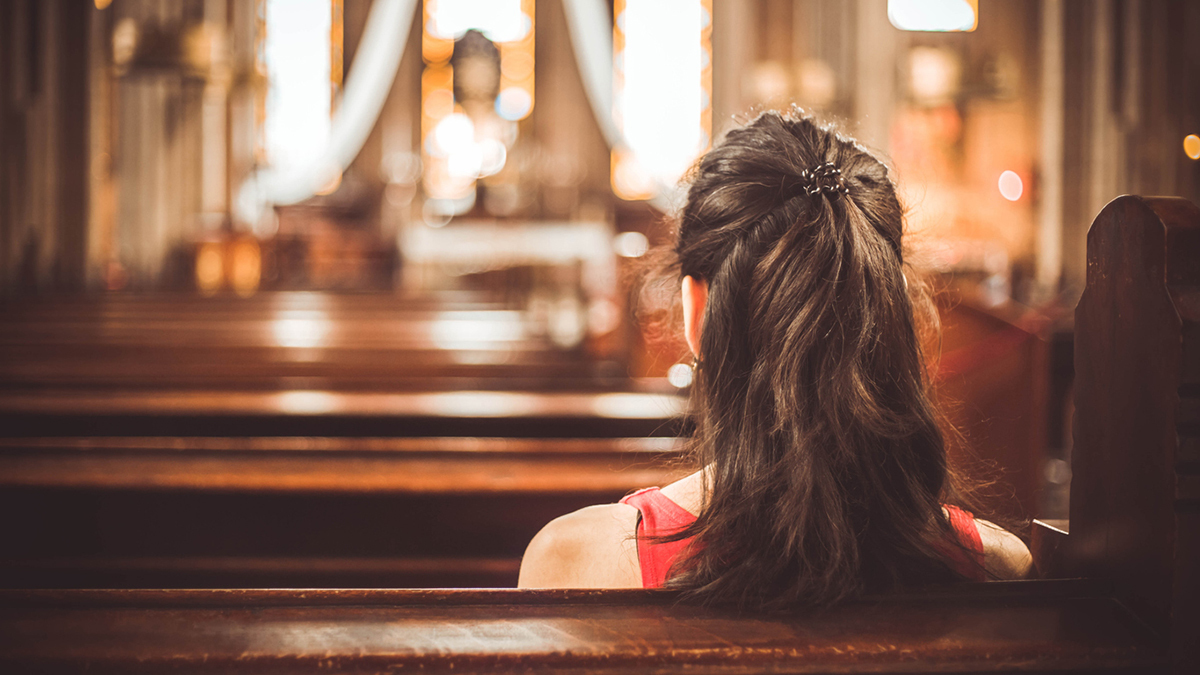
By Samantha Kamman, Christian Post Reporter Sunday, April 05, 2026A woman sitting in a church pew. | kadirdemir/iStockDays after YouGov retracted Bible Society’s “Quiet Revival” data, a new analysis contends that non-religious identity among young people in the United Kingdom, particularly those under 35, is a permanent shift rather than a temporary phase, prompting a response from the nondenominational organization. Humanists UK, a national charity that promotes secular humanism, published an analysis of the British Social Attitudes Survey 2024 conducted by the National Centre for Social Research between Sept. 16 and Oct. 17, 2024.  Based on 4,120 fully or partially completed responses, the BSA survey found that that 61% of 16 to 34-year-olds identify with no religion. Ninety-four percent of the 16 to 34-year-olds raised as non-religious still identified with no religion as adults, while 4% of people in the same age group raised as non-religious adopted any form of Christianity.“The data shows that non-religious identity is not a phase young people pass through — it is a settled and stable worldview,” Humanists UK’s analysis asserted. Janet Ellis, the president of Humanists UK, asserted in a statement Thursday that the figures suggest young people “are living thoughtful, values-driven lives without any religious framework at all,” claiming that they are doing so “with confidence and joy.”“For young people, [labeling] them just as 'nones' or 'no religion' can be misleading because it implies an absence,” the Humanists UK president stated. “But what they actually have is a positive way of being in the world: looking for evidence to know what’s true, and looking to friendships, hobbies, and relationships to give life meaning.” “The data confirms what many of us already know: for a growing majority of people in Britain, humanism — the idea that we can live well and do good without gods — is simply how life is lived,” Ellis said. The BSA data also suggests that half of the population in the U.K. now identifies with no religion, and half of them were raised with no religion. According to Humanists UK, the data “reveals the near-total collapse of Church of England identity among younger generations.” “While 21% of over-75s identify as Anglican, that figure falls to just 2.6% among 16 to 34-year-olds,” the secular group noted. “Across all respondents, only 10.7% now identify as Church of England — down from figures that once placed it as the majority faith tradition in Britain.” The publication of the analysis follows YouGov's retraction of research that reportedly found a rise in church attendance among young people in parts of the U.K., which the Bible Society described as a “quiet revival.” YouGov, which carried out the research in 2024 for the Bible Society, announced last week that, after re-analyzing its data collection, it had discovered that the data sample for “The Quiet Revival” report contained “a number of respondents who we can now identify as fraudulent.”Andrew Copson, chief executive of Humanists UK, argued that the data in the “Quiet Revival” report was “always implausible,” claiming that it contradicted the findings of other surveys, as well as attendance data from Anglican and Catholic churches. “The British Social Attitudes survey is the gold standard for a reason. It shows, clearly and consistently, that Britain has become a majority non-religious country, that younger generations are leading that change, and that there is no evidence of any reversal,” Copson stated. “It is time for our public institutions, from Parliament to our schools, to catch up with the reality of who the British people actually are,” he added. In response to an inquiry from The Christian Post, a Bible Society spokesperson cautioned against concluding that young people who identify as non-religious lack spiritual beliefs, noting that this is an area of study in development.The spokesperson referenced the Bible Society's latest report, "The Quiet Revival one year on: what's the story?," which he said provides counter-evidence to Humanist UK's claims.According to the report, "measuring national church attendance accurately and consistently is incredibly complex" due to the lack of a comprehensive census of church attendance in England and Wales and the fact that few denominations and expressions regularly count attendance.The introduction of digital church services and remote worship has also made it difficult to accurately measure attendance, the report argued. While the Bible Society's report acknowledged that the Catholic Church and the Church of England have reported lower attendance numbers than before COVID, they have also reported "year-on-year growth" since the pandemic. In 2024, there was a 21% rise in the number of baptisms of people over the age of 7 in the Catholic Church, "with more [baptized[ in 2024 than ‘in any other year in the 11-year period for which data is available, by a considerable margin," according to a November 2025 report in The Tablet cited in Bible Society.The Catholic Church had already seen the number of baptisms rise above pre-pandemic levels in 2023, and in 2024, the number of adults receiving Holy Communion for the first time increased by 44%. "In the Church of England, teenage and adult baptisms rose by more than 1,000 (an increase of 11.5%) in 2024 compared to 2023 — the highest increase since age categories were introduced. In the same year, confirmations increased by 5.3%," Bible Society's report noted.Bible Society's latest analysis noted that the Evangelical Alliance reported an average increase of 13% attendance after surveying its members in 2025. The group's report also highlighted data showing that Pentecostal churches in the U.K went from 2,500 congregations in 2000 to 4,200 by 2020. Humanists UK did not immediately respond to The Christian Post's request for comment.Those who believe a religious revival may be underway in the U.K. point to data collated by Christian publisher SPCK Group that found Bible sales rose sharply in 2025, with the group reporting record figures.Publishing director at SPCK, Lauren Windle, has suggested the surge reflects growing engagement among younger readers."Maybe the generation that has everything wants more — more real, more truthful, more consistent, more outward facing, more generous and more peaceful. More God-like," she said.While Bible Society CEO Paul Williams acknowledged YouGov’s error in a statement last week, he asserted that the research firm’s mistake does not mean that all other findings are wrong.Williams said his organization will continue trying to understand the “changing landscape” through research focused on attitudes toward faith and the Bible.“This wider picture is also supported by a number of other surveys, based on probability sampling, which point to an increased engagement in faith among young adults compared to older generations,” the Bible Society CEO said. Williams pointed to research such as the Ipsos MORI 2023 Global Religion Survey, which found that, on average across 26 countries, 40% say they believe in God as described in holy scriptures. Twenty percent said they believe in a higher power.“While religious identity overall is shifting from ‘Christian’ to ‘no religion,’ Christianity in Britain appears to be moving from a declining nominal faith to a committed and active one, as cultural shifts — especially among younger people — encourage a more proactive search for identity, meaning and purpose,” the CEO said.

By Michael Gryboski, Editor Sunday, April 05, 2026A Russian postage stamp commemorating the 750th anniversary of the 1242 Battle of Lake Peipus. | Wikimedia CommonsThroughout the extensive history of the Church, numerous events of lasting significance have occurred.Each week marks anniversaries of impressive milestones, unforgettable tragedies, amazing triumphs, memorable births and notable deaths.Some events, spanning over 2,000 years of history, might be familiar, while others might be unknown to many.The following pages highlight anniversaries of memorable events from this week in Christian history, including the Battle of Lake Peipus, the death of William M. Thomson and the arrival of evangelist Bakht Singh in Bombay.Follow Michael Gryboski on Twitter or FacebookPage 2 By Michael Gryboski, Editor Sunday, April 05, 2026The Battle of Lake Peipus – April 5, 1242A 16th-century depiction of the 1242 Battle of Lake Peipus, where Russian forces under the command of Prince Alexander Nevsky defeated an army of Teutonic knights. | Public DomainThis week marks the anniversary of when Russian forces under the command of Prince Alexander Nevsky defeated the Teutonic Order of knights at the Battle of Lake Peipus.Commonly known as “The Battle on the Ice” because a substantial portion of the fight took place on a frozen lake, the conflict was part of the broader Northern Crusades, an effort by Catholic military orders to conquer the Baltic region.The Teutonic forces and their allies sought to take control of the Russian Orthodox city of Novgorod and defeat its ruler, Nevsky. However, Nevsky’s forces held strong and ultimately repulsed the knights.“Alexander rode home in triumph, with much money, a lot of horses and armor, and as prisoners tied to the harnesses of their own and other captured war horses,” noted the Warfare History Network.“As for the Teutonic Order, the knights would continue their crusading efforts and find many new enemies to fight, their arrogance unrestrained by the defeat at Lake Peipus.”Follow Michael Gryboski on Twitter or Facebook

By Leah MarieAnn Klett, Assistant Editor Saturday, April 04, 2026The Christian PostHOLLYWOOD, Calif. — Since shooting to fame in 2005 as the winner of “American Idol,” Carrie Underwood has become one of the most successful artists in country music, but one thing she’s never compromised is her outspoken Christian faith.More than two decades after her breakout moment, the Grammy-winning singer returned to the “Idol” stage this week for a second year as a judge, helping shape the next generation and serving as a central voice in one of the show’s most overtly faith-filled episodes. “You don’t have to … sell your soul to make it in the entertainment industry,” the 43-year-old Oklahoma native told The Christian Post following the show’s second annual “Songs of Faith” episode. “You are going to have to stand strong in your faith and remember who got you here, because it wasn’t you.”Underwood, who shares two sons with her husband, Mike Fisher, has won multiple Grammy Awards and scored dozens of No. 1 hits and global tours. Songs like “Jesus, Take the Wheel” and her gospel album My Savior have made her one of the most visible Christians in mainstream country music, even as she’s maintained widespread commercial success.On Monday night, that identity was on full display. The Nashville resident performed a rousing rendition of the hymn “How Great Thou Art” alongside former “Idol” contestants Filo, Canaan and Kolbi, while judges Lionel Richie and Luke Bryan opened with the overtly Christian song “Jesus Is Love.”The episode, timed during Easter week, also featured contestants performing songs centered on faith, alongside moments of prayer and worship, including prayers from viral child pastor Luke Tillman.“I love that we were able to … just be joyful and, you know, kind of have some moments of just worship in front of the world,” Underwood said. “I love that we had a little kid praying for us, Pastor Luke, it was just no fear.”“There were a lot of moments,” she said. “I feel like I’m still downloading all that we just experienced.”Underwood, who has been credited for the show’s renewed emphasis on faith-themed programming, praised the show for leaning into something she said is often difficult to embrace in the entertainment industry.“I mean, what’s not to love [about this night],” she said. “I respect ABC and ‘American Idol’ so much for being bold in this theme, because it’s not easy. I feel like in the world of entertainment in general … it’s not easy.”“But I also love that it was a gentle way,” she added. “It’s songs of faith, and it was kind of what that means to you as hopeful. So it’s not like we were making everybody sing about Jesus. It’s kind of like you could take that and sing something inspirational that means something to you.”Still, the night included unmistakably Christian elements, including performances from contestants who openly expressed their faith. Keyla Richardson, a pastor’s daughter, performed Maverick City Music’s “Jireh,” while mother-of-three Hannah Harper, who recently told CP that contestants pray for one another before the show, performed Chris Tomlin’s “At the Cross (Love Ran Red)” and Kyndal sang an indie version of “Nothing but the Blood.”“I feel like Keyla … she’s always been very vocal about her faith since her day one audition,” Underwood said. “It was a great way to open the show.”Following Harper’s performance, Underwood told the aspiring artist, “From the beginning, you’ve been one of my absolute favorites. I loved your version of that. I could feel your heart in it, and I was right there with ya.”Underwood reiterated to CP that she “loves” Harper, adding: “Even when … they were playing the Bruno Mars song … she said, ‘Hot dang’ or ‘Hot darn.’ I was like, ‘OK, girl, I love you even more now.’”Asked whether she felt a spiritual shift in the room during the broadcast, Underwood said there were several moments that stood out.“I mean, there were several times,” she said, describing an atmosphere that, at times, felt less like a competition and more like a worship service.Now sitting on the judges’ panel, Underwood said she hopes her journey from contestant to global star offers encouragement to aspiring artists navigating the industry while holding onto their faith.“Remember where your gifts come from, because it's not from you,” she said. “Everybody kind of has to make their own way, but it is possible.”

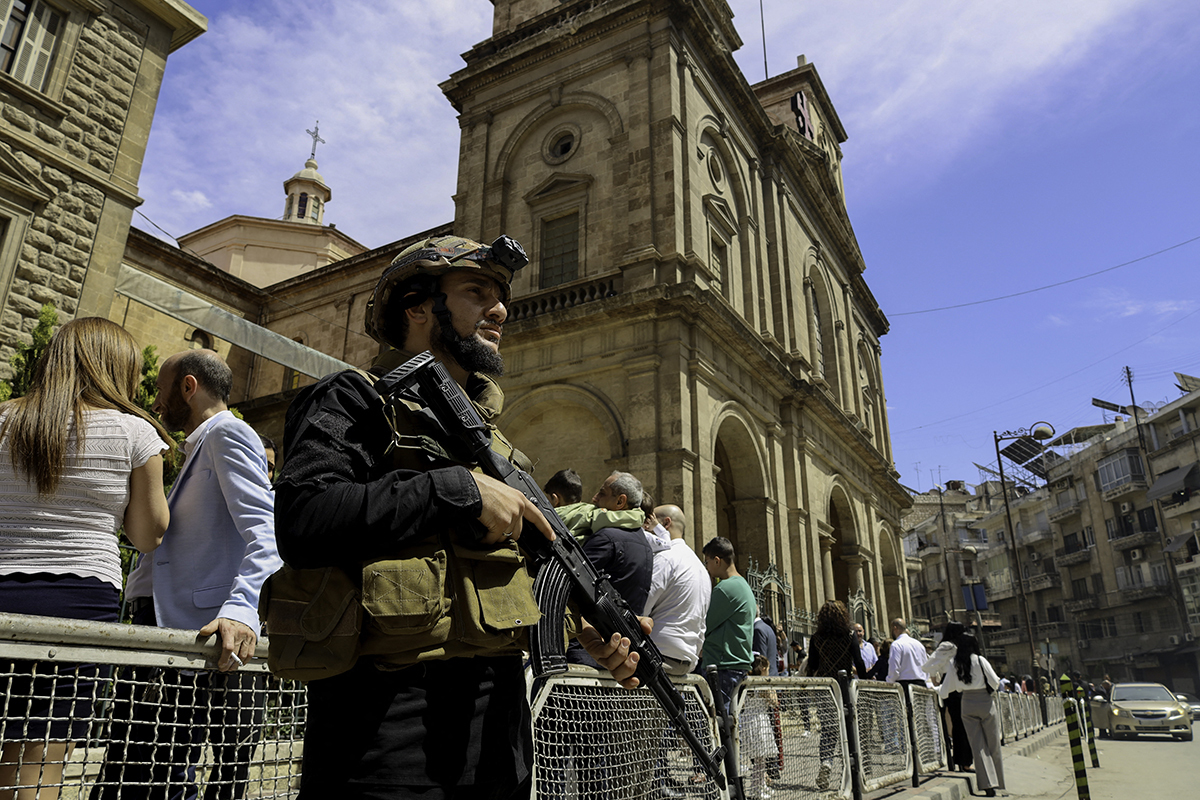
By Anugrah Kumar, Christian Post Contributor Saturday, April 04, 2026An armed security staff of the new Syrian government stands guard as Syrian Christians celebrate Easter for the first time after the fall of Bashar al-Assad's regime in Aleppo, Syria, on April 20, 2025. Easter is a major Christian holiday that celebrates the resurrection of Jesus Christ from the dead, which is believed to have occurred on the third day after his crucifixion. | OMAR ALBAW/Middle East Images/AFP via Getty ImagesSyrian church leaders have announced that Easter celebrations this year will be confined to prayers inside churches after dozens of armed men stormed a predominantly Christian town in Hama province on the eve of Holy Week, firing guns, smashing vehicles and damaging property over the course of hours.The Greek Orthodox and Catholic patriarchs issued a joint statement saying Easter this year will be celebrated in Syria “only with prayer inside the churches,” The National reported. The patriarchs said Syria was facing “challenges” aimed at undermining “common living between Muslims and Christians,” and called for confiscation of illegal weapons, equal treatment of all citizens and “respect for individual and public rights.”The attack took place last Saturday in Suqaylabiyah, a town of about 16,000 residents in the Ghab Plain of Hama who are mainly Greek Orthodox Christians, according to the U.K.-based group Christian Solidarity Worldwide.The violence began the day before when two young Muslim men from the nearby town of Qalaat al-Madiq verbally harassed Christian women in Suqaylabiyah. Local Christian men assaulted the two men, who were then expelled from the town and returned with dozens of others on motorcycles.The mob fired guns in the air, smashed cars and damaged storefronts while residents hid inside buildings. The attackers also destroyed a shrine of the Virgin Mary.Footage filmed by the attackers or secretly recorded by residents showed acts of vandalism and theft accompanied by threatening chants and insults, as reported by EWTN News. No casualties were reported.Some national security personnel were reported to have participated in the violence.The Syrian government deployed the army and national security forces to contain the situation, but mobs continued to gather and several attempts to storm the town were foiled by government forces.A second attempted attack the following day was thwarted by security personnel, deepening residents’ fears of further assaults.Christians in the town assembled before the main church in an expression of “popular anger,” while residents staged a protest sit-in demanding accountability for the perpetrators, including members of General Security whom protesters accused of participating in the violence.Demonstrators rejected a “single-color army,” meaning a force dominated by one religious or ethnic group, and voiced frustration with state media coverage that characterized the incident as a personal dispute.The Christian Emergency Alliance said the Suqaylabiyah attack was the latest in a series of violent incidents targeting Syria’s Christian minority.“The assault, on the eve of Holy Week, lasted hours. Pray for the Christians of Syria – they need immediate help,” the Alliance wrote on X.The Melkite Greek Catholic Patriarchate of Antioch and All the East, along with most other churches in Syria, announced that Easter celebrations would be confined to prayers inside churches, citing “the current discouraging circumstances.”The Greek Orthodox Patriarchate of Antioch and All the East said incidents targeting the Christian community cannot be dismissed as “individual incidents” and called for an official investigation, accountability for those responsible and compensation for those affected.The Greek Orthodox Archdiocese of Hama branded the attackers “outlaw groups” and demanded the formation of a judicial investigative committee and laws restricting weapons to the hands of the state.Syrian Christians for Peace, a civil society organization, called on all Syrians to reject sectarianism, urged the government to launch a national dialogue initiative and asked Syrian authorities to enact legislation criminalizing hate speech.Suqaylabiyah’s population has fallen from 20,000 to 16,000 after December 2024, when the government of former president Bashar al-Assad collapsed and many residents with ties to the old order fled the town.During the civil war, some Christians from Suqaylabiyah were recruited into a local brigade of the National Defence Forces, a pro-government auxiliary, and the town’s association with the former government contributed to tension with surrounding, predominantly Sunni areas.The new Syrian government, led by Sunni Islamists, has made improving relations with the United States its top priority, a stance that has helped spare Christians from the violence dealt to other minorities, including the Druze and Alawites.A United Nations report documented more than 1,700 people killed and around 200,000 displaced during a single week of violence in southern Syria in July 2025, most of them Druze civilians, with documented violations that may amount to war crimes or crimes against humanity.Easter falls on April 5 for western Christians this year, and on April 12 for eastern Christians.

Rosetta Hall's scroll travel letters. Yanghwajin Archives The Yanghwajin Archives in Seoul has launched a digital archive providing public access to more than 7,000 historical records documenting the role of Christianity and foreign missionaries in Korea.  The archive, which went live March 22, includes rare materials that had not previously been available to the public, such as missionary artifacts, letters, photographs, denominational reports, diaries and handwritten manuscripts. The collection spans from the late 19th century to the modern era and is regarded as an important historical resource for understanding the development of Korean society and Christianity. Operated by the Korean Church of the 100th Anniversary, the Yanghwajin Archives was established to preserve and study the legacy of early foreign missionaries and the history of Christianity in Korea. The institution has gradually expanded its holdings through key donations, including the personal effects and records of Jeon Taek-bu in December 2012, followed by additional materials from the families of missionaries Rosetta Sherwood Hall and Arthur Garner Welbon in 2013. Rosetta Hall's notebooks. Yanghwajin Archives The newly released digital archive reflects years of efforts to systematically manage and digitize the collection. By making core materials available online, the archives aims to improve accessibility for both researchers and the general public. According to Christian Today Korea, the archives plans to continue collecting records that document missionary work, expressions of faith and the social impact of Christianity in Korean society, with the goal of sharing these materials more broadly. Rosetta Hall's handwritten diary. Yanghwajin Archives Among the notable holdings, the Hall family collection highlights the development of modern medical missions in Korea, including education initiatives for women and people with disabilities and efforts to combat tuberculosis. The Welbon family collection documents inland missionary work centered in Andong and offers insight into changes in rural communities. The Jeon Taek-bu collection focuses on the preservation movement of the Yanghwajin Foreign Missionary Cemetery and broader civil society engagement. The archives said it has established a classification system to support the long-term management and use of its holdings and has pursued digitization in stages. The digital platform marks a significant step in expanding public engagement with historical materials that were previously limited to in-person access. Missionary Welborn's Bible and glasses. Yanghwajin Archives Looking ahead, the institution plans to collaborate with domestic and international organizations and experts to further highlight the historical and academic value of its collections. It describes its mission as serving as a platform that connects “the memories embedded in Yanghwajin” and passes them on to future generations. Manuscript by Elder Jeon Taek-bu. Yanghwajin Archives The Korean Church of the 100th Anniversary was established in 2005 by the Korean Church Centennial Foundation, which was chaired by the late Rev. Han Kyung-chik. The foundation oversees the Yanghwajin Foreign Missionary Cemetery—associated with early Christian contributions to Korea’s independence and modernization—as well as the Korean Christian Martyrs Memorial Hall, which commemorates those who were martyred for their faith. The Yanghwajin Archives can be accessed at yanghwajinarchives.org.

(LifeSiteNews) — A night has passed over the Tomb, wherein lies buried the body of the Man-God. Death is triumphant in that silent cave, and holds captive Him that gives life to every creature – but His triumph will soon be at an end. The soldiers may watch, as best they will, over that grave: they cannot hold Jesus prisoner, as soon as the moment fixed for His resurrection comes. The holy angels are there, profoundly adoring the lifeless body of Him, whose blood is to reconcile all things, both on earth, and in heaven. (Colossians 1:20) This body, though, for a brief interval, separated from the soul, is still united to the person of the Son of God; so, likewise, the soul, during its separation from the body, has not, for an instant, lost its union with the Word. The divinity remains also united with the blood that lies sprinkled on Calvary, and which, at the moment of the resurrection of the Man-God, is to enter once more into His sacred veins. Let us, also, return to the sepulcher, and adore the body of our buried Jesus. Now, at last, we understand what sin has done: by sin, death entered into the world; and it passed upon all men (Romans 5:12) Though Jesus knows no sin (2 Corinthians 5:21) yet has He permitted death to have dominion over him, in order that He might make it less bitter to us, and, by His resurrection, restore unto us that eternal life, of which we had been deprived by sin. How gratefully we should appreciate this death of our Jesus! By becoming Incarnate, He became a servant; (Philippians 2:7) His death was a still deeper humiliation. The sight of this tomb, wherein His body lies lifeless and cold, teaches us something far more important than the power of death: it reveals to us the immense, the incomprehensible love of God for man. He knew that we were to gain by His humiliations; the greater His humiliations, the greater our exaltation: this was His principle, and it led Him to what seems like an excess! Let us, then, love this sacred sepulcher, which is to give us life. We have thanked Him for having died for us upon the Cross; let us thank Him, but most feelingly, for having humbled Himself, for our sakes, even to the tomb. And now, let us visit the holy mother, who has passed the night in Jerusalem, going over, in saddest memory, the scenes she has witnessed. Her Jesus has been a victim to every possible insult and cruelty: He has been crucified: His precious blood has flowed in torrents from those five wounds: He is dead, and now lies buried in yonder tomb, as though He were but a mere man, yea the most abject of men. How many tears have fallen, during these long hours, from the eyes of the daughter of David and yet, her Son has not come back to her! Near her is Magdalene; heartbroken by yesterday’s events, she has no words to tell her grief, for Jesus is gone, and, as she thinks, for ever. The other women, less loved by Jesus than Magdalene, yet, still, dear to him, stand round the disconsolate mother. They have braved every insult and danger in order to remain on Calvary till all was over, and they intend returning thither with Magdalene, as soon as the sabbath is over, to honor the tomb and the body of Jesus. John, the adopted son of Mary, and the beloved disciple of Jesus, is oppressed with sorrow. Others, also, of the apostles and disciples visit the house of mourning. Peter, penitent and humble, fears not to appear before the Mother of Mercy. Among the disciples are Joseph of Arimathea and Nicodemus. We may easily imagine the conversation – it is on the sufferings and death of Jesus, and on the ingratitude of the Jews. The Church, in the seventh Responsory of today’s Tenebrae, represents these men as saying: “Behold ! how the Just One dieth, and there is none that taketh it to heart. Iniquity has had its way. He was silent as a Lamb under his shearer, and he opened not his mouth. He was taken away from distress and judgment: but his memory shall be in peace.” Thus speak the men! The women are thinking of their morrow’s visit to the sepulcher! The saintliness of Jesus, His goodness, His power, His sufferings, His death – everything is remembered, except His resurrection, which they had often heard Him say should certainly and speedily take place. Mary alone lives in expectation of His triumph. In her was verified that expression of the Holy Ghost, where, speaking of the valiant woman, He says: “Her lamp shall not be put out in the night.” (Proverbs 31:18) Her courage fails not, because she knows that the sepulcher must yield up its dead, and her Jesus will rise again to life. St. Paul tells us that our religion is vain, unless we have faith in the mystery of our Savior’s resurrection; where was this faith on the day after our Lord’s death? In one heart only, and that was Mary’s. As it was her chaste womb that had held within it Him, whom heaven and earth cannot contain, so on this day, by her firm and unwavering faith, she resumes within her single self the whole Church. How sacred is this Saturday, which, notwithstanding all its sadness, is such a day of glory to the mother of Jesus! It is on this account that the Church has consecrated to Mary the Saturday of every week. But it is time to repair to the house of God. The bells are still silent: our faith must speak to us, and make us eager to assist at the grand mysteries, which the liturgy is about to celebrate. Surely, the Christian sentiment must be dead in them who can be willingly absent from their Church on such a morning as this. No, it cannot be, that we, who have followed the celebration of the mysteries of our religion thus far, can flag now, and lose the graces of this morning’s magnificent service. It was the practice of the Church, and one that had been handed down from the earliest Ages, that the sacrifice of the Mass should not be offered up either yesterday or today. Yesterday, the anniversary of Jesus’ death was exclusively devoted to the remembrance of the mystery of Calvary, and a holy fear kept the Church from renewing that sacrifice upon Her altars. For the same reason She abstained today, also, from its celebration. The burial of Christ is a sequel of His Passion: and during these hours when His body lay lifeless in the tomb, it was fitting that the sacrifice, wherein He is offered as the perfect and risen Jesus, should be suspended. Even the Greek Church, which never fasts on the Saturdays of Lent, follows the practice of the Latin Church for this Saturday: she not only fasts, but she even omits the celebration of the Mass of the Presanctified. Such, we repeat, was the discipline of the Latin Church for nearly a thousand years: but about the eleventh century an important change began to be introduced with regard to the celebration of Mass on Holy Saturday. The Mass which, hitherto, had been celebrated during the night preceding Easter Sunday then began to be anticipated, on the Saturday; but it was always considered as the Mass of the hour of our Lord’s resurrection, and not as the Mass of Holy Saturday. The relaxations, that had been introduced with regard to fasting, were the occasion of this change in the liturgy. In the first ages, the faithful watched the whole night in the church, awaiting the hour when our Lord rose triumphant from the tomb. They also assisted at the solemn administration of baptism to the catechumens, which so sublimely expressed the passing from spiritual death to the life of grace. There was no other vigil in the whole year which was so solemnly observed as this: but it lost a great portion of its interest, when the necessity of baptizing adults was removed by Christianity having triumphed wheresoever it had been preached. The orientals have kept up the ancient tradition to this day: but, in the West, dating from the eleventh century, the Mass of the resurrection hour has been gradually anticipated, until it has been brought even to the morning of Holy Saturday. Durandus of Menda, who wrote his “Rational of the Divine Offices,” towards the close of the 13th century, tells us that, in his time, there were very few Churches which observed the primitive custom: even these soon conformed to the general practice of the Latin Church. As a result of this change, there is an apparent contradiction between the mystery of Holy Saturday and the divine service which is celebrated upon it; Christ is still in the tomb, and yet we are celebrating His resurrection: the hours preceding Mass are mournful, and before mid-day, the paschal joy will have filled our hearts. We will conform to the present order of the holy liturgy, thus entering into the spirit of the Church, who has thought proper to give Her children a foretaste of the joys of Easter. We will give a general view of the solemn service, at which we are going to assist; afterwards, we will explain each portion, as it comes. The great object of the whole of today’s service, and the center to which every one of the ceremonies converges, is the baptism of the catechumens. The faithful must keep this incessantly before them, or they will be at a loss how to understand or profit by the liturgy of today. First of all, there is the blessing of the new fire, and the incense. This is followed by the blessing of the Paschal candle. Immediately after this, are read the twelve prophecies, which have reference to the mysteries of today’s service. As soon as the prophecies are finished, a procession is formed to the baptistery, and the water is blessed. The matter of baptism thus prepared, the catechumens receive the sacrament of regeneration. Confirmation is then administered to them by the bishop. Immediately after this, the holy sacrifice is celebrated in honor of our Lord’s resurrection, and the neophytes partake of the divine mysteries. Finally, the joyous Vesper Office comes in, and brings to a termination the longest and most trying service of the Latin liturgy. In order to assist our readers to enter fully into its spirit, we will go back a thousand years, and imagine ourselves to be celebrating this solemn eve of Easter in one of the ancient cathedrals of Italy, or of our own dear land. At Rome, the station is at Saint John Lateran, the Mother and Mistress of all churches. The sacrament of regeneration is administered in the baptistery of Constantine. The sight of these venerable sanctuaries carries us back in thought to the fourth century; there, each year, holy baptism is conferred upon some adult; and a numerous ordination adds its own to the sacred pomp of this day, whose liturgy, as we have just said, is the richest of the whole year. THE PASCHAL CANDLE The sun is setting, and our earth will soon be mantled in darkness. The Church has provided a torch, which is to spread its light upon us during the whole of this long vigil. It is of an unusual size. It stands alone, and is of a pillar-like form. It is the symbol of Christ. Before being lighted, its scriptural type is the pillar of a cloud, which hid the Israelites when they went out from Egypt; under this form, it is the figure of our Lord, when lying lifeless in the tomb. When lighted, we must see in it both the pillar of fire, which guided the people of God, and the glory of our Jesus risen from His grave. Our Holy Mother the Church, would have us enthusiastically love this glorious symbol, and speaks its praises to us in all the magnificence of Her inspired eloquence. As early as the beginning of the fifth century, Pope St. Zosimus extended to all the churches of the city of Rome the privilege of blessing the Paschal candle, although baptism was administered nowhere but in the baptistery of St. John Lateran. The object of this grant was that all the faithful might share in the holy impressions which so solemn a rite is intended to produce. It was for the same intention that, later, every church, even though it had no baptismal font, was permitted to have the blessing of the Paschal candle. The deacon proclaims the Easter solemnity to the people, whilst chanting the praises of this sacred object: and whilst celebrating the glory of Him, whose emblem it is, he becomes the herald of the resurrection. The altar, the sanctuary, the bishop, all are in the somber color of the Lenten rite; the deacon alone is vested in white. At other times, he would not presume to raise his voice as he is now going to do, in the solemn tone of a Preface: but this is the eve of the resurrection, and the deacon, as the interpreters of the liturgy tell us, represents Magdalene and the holy women, on whom our Lord conferred the honor of being the first to know His resurrection, and to whom He gave the mission of preaching to the very apostles, that He had risen from the dead, and would meet them in Galilee. THE EVENING The description we have been giving of the magnificent ceremonies of baptism has made us forget the sepulcher wherein reposes the body of our crucified Jesus. Let us return thither in thought, for the hour of His resurrection is not yet come. Let us devote a few moments in meditating on the mystery of the three days, during which the soul of our Redeemer was separated from His body. We went, this morning, to visit the tomb, where lies our buried Jesus; we adored that sacred body, which Magdalene and her companions are preparing to honor, by anointing it early on the morrow. Now let us offer the tribute of our profound adoration to the soul of our divine master. It is not in the tomb, where His body is: let us follow it to the place where it lives during these hours of separation. In the center of the earth, there are four immense regions, into which no one living can ever enter: it is only by divine revelation that we know of their existence. The farthest from us is the hell of the damned, the frightful abode where Satan and his angels and the reprobate are suffering eternal torments. It is here that the prince of darkness is ever forming his plots against God and his creatures. Nearer to us, is the limbo wherein are detained the souls of children, who departed this world before being regenerated [baptized]. The opinion which has met most favor from the Church is that these souls suffer no torment; and that although they can never enjoy the beatific vision, yet are they enjoying a natural happiness, and one that is proportionate to their desires. Above the abode of these children is the place of expiation, where souls, that have departed this life in the state of grace, cleanse themselves from any stains of lesser sins, or satisfy for the debt of temporal punishment still due to divine justice. And lastly, still nearer to us, is the limbo where are kept from heaven the saints who died under the Old Law. Here are our first parents, Abel, Noah, Abraham, Moses, David, and the prophets; the just gentiles, such as that great saint of Arabia, Job; and those holy personages who were closely connected with our Lord, such as Joachim and Anne, the parents of his Blessed Mother, Joseph, her spouse and his own foster-father, and John, his precursor, together with his holy parents, Zachary and Elizabeth. Until such time as the gate of heaven shall have been opened by the blood of the Redeemer, none of the just can ascend thither. How holy soever they might have been during this life, they must descend into limbo after death. We meet with innumerable passages of the Old Testament, where mention is made of hell (that is, that portion of the regions in the center of the earth, which we call limbo) as being the abode of even the holiest of God’s servants: it is only in the New Testament that heaven is spoken of as being the abode of men. The limbo of the just is not one of torment, beyond that of expectation and captivity. The souls that dwell there are confirmed in grace, and are sure of enjoying, at some future period, an infinite happiness; they resignedly bear this long banishment, which is a consequence of Adam’s sin; and, as they saw the time drawing nigh for their deliverance, their joy was beyond all we can imagine. The Son of God has subjected himself to everything (save sin) that our human nature has to suffer or undergo: it is by His resurrection that he is to triumph, it is by His ascension alone that He is to open the gates of heaven: hence, His soul, having been separated from His body by death, was to descend into the depths of the earth, and become a companion with the holy exiles there. He had said of Himself: “The Son of Man shall be in the heart of the earth three days and three nights.” (Matthew 12:40) What must have been the joy of these countless saints! and how majestic must not have been the entrance of our Emmanuel into their abode! No sooner did our Jesus breathe His last upon the Cross, than the limbo of the saints was illumined with heavenly splendor. The soul of the Redeemer, united to the divinity of the Word, descended thither, and changed it, from a place of banishment, into a very paradise. Thus did He fulfill the promise He had made to the good thief: “This day shalt thou he with me in Paradise.” The happy hour, so long expected by these saints, is come! What tongue could tell their joy, their admiration, and their love, as they beheld the soul of Jesus, who thus comes among them, to share and close their exile! He looks complacently on this countless number of His elect – this fruit of four thousand years of His grace – this portion of His Church purchased by His blood, and to which the merits of His blood were applied by the mercy of His Eternal Father, even before it was shed on Calvary! Let us who hope, on our departure from this world, to ascend to Him, who has gone to prepare a place for us in heaven, (John 14:2) let us joyfully congratulate these our holy ancestors. Let us also adore the condescension of our Emmanuel, who deigns to spend these three days in the heart of the earth, that so He might sanctify every condition of our nature, and take upon Himself even what was but a transient state of our existence. But, the Son of God would have this His visit to the regions beneath our earth to be a manifestation of His sovereign power. His soul does not, it is true, descend into the hell of Satan, but He makes His power be felt there. The prince of this world is now forced to bend his knee and humble himself. (Philipp 2:10) In this Jesus, whom he has instigated the Jews to crucify, he now recognizes the Son of God. Man is saved, death is conquered. Sin is effaced. Henceforth, it is not to the Bosom of Abraham, but to heaven itself, that the souls of the just made perfect shall ascend, there to reign, together with the faithful angels, with Christ their divine head. The reign of idolatry is to be at an end: the altars, whereon men have offered incense to Satan, are to be destroyed. The house of the strong one is to be entered by his divine adversary, and his goods are to be rifled. (Matt 12:29) The handwriting of our condemnation is snatched from the serpent. (Coloss 2:14) The Cross, which he had so exultingly prepared for the just one, has been his overthrow, or, as St. Antony so forcibly expresses it, the bait thrown out to the leviathan, which he took, and, taking it, was conquered. The soul of our Jesus makes its presence felt also by the just who dwell in the abode of expiation. It mercifully alleviates their sufferings, and shortens their purgatory. Many of them are delivered altogether, and numbered with the saints in limbo, where they spend the forty days, between this and the ascension, in the happy expectation of ascending to heaven with their Deliverer. It is not contrary to the principles of faith to suppose, as several learned theologians have taught, that the visit of the Man-God to limbo was a source of blessing and consolation to the abode of unregenerated children, and that they then received a promise, that the time would come when they should be reunited to their bodies, and, after the day of judgment, be placed in a happier land than that in which divine justice now holds them captives. We adore thee, O holy soul of our Redeemer! for thy having deigned to pass these hours with thy saints, our fathers, in the heart of the earth. We extol thy goodness and love shown towards these thy elect, whom thou hast made to be thine own brethren. We give thee thanks for that thou didst humble our enemy: oh, give us grace to conquer him! But now, dearest Jesus! it is time for thee to rise from thy tomb, and reunite thy soul to thy body! Heaven and earth await thy resurrection! The Church, thy Spouse, has already sung the Alleluia of her glad expectation! Rise, then, from thy grave, O Jesus, our Life ! Triumph over death, and reign our King forever! This text is taken from The Liturgical Year, authored by Dom Prosper Guéranger (1841-1875). LifeSiteNews is grateful to The Ecu-Men website for making this classic work easily available online.

Faisalabad Police Chief Kamran Adil shows solidarity with Christians in Jaranwala, Pakistan on Aug. 16, 2024. Christian Daily International-Morning Star News Pakistan’s Supreme Court on Tuesday (March 31) ordered a trial court to conclude within six months the case against assailants in the 2023 anti-Christian attacks in Jaranwala, according to media reports. A two-judge bench headed by Chief Justice of Pakistan Yahya Afridi also directed police to immediately arrest all absconding suspects. The bench issued the directives while hearing petitions filed by the Punjab Province government seeking cancellation of bail granted to suspects in 22 cases linked to the Aug. 16, 2023 Islamist violence against Christians in Jaranwala, in Faisalabad District. At the outset of the hearing, Punjab Additional Prosecutor General Ahmad Raza Gilani stressed the need for expediting the trial, citing delays in proceedings before a special anti-terrorism court in Faisalabad. The provincial government’s legal team urged the court to set a clear timeline for the cases, ARY news channel reported. The bench then ordered that all trials be completed within six months and instructed the inspector general of Punjab Police to ensure the immediate arrest of all absconding suspects. The chief justice emphasized that suspects must be taken into custody without delay to uphold the rule of law. The court’s intervention follows earlier criticism by the Supreme Court over the pace and quality of investigations into the attacks, which saw Islamist mobs target churches and Christian homes after allegations of blasphemy against two Christians. In February 2024, a three-judge bench led by then-Chief Justice Qazi Faez Isa strongly rebuked the Punjab government’s progress report on the incident, calling it inadequate and ordering a revised submission within 10 days. “I am feeling ashamed that only 18 charge sheets were submitted in the case in the last six months,” Isa told a provincial law officer during the hearing. He also questioned Pakistan’s commitment to minority rights, contrasting domestic realities with its criticism of Islamophobia abroad. Figures presented at the time showed 22 cases had been registered, with 304 arrests made and charge sheets filed in 18 cases. The court, however, noted significant gaps in the report, including missing details on suspects, case status and progress in prosecutions. Isa further criticized law enforcement agencies for their lack of resolve in identifying and prosecuting those responsible. He warned that such shortcomings risked damaging the credibility of the police and suggested that authorities appeared reluctant to act against perpetrators of mob violence. The court subsequently ordered a fresh and thorough investigation, directing authorities to ensure effective prosecution and warning of disciplinary action against officials who failed to do so. It also sought updates on compensation for victims and reconstruction of damaged churches. Separately, the Lahore High Court in October dismissed petitions filed by individuals and Christian groups seeking a judicial inquiry into the attacks. Justice Asim Hafeez ruled that the court lacked jurisdiction to order the formation of a judicial commission, noting that multiple Joint Investigation Teams (JITs) had already submitted reports. The Jaranwala violence erupted after two Christians were accused of desecrating the Quran and insulting the Muhammad, the prophet of Islam – allegations that were later found to be false. A trial court subsequently acquitted the men, concluding that they had been framed following a personal dispute. Despite official assurances of accountability, rights groups say progress has been limited. According to Amnesty International, of more than 5,200 individuals allegedly involved in the attacks, only 380 were arrested, with the vast majority remaining at large. “Of the arrested suspects, 228 were released on bail and 77 others had the charges against them dropped,” said Babu Ram Pant, Amnesty International’s deputy regional director for South Asia, in a statement marking the first anniversary of the incident. He warned that weak investigations and prosecutions had fostered “a climate of impunity.” Blasphemy allegations in Pakistan frequently trigger mob violence, particularly against religious minorities. While the law prescribes severe penalties, including death, for insulting the Muhammad, executions have not been carried out. Even unproven accusations, however, can incite unrest and vigilantism. International advocacy groups continue to highlight systemic challenges faced by religious minorities in Pakistan. In its 2026 World Watch List, Open Doors ranked Pakistan eighth among the 50 countries where it is most difficult to be a Christian, underscoring ongoing concerns about legal protections and enforcement.

For Victoire Ingabire Umuhoza, faith was never a political tool. It was a calling. A devout Catholic who once aspired to become a nun, Ingabire has long drawn strength from her religious convictions. But today, as she sits in detention in Rwanda awaiting trial, even that source of comfort has been stripped away. Her daughter, Raïssa Ujeneza, describes a pattern that goes beyond politics, one that touches on conscience, isolation and control “My mother has made no secret of her strong faith and that she draws a lot of strength from that,” Ujeneza said in an interview with Christian Daily International.  She said her mother is now completely barred from attending church. “I think it is a way to mentally break her, but also just to show her how much control they have over her movements and what she is allowed and not allowed to do,” she said.  During Ingabire’s previous imprisonment, authorities allowed her to attend church, but under strict conditions. “She would be the last one entering and the first one to leave so that they would put a gap between her and other churchgoers,” Ujeneza said. Now, even that limited access has disappeared. The restriction, her daughter argues, is not incidental. It reflects a broader effort to isolate her from any community that could sustain her including fellow believers. “Christians tend to be known in societies for daring to stand for justice despite the dangers,” Ujeneza said, suggesting authorities may fear the solidarity such groups can provide.  Ingabire was arrested again in June 2025. Nearly nine months later, Rwanda’s Supreme Court ruled that her arrest and investigation were lawful, dismissing her objections. Victoire Ingabire/Facebook Her account comes amid wider concerns about religious space in Rwanda. In recent years, hundreds of churches have been closed over regulatory compliance issues, a move the government says is about safety and order, but critics say has tightened control over religious life. Within that environment, Ujeneza believes churches themselves are cautious. “To continue to be a church to the people, they need some kind of free movement, so to appease the government, they stay away and refrain from certain comments,” she said.  Limited access to family Beyond faith, Ingabire’s personal connections have also been severely restricted. “They do not allow us to talk to her,” Ujeneza said.  The situation echoes her earlier imprisonment, when direct contact was rare. “It took six years for our mother to be able to call us,” Ujeneza said, recalling that even then, the call was only permitted due to a family emergency.  Ingabire was arrested again in June 2025. Nearly nine months later, Rwanda’s Supreme Court ruled that her arrest and investigation were lawful, dismissing her objections. According to Ujeneza, the legal challenge centered on how the case was initiated. “In this case, a judge made that ruling, and it is the same judge who will rule over her case. So how much bias is there?” she said.  Her mother had argued that the process violated proper legal protocols and rendered the case invalid. The court disagreed. The ruling means Ingabire will remain in custody as the trial proceeds, with no clear timeline. “Last time it took over two years before there was a verdict, so it might as well be the same,” she said.  Political journey Ingabire’s case cannot be separated from her political role. A longtime opposition figure, she returned to Rwanda in 2010 after years in exile in the Netherlands to challenge President Paul Kagame’s government. She was later convicted on charges including terrorism and inciting division, which she denied. She was released in 2018 by presidential pardon. International organizations, including Amnesty International and Human Rights Watch, have repeatedly criticized her earlier trial as politically motivated. A 2017 ruling by the African Court on Human and Peoples’ Rights found that Rwanda had violated her rights to freedom of expression and defense. Her latest arrest follows renewed accusations linked to alleged subversive activity, charges her supporters again reject as political. Ujeneza believes her mother’s international visibility has made her a target. “They see international media covering her story, and this frustrates them because they cannot silence her unless they put her in jail,” she said.  Politics, she said, was never Ingabire’s original path. “She never intended to become a politician, but slowly but surely this has become her vocation,” Ujeneza said. Instead, what began as conviction has turned into a lifelong mission. “She is going to invest everything she has in bringing about democracy and revealing truths… this is her life's work,” she said.  Despite years of imprisonment and pressure, Ujeneza says her mother remains resolute. “Her will is strong,” she said. Even exile is not an option. “She would not return to the Netherlands… her life is in Rwanda. She will live and die in Rwanda,” she said.  For Ujeneza, her mother’s case reflects a broader issue across Africa. One shaped by fear of dissent. “I think sometimes we think we see competition, but it is indeed all fear,” she said.  She called for greater openness toward political and religious differences. “Being from a different religious group doesn’t mean you’re a threat,” she said.  Instead, she urged societies to embrace pluralism. “We have more to win if we do that. There is more to unite us than that separates us,” she said.  As Ingabire waits for trial, her situation sits at the intersection of faith and politics. A woman who once considered religious life now finds herself cut off from worship. A political opponent remains in custody under a system her family believes is stacked against her.

Loading...
Loading...
Confirmation
Are you sure?
Cancel Continue