 Your post is being uploaded. Please don't close or refresh the page.


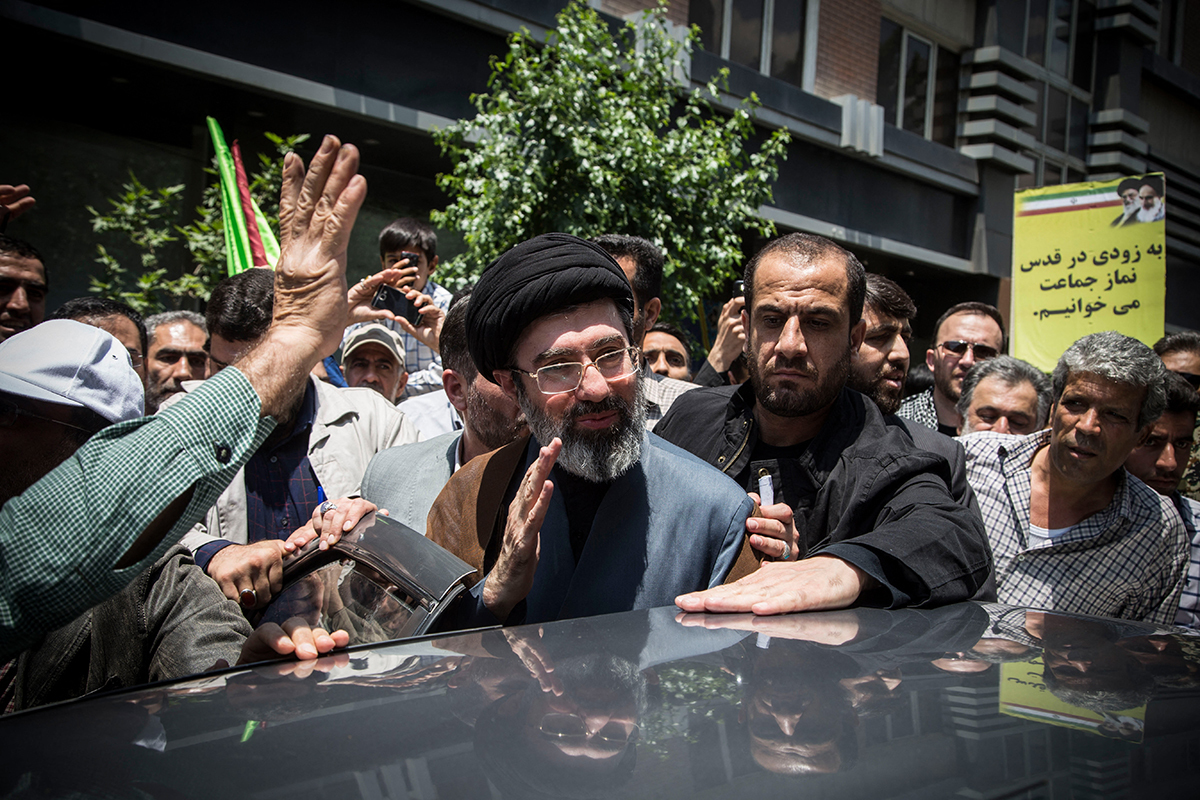
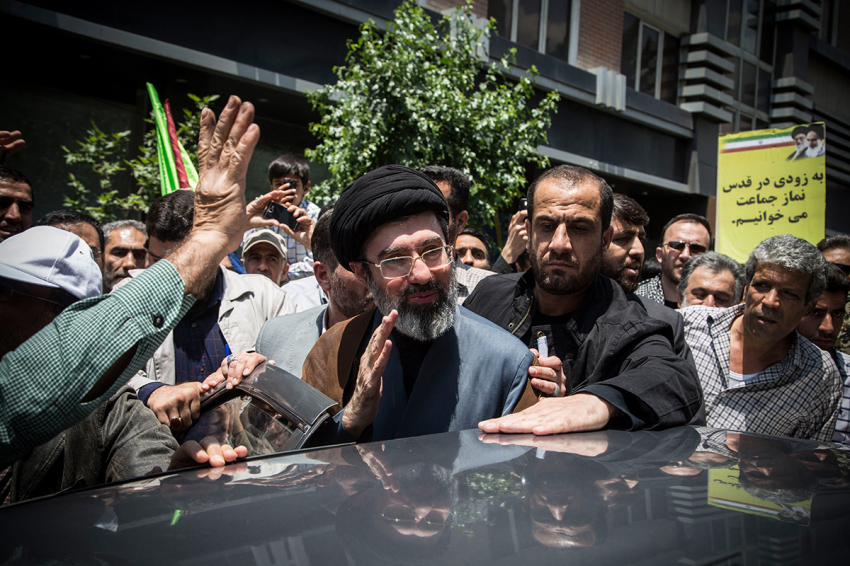
As Ayatollah Ali Khamenei, who led Iran for nearly four decades as the country’s highest religious and political authority, was killed in U.S. and Israeli strikes during an ongoing military conflict, the Islamic Republic’s leadership has begun the process of selecting a successor. Several potential candidates exist, but Mojtaba Khamenei, the son of the late leader, is widely being seen as a leading contender to become the country’s next Ayatollah. Here are seven significant things to know about him.
Iran’s constitution sets out a formal process for choosing a new supreme leader. After the death of the incumbent, a temporary leadership council takes over the duties of the office. The permanent successor is then selected by the Assembly of Experts, an elected body of 88 clerics that has the constitutional authority to appoint the country’s supreme leader.
Here are the seven significant things about him that offer a clearer sense of what his leadership may look like.
(1) He is widely seen as a hardliner.
Mojtaba Khamenei comes from the hardline faction and may continue a strict political line. He “would likely opt for an even more hard-line direction as supreme leader,” reports The Wall Street Journal, citing Iranian officials and analysts familiar with the matter. One Iranian official called him “much tougher than his father.”
The Carnegie Endowment for International Peace links Mojtaba Khamenei to the regime’s response to the 2009 Green Movement protests, noting that he worked closely with the Basij paramilitary forces to help his father suppress demonstrators. Those protests, which erupted after the disputed 2009 presidential election, became the largest political challenge to the Islamic Republic since the revolution and were eventually crushed by security forces.
The Journal also quotes Saeid Golkar, an expert on Iran’s security services at the University of Tennessee at Chattanooga, who said that if Mojtaba takes power, “He will take his father’s revenge against both Iranian society as well as Israel and the United States.”
His foreign policy outlook would probably be confrontational toward Iran’s external adversaries. Several reports describe him as deeply hostile to the United States and Israel and closely connected to the institutions that shape Iran’s regional military posture. Choosing Mojtaba Khamenei as supreme leader would signal escalation rather than compromise.
The larger institutional environment reinforces this outcome. Carnegie explains that before his death, Ali Khamenei ensured that key political institutions were dominated by hardliners. Through the Guardian Council, he disqualified hundreds of candidates from the Assembly of Experts elections in March 2024, many of them moderates or reformists. Because the Assembly of Experts chooses the supreme leader, that composition makes the selection of a reformist or moderate figure highly unlikely.
(2) His strongest base appears to be the security apparatus.
The next leader is likely to be closely aligned with the Islamic Revolutionary Guard Corps and the Basij, a volunteer paramilitary force that operates under the Guards. Several reports stress that Mojtaba Khamenei has longstanding relationships with these institutions, which form the backbone of the regime’s security and political power.
The Journal reports that he is “close to the Islamic Revolutionary Guard Corps and the Basij paramilitary, essential elements of Iran’s repression apparatus.” Carnegie similarly notes that his possible rise to the supreme leadership would be “predicated on his proximity to the security apparatus, specifically the Islamic Revolutionary Guard Corps and its paramilitary force, the Basij.”
This connection is rooted partly in his early experience during the Iran-Iraq war in the 1980s. According to The Telegraph, Mojtaba Khamenei served in the latter years of that war, where he built relationships with figures who later rose to prominent positions within the Revolutionary Guards.
Over the years he also became deeply embedded in the political networks surrounding the supreme leader’s office. He worked inside his father’s inner circle and developed ties. Analysts describe him as someone familiar with “running and co-ordinating security and military apparatuses,” having spent years managing the networks around the supreme leader, according to another report by the Telegraph.
(3) He represents continuity more than change.
The succession process itself follows a formal constitutional structure but is unfolding under wartime conditions. Carnegie explains that Article 111 of Iran’s constitution requires a three-person Interim Leadership Council to take over the duties of the supreme leader after a vacancy occurs. That council consists of President Masoud Pezeshkian, Chief Justice Gholam-Hossein Mohseni-Eje'i and Ayatollah Alireza Arafi.
The council temporarily performs the functions of the supreme leader until the Assembly of Experts elects a permanent successor. The assembly consists of 88 clerics who serve eight-year terms and are responsible for selecting and supervising the supreme leader. Carnegie reports that after Khamenei’s death, the succession process began immediately and that the assembly is expected to move quickly to appoint a new leader so that the ruling system, referred to as the nezam, can preserve continuity during the war.
(4) His candidacy is politically sensitive because it looks dynastic.
His candidacy is politically sensitive because it raises the question of dynastic succession in a system that was created to reject monarchy. The Islamic Republic was established in 1979 after overthrowing the Shah, and the revolutionary leadership explicitly rejected hereditary rule as corrupt and un-Islamic.
For years, even Ali Khamenei publicly opposed the idea of dynastic succession because it could provoke opposition within the political and clerical establishment, Carnegie notes, explaining that the idea of passing power from father to son runs against the ideological foundations of the Islamic Republic.
Despite that sensitivity, Mojtaba’s family name also gives him a powerful advantage inside the system. As the son of the late supreme leader he carries a form of “dynastic legitimacy,” especially among figures within the regime who are seeking continuity during a period of war and instability, according to the Telegraph.
His rise would therefore represent a paradox within the Islamic Republic. The state that overthrew a monarchy would effectively pass power from father to son. Mojtaba is widely seen as the “continuity candidate,” someone who resembles his father politically and personally.
(5) His religious credentials are a question mark.
Religious qualifications remain a key issue for any candidate for supreme leader because the office combines the highest political authority in Iran with religious legitimacy within Shiite clerical hierarchy. The supreme leader is expected to possess recognized scholarly standing in Islamic jurisprudence and theology, since the position is rooted in the doctrine of velayat-e faqih, or the guardianship of the Islamic jurist, which places ultimate authority in the hands of a senior religious scholar.
Carnegie explains that Mojtaba Khamenei, like his father before him, is considered a midranking cleric. He teaches theology at the Qom seminary, the most important centre of Shiite religious learning in Iran, where clerics study Islamic law, philosophy and theology. However, he does not currently hold the rank traditionally associated with the highest religious authority in Shiism.
If Mojtaba were selected as supreme leader, the Assembly of Experts would likely have to elevate his religious status. Carnegie notes that he is not regarded as a grand ayatollah, which is one of the highest ranks in the Shiite clerical hierarchy and normally associated with senior scholars whose religious rulings carry wide authority among believers. To place him in the office, the assembly could effectively promote his standing within the clerical structure so that he meets the expectations attached to the role.
Such institutional adjustments have precedent in the Islamic Republic. When Ali Khamenei himself became supreme leader in 1989 after the death of Ayatollah Ruhollah Khomeini, he did not possess the highest clerical rank. At the time, Iran’s constitution required the supreme leader to be a marja, or a grand religious authority. To accommodate Khamenei’s more modest religious credentials, the constitution was amended so that a senior Islamic jurist with sufficient political and religious qualifications could hold the office.
(6) He has influence inside the system, but limited public political experience.
Mojtaba Khamenei has limited public governing experience despite having spent years close to the center of power in Iran’s political system. The Telegraph notes that he has “managed his father’s office and networks for years,” working behind the scenes within the circle surrounding the supreme leader rather than in visible political roles.
A leaked diplomatic cable cited by the newspaper described him as “a capable and forceful leader and manager who may someday succeed to at least a share of national leadership.” The same cable suggested that he had developed a reputation inside the system as an effective organizer and power broker within the networks linked to the supreme leader’s office.
His influence also extended into Iran’s political establishment. He developed ties with powerful figures within the regime and is reported to have been an adviser and financier of Mohammad Bagher Ghalibaf, who served as mayor of Tehran and later became the speaker of Iran’s parliament.
Analysts see him as a “gatekeeper” to the supreme leader’s inner circle, someone deeply familiar with the workings of Iran’s political and security institutions. Mehdi Rahmati, an analyst based in Tehran, told The New York Times that Mojtaba is seen by some insiders as the “wisest pick right now” because he is closely familiar with the coordination of the country’s security and military apparatus.
Despite this internal influence, however, Carnegie notes that Mojtaba Khamenei has never held public office. This marks a contrast with his father, Ali Khamenei, who served as Iran’s third president from 1981 to 1989 before becoming supreme leader. Mojtaba has instead spent most of his political career inside the institutional networks of the regime, observing and influencing power from within rather than exercising it directly in a formal governing position.
(7) Even if chosen, his survival could be uncertain.
The next supreme leader will assume power during a period of extreme instability and personal risk. Israeli defence minister Israel Katz has warned that any Iranian leader chosen to replace Khamenei would become a target for assassination, stating on social media that such a leader would be a “certain target for assassination, no matter his name or where he hides,” according to the Telegraph.
The Journal also raises doubts about the long-term survival of any new leader because of ongoing attacks. It reports that Iranian, Arab and Western officials are questioning “how long the younger Khamenei would survive the onslaught.”
His possible elevation therefore raises a larger question about the durability of leadership itself during the conflict, since the position could place him directly in the crosshairs of continuing U.S. and Israeli operations.
News Source : https://www.christianpost.com/news/mojtaba-khamenei-7-things-to-know-about-irans-likely-next-leader.html