 Your post is being uploaded. Please don't close or refresh the page.


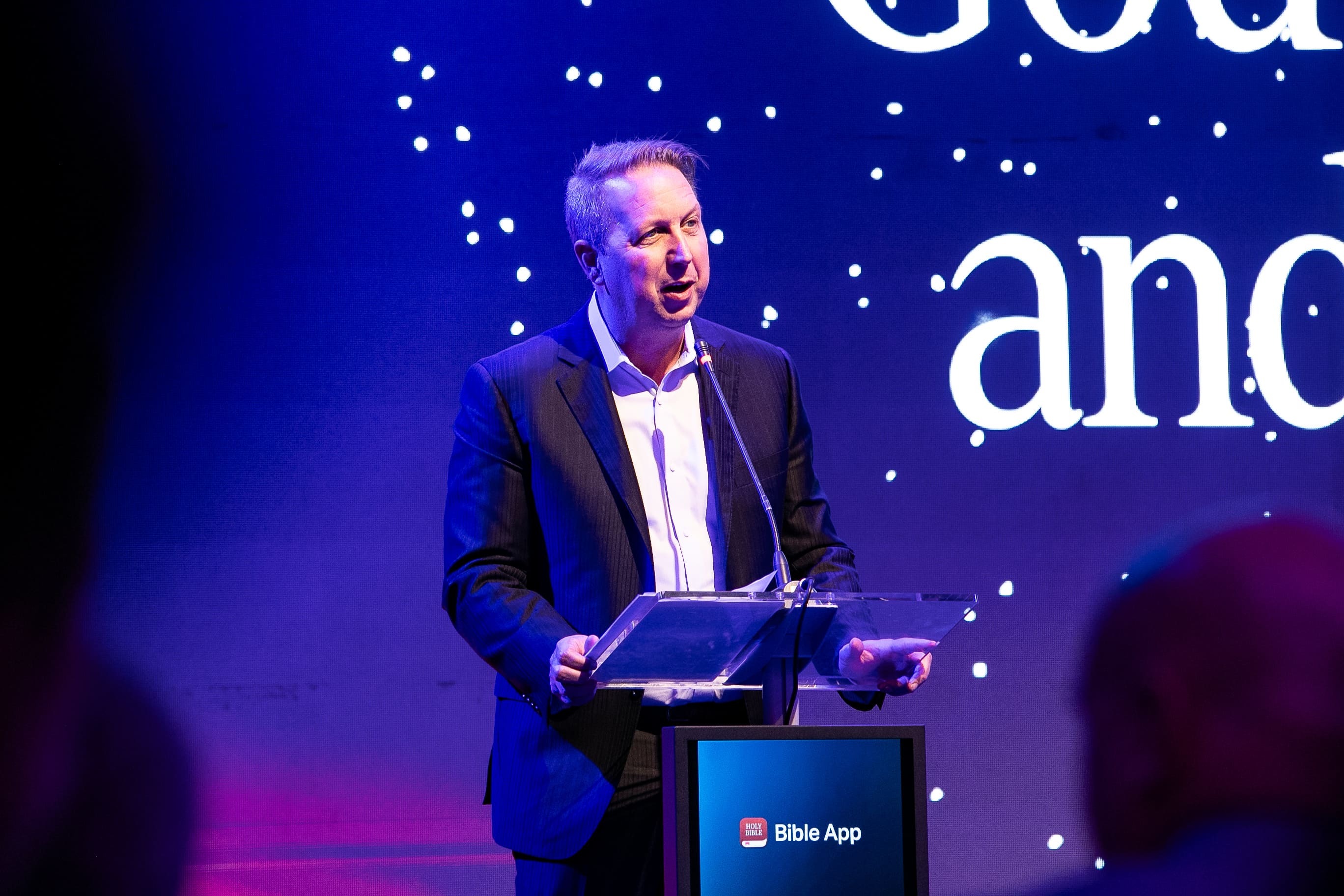
YouVersion founder and CEO Bobby Gruenewald says artificial intelligence holds enormous promise. But when it comes to answering questions about God and Scripture, he believes the technology is not yet ready.
As the head of the digital Bible platform that now reports more than 1 billion downloads across its family of apps worldwide, Gruenewald has a vantage point as churches, pastors and believers increasingly turn to AI chatbots for spiritual answers.
“If we ever do (fully adapt AI), it will be because we feel very confident that it can be done safely and be done with a level of accuracy and integrity,” Gruenewald said in an interview with Christian Daily International when asked whether YouVersion would step into open-ended AI question-and-answer chat features.
YouVersion offers Scripture in hundreds of languages and has become one of the most widely used Bible tools globally.
Gruenewald, who was in Nairobi to open YouVersion regional hub that will facilitate localized digital content, described himself as an early AI adopter. YouVersion already uses AI internally to accelerate coding and improve workflow behind the scenes. But the organization has chosen not to launch a public-facing chatbot that answers theological questions. The reason, he said, is accuracy.
“The best model with the best performance, with the most popular versions of the Bible that are most indexed, misquotes Scripture at least 15% of the time,” Gruenewald said. “Some of them as much as 60% of the time.”
While some errors may involve commas or minor wording shifts, he said even small changes matter. “For Bible translation, every word and punctuation is meaningful to Scripture translation,” he said.
Large language models train on vast portions of the internet. That breadth makes them powerful but also unpredictable. Gruenewald said open-ended chat systems can generate responses that organizations would not “be proud of” because users may not have memorized Scripture, they might not recognize when a verse is misquoted or subtly altered.
His caution reflects a broader debate unfolding across the Christian world.
Some Christian leaders and scholars have warned that AI tools can present flawed or biased interpretations of Scripture. In a 2023 analysis, Christianity Today explored how AI systems can produce confident yet inaccurate theological explanations and urged discernment when using such tools for Bible study. The publication noted that chatbots can blend correct citations with subtle interpretive errors, creating an illusion of authority.
At the same time, churches are experimenting. Axios reported in 2025 that congregations in the United States have begun using AI to help draft sermons, create devotional materials and power prayer apps. Some platforms allow users to “chat” with biblical characters or ask questions about faith. While some pastors see these tools as innovative outreach methods, others question whether they risk trivializing sacred texts or outsourcing spiritual formation to algorithms.
Improving models
Gruenewald’s position sits between rejection and embrace. He said YouVersion wants to be “a part of the solution and a part of the help.” He added that the organization has privately challenged AI developers to improve how models handle Scripture. If models could consistently quote the Bible accurately, he said, YouVersion would work to help them gain access to reliable biblical texts.
Faith-based technology firms are also exploring guardrails. Reuters reported in 2025 that Gloo, a faith-oriented technology company, launched efforts to evaluate AI systems based on values important to Christian communities. The goal is to create standards that measure how AI tools align with principles such as human flourishing and theological integrity. Supporters argue that such initiatives could help shape safer faith-based AI applications rather than leaving development entirely to general-purpose models.
For many ministry leaders, AI already serves practical roles. It can analyze data, draft communications and assist with administrative work. Those use cases free pastors to spend more time in direct ministry. AI can also help scholars search biblical texts quickly, compare translations and identify linguistic patterns.
But Gruenewald draws a line at spiritual authority.
“When it comes to answering life’s most important questions and trying to give direction from God’s Word, we need it to be better in order to rely on it,” he said.
His warning comes as younger generations increasingly turn to chatbots before they turn to clergy. Surveys show that many users treat AI tools as neutral sources of information. Yet models generate responses based on probabilities, not doctrine or spiritual discernment.
The question facing ministries is not whether AI will influence faith engagement. It already does. The question is how.
For YouVersion, scale increases responsibility. With more than 1 billion downloads worldwide, the app reaches believers in nearly every region. Its features include reading plans, audio Bibles and verse-sharing tools. Many churches integrate the app into discipleship programs.
That global footprint means any AI-driven Scripture feature would affect millions of users. Gruenewald’s caution reflects the weight of that reality.
He encouraged individuals to know the Bible themselves and to seek guidance from trained pastors and leaders. Technology, he suggested, can assist but should not replace human discipleship or careful study.
The debate is unlikely to fade. As AI models improve, pressure will grow for faith platforms to integrate conversational features. Some Christian technologists believe specialized, Scripture-trained systems could eventually reach the accuracy standards Gruenewald describes.
The tension between innovation and integrity now defines the AI-and-faith conversation. Churches see the potential: wider reach, faster research, personalized engagement. They also see the risk: misquoted verses, theological drift and misplaced trust.
For Gruenewald, the calculus is simple. Speed and popularity do not outweigh fidelity. AI may shape the future of ministry. But when it comes to sacred text, he argues, precision must come first.
News Source : https://www.christiandaily.com/news/ais-scripture-problem-misquotes-range-from-15-to-60-says-youversion-ceo