 Your post is being uploaded. Please don't close or refresh the page.


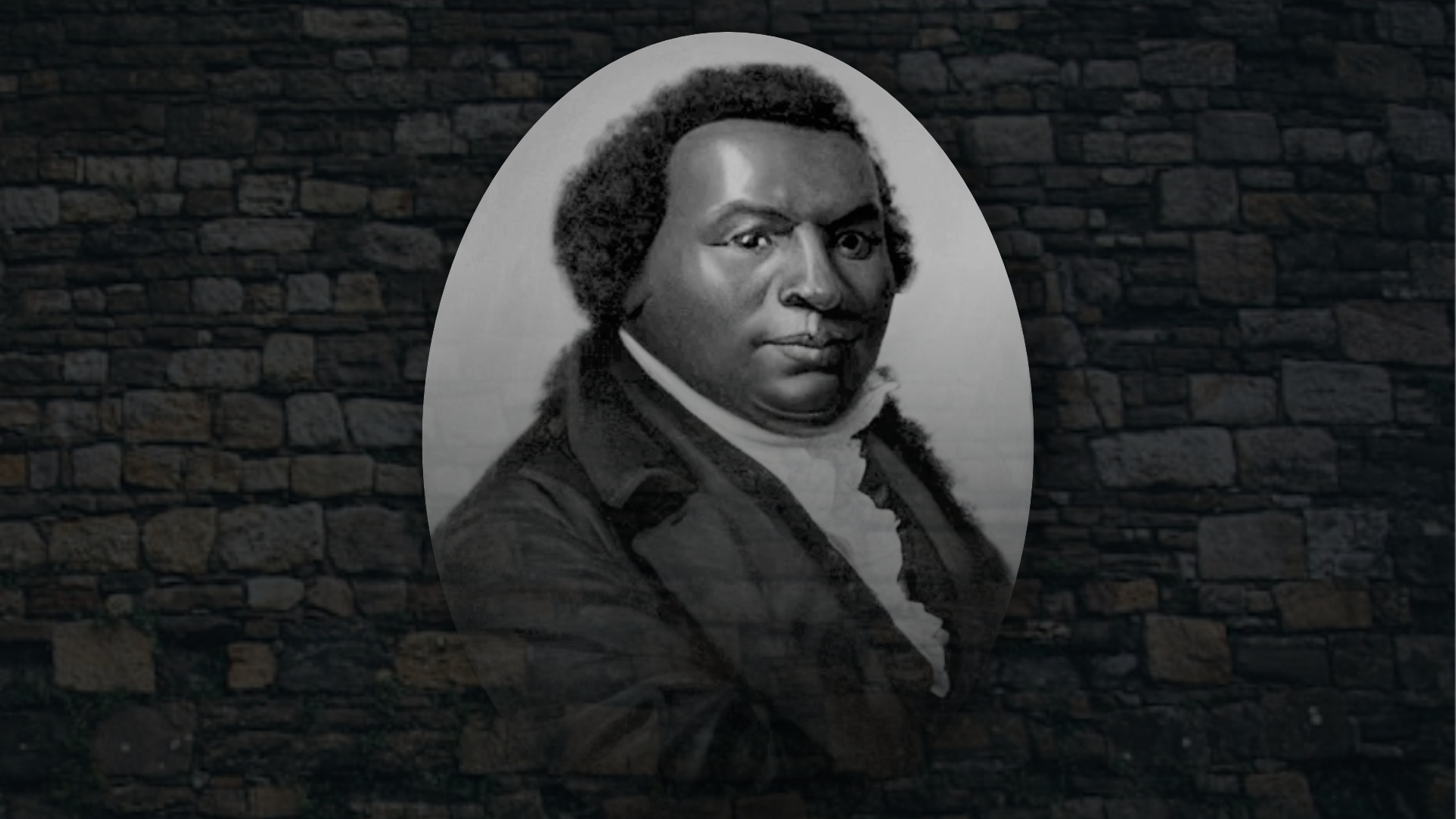
I met Gowan Pamphlet (1748–1807) when he was sitting on a bench outside a cemetery. It wasn’t really Pamphlet, of course; it was a man named James Ingram, who portrays the colonial-era Baptist preacher at Colonial Williamsburg. Ingram spoke about the lives of the enslaved represented in the cemetery and the African Baptist Church they worshiped in. I walked away wanting to know more about Pamphlet and his theological legacy.
Unfortunately, we know little about Pamphlet’s early life. The earliest reference to him is an ad in the Virginia Gazette from July 3, 1779, that accuses him of stealing a horse, which was an offense worthy of hanging. In that account, he’s listed as the property of Jane Vobe, a tavern keeper in Williamsburg.
Yet what we know about the rest of Pamphlet’s life is remarkable. He was a faithful pastor who preached freedom from sin through the gospel of Christ as he worked for liberation from the sin of slavery. Pamphlet was in the first generation of black evangelical leaders who gained respect among their white brethren without abandoning their distinct ethnic identity.
Providential Opportunity
In the 18th century, the Great Awakening spurred a fresh generation of white Christian efforts to engage African Americans with the gospel. That’s how Pamphlet was converted to Christianity, beginning a life of service to Christ as he ministered to free and enslaved people of African descent.
Based on historical records, it’s likely that Pamphlet’s conversion experience came before his transfer of ownership. Yet his owner offered opportunities for her slaves to learn to read and write by using the Bible through the Bray School, one of the earliest institutions for black education in North America. Vobe also took her slaves to worship services at Bruton Parish, which was part of the Episcopalian church.
There’s no evidence that Vobe ever opposed slavery. However, her willingness to allow the people she enslaved to be educated enabled Pamphlet to gain the skills that would allow him to become a leading Baptist figure. Through God’s providence, he became one of the first black ordained ministers in the United States.
Risky Calling
Entry into the gospel ministry came with hardship for blacks. Historian Robert Semple reports that a black preacher named Moses Wilkinson, Pamphlet’s predecessor in Williamsburg, “was often taken up and whipped for holding meetings.” Yet Wilkinson’s courage in the face of persecution set an example for Pamphlet’s ministry to free and enslaved blacks in Virginia.
After Wilkinson’s Methodist ministry took him to New York and Nova Scotia, Pamphlet helped build the congregation Wilkinson founded into the nation’s first black Baptist church. Pamphlet began preaching on the wooded land of the Green Spring Plantation even before he was granted his freedom by David Miller (Vobe’s son) in September 1793.
Pamphlet never experienced safety as he preached the gospel of Jesus Christ for at least two reasons. First, Virginia didn’t establish religious freedom until July 1786, so as a Baptist in a state aligned with the Church of England, Pamphlet could have been punished for religious dissent. Nevertheless, historian John Asplund records Pamphlet’s Baptist church as founded in 1781 with about 200 members. Second, gatherings of that size would have been a concern to slave owners for fear of a possible uprising. Yet Pamphlet remained faithful to his calling.
Perpetual Resistance
Resistance seemed to come from every direction. The General Association of Baptists in Virginia “advised that no person of color should be allowed to preach, on the pain of excommunication.” Some, like Pamphlet, continued to gather and preach and were excluded from fellowship on those grounds.
Pamphlet never experienced safety as he preached the gospel of Jesus Christ.
Yet Pamphlet’s ministry was effective. And he continued to pursue unity with other Christians, even the white Christians who had rejected his ministry based on his race. Thus, in 1791, Pamphlet’s church petitioned the Dover Baptist Association for admission. The black congregation, now known as First Baptist Church of Williamsburg, was admitted into the association in 1793.
It’s remarkable that despite such pervasive resistance, Pamphlet’s desire for Christian unity and mutual accountability drove him to pursue inclusion in the Baptist association. His leadership was instrumental in showing that good faith and an iron will could help other Christians to consider the implications of their evangelical doctrine on social and civic life.
Notably, since black Christians had come into fellowship with white, slave-holding Christians, questions about how slave-holders treated their Christian brethren became inescapable. Virginia Baptists had to explore how church discipline should be implemented on white believers who were reluctant to treat black Christians fairly.
When Pamphlet and his congregants showed up at Baptist meetings, they advocated for church procedures that ensured slaves were treated as coheirs and brothers. Historian Charles Irons notes that in matters of church discipline, “black evangelicals could expect . . . far more respect for their persons than they enjoyed in any civil setting.” Nevertheless, white men were often the final arbiters on matters of church discipline.
Theological Challenges
The presence of black evangelicals like Pamphlet challenged their white colaborers to consider the way a biblical view of marriage could be applied to slavery and plantation life. For example, in 1793, the Dover Association had to modify its strict stance on divorce and remarriage in cases “where men and their wives, being slaves, [were] so far removed to each other, as not to have it in their power to discharge the mutual duties of man and wife.” Instead, the local church was to use judgment regarding the permissibility of remarriage.
Since black Christians had come into fellowship with white, slave-holding Christians, questions about how slave-holders treated their Christian brethren became inescapable.
This train of logic was never taken to its final destination, however. Most white Christians in the association were content to relinquish the decision on the permissibility of slavery and the surrounding practices to the state. This hesitation exposes the danger of allowing civil authorities to resolve moral questions the church was called to address.
Pamphlet’s legacy is profound. By engaging with the Dover Association, First Baptist Church of Williamsburg paved the way for other Baptist congregations to form in Portsmouth and Petersburg. Additionally, Pamphlet trained churchmen like Simon Gulley, Israel Camp, Lewis Armstead, T. Maise, Benjamin White, Thomas Mars, and James Roberts, who were noted contributors to early black evangelical life and the Dover Association. Moreover, during Pamphlet’s pastorate, First Baptist Church of Williamsburg grew to 500 members and became an exemplar for reaching black communities with the gospel.
Pamphlet’s encounter with the freedom of the gospel informed his passion to share the message of redemption and hope. He joined a biracial movement of evangelicals that offered true freedom even amid the injustice of chattel slavery.
Gowan Pamphlet’s body has long been in his grave, but his legacy still has the power to inspire the church.
News Source : https://www.thegospelcoalition.org/article/gowan-pamphlet-biography/