 Your post is being uploaded. Please don't close or refresh the page.


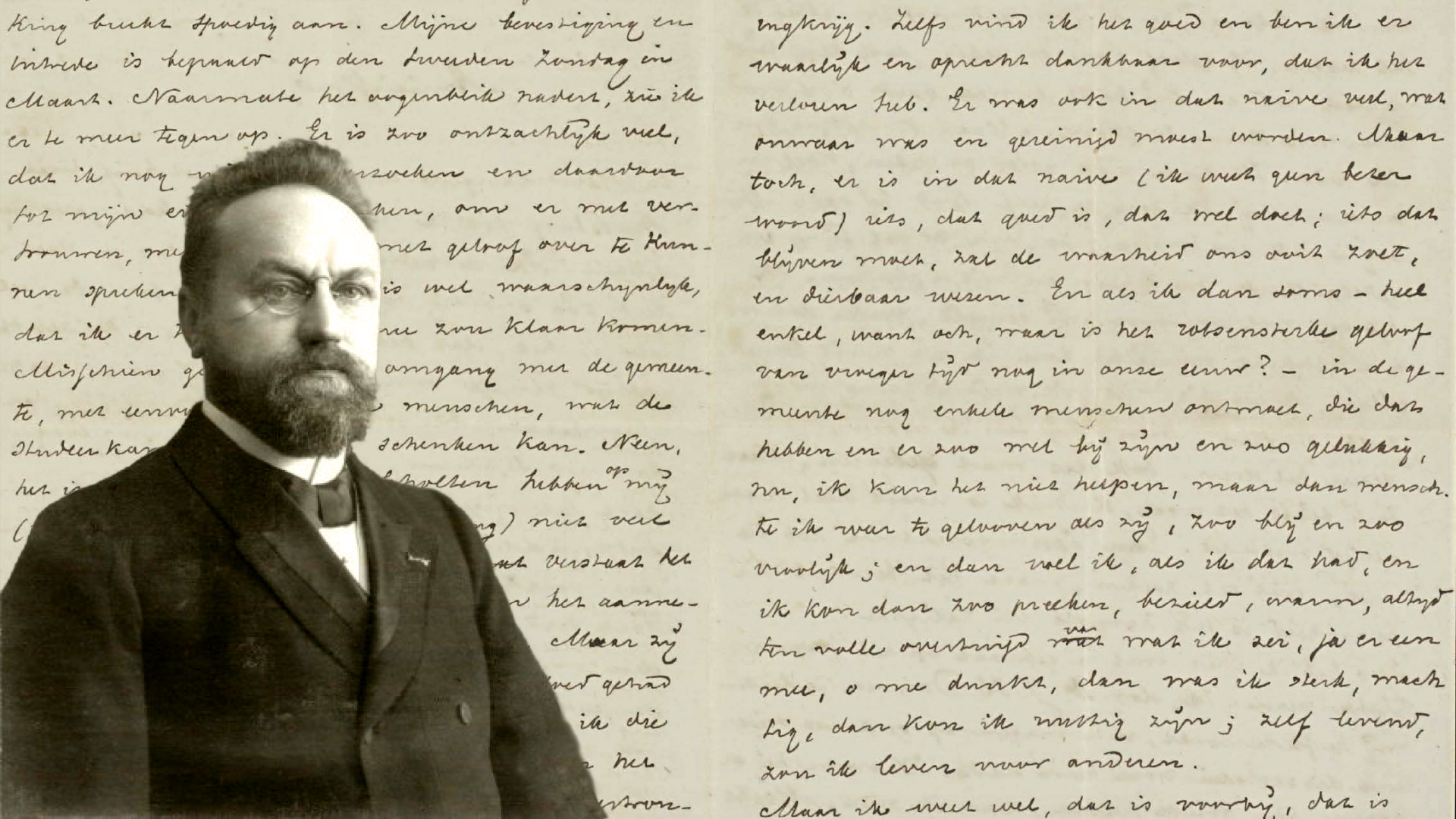
In How To Reach the West Again, Tim Keller called for Christians to cultivate a “Christian High Theory”: a method of contextualization whereby Christians don’t merely explain the gospel itself but also explain their own culture with the gospel. Late in his ministry, Keller turned to Herman Bavinck (1854–1921) for precisely this kind of project.
In Bavinck, we find the ground zero for many of the ways Christians in the 21st century speak about how to analyze, critique, and evangelize the late-modern world. His writings are the primary sources for concepts that have been so taken for granted that they’re used without definitions: common grace, Christianity as a worldview, and subversive fulfillment.
Oddly enough, however, Bavinck’s main works were untranslated until recently, with his four-volume Reformed Dogmatics translated in 2008 and other seminal texts like Christian Worldview and Christianity and Science as late as 2019 and 2023. Concepts like “worldview” and “common grace” have received a life of their own in Anglophone Christianity apart from the source that first articulated these notions.
In Bavinck, we find the silent influence behind many of the most formative minds in American evangelicalism and Reformed theology—figures like Keller, Francis Schaeffer, and Louis Berkhof. This is why, in Gayle Doornbos’s and my forthcoming book, The Essential Herman Bavinck, we seek to reintroduce his core texts in one volume, and why The Keller Center is including a session on Bavinck in a cohort on major figures in cultural apologetics.
In Bavinck, one finds the ground zero for many of the ways Christians in the 21st century speak about how to analyze, critique, and evangelize to the late-modern world.
Let’s consider the answers to three questions: Who was Bavinck? What were his major writings? And how does his work inform cultural apologetics for today?
Who Was Bavinck?
Bavinck was one of the first-generation Dutch neo-Calvinists who, along with his colleague Abraham Kuyper (1837–1920), sought to convey confessional Reformed orthodoxy to late-modern society and its holistic implications to every area of life.
A child of the Secession of 1834 (Afscheiding) that separated from the established Dutch Reformed Church (Nederlandse Hervormde Kerk), Bavinck grew up in the wake of the 1848 revolutions that granted religious freedom and toleration to the once-persecuted Seceders. He inherited his family’s ambition to integrate into modern life and education from an early age. Bavinck received his education at Leiden University, which hosted a leading modernist theological faculty in Holland. He studied under the likes of Johannes Scholten (1811–85) and Abraham Kuenen (1828–91).
After finishing his doctoral work on the ethics of Huldrych Zwingli, Bavinck went on to work a brief pastorate at Franeker, before taking up a post at the Theological School at Kampen. He taught there from 1883 to 1902, during which he published the first edition of his four-volume Dogmatics. He then accepted a position at Kuyper’s recently established Free University of Amsterdam in 1902, where he focused more attention on showing Christianity’s relevance for the other academic disciplines and public issues.
Bavinck was also elected as a parliamentarian in the First Chamber in 1911, representing Kuyper’s Anti-Revolutionary Party, and remained productive until his death on July 29, 1921. He was married to Johanna Adriana Schippers, and their daughter, Johanna Geziena Bavinck, was born in 1894.
Major Writings: From Kampen to Amsterdam
Bavinck’s writings fit into two major categories: those writings leading up to and during his tenure at the Theological School at Kampen (1883–1902), and then those in his Amsterdam years at the Free University (1902–21). This brief survey of his writings can only pick out a selection of the significant texts.
These works highlight Bavinck’s distinct contributions in the story of modern theology: the desire to be orthodox yet modern, the attempt to showcase the holistic implications of Christian faith, and the organic character of a Christian world-and-life view.
His works in the earlier period consisted of shorter treatises on various theological topics, culminating in the first edition of the Dogmatics. One of his first major publications was a new edition of the Synopsis purioris theologiae (Synopsis of a Purer Theology), establishing Bavinck’s connection to the earlier orthodoxy of 17th-century Dutch Reformed scholasticism while signaling his desire for further constructive work as noted in his Latin preface.
His inaugural lecture at Kampen, “The Science of Holy Theology” (1883), focused on the distinctness of theology’s grounds, character, and end. His “Catholicity of Christianity and the Church” (1888), another address delivered at the theological school, argued that catholicity extends not merely to the universality of the church’s theology but also to the way in which Christian faith can organically transform other spheres of human life: culture, family, science, and art.
Two important essays from 1894 are worth mentioning. “Common Grace,” his rectorial address at Kampen, attributed the restraint of sin and humanity’s access to creational norms to the working of God’s general operations, which allows for the work of special grace to take place within history. Nature is thus not profane or insignificant but preserved for the redemption of special grace.
“The Future of Calvinism”––an essay that extended a lecture delivered two years prior––distinguished between Reformed theology as an ecclesial theological confession and Calvinism, which Bavinck considered a more holistic world-and-life view. While Bavinck would later emphasize that this holism is the product of Christianity in general (and not merely Calvinism in particular), in these earlier writings one already begins to see his lifelong commitment to display the leavening power of Christian faith and his desire to communicate orthodoxy well to shifting modern intellectual sensibilities concerned about immanent realities.
In the subsequent years, Bavinck continued working on his Dogmatics and Reformed Ethics, though only the former was completed and published. The first edition of Dogmatics appeared between 1895 and 1901, covering the various traditional theological loci, from prolegomena to eschatological consummation. His approach on each topic consists in moving broadly in three steps: (1) expositing the relevant biblical material on the doctrine, (2) tracing out the way in which ancient, medieval, Reformed, Lutheran, Roman Catholic, and modern theologians or philosophers have developed and articulated the material, and (3) Bavinck’s own constructive articulation of the doctrine that draws from steps #1 and #2.
Readers of the Dogmatics would thus learn much from Bavinck’s evaluative comments on the history of each doctrine, but would do well to consider each chapter as a whole and his constructive comments at the end to perceive Bavinck’s voice. Because of Bavinck’s irenic posture and the way he sympathetically described views with which he disagreed, many commentators note that locating Bavinck’s own position on a subject can be a challenging task.
While the Dogmatics was certainly his magnum opus, Bavinck constantly reconsidered and revised his stated positions on various issues. In this regard, his enlarged second edition was released between 1906 and 1911, adding, for example, sections on psychology and the science of religion. Bavinck continued to wrestle with his ideas, planning further revisions and expansions to the text (that never came to light) before his death.
During Bavinck’s Amsterdam years, he wrote three books which today stand out as a collective whole. In 1904, he published Christian Worldview and Christianity and Science. While the former work was a macrotreatise that argued for a distinct Christian treatment of the classical divisions of philosophy––epistemology, metaphysics, and ethics––the latter work tried to show how Christianity contributes to the formation of a university and its various academic disciplines.
Both works argued for the organic character of a Christian world-and-life-view––that Christianity isn’t confined to a single category of human existence (i.e., “religion”) but permeates all of life. These two works anticipated Bavinck’s 1908 Stone Lectures delivered at Princeton Theological Seminary, published as the Philosophy of Revelation (10 years after Kuyper’s own Stone lectures, published as the Lectures on Calvinism). These lectures explored the inescapability of revelation in the disciplines of higher study, treating the disciplines of philosophy, the natural sciences, religion, culture, history, and Christianity.
The next few years continued this focus on the public implications of theology, as Bavinck wrote shorter works on issues like the problem of war, pedagogy, classical education, religious psychology, unconscious life, aesthetics, and evolution. These treatments often signaled Bavinck’s ongoing wrestling with the newer questions of the 20th century.
This brief survey of Bavinck’s prolific academic output highlights his academic powers, rendering comprehensible his nomination to the literary division of the Royal Academy of Science in 1908 (his promising talents had already resulted in a nomination to the Society of Dutch Literature in 1883). Yet this shouldn’t eclipse his many ecclesial writings throughout his career. Two of his more accessible works are worth mentioning: his 1901 Sacrifice of Praise and his 1909 Wonderful Works of God (originally Magnalia Dei).
The former work was often given to a catechumen before his or her first partaking of the Lord’s Supper, for it emphasized the historical roots and importance of the public confession of faith. The latter work, a single-volume Dogmatics, was written for the modern layperson, without the copious documentation and historical surveys of the Dogmatics. Bavinck’s foreword to Wonderful Works particularly emphasized the need to engage readers afresh, for he deemed that the older works “do not speak to the younger generation” (xxxii). Readers wanting a sense of Bavinck’s mature theological views would do well to dip into Wonderful Works as a starting point into his wider oeuvre.
Contributions to Cultural Apologetics
What might we learn from Bavinck’s work for the sake of cultural apologetics? Two applications come to mind: (1) we should desire to convey classical Reformed orthodox theology into a modern intellectual milieu and (2) Christianity is holistic.
First, Bavinck’s theology conveyed that the heritage of classical Reformed orthodoxy can engage fruitfully with the insights of modern theology and philosophy. Along with Kuyper, Bavinck often conceived his neo-Calvinist position as that between “conservatism” and “modernism.” While conservatism decried the present in a nostalgic call for the past, Bavinck argued that the present age remains a remarkable opportunity to recommunicate the Christian faith in fresh ways.
One example comes to mind: his argument for the separation of church and state. Bavinck was part of a committee that argued for the removal of the clause from Belgic Confession (article 36) in which the government is called to “[upholding] the sacred ministry, with a view to removing and destroying all idolatry and false worship of the Antichrist.” Bavinck (and Kuyper) continued to believe that the Bible should inform our view of the state’s responsibility but that the state should also recognize that in this present—post-fall and pre-glory—period of history, God wants the believer and unbeliever to coexist (Matt. 13:24–30).
Thus, the state, as an institution of common grace, should recognize that it isn’t yet the period of God’s judgment and provide for the conditions for believers and unbelievers to engage in civil and public life together with relative peace. This isn’t a neutral view of the state but a biblically grounded one. For Bavinck, Christianity provides the theological resources that civil life needs: the virtues of toleration and of taking religion seriously beyond what the secular worldview can provide.
Christianity provides the theological resources that civil life needs: the virtues of toleration and of taking religion seriously beyond what the secular worldview can provide.
Instead of shying away from the modern debates and arguing that orthodox theology should bypass the academic discussions of the day, Bavinck often sought to incorporate as much of these contemporary insights as possible within the boundaries of orthodox Calvinism. James Eglinton rightly notes that Bavinck often “fought modern with modern.”
These inclinations led the neo-Calvinists to be critiqued by modernists and conservative thinkers alike––modernists argued that Bavinck and Kuyper were merely redressing fundamentalism in modern idiom, while conservatives often accused them of capitulating to the allure of the modern age. Bavinck’s 1911 oration “Modernism and Orthodoxy” addressed these charges directly. Though modernism as a secular worldview is contradictory to the gospel, modernity and orthodoxy may exist fruitfully together, simply because God’s Word addresses and fulfills the desires of every human heart in every age.
Second, Bavinck argued for the holistic and leavening implications of the Christian faith. Aware of the totalizing nontheistic ideals of the 1789 French Revolution and later of Nietzsche’s thoroughgoing nihilism, Bavinck, like Kuyper, saw it was necessary to present Christianity as a full-orbed alternative.
It was no longer viable to assume that Christianity was relevant for public life in those modern conditions, which increasingly argued that faith belonged within the ecclesial and private spheres alone. This realization led Bavinck and Kuyper to argue for theology to awaken to self-consciousness and to justify its existence not merely in the church but for every area of life.
However, while Kuyper argued for this in a deductive and perhaps inflated way, Bavinck’s method was more reserved and inductive. He argued that Christianity remained the inescapable conclusion if one patiently sifted through the data and contemporary arguments presented. He provides us with an example of patient investigation coupled with confidence in God’s Word.
In this way, Bavinck is a model for cultural apologetics: Christianity can engage any culture, any philosophy, and any time period because the gospel subverts and fulfills the desires of the human heart.
News Source : https://www.thegospelcoalition.org/article/orthodox-modern-bavinck-cultural-apologist/