 Your post is being uploaded. Please don't close or refresh the page.


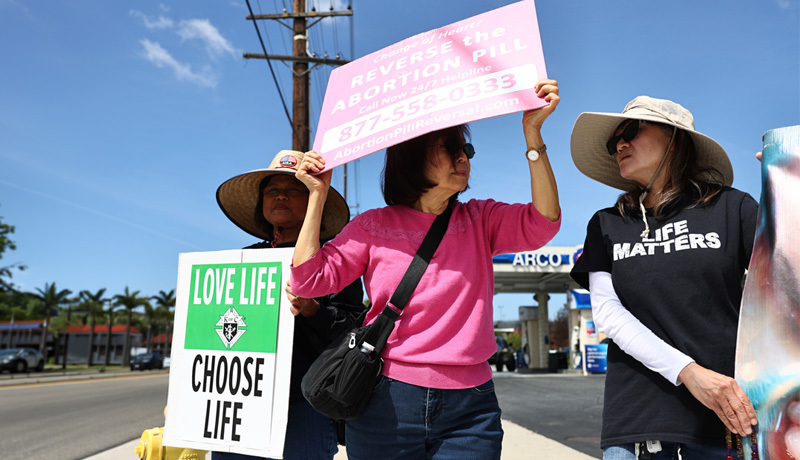
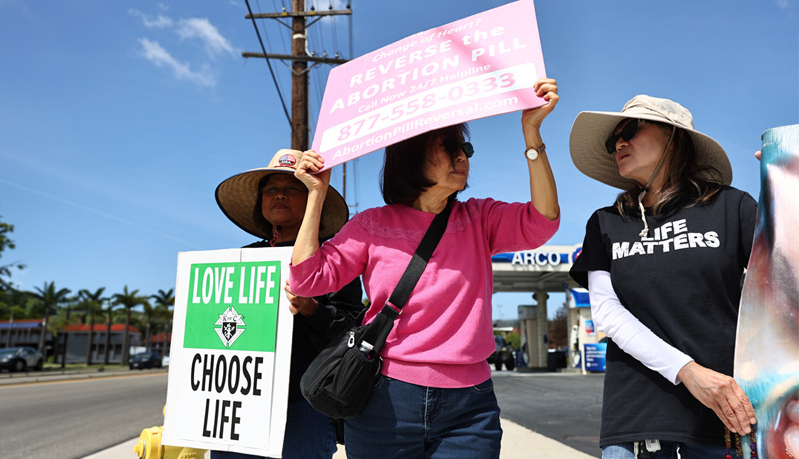
For decades, the case for legal abortion in the USA and elsewhere has rested on two central claims: that women’s rights depend on autonomy over their bodies, and that legal access would make abortion safer than the dangerous black-market alternatives it replaced.
Time for an honest reassessment.
If those claims still matter, pro-choice advocates should be deeply concerned about how abortion pills are being distributed today and should work with the pro-life movement.
Under the banner of “telehealth,” a system has emerged that strips women of basic medical protections while calling it empowerment. It is time for an honest reassessment.
This is not an argument about morality. It is an argument about choice, safety and rights.
Choice without information is not choice
Choice is meaningful only when it is informed. A decision made without understanding risks, alternatives or consequences is not autonomy. It is reckless abandonment.
Many abortion pills are obtained through websites with little or no real physician interaction.
In theory, telehealth means a remote visit with a licensed physician who reviews medical history, screens for risk factors, explains complications and provides follow-up care. In practice, here in the USA, many abortion pills are obtained through websites with little or no real physician interaction.
There is often no physical exam, no confirmation of gestational age, and no screening for dangerous conditions like ectopic pregnancy.
The abortion pill mifepristone carries a black-box warning from the Food and Drug Administration. Its own label states that one in 25 women may end up in the emergency room due to complications such as hemorrhage or infection.
Some studies suggest that the rate may be higher. Yet these risks are frequently buried in fine print, delivered electronically, or never meaningfully explained. When is the last time you read these complicated warnings of your medicine while under stress?
A checkbox on a screen is not informed consent.
A checkbox on a screen is not informed consent. Consent requires time, understanding and the ability to ask questions in a setting where a woman is treated as a patient, not a transaction.
In some cases, choice is eliminated entirely. Pills are obtained by abusive partners, traffickers or coercive boyfriends. In those circumstances, warning labels are irrelevant. The woman is not choosing anything.
If pro-choice advocacy is rooted in respect for women’s autonomy, this system should raise serious alarms.
The abortion pill increasingly resembles the black market abortion was meant to replace
One of the strongest arguments for legal abortion in the 1970’s was safety. Bringing abortion into regulated medicine, advocates argued, would eliminate back-alley procedures and protect women from harm. If you lived in the USA then, do you remember the coat hanger signs?
But the current abortion-pill regime increasingly mirrors the very dangers it was supposed to prevent.
Follow-up care is inconsistent or nonexistent.
In the US, pills can be mailed across state lines with minimal oversight. Some originate from overseas suppliers. Prescribers may never meet the patient. Follow-up care is inconsistent or nonexistent. When complications occur, women are often told to go to the emergency room and describe the situation as a miscarriage, breaking continuity of care and obscuring accurate reporting.
This is not what regulated medicine looks like.
If a drug with comparable risks were used for any other purpose, regulators would tighten standards, not loosen them. In-person screening would be routine. Adverse-event reporting would be mandatory.
Safety cannot depend on ideology.
Accountability would be clear. Instead, abortion pills are treated as an exception, not because the risks are lower, but because the politics are louder. Safety cannot depend on ideology.
A system that relies on anonymity, remote distribution, and emergency rooms to manage predictable complications is not a healthcare model. It is a liability model, one where women absorb the cost.
Rights require accountability, not deregulation
Advocates often describe abortion access as a women’s rights issue. But no right, for men or women, includes the right to unsafe medical practices without standards.
We do not permit patients to waive informed consent for chemotherapy. We do not allow controlled substances to be distributed without verification.
We do not excuse pharmaceutical companies from oversight because a product is politically popular. I cannot get Sudafed (containing Pseudoephedrine, a key component for making methamphetamine) without showing my licenses and signing a document.
Rights exist within systems designed to protect people from harm.
Rights exist within systems designed to protect people from harm. When regulators knowingly allow a drug with documented risks to be distributed without adequate safeguards, women are the ones who suffer.
When oversight disappears, accountability disappears. And when accountability disappears, rights become slogans rather than protections.
Women are told they are empowered. In reality, many are left to manage serious medical risks alone. Emergency rooms become the safety net. Physical complications, emotional trauma, and unanswered questions become the aftermath.
That is not empowerment. It is neglect.
A test of consistency
This issue should concern people on all sides of the abortion debate.
This issue should concern people on all sides of the abortion debate. A healthcare system that hides risk behind convenience is not compassionate.
A regulatory framework that treats informed consent as optional is not progressive. And a movement that invokes women’s rights while denying women information is not defending choice.
Abortion pills should be regulated like every other serious medication: with transparency, medical supervision, and respect for the realities of patient care.
If choice truly matters, then so does education.If safety matters, then so does oversight.
If women’s rights matter, then so does accountability.
News Source : https://www.christiandaily.com/news/why-pro-choice-advocates-should-oppose-the-abortion-pill