 Your post is being uploaded. Please don't close or refresh the page.



In my role as a women’s ministry director over the past 15 years, I’ve observed an increase in church women struggling with emotional and relational issues and a decrease in women coming to pastors, women’s ministry directors, and small group leaders for help. Many women are turning to therapy instead.
As church leaders, we want to care well for our congregations, but it’s challenging to minister to people when we don’t know their struggles. Why are women increasingly looking outside the church for help?
What people theologically believe about themselves—their doctrine of man—determines whom they go to for help when troubled. While the church’s confessional doctrine of man hasn’t changed in recent years, I believe the influence of our therapeutic culture is leading many congregants to a functional change in their doctrine of man.
Shifting Views
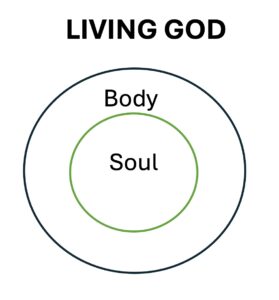
The church professes we’re two unified entities: body and soul (Gen. 2:7). This embodied-soul view of the person can be depicted by two embedded circles where the whole person lives before the face of the living God, a concept known as coram Deo.
Figure 1: Confessed Belief: Embodied Soul, Duplex-Unity View of Man
While our confessed doctrine is that man has two parts, I’m seeing church members functionally living as if they have three parts:
Figure 2: Functional Belief: Threefold View of Man in a Somewhat Therapeutic Culture

With the rise of therapeutic culture, instead of seeing themselves as unified in body and soul, people increasingly see themselves as three distinct but overlapping parts: the body, the spirit, and the psychological.
Clyde Narramore popularized this view in the 1950s: If you have a body problem, see a physician; if you have a soul (psychological) problem, talk with a psychologist; if you have a spiritual problem, talk with a pastor. Ed Welch points out that Scripture doesn’t identify psychological problems divorced from our bodies and spirits, and he explains that the struggles typically placed in the psychological realm can be reassigned to either body or soul.
But this is the most critical concern: Where is the living God in this model, and what part (or parts) of man does he care about and have authority over?
Critical Concerns
R. C. Sproul said that “to live coram Deo is to live one’s entire life in the presence of God, under the authority of God, to the glory of God.” I’m concerned that when we separate man into three parts and label only one of those as spiritual, the other two parts may seem to be outside God’s presence and authority. We might not see man as a whole in the presence of God, under the authority of God, living to the glory of God.
Our therapeutic culture is leading many congregants to a functional change in their doctrine of man.
With the three-part view, it can be difficult to see God’s final authority over the body, and it can be even more challenging to convince people that God is also the final authority over the psychological.
Our secular therapeutic culture communicates a godless alternative to coram Deo: living in the presence of a therapist, under the authority of that therapist, to feel better and be a healthier you. What dominates our culture tends to seep into the church, and as therapy is increasingly emphasized, our church members may further progress to view themselves in this way:
Figure 3: Functional Belief: Threefold View of Man in a Highly Therapeutic Culture
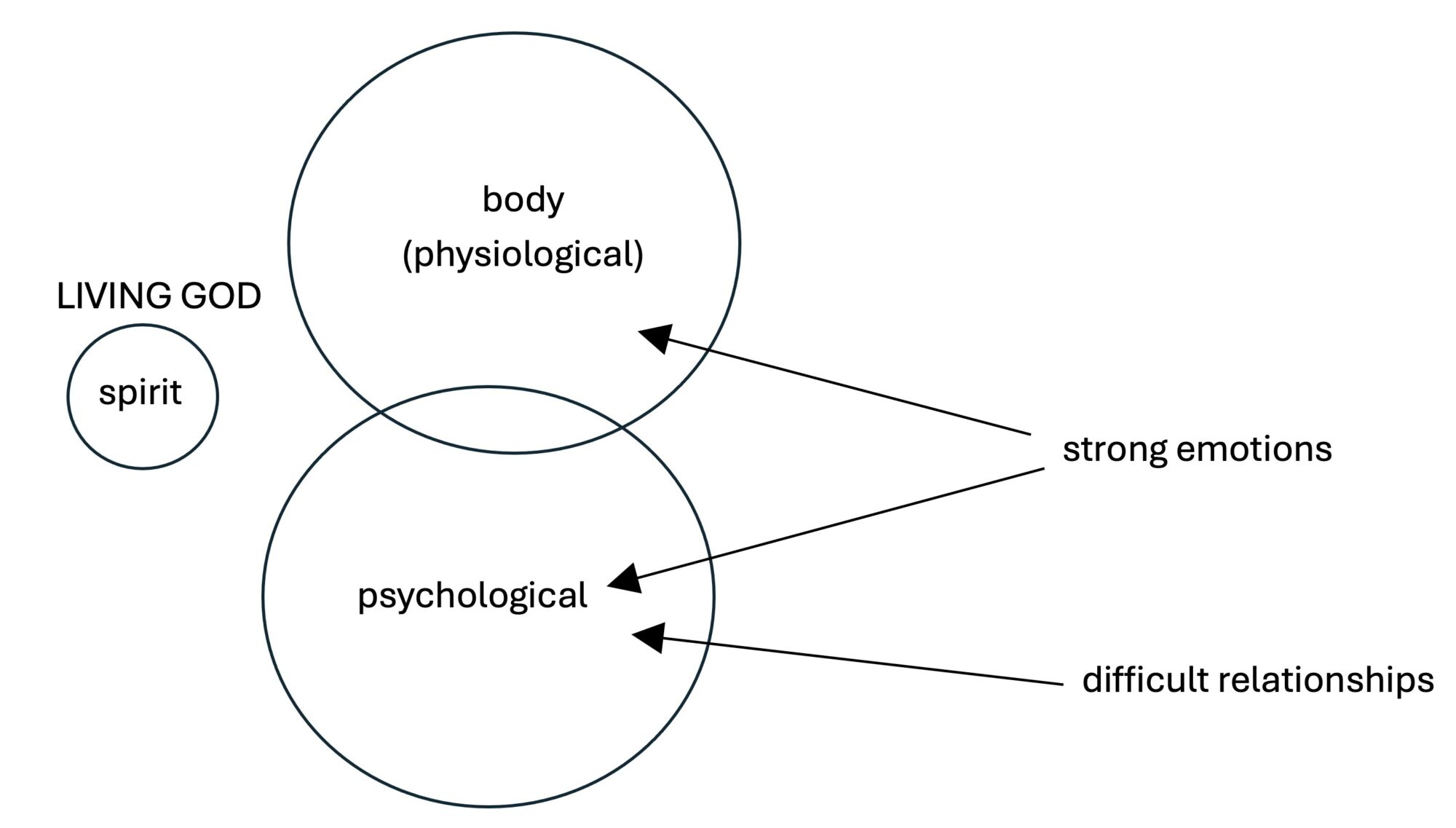
In this view of man, the spiritual life is seen as separate from the rest of the self, and it becomes smaller (taking on less of a priority). As a result, the living God is relegated to a distinct compartment of one’s life. Additionally, strong emotions and even difficult relationships are assigned to the body or the psychological, and God’s presence, authority, and involvement are often not considered in these spheres.
Recently, a pastor friend shared that a woman from his church asked to meet with him for wisdom in marriage. At the first meeting, they agreed to meet several times, but the pastor had a difficult time scheduling the second meeting. Later, the woman said she postponed their sessions because she was struggling with boundaries and anxiety in a family relationship and had been going to a therapist for help with that.
Thankfully, this woman was still looking to her pastor for some care, but we can see how she was separating out her needs, believing that her pastor’s role was narrow.
At times, it’s wise for Christians to seek professional therapy and counseling help in addition to receiving care from pastors and church leaders. But in today’s culture, church members are increasingly looking only to therapists and counselors to help them with issues like anxiety and relational struggles because they don’t consider those problems to be related to their spiritual lives.
How Churches Can Help
Amid difficulties, the psalmist asks, “From where does my help come?” (Ps.121:1). Our culture too often answers, “My help comes from Google, social media, online support groups, AI chatbots, and my therapist.” Not all of these are inherently bad, but we can follow them to places where the living God and his church are unconsidered or deemed irrelevant.
When our members experience stormy struggles, we, as church leaders, long to lead them to the rock that is higher than us all. God is their ultimate refuge and strong tower in their sea of distress (Ps. 61:1–3).
When we separate man into three parts and label only one of those as spiritual, the other two parts may seem to be outside of God’s presence and authority.
So how can the church practically help congregants navigate this cultural moment?
Clear and consistent preaching and teaching of the embodied-soul doctrine of man lays the necessary groundwork. In addition, our church has found it helpful to specifically train lay leaders in how to wisely and lovingly move toward struggling congregants. We’re hosting specialized events on topics like anxiety and boundaries to remind our members that the church is a valuable resource amid those struggles. We’ve increased communication about available care, offering biblical resources on various struggles and creating short-term small groups on sensitive topics.
We encourage our congregants to come to us early in their emotional and relational struggles so we can minister to them through the Word and prayer. At that time, we assess the need for widening the circle of care, keeping both body and soul in mind. Widening care may involve inviting the person to join a small group, offering financial or physical care, or engaging with ministry partners such as counselors and psychiatrists, those our members are already seeing and those with whom we hope to coordinate care.
As church leaders, we need to help our members not only believe the doctrine of an embodied soul but also functionally live all of life before the face of God. In our therapeutic culture, may we not lose sight of the truth that, ultimately, “[our] help comes from the LORD” (Ps. 121:2).
News Source : https://www.thegospelcoalition.org/article/therapy-instead-church/