For the best experienceDownload the Mobile App

(LifeSiteNews) – In her recently published memoir, “You With the Sad Eyes,” Hollywood actress Christina Applegate shares the heartbreak of having an abortion at age 19, that she knew at the time that abortion is “murder,” and that she was “killing” her child.   The “Married With Children” star, now 54, chose to quote entries from her diary at the time because what she experienced is “too painful” to write about today.   The words of the then-teen star display her inner turmoil of sacrificing her child for the sake of her career, knowing full well that the pro-abortion narrative about the non-humanity of the life she carried was a lie, and that the baby she was about to abort was “incredible”: I always felt that if I ever got pregnant when I knew it was the wrong time, I wouldn’t have any problem having an abortion. “Oh, whatever, it isn’t even a baby yet.” That’s bull—-. This creature is incredible. It makes me feel whole, safe … Applegate notes that her diary entries then took a “brutal turn”: I’m f*cking pregnant and I’m killing my child on Thursday. I’m thinking where the fuck can I go to recuperate from murder … His family will hate me when they find out that I killed their family member because they don’t believe in it. But I can’t have this baby because I have work to do to entertain this fucking world. Besides, I can’t … now. In June 1991, about three months’ pregnant and days away from undergoing her abortion, she wrote a poem to her child whom she believed to be a girl: Hello little thing. I feel you every moment of my day Such a tiny existence Such an immense effect you have You are a miracle A tiny-handed miracle I love you. But you know your fate. It is not your time. I know you didn’t make the decision. But it can’t be your time. You will live on, though … You will live through another. … I hope you will forgive me. But I want you to know how you’ve changed me. You’ve opened my eyes. You’re letting me know something is more important than myself. But Mommy can’t be with you right now. But know she loves you More than any other miracle. And know that when it’s your time It will be your time. On Wednesday, June 12, 1991, Applegate wrote: Tomorrow is the day. Yes, pain and all the other emotions are pummeling my soul. And on the following day, June 13, she entered in her diary: Well, it’s over. I feel pretty okay. Just kind of woozy. That gives me no time to realize what I have done. Which is most likely the best right now … Applegate, who for the last five years has suffered from the debilitating effects of multiple sclerosis, noted that those diary entries were prescient, “it’s almost as if I could see a future in which the bill for all the guilt and unhappiness and trauma would be paid by my body.” “Over the years, countless women — especially in the entertainment industry — have been sold the lie that the only way they can be successful is to kill their preborn children. Some have come to regret that they exchanged their own children for this lie,” Live Action’s Bridget Sielicki explained.  “As Applegate’s experience indicates, the killing of a preborn child leaves a lasting mark on the mother, as a mother’s natural instinct is to protect and nourish her baby — not abort it,” Sielicki said. Applegate’s soul-crushing story contrasts with that of Leah Darrow, a former contestant on America’s Next Top Model.  Shortly after actress Michelle Williams used her award acceptance speech to promote abortion at the Golden Globes in January 2020, Darrow, who was then in labor, took the time to record an Instagram video challenging Williams’ statement that abortion was integral to her success as an actress. “I’m here getting ready to deliver my fifth baby,” Darrow said from her hospital bed. “And I want to let all you women know, all you young ladies who haven’t had babies or are maybe listening to what the culture says about birth, and women, and babies, and choice.”   “Babies don’t keep us from our dreams,” she declared. 

(LifeSiteNews) — After a video went viral of “Christian nationalist” preacher Doug Wilson saying that Catholics should be banned from having Marian and Eucharistic processions and calling them acts of “idolatry,” one diocese immediately sprang into action, proposing that massive Eucharistic processions should be held across the country on the Feast of Corpus Christi this year.  “All Roman Catholics: mark your calendars for June 7, 2026 – the Feast of Corpus Christi,” the Archdiocese of Portland urged on social media.  “Let’s organize even larger Eucharistic processions in our cities and parishes this year,” encouraged the archdiocese, which shared photos of recent beautiful, large processions.  All Roman Catholics: mark your calendars for June 7, 2026 – the Feast of Corpus Christi. Let’s organize even larger Eucharistic processions in our cities and parishes this year. https://t.co/r91Xcz2FGm pic.twitter.com/66ZXksWL9l — Archdiocese Portland (@archdpdx) March 13, 2026 Catholic news and opinion site Catholic Arena said on X that the Portland archdiocese had responded “defiantly” to Wilson’s “anti-Catholic rant.”  Wilson, the co-founder of the Communion of Reformed Evangelical Churches (CREC) who frequently preaches on “Christian nationalism,” has previously been invited to the Pentagon by Secretary of War Pete Hegseth to lead a worship service. Hegseth himself attends a CREC church. As reported yesterday by LifeSiteNews’ Antonino Cambria, Wilson emphasized that in an ideal America, Catholics would be allowed to keep their churches and ring their church bells. However, they would not be permitted to hold public Marian processions, and they would likely not be allowed to hold public Eucharistic processions because, according to Wilson, these would constitute public acts of “idolatry,” even comparing them with Hindu processions. “We are a Christian nation, so church bells are OK, but a Muslim call to prayer in the public space would not be OK,” Wilson said in the clip. “Catholic church bells would be OK, but a parade in honor of the Virgin Mary, carrying an image of the Virgin Mary down Main Street, no!” Secretary Pete Hegseth Pastor who was Invited to Pray at Pentagon Says Publicly Eucharist and Marian Procession Should NOT be Permitted in Public. See more here: https://t.co/5fpjjd1ff8 pic.twitter.com/iKJg1bPCuI — John-Henry Westen (@JhWesten) March 13, 2026 When the host interjected to ask Wilson if Eucharistic processions would be allowed, Wilson said it would depend on how they are conducted, but probably not, adding that all “public displays of idolatry” as defined by the Protestant foundation of the law would be banned from the public square, erroneously comparing them with pagan Hindu processions. “Basically, public displays of idolatry, what the Protestant foundation of the law would consider to be idolatry, would not be allowed,” he said. “So you wouldn’t have a Hindu procession with a Hindu god, you wouldn’t have a procession of the Virgin Mary.” The controversy stirred up by Wilson’s ludicrous views is still fresh, so it remains to be seen if other dioceses will follow Portland’s lead. 

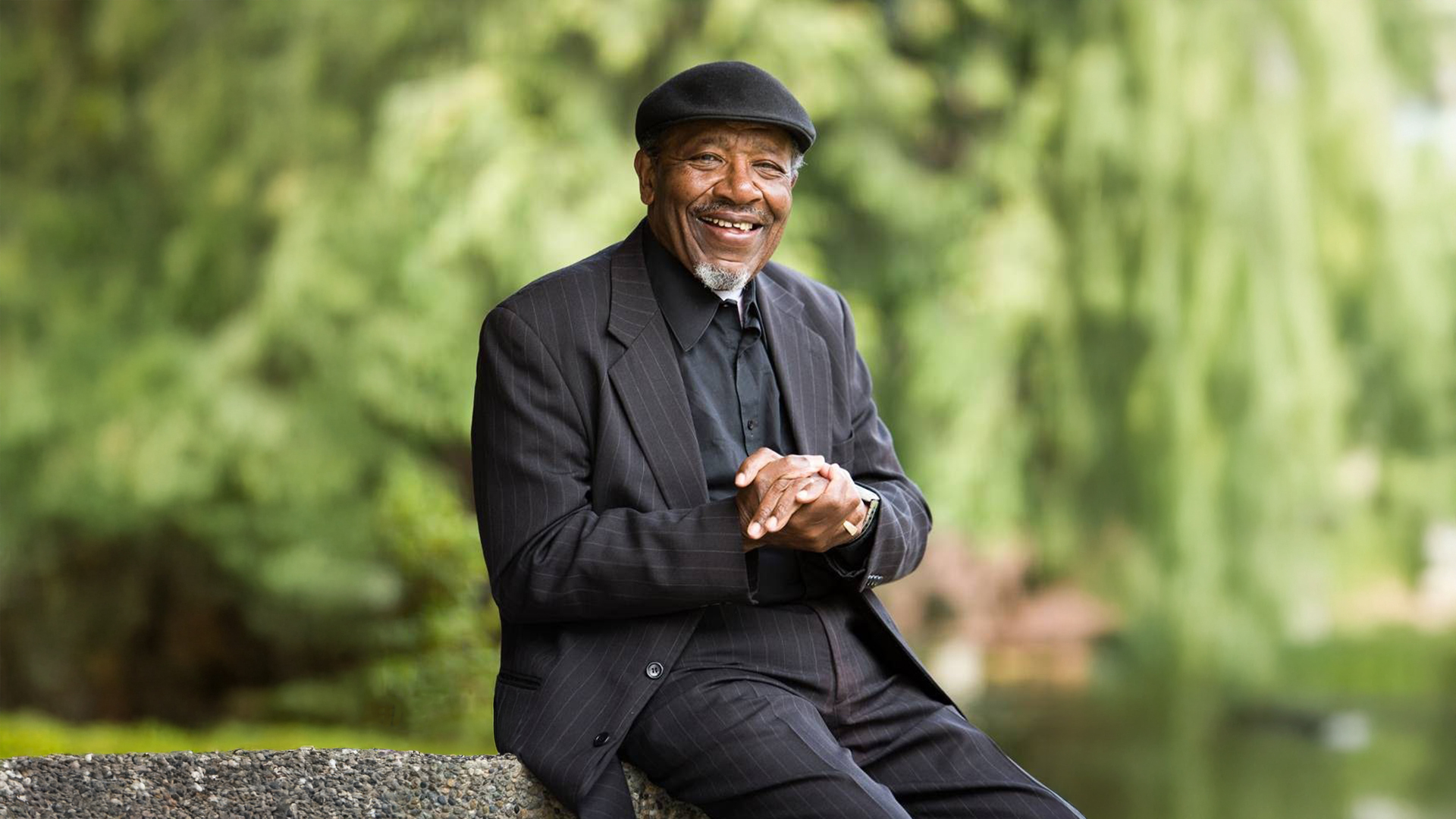
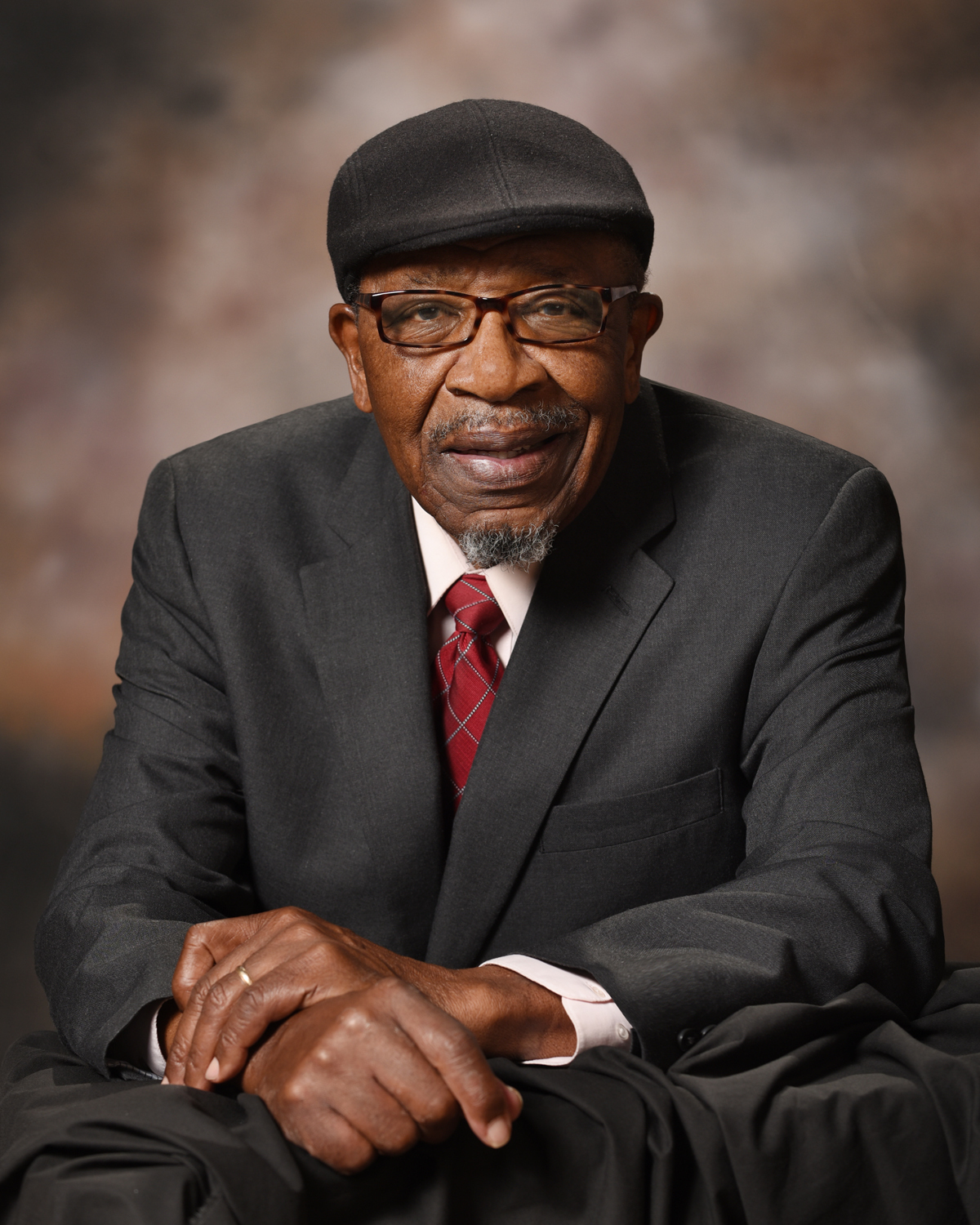
I read a tattered copy of John Perkins’s With Justice for All as a newly regenerated teenager in the 1990s. It had an indelible impact on my young Christian mind. If I had known that some twenty years later he would become a personal mentor and cherished friend, it would have been an unthinkable blessing. John Perkins (1930–2026), or “Brother John” (as he let me address him), was born into the sharecropping world of rural Mississippi, during the Great Depression and the worst of Jim Crow segregation. He lost his mother to malnutrition when he was seven months old. At the age of 17, he held his big brother—a decorated veteran of World War II—as he died, fatally shot by a racist town marshal. After a civil rights protest in 1970, Brother John was arrested along with nineteen black Tougaloo College students. He was tortured and nearly beaten to death in the Rankin County Jail. When he first shared these stories with me, I could still hear the gravelly pain in his baritone voice. Born nearly a half century after Brother John, I was raised in middle-class Orange County, California, in the 1980s. How could I possibly find common ground with a man who had such a radically different experience of America? Turns out, lo and behold, the Jesus who set out to save sinners from every tongue, tribe, and nation is all the common ground we needed to form bonds of profound friendship and brotherhood. In Christ we were truly “one blood,” as Brother John was so fond of saying. Meeting Brother John Several years ago, as I was writing a book about Christianity and social justice, one of Brother John’s best friends put us in touch. To say that he warmly embraced me, a no-name amongst many vying for his finite attention, would be an understatement. After years immersing myself in the work of critical race theory—with its tendency to treat individual image-bearers of God as exemplars of their vicious or virtuous group identities, thereby inspiring suspicion, resentment, and self-righteousness—talking with Brother John came like a rush of water to my joy-parched soul. ‘It would have been the easiest thing in the world for me to answer hate with hate. But God had another plan for my life, a redemptive plan.’ In our conversations, I learned more of his story. After he’d been beaten by the police, he spent months recuperating in the hospital: “It would have been the easiest thing in the world for me to answer hate with hate. But God had another plan for my life, a redemptive plan. Jesus saved me . . . He saved me from what could have easily become a life of hatred and resentment.” Years later, he spoke to me as if, because of our shared union with Christ, we were brothers. That’s because, theologically and in real life (for Brother John there was no distinction between the two), that’s precisely what we were. Learning from Brother John There was much to learn from my brother, new friend, and mentor who had poured his blood, sweat, and tears into civil rights, community development, biblical education, and gospel preaching. He graciously offered to add his voice to my work on social justice. I asked him what nuggets of wisdom he most wanted to pass on to the next generation of Christian justice-seekers. He offered four imperatives that had shaped his 60-plus years of faithful ministry, and I share them here in his own words: 1. Start with God. God is bigger than we can imagine. We have to align ourselves with his purpose, his will, his mission to let justice roll down and bring forgiveness and love to everyone on earth. The problem of injustice is a God-sized problem. If we don’t start with him first, whatever we’re seeking, it ain’t justice. 2. Be one in Christ. Christian brothers and sisters—black, white, brown, rich, and poor—are all family. We are one blood. We are adopted by the same Father, saved by the same Son, filled with the same Spirit. If we give a foothold to any kind of tribalism that could teardown that unity, then we ain’t bringing God’s justice. 3. Preach the gospel. The gospel of Jesus’s incarnation, his perfect life, his death as our substitute, and his triumph over sin and death is good news for everyone. In the blood of Jesus, we are able to truly see ourselves as one race, one blood. We’ve got to stop playing the race game. . . . If we replace the gospel with this or that man-made political agenda, then we ain’t doing biblical justice. 4. Teach truth. Without truth, there can be no justice. And what is the ultimate standard of truth? It is not our feelings, or popular opinion, or what presidents and politicians say. God’s Word is the standard of truth. If we’re trying harder to align with the rising opinions of our day than with the Bible, then we ain’t doing real justice. Brother John would often call out of the blue to swap flashes of theological inspiration, confide his struggles, and pray with me. I’ll always treasure the day he FaceTimed me mid-lecture during my afternoon course on biblical justice at Biola University. I put him on speaker phone and he proceeded to finish the lecture for me, offering students a fiery master class on how to obey God’s commands, not suggestions, to do justice (Mic. 6:8; Isa. 1:15-17; 58-6-10; Jer. 7:5; 22:6). Saying Goodbye to Brother John In one of my longest and last conversations with Brother John, he talked much of death. Hear his words: I’m living at the doorway of heaven….  aware that any day could be my last. Joy is all around me. My heart overflows with gratitude for this joy. It has not diminished over time. It grows more radiant each and every day, with the promise of heaven set before me. The hymn writer said it best: Oh, I want to see Him, look upon His face, There to sing forever of His saving grace; On the streets of Glory let me lift my voice, Cares all past, home at last, ever to rejoice. Oh, I want to see him! I am almost there. I can almost see his face. And he is Joy! On the morning of March 13, 2026, surrounded by family and his cherished wife of nearly 75 years, Vera Mae, the Rev. Dr. John M. Perkins—my beloved Brother John—entered “the doorway of heaven.” He is not almost there; he is there, beholding the face of Jesus! May we honor Brother John the way he would have wanted, by starting with God, being one in Christ, preaching the Gospel, and teaching the truth, all in the Joy that is Jesus.

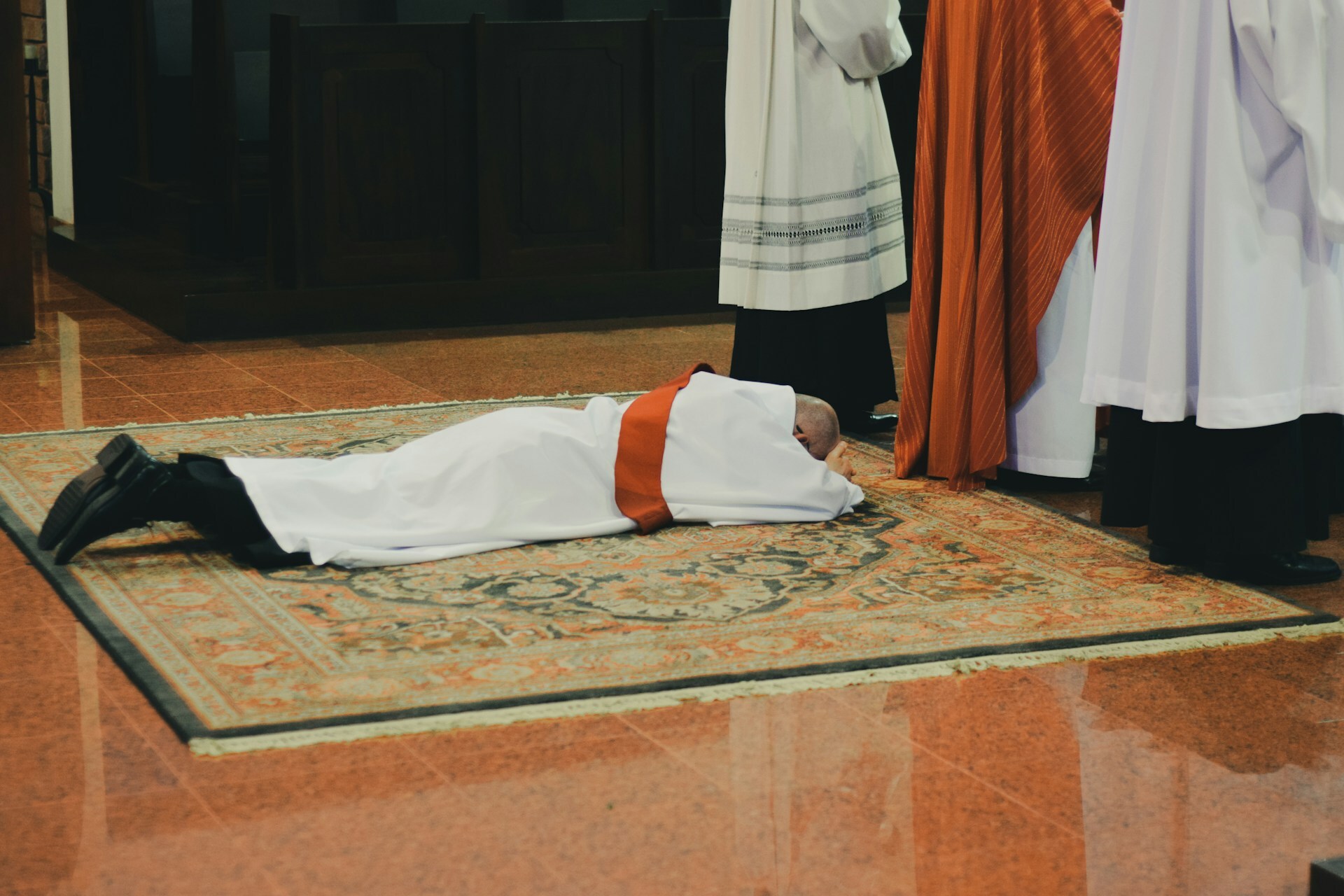
(LifeSiteNews) — The station is in the church of Saint Susanna, virgin and martyr of Rome. The reason of this church having been chosen is, that, today, there is read the history of the chaste Susanna, the daughter of Helcias. COLLECT Grant, we beseech thee, O mighty God, that they who mortify themselves by abstinence from food, may, by observing thy holy law, also fast from all sin. Through Christ Our Lord. Amen. EPISTLE Lesson from the Prophet Daniel 13:1-62 In those days: There was a man that dwelt in Babylon, and his name was Joakim; and he took a wife whose name was Susanna, the daughter of Helcias, a very beautiful woman, and one that feared God. For her parents being just, had instructed their daughter according to the Law of Moses. Now Joakim was very rich, and had an orchard near his house; and the Jews resorted to him, because he was the most honorable of them all. And there were two of the ancients of the people appointed judges that year, of whom the Lord said: Iniquity came out from Babylon from the ancient judges, that seemed to govern the people. These men frequented the house of Joakim, and all that had any matters of judgment came to them. And when the people departed away at noon, Susanna went in, and walked in her husband’s orchard. And the old men saw her going in every day, and walking; and they were inflamed with lust towards her; and they perverted their own mind, and turned away their eyes, that they might not look unto heaven, nor remember just judgments. And it fell out, as they watched a fit day, she went in on a time, as yesterday and the day before, with two maids only, and was desirous to wash herself in the orchard for it was hot weather. And there was nobody there but the two old men, that had hid themselves and were considering her. So she said to the maids: Bring me oil and washing balls, and shut the doors of the orchard, that I may wash me. And they did as she bade them; and they shut the doors of the orchard, and went out by a back door to fetch what she had commanded them, and they knew not that the elders were hid within. Now when the maids were gone forth, the two elders arose, and ran to her, and said: Behold the doors of the orchard are shut, and nobody seeth us, and we are in love with thee; wherefore consent to us, and lie with us. But if thou wilt not, we will bear witness against thee, that a young man was with thee, and therefore thou didst send away thy maids from thee. Susanna sighed, and said: I am straitened on every side; for if I do this thing, it is death to me, and if I do it not, I shall not escape your hands. But it is better for me to fall into your hands without doing it, than to sin in the sight of the Lord. With that Susanna cried out with a loud voice, and the elders also cried against her; and one of them ran to the door of the orchard, and opened it. So when the servants of the house heard the cry in the orchard, they rushed in by the back door, to see what was the matter. But after the old men had spoken, the servants were greatly ashamed, for never had there been any such word said of Susanna. And on the next day, when the people were come to Joakim her husband, the two elders also came, full of their wicked device against Susanna, to put her to death. And they said before the people: Send to Susanna, daughter of Helcias, the wife of Joakim. And they presently sent; and she came with her parents, and children, and all her kindred. Therefore her friends and all her acquaintance wept. But the two elders, rising up in the midst of the people, laid their hands upon her head. And she weeping looked up to heaven, for her heart had confidence in the Lord. And the elders said: As we walked in the orchard alone, this woman came in with two maids, and shut the doors of the orchard, and sent away the maids from her. Then a young man that was there hid, came to her, and lay with her. But we that were in the corner of the orchard, seeing this wickedness, ran up to them, and we saw them lie together. And as for him we could not take him, because he was stronger than we, and opening the doors he leaped out; but having taken this woman, we asked who the young man was, but she would not tell us. Of this thing we are witnesses. The multitude believed them, as being the elders and judges of the people, and they condemned her to death. Then Susanna cried out with a loud voice, and said: O eternal God, who knowest hidden things, who knowest all things before they come to pass, thou knowest that they have borne false witness against me; and behold I must die, whereas I have done none of these things, which these men have maliciously forged against me. And the Lord heard her voice. And when she was led to be put to death, the Lord raised up the holy spirit of a young boy, whose name was Daniel; and he cried out with a loud voice: I am clear form the blood of this woman. Then all the people turning towards him, said: What meaneth this word that thou hast spoken? But he standing in the midst of them, said: Are ye so foolish, ye children of Israel, that without examination or knowledge of the truth, ye have condemned a daughter of Israel? Return to judgment, for they have borne false witness against her. So all the people turned again in haste. And Daniel said to the people: Separate these two far from one another, and I will examine them. So when they were put asunder one from the other, he called one of them and said to him: O thou that art grown old in evil days, now are thy sins come out which thou hast committed before, in judging unjust judgments, oppressing the innocent, and letting the guilty go free, whereas the Lord saith: The innocent and the just thou shalt not kill. Now then, if thou sawest her, tell me under what tree thou sawest them conversing together. He said: Under a mastick tree. And Daniel said: Well hast thou lied against thy own head; for behold the Angel of God, having received the sentence of him, shall cut thee in two. And having put him aside, he commanded that the other should come, and he said to him: O thou seed of Canaan, and not of Juda, beauty hath deceived thee, and lust hath perverted thy heart; thus did you do as the daughters of Israel, and they for fear conversed with you; but a daughter of Juda would not abide your wickedness. Now, therefore, tell me under what tree didst thou take them conversing together? And he answered: Under a holm tree. And Daniel said to him: Well hast thou also lied against thy own head; for the Angel of the Lord waiteth with a sword to cut thee in two, and to destroy thee. With that all the assembly cried out with a loud voice, and they blessed God, who saveth them that trust in him. And they rose up against the two elders (for Daniel had convicted them of false witness by their own mouth), and they did to them as they had maliciously dealt against their neighbor, and they put them to death, and innocent blood was saved in that day. Yesterday, we shared in the joy felt by our catechumens, as they listened to the Church describing that limpid and life-giving fountain, which flows from the Savior; in these waters they were soon to receive a new life. Today, the instruction is for the penitents, whose reconciliation is drawing near. But how can they hope for pardon, who have sullied the white robe of their baptism, and trampled on the precious Blood that redeemed them? And yet, they are really to be pardoned and saved. If you would understand the mystery, read and meditate upon the Sacred Scriptures; for there you will learn that there is a salvation which comes from justice, and a salvation that proceeds from mercy. Today we have an example of both. Susanna, who is unjustly accused of adultery, receives from God the recompense of her virtue; He avenges and saves her: another woman, who is really guilty of the crime, is saved from death by Jesus Christ Himself. Let the just, therefore, confidently and humbly await the reward they have merited; but let sinners also hope in the mercy of the Redeemer, who is come for them rather than for the just. Thus does the holy Church encourage her penitents, and call them to conversion, by showing them the riches of the Heart of Jesus, and the mercies of the New Covenant, which this same Savior has signed by His Blood. In this history of Susanna, the early Christians saw a figure of the Church, which in their time was solicited by the pagans to evil, but remained faithful to her Divine Spouse, even though death was the punishment of her resistance. A holy Martyr of the third century, St. Hippolytus mentions this interpretation. (In Danielem) The carvings on the ancient Christian tombs, and the frescoes of the Roman catacombs, represent this history of Susanna’s fidelity to God’s law, in spite of the death that threatened her, as a type of the martyrs’ preferring death to apostasy; for apostasy, in the language of the Sacred Scriptures, is called adultery, which the soul is guilty of by denying her God, to whom she espoused herself when she received baptism. GOSPEL Sequel of the holy Gospel according to John 8:1-11 At that time: Jesus went to Mount Olivet. And early in the morning he came again into the temple, and all the people came to him, and sitting down he taught them. And the Scribes and Pharisees bring unto him a woman taken in adultery, and they set her in the midst, and said to him: Master, this woman was even now taken in adultery. Now, Moses in the law commanded us to stone such a one: but what sayest thou? And this they said tempting him, that they might accuse him. But Jesus bowing himself down, wrote with his finger on the ground. When therefore they continued asking him, he lifted up himself, and said to them: He that is without sin among you, let him first cast a stone at her. And again stooping down, he wrote on the ground. But they hearing this went out one by one, beginning at the eldest; and Jesus alone remained, and the woman standing in the midst. Then Jesus lifting up himself, said to her: Woman, where are they that accused thee? Hath no man condemned thee? Who said: No man, Lord. And Jesus said: Neither will I condemn thee. Go, and now sin no more. This is the Salvation that proceeds from mercy. The woman is guilty: the law condemns her to be put to death; her accusers are justified in insisting on her being punished – and yet she shall not die. Jesus saves her; and all He asks of her is that she sin no more. What must have been her gratitude! How must she not have desired to obey, henceforward, that God who would not condemn her, and to whom she owed her life! Let us enter into like dispositions towards our Redeemer, for we too are sinners. Is it not He that has stayed the arm of Divine Justice when it was raised to strike us? Has He not turned the blow upon Himself? Our salvation, then, has been one of mercy; let us imitate the penitents of the primitive Church, and during these remaining days of Lent, consolidate the foundations of the new life we have begun. The answer made by Jesus to the Pharisees, who accused this woman, deserves our respectful attention. It not only shows his compassion for the humble sinner, who stood trembling before Him; it contains a practical instruction for us: “He that is without sin among you, let him be the first to cast a stone at her.” During these days of conversion and repentance, let us recall to mind the detractions we have been guilty of against our neighbor. Alas! these sins of the tongue are looked upon as mere trifles; we forget them almost as soon as we commit them; nay, so deeply rooted in us is the habit of finding fault with everyone that we scarcely know ourselves to be detractors. If this saying of our Redeemer had made the impression it ought to have done upon us; if we had thought of our own numberless defects and sins – how could we have dared to criticize our neighbor, publish his faults, and pass judgment upon his very thoughts and intentions? Jesus knew what sort of life these man had led, who accuse the woman; He knows what ours has been! Woe to us if, henceforth, we are not indulgent with others! And lastly, let us consider the malice of Jesus’ enemies; what they said, they said, tempting him, that they might accuse him. If He pronounce in the woman’s favor, they will accuse Him of despising the Law of Moses, which condemns her to be stoned: if He answer in conformity with the law, they will hold him up to the people as a man without mercy or compassion. Jesus, by His divine prudence, eludes their stratagem; but we can foresee what He will have to suffer at their hands when, having put Himself in their power, that they may do with Him what they please, He will make no other answer to their calumnies and insults than the silence and patience of an innocent victim condemned to death. Bow down your heads to God. Stretch forth, O Lord, over thy people, the right hand of thy heavenly aid, that they may seek thee with their whole heart, and mercifully obtain what they ask for as the ought. Through Christ our Lord. Amen. Let us offer to Mary, as we are accustomed to do on the last day of each week, some special expression of our love. Let us say, in her honor, the following Sequence, which is taken from the ancient Roman-French Missals. SEQUENCE Let this be our joyous praise of Mary, true and fervent love. Let the cry of our heart, as it sings in the Mother’s honor, be presented to her Son is a tribute of love. Hail thou that broughtest Salvation to men! O Virgin, and Queen of Virgins! to thee, after God, are due praise and honor. Thou art the fair Rose and Lily, whose fragrance drew he Son of God to assume our human nature. Hail overflowing fount of Mercy! Hail true balm of the wounded heart! Thou art the ministress of pardon, the flame richly fed with grace, the Queen of matchless glory. Hail spotless Mirror of purity, that givest beauty to the holy Church of God! Where thou art, there can be no sadness, for thou art the spring-time of joy; thou art the bond of peace and concord. O happy Mother! use a Mother’s right; and bid thy Son, our Redeemer, forgive us our sins. These are the gifts we ask of thee: firmness of faith, works available to salvation, and in the evening of life, a happy death. Amen. This text is taken from The Liturgical Year, authored by Dom Prosper Guéranger (1841-1875). LifeSiteNews is grateful to The Ecu-Men website for making this classic work easily available online.

 Photo by Mateus Campos Felipe / Unsplash Nicaragua’s government has prohibited the ordination of new Catholic priests and deacons in several dioceses, a move church leaders say intensifies pressure on religious communities in the country. According to reports published by ACI Prensa, the measure directly affects the dioceses of Jinotega, Siuna, Matagalpa and Estelí—territories currently under heavy government pressure and without the presence of their resident bishops. This administrative and police restriction represents a direct blow to the ministerial structure of Nicaragua’s Catholic Church, preventing young men who have completed their theological training from formally serving their congregations. Local leaders say police are preventing any outside bishop from conducting ordination rites, reinforcing what analysts say is an attempt to dismantle the institutional presence of the Church in the country. The persecution is not limited to Catholicism. Nicaragua’s evangelical community has also faced unprecedented pressure under the administration of Daniel Ortega and his wife, Co-President Rosario Murillo. In recent years, Nicaragua’s Interior Ministry has revoked the legal status of more than 1,500 nonprofit organizations, the majority of which were evangelical churches and missions, confiscating their assets and properties in favor of the state over alleged administrative irregularities. Leaders of historic denominations and independent ministries have been subjected to surveillance, threats and the forced closure of their Christian radio and television stations. As has happened with the dioceses mentioned above, many evangelical pastors have fled the country after being accused of “treason against the homeland” simply for providing humanitarian aid during civil protests or for refusing to align their sermons with the official political narrative. Experts on human rights and religious freedom describe the situation as critical. Researcher Martha Patricia Molina, author of the report “Nicaragua: A Persecuted Church,” previously described ordination efforts as a “liturgical oasis” in the desert of repression. Critics say the tightening of state policies aims to “eradicate the spiritual influence of Christian churches in favor of a political ideology that promotes the cult of the Sandinista regime.” The pastoral impact has been devastating, especially in areas such as Matagalpa in northern Nicaragua, where it is estimated that nearly 70 percent of clergy have been forced into exile to protect their safety. Although the operational capacity of several dioceses has been reduced by half, spiritual resistance remains strong among the faithful. “The Church in Nicaragua is crucified, but not immobilized,” a priest said from exile, emphasizing that new vocations continue to emerge despite the risks. Originally published by Diario Cristiano, Christian Daily International's Spanish edition.

Spain has expanded access to public health care for migrants without legal residency under a new government decree, a move welcomed by some church leaders for its humanitarian intent while raising debate about the sustainability of universal health coverage. Unsplash / Stephen Andrews A senior evangelical leader in Spain has cautiously welcomed a government decision to expand access to public health care for migrants without legal residency, while warning that poorly controlled policies could unintentionally encourage health tourism. Spain’s Ministry of Health announced March 10 that administrative barriers preventing undocumented migrants from accessing the country’s public health system will be removed under a new Royal Decree approved by the Council of Ministers at the Moncloa Palace. The measure takes immediate effect. The decree updates a 2018 regulation that restored access to health protection and medical care for people without legal residency but left significant administrative hurdles in place. One such obstacle was the requirement to provide proof of municipal registration — known as a padrón — a document that many undocumented migrants struggle to obtain because landlords often refuse to register tenants without legal status. According to the government’s official summary of the decision, the reform seeks to create “a uniform and effective procedure throughout the country for recognizing the right to health of unregistered and unauthorized foreign nationals.” “This regulation aims to guarantee equity and prevent inequalities within this group, enabling better disease control through primary care and a more efficient use of public resources,” the summary said. Under the updated rules, migrants can now demonstrate residency through alternative documentation such as utility bills or reports from social services. Health care applications will also be automatically approved if authorities do not issue a rejection within three months. Provisional access to care will be granted while paperwork is being processed. The reform applies across Spain’s 17 autonomous regions. Dr. Xesús-Manuel Suárez-García, secretary general of the Spanish Evangelical Alliance and a member of the executive committee of GBU España (IFES), told Christian Daily International that the policy raises complex ethical and practical questions. He said Christian teaching clearly supports equal treatment of foreigners who legally reside in a country, citing Leviticus 24:22: “You are to have the same law for the foreigner and the native-born. I am the Lord your God.” However, Suárez-García said debates around universal health access for undocumented migrants often fall into two opposing extremes — both of which he believes are problematic. “I experienced the first one directly in a Latin American country,” he said. “My family helps support a shelter home there, and one day a girl became very ill.” When caregivers took the child to a nearby hospital, staff told them the girl needed immediate treatment but would not be admitted unless they paid $500. “Letting a child die, whether a national or a foreigner, because the family cannot pay is inhumane,” he said. Yet the opposite extreme — offering completely free hospital treatment to anyone who arrives in Spain — can also create difficult consequences, he said, including what he described as “health tourism.” Suárez-García recounted a case in which a Venezuelan mother traveled to Spain with her daughter, who needed treatment for a serious kidney condition, after neighbors advised her that medical care could be obtained upon arrival. “I knew about the case myself and spoke to colleagues at one hospital so that the girl was admitted and cured,” he said. The situation illustrated both the humanitarian impulse to provide care and the broader policy challenges governments face. Suárez-García said he fully understood the mother’s decision — and even helped facilitate treatment — but acknowledged the political concerns about what he calls the “call effect,” a pull factor that could encourage people to travel to Spain specifically for medical care. “Hospital treatment certainly has a cost; the only difference is who pays for it,” he said. “In this case it should not be the Spanish state — the Spanish people through their taxes — but the Venezuelan state, which should ensure that there is a budget to provide proper care for its nationals.” He suggested that governments could explore mechanisms allowing Spain to recover the costs of treatment from a patient’s home country. “In a political debate where I presented this case, I said that the girl had to be treated, but the bill should be charged to the Venezuelan government — for example by deducting it from the bill for oil sold to Spain,” he said. For poorer countries that lack such resources, he said medical costs could potentially be incorporated into development aid budgets. “But we should never assume that these treatments are free,” he said. “They are not.” To prevent the “call effect,” Suárez-García argued that policies should avoid relying solely on self-declared residency. “I believe a mechanism should be put in place to offer hospital care to specific cases in a controlled way,” he said, suggesting bilateral agreements with sending countries and clear treatment protocols. At the same time, he acknowledged concerns among Spanish citizens about the capacity of the public health system. “It is true that budgetary resources for health care are not unlimited, and it is also true that public health care in Spain is saturated,” he said. “That is why this type of collaboration cannot be unlimited, but must be controlled with as much rationality as sensitivity and humanity.”

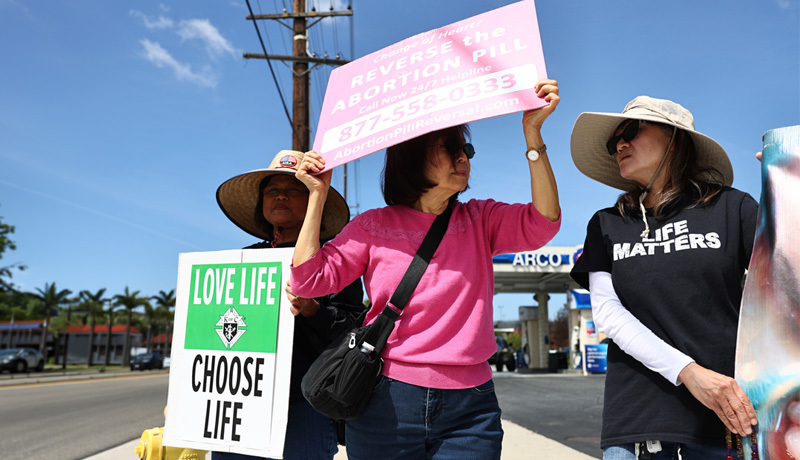
Demonstrators protest against abortion pill sales outside a pharmacy March 26, 2024, on the same day the justices of the U.S. Supreme Court heard oral arguments in the case of the U.S. Food and Drug Administration v. Alliance for Hippocratic Medicine. The case challenged the 20-plus-year legal authorization by the FDA of mifepristone, a commonly used abortion medication. The charges were dismissed. Mario Tama/Getty Images For decades, the case for legal abortion in the USA and elsewhere has rested on two central claims: that women’s rights depend on autonomy over their bodies, and that legal access would make abortion safer than the dangerous black-market alternatives it replaced.  Time for an honest reassessment. If those claims still matter, pro-choice advocates should be deeply concerned about how abortion pills are being distributed today and should work with the pro-life movement.  Under the banner of “telehealth,” a system has emerged that strips women of basic medical protections while calling it empowerment. It is time for an honest reassessment. This is not an argument about morality. It is an argument about choice, safety and rights. Choice without information is not choice Choice is meaningful only when it is informed. A decision made without understanding risks, alternatives or consequences is not autonomy. It is reckless abandonment. Many abortion pills are obtained through websites with little or no real physician interaction. In theory, telehealth means a remote visit with a licensed physician who reviews medical history, screens for risk factors, explains complications and provides follow-up care. In practice, here in the USA, many abortion pills are obtained through websites with little or no real physician interaction. There is often no physical exam, no confirmation of gestational age, and no screening for dangerous conditions like ectopic pregnancy. The abortion pill mifepristone carries a black-box warning from the Food and Drug Administration. Its own label states that one in 25 women may end up in the emergency room due to complications such as hemorrhage or infection. Some studies suggest that the rate may be higher. Yet these risks are frequently buried in fine print, delivered electronically, or never meaningfully explained.  When is the last time you read these complicated warnings of your medicine while under stress? A checkbox on a screen is not informed consent. A checkbox on a screen is not informed consent. Consent requires time, understanding and the ability to ask questions in a setting where a woman is treated as a patient, not a transaction. In some cases, choice is eliminated entirely. Pills are obtained by abusive partners, traffickers or coercive boyfriends. In those circumstances, warning labels are irrelevant. The woman is not choosing anything. If pro-choice advocacy is rooted in respect for women’s autonomy, this system should raise serious alarms. The abortion pill increasingly resembles the black market abortion was meant to replace One of the strongest arguments for legal abortion in the 1970’s was safety. Bringing abortion into regulated medicine, advocates argued, would eliminate back-alley procedures and protect women from harm. If you lived in the USA then, do you remember the coat hanger signs? But the current abortion-pill regime increasingly mirrors the very dangers it was supposed to prevent. Follow-up care is inconsistent or nonexistent. In the US, pills can be mailed across state lines with minimal oversight. Some originate from overseas suppliers. Prescribers may never meet the patient. Follow-up care is inconsistent or nonexistent. When complications occur, women are often told to go to the emergency room and describe the situation as a miscarriage, breaking continuity of care and obscuring accurate reporting. This is not what regulated medicine looks like. If a drug with comparable risks were used for any other purpose, regulators would tighten standards, not loosen them. In-person screening would be routine. Adverse-event reporting would be mandatory. Safety cannot depend on ideology. Accountability would be clear. Instead, abortion pills are treated as an exception, not because the risks are lower, but because the politics are louder. Safety cannot depend on ideology. A system that relies on anonymity, remote distribution, and emergency rooms to manage predictable complications is not a healthcare model. It is a liability model, one where women absorb the cost. Rights require accountability, not deregulation Advocates often describe abortion access as a women’s rights issue. But no right, for men or women, includes the right to unsafe medical practices without standards. We do not permit patients to waive informed consent for chemotherapy. We do not allow controlled substances to be distributed without verification. We do not excuse pharmaceutical companies from oversight because a product is politically popular. I cannot get Sudafed (containing Pseudoephedrine, a key component for making methamphetamine) without showing my licenses and signing a document. Rights exist within systems designed to protect people from harm. Rights exist within systems designed to protect people from harm. When regulators knowingly allow a drug with documented risks to be distributed without adequate safeguards, women are the ones who suffer. When oversight disappears, accountability disappears. And when accountability disappears, rights become slogans rather than protections. Women are told they are empowered. In reality, many are left to manage serious medical risks alone. Emergency rooms become the safety net. Physical complications, emotional trauma, and unanswered questions become the aftermath. That is not empowerment. It is neglect. A test of consistency This issue should concern people on all sides of the abortion debate. This issue should concern people on all sides of the abortion debate. A healthcare system that hides risk behind convenience is not compassionate. A regulatory framework that treats informed consent as optional is not progressive. And a movement that invokes women’s rights while denying women information is not defending choice.  Abortion pills should be regulated like every other serious medication: with transparency, medical supervision, and respect for the realities of patient care. If choice truly matters, then so does education.If safety matters, then so does oversight.If women’s rights matter, then so does accountability.

I’m frugal. I’m the bargain-shopper that my mother raised me to be. It’s not like I don’t like spending money. I just really like saving money. Before any big purchase, I spend days (sometimes weeks!) comparing different brands and options to see if I can get a similar value for a lower cost. Before making the final purchase I always ask myself, “Is this worth it?” While I am often very proud of my bargain shopping, one place where I don’t want to count costs or look for a better deal is in my walk with Christ. Walking with Christ often requires different kinds of sacrifice. Whether it be our finances, free time, personal plans, or social status, there are many things we may need to fully surrender to Christ. When I know I need to surrender something to the Lord, I might ask myself, is it worth it? Mark 14:3-9 is the account of Jesus’ anointing at Bethany. An unnamed woman pours a flask of pure nard over Jesus’ head. In other words, this woman used an entire year’s worth of wages in very expensive oil to glorify Christ as her King and Savior. Some sitting around the table are furious about what they’ve just seen: Some of those at the table were indignant. "Why waste such expensive perfume?" they asked. "It could have been sold for a year’s wages and the money given to the poor!" So they scolded her harshly (Mark 14:4-5 NLT). But Jesus doesn’t scold her. But Jesus replied, "Leave her alone. Why criticize her for doing such a good thing to me? … Wherever the Good News is preached throughout the world, this woman’s deed will be remembered and discussed” (Mark 14:6,9). This was a beautiful, sacrificial act of worship, exalting Jesus as the Messiah, that we still talk about today! But it came at a very high cost. She didn’t use just some of the oil. She didn’t try to do just enough to get by. She spared no expense when it came to Jesus. Are we willing to do the same with our lives? Maybe we’re afraid to give our lives fully to Christ because we’re afraid of looking foolish. When we make sacrifices to honor Christ, others may not understand. Just like those at the table in Bethany, they might think of it as a waste of time, money, or energy. But Christ says: “If anyone loves me, he will keep my word, and my Father will love him, and we will come to him and make our home with him” (John 14:23). When we love God and live for Him, we get to spend eternity with Him. We can spend days, weeks, and even years trying to replace a relationship with Christ with the things of this world, but in this case, there is nothing of similar value for a lower cost. No better deal exists! Father God, teach us to worship and honor You as You deserve without worrying about what it will cost us. Give us the wisdom and strength to lay down the things of this world at Your feet and to walk in right relationship with You, regardless of what the world may think of us for doing so. “You will show me the way of life, granting me the joy of your presence and the pleasures of living with you forever” (Psalms 16:11). ~ Scripture is quoted from the Holy Bible, New Living Translation, copyright © 1996, 2004, 2015 by Tyndale House Foundation. Used by permission of Tyndale House Publishers, Inc., Carol Stream, Illinois 60188. All rights reserved.

“I just want to know how best to help when I see someone on the corner asking for money.” I’m a ministry practitioner focused on helping churches and parachurch organizations understand and address poverty in meaningful ways. If there’s one question I get asked more than any other, this is it. There are several reasonable answers: Pray for wisdom, and treat that person as an image-bearer of our triune God worthy of dignity, respect, and care. Extend a little human connection; stop and talk. Keep a card on you for local shelters, clinics, or addiction-recovery centers that could connect the person to long-term restorative programs. If the person is asking for food, offer to share a meal with her while you talk. My friends at True Charity suggest “taking their offer”—if someone says he’ll work for food, offer a small job at your church or business he could do, and then buy him a meal he earned. Your church or ministry may want to go deeper in being part of long-term care. The Chalmers Center (my employer) offers numerous trainings—in benevolence ministry, job-readiness, financial literacy, collaborative ministry design, and more—that can help you cultivate a team and program focused on long-term restoration. Jesus Christ is making all things new, and his people are called to be outposts of his already-not-yet kingdom in how we declare and demonstrate the good news of the gospel in word and deed. So far, the answers seem straightforward, and perhaps you’ve heard suggestions like these before.  But I’m more interested in the question under the question. Proximity and Perception Why, for so many American Christians I interact with, is the face of poverty almost always the man or woman on the corner? A panhandler isn’t, by a long stretch, an accurate representation of most material poverty in the United States. Poverty often hides in plain sight, and many from middle-class communities can’t always see it. We need our eyes to adjust to a brighter light shining on our neighbors and their situations. Poverty often hides in plain sight, and many from middle-class communities can’t always see it. If we aren’t in regular proximity to those in poverty, we make assumptions about what it looks like based on the “anomalies” we encounter in our settled patterns of life. Increasingly, in American life, we’re sorted by income—we live, work, play, and worship around people in similar economic conditions. This plays out in neighborhoods all the way up to whole regions of the country. This lack of shared community contributes to decreased social mobility. Perhaps more than at any time before in American history, the zip code where we’re born sets the tone of our economic lives. Beyond that, our social isolation leads to superficial relationships. Sometimes our neighbors who seem outwardly to be flourishing might be on the verge of bankruptcy and breakdown, but won’t say anything out of shame. Hidden Cost of Poverty in America Part of our perception issue is that America feels abundantly wealthy. Here, even the lowest-income households are likely to have tremendous material wealth relative to much of the world (and most of human history). People living well below the federal poverty line ($32,150/year for a family of four in 2025) often have a television, smartphones, a microwave, a refrigerator, beauty products, furniture, and more. How can people be experiencing deep poverty amid such apparent material comfort? Last fall, investor Michael Green sparked debate by asserting the true poverty line in the United States is more like $140,000/year for a family of four—once he factored in housing, food, transportation, health care, childcare, taxes, and other essentials. Some of his metrics and calculations have been called into question, so I don’t think we should accept this as a baseline, but his chief point remains provocative. In most areas of the country, he points out, consumer goods like those mentioned above have dramatically decreased in price relative to inflation (or increased in complexity and utility even as they’ve increased in price). Meanwhile, the things people need to live well have dramatically increased in price. “Amenities” that used to be markers of wealth are now commonplace, and their presence can mask underlying needs. At the same time, real wages (purchasing power adjusted for inflation) have stagnated over the past several decades relative to this increased cost of living. Often, the middle of the income ladder is squeezed the most—those at the bottom are eligible for various subsidies of necessities, but they bump into steep “benefits cliffs” as they earn more, reducing their actual usable income. Translation: We have to work longer hours to make ends meet than we’ve had to in a long time, and breaking out of poverty is hard. Not only that, but the cost of falling behind is high. One layoff or medical emergency can set a family’s financial stability back by decades, with generational effects. Changing Faces of Poverty So if the man on the street corner isn’t the face of poverty in America, who is? Let me give you some case studies. These aren’t hypotheticals; they’re composite stories of real people (names changed) that we at The Chalmers Center or our ministry partners have walked alongside. Cherise lives in Nashville with her three young children. She works several shifts a week for $11/hour at a fast-food restaurant (but falls short of full-time hours and, therefore, benefits). She also works a few nights a week with a crew cleaning office buildings, but still only makes about $35,000–$40,000 most years. She is enrolled in SNAP and TennCare, but rent and daycare for her youngest child take almost all her earned income. She is focused on being a good mom to her kids but is often exhausted after working 12–14 hours in a day and barely sees them some weeks. She sometimes has to leave her 11-year-old daughter “in charge” to watch the other kids while she works at night. The Thompsons are 8 years into a 30-year mortgage on a home in Albuquerque. Their three kids are doing well in school, and the family looks successful to their neighbors. Both parents are self-employed, so they have to buy health coverage from their state exchange. After Mrs. Thompson is diagnosed with a rare chronic illness requiring regular hospitalization and expensive treatments, they have to switch to a more costly plan, plus her earnings have fallen by 50 percent as she no longer has the time or energy to work as much. But the couple still makes enough money on paper that their kids don’t qualify for need-based state aid for college. They’re wrestling with whether they can help their kids pay for college and make payments on their mortgage at the same time. Kevin and Crystal are trying to stay connected to the small rural community in Ohio where they’ve lived all their lives. They’re retired and on a fixed income. They have to spend significant time and money traveling to a nearby city for medical care and basic household goods because so few businesses can survive in their town, and they’re increasingly lonely. Their kids moved to Columbus for college and stayed for work, so they don’t get to see their grandkids as often as they want. Their local church has dwindled in attendance, and many houses on their road sit empty as more and more businesses close and neighbors move away because there are few good jobs and no social services in the area. Phoenix is the first in her family to get a college degree, finishing a program at the University of Texas. She’s stayed in Austin, trying to break into the tech scene there, but hasn’t found work yet beyond the barista job she kept through college. She’s stuck most months trying to cover rent, car insurance, and student loan payments, and wonders if she’ll ever break her family’s generational cycle of poverty. What Should We Do? So, how do we help? Your church could support each of the people in these case studies in concrete ways. You could offer to help Cherise with transportation and childcare. Connecting her with a workforce development program could help turn her incredible work ethic into something more remunerative, and your benevolence fund could help cover the benefits cliffs she may encounter as she earns more. You could create a scholarship fund to help kids like the Thompsons manage some of their college expenses, so their family doesn’t suffer long-term consequences from their current struggles. One layoff or medical emergency can set a family’s financial stability back by decades, with generational effects. You could adopt a church in the town where Kevin and Crystal live, supporting ministry programs there that they otherwise couldn’t afford, and explore ways to help rural entrepreneurs create new businesses. Larger churches might be able to sponsor mobile clinics or part-time satellite offices for health care (physical and mental). You could connect Phoenix to a small group to introduce her to potential employers in her field who also go to your church, or even offer her part-time work at the church that helps cover her loan payments. Beneath these plans for long-term, relational help are posture shifts: remember that poverty is relational as much as it is material, and that it requires more than just material solutions. Focus on long-term growth, not emergency patches. Remember that living out God’s kingdom is a group project—it takes whole churches and communities to lift up and care for our neighbors in need (believers in Matt. 25:31–46, for instance, are addressed as a group). Healthy interdependence, not isolated self-sufficiency, should be our goal. And remember that people can change, but God hasn’t designed us to change by ourselves. We need the Holy Spirit, and we need each other. Human beings are designed to flourish in relationship with God, self, others, and the rest of creation. With that mindset, we can go to work: Look around; be aware. Are there people in your congregation or in your community who might fit the profiles of these case studies? It may not be obvious at a glance. Get curious. Talk to those people and find out more about their stories and their struggles, but also their dreams and goals. Be part of their team for the long haul. Get equipped. Learn more about how to walk with people well. Chalmers’ “Helping Without Hurting in Benevolence Ministry” training is a great place to start. True Charity has many model action plans to launch new ministry programs that address specific needs. LoveINC brings churches together to create pathways for transformational ministry (especially in rural areas). Let’s remember that what we do for the least of these brothers and sisters, we do for Christ. Then, let’s look for real needs in our communities and begin to serve with eyes wide open.

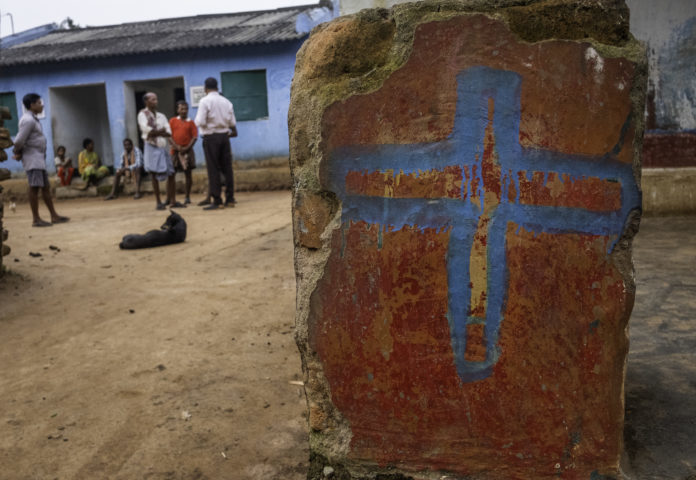
By Morning Star NewsFriday, March 13, 2026John FredricksNEW DELHI — Hindu nationalists in central India last month led a mob that assaulted Christians worshiping at a house church, including women and children, and beat the pastor unconscious.Pastor Ramesh Barela, 42, went to the house of Naval Singh to lead the service in Kotwara village, Khandwa District, Madhya Pradesh state on Feb. 7. Four families comprising 16 members gathered for the worship service. After the service began at about 9 p.m., more than 100 people led by Hindu extremist groups surrounded Singh’s house, he said.“On the way to Naval’s house I crossed a village where a few supporters of the Hindu right-wing groups spotted me,” Pastor Barela told Morning Star News. “These days, they have expanded their network; they have gotten vigilant, and word travels fast because of WhatsApp groups.”The mob surrounded the house and broke open the front and the back doors that were latched from the inside, he said. They broke in, brandishing thick wooden sticks, went straight to Pastor Barela and began assaulting him, though they were unable to raise their sticks as the roof was too low, he said.“I repeatedly told them that physical violence was not a solution to solving any grievance they might have had, and that we must sit and talk out whatever the matter was, but they continued to beat me,” he said.They tried to drag Pastor Barela outside the house so that they could use the wooden sticks, but congregation members caught hold of him, he said. The mob resorted to hitting him with their hands and kicking him. Those who tried to stop them were assaulted, including women and children, he said.“They pulled women’s sarees and their blouses, thus outraging their modesty, and hit little children with their legs,” said Pastor Barela.Singh’s two grandchildren sustained internal injuries to the chest as the assailants kicked one and manhandled the other, he said. The mob broke the chair the pastor was using and vandalized the house “as if searching for something,” he said.“I suppose they were looking for Bibles to confiscate as proof of [forced] conversion, but they could not find a single one,” said Pasto Barela, who uses a Bible app on his phone rather than carry a printed copy.He lost his mobile phone as he was being assaulted. Another Christian began to record the incident on his cell phone, but the Hindu extremists switched off the lights of the house.While they beat Barela, he fell unconscious.“They hit me from all sides, and some of them were constantly attacking me from the back. I could not see them, and suddenly I lost consciousness,” he said.A Christian called the police, who arrived and took Pastor Barela and Singh to the government hospital in Khandwa, where doctors hospitalized both of them after examining the extent of their injuries.“When I regained consciousness, I saw that I was in the hospital,” said Barela, who remained for four days. After being discharged, he went to a private hospital where doctors admitted him for treatment for two more days.Singh and Pastor Barela were still on medication at this writing.Police inactionOn Feb. 8, Piplod Police filed two separate cases, one at the complaint of Singh against three identified assailants, and the second by a member of the mob, Vijay Kumar Rathore, against three Christians, including Pastor Barela.Singh’s complaint named Kishore Banjara, Pawan and Bharat Banjara in First Information Report (FIR) No. 51 under the Bharatiya Nagarik Suraksha Sanhita, 2023 for “Singing, reciting, or uttering obscene songs/words in public place,” “voluntarily causing hurt,” “criminal intimidation involving grievous hurt,” “joint liability for acts done by several persons in furtherance of a common intention,” and under the Scheduled Castes and the Scheduled Tribes (Prevention of Atrocities) Act, 1989, for “Preventing, obstructing, or humiliating a member of SC/ST from entering public places” and offense committed against an SC/ST person or property knowing that such person belongs to an SC/ST.Singh, in his complaint, mentioned that they were praying to Christ in their house when the mob led by the three men named in the complaint broke open his doors and began to assault them. Singh sustained an injury on his right foot and internal injuries on his back.He also mentioned that his daughter and daughters-in-law were manhandled. The three assailants used derogatory words pertaining to his caste and used abusive language as they assaulted everyone present and threatened to kill them if they “converted anybody,” Singh stated.Pastor Sunil Arya, a friend of Singh, told Morning Star News that Singh was able to identify several of the assailants.“Naval gave their names to the police, but the police only named these three in the complaint and let the others be counted under a ‘mob’ — which does not have a face, neither a name,” Pastor Arya said.The second FIR by Rathore was registered against Singh, Dashrath Vishwakarma and Pastor Barela. Rathore alleged that they were trying to convert Hindus to Christianity, which is not illegal in India, and that they tried to coerce him into converting and beat him when he refused.The three Christians were charged with “voluntarily causing hurt,” “criminal intimidation involving grievous hurt,” and unlawful religious conversion under the Madhya Pradesh Freedom of Religion Act, 2021.An attorney representing Singh, Vishwakarma and Pastor Barela applied for anticipatory bail in the district Session’s Court, which was denied on Feb. 13.Though no arrests have been made on both sides, Pastor Arya said that “the charges against the Christians are more severe, thus the Christians have to acquire anticipatory bail as soon as possible.”Pastor Barela, who has not returned home since the attack, is awaiting anticipatory bail from the High Court in Jabalpur, Madhya Pradesh. He has four daughters and is also caring for the daughter of his deceased brother. Three of the five daughters are married, while two are still in junior high school.“Please pray for me,” Pastor Barela said. “With these false charges against me, my family is paying a heavy price. My wife lacks resources to run the family and I am helpless too.”The hostile tone of the National Democratic Alliance government, led by the Hindu nationalist Bharatiya Janata Party, against non-Hindus has emboldened Hindu extremists in several parts of the country to attack Christians since Prime Minister Narendra Modi took power in May 2014, religious rights advocates say.India ranked 12th on Christian support organization Open Doors’ 2026 World Watch List of the countries where it is most difficult to be a Christian, up from 31st in 2013 before Modi came to power.This article was originally published at Morning Star News Morning Star News is the only independent news service focusing exclusively on the persecution of Christians. The nonprofit's mission is to provide complete, reliable, even-handed news in order to empower those in the free world to help persecuted Christians, and to encourage persecuted Christians by informing them that they are not alone in their suffering.

(Padre Peregrino) — This was originally called He is to Be Accused by His Subjects at my main site but has been updated. This is a continuation of my weekend series, reproducing on Substack past favorites from my normal website. I do not want this blog to turn my readers into “heresy hunters” since recognizing heresy is not enough to obtain eternal life. Also, there is so much heresy in current “Catholics” (both lay and clergy) that your “heresy hunting” would become an exhausting effort. READ: Spanish cardinal secretly gave socialist gov’t power to redesign Benedictine basilica: report But this blog is worth writing because there is an odd gnostic-myth floating around Catholic circles today that a heretic in the hierarchy can only be recognized by either a group of cardinals or an obsolete battery of canonical trials. While it is true that the saints seem to delineate between “material heresy” (small points) and “manifest heresy” (obvious heresy), the latter is held by saints to be easily-identified by your average faithful lay-man or lay-woman living in sanctifying grace. To believe secret wisdom on recognizing orthodoxy belongs to a shifty group of cardinals is peak Gnosticism. (Gnosticism is the old and tired heresy that only a certain group of “enlightened elites” have access to “secret” divine knowledge.) Rather, the Catholic Church has always taught you only need the true faith and blue-collar common sense to identify a manifest heretic. This means you do not need a group of cardinals behind you with “an imperfect council” or canonists forming a “canonical trial” to recognize an obvious enemy of the Catholic faith. (This is important because a manifest heretic, by definition, ceases not only to be a member of the hierarchy, but even a member of the Catholic Church.) Although a “material-heretic” could historically be judged a “formal heretic” only by a canonical trial, Father Paul Kramer asserts in his book that “any prelate can be judged for heresy by his inferiors” in regards to obvious (or manifest) heresy. In other words, if it walks like a duck, and talks like a duck – it is a duck! And, as such, “the duck” heretic must be avoided as a non-Catholic intruder (even if he purports himself to be part of the hierarchy) by your average member of the lay faithful. (The key word here is faithful, as in catechized and orthodox.) I realize this is the opposite of what most of the traditional Catholic faithful currently believe. Fr. Paul Kramer quotes early saints and later Popes to prove this: Pope Gregory XVI … explicitly cites Ballerini’s doctrine as the basis for his own position on this question; and Ballerini’s teaching is most clearly stated in the following passage: “For any person, even a private person, the words of Saint Paul to Titus hold: ‘A man that is a heretic, after the first and second admonition, avoid: knowing that he that is such a one, is subverted, and sinneth, being condemned by his own judgment.’ (Tit. 3, 10-11). He undoubtedly, who having been once or twice corrected, does not repent, but remains obstinate in a belief contrary to a manifest or defined dogma; by this his public pertinacity which for no reason can be excused, since pertinacity properly pertains to heresy, he declares himself to be a heretic, i.e. to have withdrawn from the Catholic faith and the Church by his own will, so that no declaration or sentence from anyone would be necessary. Conspicuous in this matter is the explanation of St. Jerome on the commended words of Paul: “Therefore, by himself [the heretic] is said to be condemned, because the fornicator, adulterer, murderer, and those guilty of other misdeeds are driven out from the Church by the Priests: but heretics deliver the sentence upon themselves, departing from the Church by their own will: this departure is seen to be the condemnation by their own conscience.” Fr. David, here: A smart-but-suspicious reader would now ask this question: But can these admonitions to abjure heresy go from so-called “inferiors” to so-called “superiors”? First of all, the required “admonitions” against “obstinacy” alluded to above have already been executed – even if by so-called “inferiors” to so-called “superiors” – in this 21st century Catholic Church crisis many times over against our most famous heretics. Many public heretics who now claim to be in the hierarchy have repeatedly revealed themselves to be public heretics by ignoring what good lay people (and priests) have written them as they beg them to abjure their manifest heresy. Fr. Paul Kramer answers this question brilliantly: Moynihan mentions that there was such “a tradition already prevalent as far back as the seventh century.” The doctrine that any prelate can be judged for heresy by his inferiors has been asserted since the late Patristic period, namely, by St. Isidore of Seville, “the last scholar of the ancient world ” (c. 560–636); and the proposition that the pope can be judged for heresy was already explicitly asserted by St. Columban (540–615). In the year 636, St. Isidore wrote in his Sententiarum, Lib. II, c. 39, “The rulers therefore are to be judged by God, and by no means are to be judged by their subjects… but if the rector strays from the faith, then he is to be accused by his subjects; but for objectionable moral behaviour he is more to be tolerated rather than to be segregated from the people…” St. Columban wrote to Pope Boniface IV: “For if these things are certain rather than fables, then vice versa your children have become the head, but you the tail (Deut. 28:44) which is even painful to say, and for that reason those who have preserved the orthodox faith will be your judges, whoever they may be, even if they are seen to be your juniors those orthodox and true Catholics, who have neither received nor defended any heretics or suspected heretics at any time, but have persevered enduringly in the zeal of the true faith.” With the words, neque hæreticos neque suspectos aliquos [neither heretics nor those suspected as such] the saint makes it clear that the subjects have the right in conscience to judge and reject (literally “not to receive”) not only superiors who are notoriously manifest heretics, but also those who positively manifest themselves to be reasonably considered suspected heretics. — On the True and False Pope, excerpts from pages 39 and 45. [Emphases added] And specifically heretics when considering the notion of he papacy: “If someone, for a reasonable motive, holds the person of the pope in suspicion and refuses his presence, even his jurisdiction, he does not commit the delict of schism nor any other whatsoever, provided that he be ready to accept the pope were he not held in suspicion. It goes without saying that one has the right to avoid what is harmful and to ward off dangers.” — Cardinal Cajetan “By natural law, it is likewise required that a person be able to discern what appears externally (1 Kings 16.7); and thus, if manifestly heretical acts are observed (such as statements that evidently express heresy outright), and if these acts and statements are made in such a way that it can, from a human point of view, be judged that the conscience gives its consent to them, in these conditions one must judge that the person is a heretic.” — Cardinal Cajetan. READ: Priests condemn ‘Harry Potter Service’ at Catholic parish in Germany Most importantly, notice in Pope Paul IV’s apostolic constitution Cum Ex Apostolatus Officio from February 15, 1559, that anyone who was a heretic before an alleged-conclave becomes not a valid pope, even if the outcome be “uncontested and by the unanimous assent of all the cardinals.” Of course, that last line completely overturns the modern myth promoted by Bishop Athanasius Schneider (and others) that “universal and peaceful acceptance” works on a heretic approaching the Chair of Peter. Indeed, the Catholic Church has always taught that a Papal Conclave electing a heretical man is certainly and without doubt an invalid conclave. And yes, you do have the ability to recognize heresy in such a man, as seen in all the above quotes. Reprinted with permission from Padre Peregrino.

By All Israel NewsFriday, March 13, 2026Google office building in the company's campus in Silicon Valley, California. | iStock/Sundry PhotographyThe Islamic Revolutionary Guard Corps and Iranian news agency Tasnim on Thursday declared Google, Amazon and Microsoft as “legitimate targets” for attack, further escalating the conflict in the Middle East.The hit list, comprising tech company offices and data centers across the Middle East, also included U.S. corporations such as NVIDIA, Palantir, IBM and Oracle as targets for attack. Tasnim listed 29 offices, data centers and research hubs owned by seven tech giants in Qatar, Israel, the United Arab Emirates and Bahrain.“As the regional war expands into an infrastructure war, the scope of Iran’s legitimate targets gradually broadens,” Tasnim wrote in a post on Telegram called “Iran’s new targets.”The announcement followed the bombing of Amazon data centers in the UAE and Bahrain by Iranian drones last week, amid accusations that the companies’ technologies are being used by the IDF in the war.Advertising sales offices and research centers in populated cities were also included on the list of location targets, in addition to financial institutions named on Wednesday.The tech companies have not stated whether they have taken steps to protect staff or close offices.The Iranian threat stated that people should stay outside a one-kilometer radius of the locations.Many of the tech giants named by Iran have significant operations in the Middle East, including NVIDIA, which employs roughly 5,000 people in Israel and Google, which has a center in Doha, Qatar.The Iranian threat is designed to impede the UAE’s and Saudi Arabia’s ability to capitalize on cheap energy and abundant land, making them both major players in the race against China to develop powerful AI infrastructure.In the past, digital warfare largely took the form of cyberattacks and electronic warfare. However, the shift toward kinetic strikes against large server farms signifies a dramatic escalation.Last week’s attacks against Amazon are believed to be the first military attacks against a U.S. tech company’s data center. This article was originally published at All Israel News ALL ISRAEL NEWS is based in Jerusalem and is a trusted source of news, analysis and information from Israel to our Christian friends around the world.

WILMINGTON, Delaware (LifeSiteNews) — An abortionist affiliated with the notorious convicted murderer Kermit Gosnell has set up a new abortion business in Delaware. Gosnell is currently serving a life sentence in prison, following his 2013 conviction for the first-degree murder of three born-alive babies and the involuntary manslaughter of client Karnamaya Mongar at his 2,700-square-foot “house of horrors” abortion facility in Philadelphia. According to the 280-page grand jury report, that office was an unsanitary, blood-stained site where Gosnell cut the spinal cords of hundreds of newborns; where witnesses described infants who survived initial abortion attempts as “swimming” in toilets “to get out”; where the feet of aborted babies were stored in a freezer; and more grisly details. On Wednesday, Operation Rescue reported an update on Leroy Brinkley, a man for whom Gosnell once worked a day a week at Wilmington’s Atlantic Women’s Medical Services, beginning late-term abortions there before completing them at his own facility. Brinkley closed down his abortion centers following Gosnell’s conviction, following the Delaware Board of Medical Licensure & Discipline citing him for a number of health violations of his own, as well as some of his other abortionists failing to report knowledge of Gosnell’s violations. Now, Brinkley has a new abortion business in Wilmington: AllGyn Health Partners, Inc., a “proud member” of the National Abortion Federation (NAF) that advertises abortions up to 24 weeks. The facility appears to have been in operation since late 2024. “Brinkley left a miserable trail of broken women and dead babies across at least two states,” said Operation Rescue President Troy Newman. “He has a well-established pattern of behavior, and it is said that a leopard cannot change his spots. We have every reason to believe that under Brinkley’s oversight, AllGyn could have all the problems his other abortion facilities had for years.” “The public has a right to know what it means to have a Brinkley-owned abortion facility in their community or state,” Newman added. “The reporting of one woman’s terrifying abortion in Louisiana is a harbinger of what women can expect at AllGyn.” As reported by LifeSiteNews back in 2011, Brinkley’s Delta Clinic in Louisiana actually lost its NAF affiliation after it was found to have a long history of dangerous criminal and medical violations, including massive state and federal regulation failures, botched abortions, including the deaths of at least two women, the use of unlicensed doctors, and extensive falsification of records. One victim of the Delta center, referred to as “Jane Doe” for confidentiality reasons, told LSN at the time that after two abortion pills prescribed by the facility during her 2009 abortion failed, doctors at Delta botched a D&C abortion procedure that she says necessitated a hysterectomy a year later.  In a witness affidavit from April 2011, Jane Doe recounted the physical and verbal abuse she suffered at the hands of the abortionist and workers at Delta. Doe said she remembered herself and other clients being “herded like cattle” by “rude” workers at the facility. During her D&C operation, Doe said she was yelled at and threatened physically by the abortionist and never given any type of anesthesia. Abortion facilities across the country are regularly flagged for harming women through botched procedures, unsanitary tools and environments, and lack of regulatory protections, such as requirements for staff to secure admitting privileges at nearby hospitals in the event of complications. With the rise of abortion pills dispensed by mail in violation of federal law, chemical abortions self-administered completely without medical oversight are certain to increase those harms further still. Further, even when “properly” committed, abortion carries grave risks. According to the American Association of Pro-Life Obstetricians and Gynecologists (AAPLOG), which represents 7,000 medical professionals who reject the anti-life stance of the medical establishment, “[w]omen face a 35% increased risk of preterm birth in a future pregnancy after one surgical abortion and an almost 90% increase in preterm birth risk after two abortions. The increased risk of future preterm birth for women after they have an abortion represents a clear long-term health risk. Mothers who deliver preterm babies are at a higher risk of medical complications later in life, including cardiovascular disease and stroke.” “From 1993 to 2018, there are at least 75 studies examining the link between abortion and mental health,” the group continues. “Two-thirds of those studies showed a correlation between abortion and adverse mental health outcomes. Studies show abortion significantly increases the risk of depression, anxiety, substance abuse, and suicidal behavior, when compared to women with unintended pregnancies who choose to carry the baby to birth. A study from Finland found a 7X higher suicide rate after abortion compared to when women gave birth.”

By Michael Gryboski, Editor Friday, March 13, 2026John Perkins is a renowned civil rights leader and racial reconciliation expert. | ContributedJohn Perkins, a distinguished black civil rights activist, author and Bible teacher known for his work in racial reconciliation, has died at the age of 95.V. Elizabeth Perkins, one of his children, posted an announcement to the John & Vera Mae Perkins Foundation on Friday stating that Perkins had died that morning while surrounded by his family. “To the world, he was Dr. John M. Perkins, a voice for justice, reconciliation, and the gospel of Jesus Christ,” she wrote. “He received 19 honorary doctorate degrees, but most importantly, he was the devoted husband of his bride, Vera Mae Perkins, for 74 years, and together they were blessed with 8 children.”“But to me, he was Daddy. My heart is broken, yet full of gratitude for the gift of being his daughter. His life was marked by courage, humility, faith, and love. He poured himself out for God, for people, and for the work of reconciliation.”Trevin Wax, vice president of research and resource development at the Southern Baptist Convention's North American Mission Board, was among those who offered condolences.“Rest well, John Perkins,” Wax tweeted. “A hero with an incredible story of resilience and faith, who leaves behind a legacy of calling us all to deeper love and justice.”Jemar Tisby, a prominent African American Evangelical author, historian and proponent of racial reconciliation in churches, also conveyed his condolences.“We lost another luminary today,” wrote Tisby in a post on Facebook. “I feel the passing of John Perkins deeply because he was a forerunner of the evangelical racial reconciliation movement that — despite its shortcomings — was a crucial part of my Christian journey.”Born in 1930 in Jim Crow-era Mississippi, Perkins was the son of a sharecropper who fled the state at age 17 for California after a town marshal murdered his older brother.Perkins accepted Jesus Christ as his savior in 1957 and ultimately returned to Mississippi in 1960 to preach the Gospel and to be active in civil rights efforts.“His outspoken support and leadership role in civil rights demonstrations resulted in repeated harassment, imprisonment and beatings,” explained the John Perkins Center at Seattle Pacific University.“In 1989, he co-founded the Christian Community Development Association, a network of evangelical congregations and organizations working in urban settings.”In addition to his prolific public speaking and teaching, Perkins also served on the board of directors of numerous Christian organizations, among them World Vision, Prison Fellowship and the National Association of Evangelicals.Perkins authored multiple books, including One Blood: Parting Words to the Church on Race and Love; He Calls Me Friend: The Healing Power of Friendship, and Count it All Joy: The Ridiculous Paradox of Suffering.“In those three books, what I have there is an overview of the centrality of the Gospel,” Perkins told The Christian Post in an interview in 2022, labeling the works his “manifesto.”“That's the idea. What I try to do is to put the centrality of the Gospel in those three books. The issue is what to do with our sin. … Someone said we don't have a skin problem. It's really a sin problem.” Follow Michael Gryboski on Twitter or Facebook

Loading...
Loading...
Confirmation
Are you sure?
Cancel Continue