Forgiveness is a profound and transformative concept central to the Christian faith. It touches every aspect of our lives and relationships, embodying God's grace and mercy towards humanity. In the Bible, forgiveness is not just a divine attribute but a powerful gift extended to us through Christ. It’s through forgiveness that we experience reconciliation with God, healing in our hearts, and restoration in our relationships.
In this blog post, we delve into 50 powerfulBible versesthat illuminate the theme of forgiveness. Each verse is accompanied by its context, story, and a concise explanation to help you understand and apply these timeless truths. Whether you are seeking personal healing, striving to mend broken relationships, or simply wishing to deepen your understanding of God’s grace, these verses offer profound insights and encouragement.
Join us as we explore the depth of God's forgiveness and how it shapes our journey of faith and love. We have also written similar blogs like125+ Inspirational Bible Verses to Uplift Your Spiritand50 Bible Verses on Love with Context and Stories, do check them out.
-
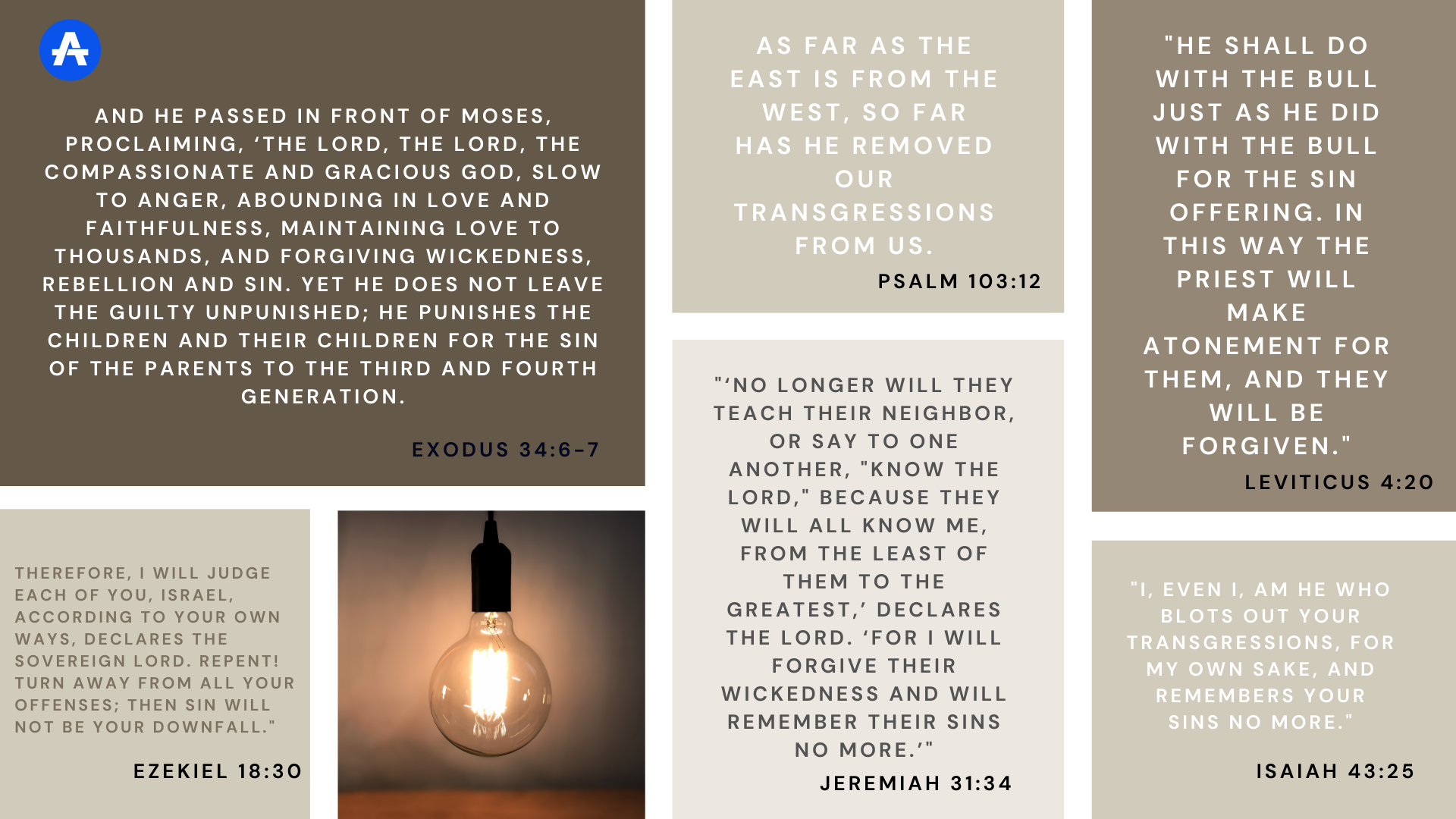
Exodus 34:6-7 (NIV)
"And he passed in front of Moses, proclaiming, ‘The Lord, the Lord, the compassionate and gracious God, slow to anger, abounding in love and faithfulness, maintaining love to thousands, and forgiving wickedness, rebellion and sin. Yet he does not leave the guilty unpunished; he punishes the children and their children for the sin of the parents to the third and fourth generation.’"
-
Context: God reveals His nature to Moses.
-
Story: God describes His attributes, including His forgiveness of sins.
-
Explanation: God’s nature includes compassion and forgiveness, tempered by justice.
-
Leviticus 4:20 (NIV)
"He shall do with the bull just as he did with the bull for the sin offering. In this way the priest will make atonement for them, and they will be forgiven."
-
Context: Instructions for sin offerings.
-
Story: The ritual of sin offerings ensures atonement and forgiveness.
-
Explanation: Rituals for sin offerings symbolize the process of seeking forgiveness.
-
Psalm 103:12 (NIV)
"As far as the east is from the west, so far has he removed our transgressions from us."
-
Context: A Psalm of David celebrating God's mercy.
-
Story: David reflects on how God removes sins from us, symbolizing complete separation.
-
Explanation: God’s forgiveness removes our sins as far as possible from us.
-
Isaiah 43:25 (NIV)
"I, even I, am he who blots out your transgressions, for my own sake, and remembers your sins no more."
-
Context: God speaks about His promise of redemption.
-
Story: God promises to erase transgressions and forget sins.
-
Explanation: Divine forgiveness includes erasing and forgetting our sins.
5. Jeremiah 31:34 (NIV)
"‘No longer will they teach their neighbor, or say to one another, "Know the Lord," because they will all know me, from the least of them to the greatest,’ declares the Lord. ‘For I will forgive their wickedness and will remember their sins no more.’"
-
Context: God promises a new covenant.
-
Story: God promises a new covenant with complete forgiveness and a personal relationship.
-
Explanation: The new covenant includes complete forgiveness and personal knowledge of God.
6. Ezekiel 18:30 (NIV)
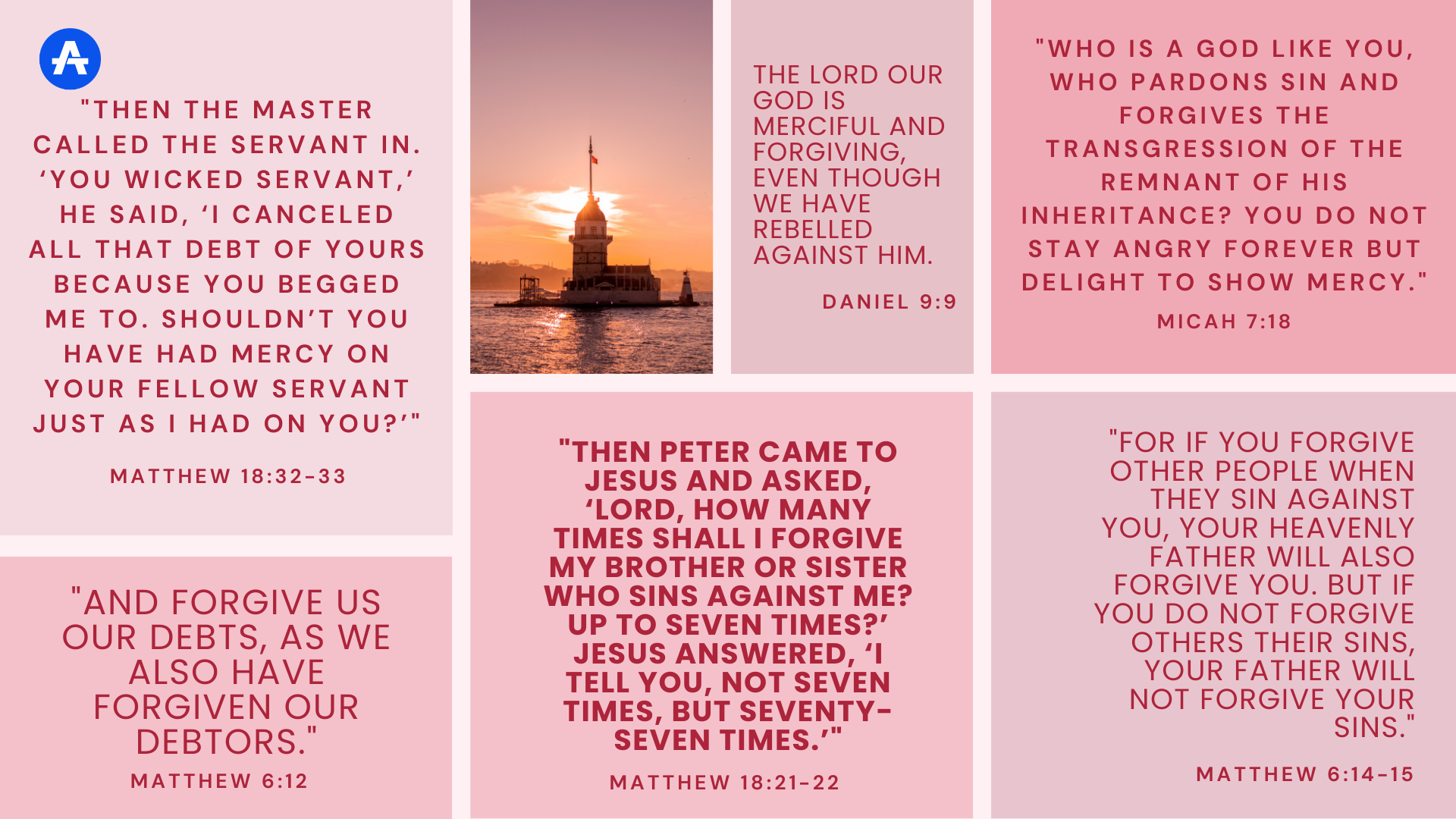
"Therefore, I will judge each of you, Israel, according to your own ways, declares the Sovereign Lord. Repent! Turn away from all your offenses; then sin will not be your downfall."
-
Context: Ezekiel calls for repentance.
-
Story: God urges repentance to avoid the consequences of sin.
-
Explanation: Genuine repentance involves turning away from sin to receive forgiveness.
7. Daniel 9:9 (NIV)
"The Lord our God is merciful and forgiving, even though we have rebelled against him."
-
Context: Daniel’s prayer of confession.
-
Story: Daniel acknowledges God’s mercy despite Israel’s rebellion.
-
Explanation: God’s mercy and forgiveness are available even amidst human rebellion.
8. Micah 7:18 (NIV)
"Who is a God like you, who pardons sin and forgives the transgression of the remnant of his inheritance? You do not stay angry forever but delight to show mercy."
-
Context: Micah’s praise for God’s forgiveness.
-
Story: Micah praises God for His unique ability to forgive sins and show mercy.
-
Explanation: God’s forgiveness is unique, marked by His delight in showing mercy.
9. Matthew 6:12 (NIV)
"And forgive us our debts, as we also have forgiven our debtors."
-
Context: Part of theLord’s Prayer.
-
Story: Jesus teaches His disciples to pray for forgiveness and to forgive others.
-
Explanation: Our request for forgiveness is connected to our forgiveness of others.
10. Matthew 6:14-15 (NIV)
"For if you forgive other people when they sin against you, your heavenly Father will also forgive you. But if you do not forgive others their sins, your Father will not forgive your sins."
-
Context: Jesus’ teaching on forgiveness.
-
Story: Jesus stresses the importance of forgiving others to receive God’s forgiveness.
-
Explanation: Forgiveness from God is contingent on our willingness to forgive others.
11. Matthew 18:21-22 (NIV)
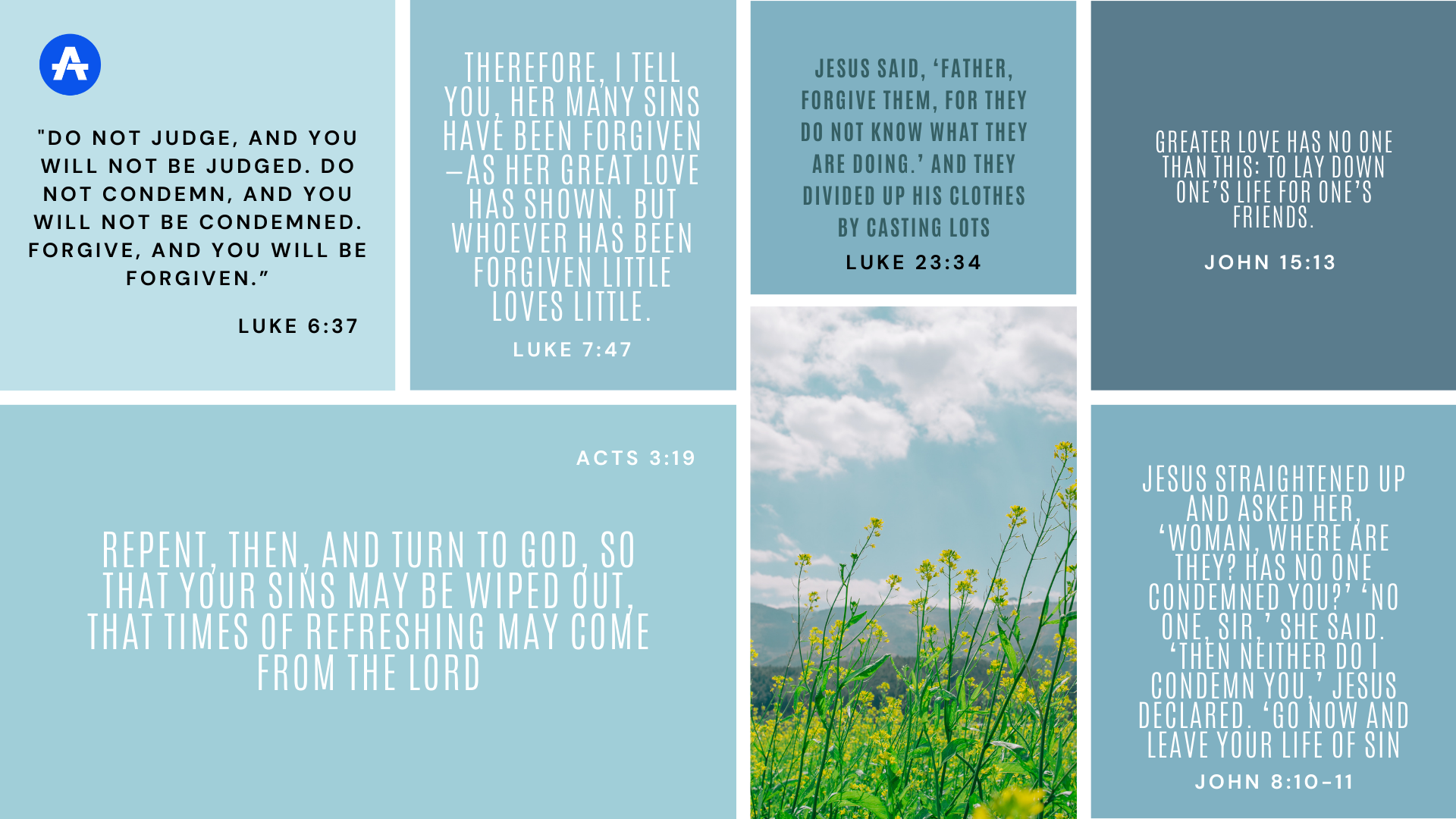
"Then Peter came to Jesus and asked, ‘Lord, how many times shall I forgive my brother or sister who sins against me? Up to seven times?’ Jesus answered, ‘I tell you, not seven times, but seventy-seven times.’"
-
Context: Peter’s question about forgiveness.
-
Story: Jesus teaches that forgiveness should be limitless.
-
Explanation: Forgiveness should be boundless, extending beyond human limits.
12. Matthew 18:32-33 (NIV)
"Then the master called the servant in. ‘You wicked servant,’ he said, ‘I canceled all that debt of yours because you begged me to. Shouldn’t you have had mercy on your fellow servant just as I had on you?’"
-
Context: Parable of the unmerciful servant.
-
Story: A servant who is forgiven a large debt fails to show mercy to another.
-
Explanation: Forgiveness received should be reflected in our forgiveness of others.
13. Luke 6:37 (NIV)
"Do not judge, and you will not be judged. Do not condemn, and you will not be condemned. Forgive, and you will be forgiven."
-
Context: Jesus’ teaching on judgment and forgiveness.
-
Story: Jesus instructs His followers to avoid judgment and forgive others.
-
Explanation: Our treatment of others influences how we are treated by God.
14. Luke 7:47 (NIV)
"Therefore, I tell you, her many sins have been forgiven—as her great love has shown. But whoever has been forgiven little loves little."
-
Context: Jesus explains why a woman’s sins are forgiven.
-
Story: Jesus contrasts the love of a forgiven woman with that of Simon the Pharisee.
-
Explanation: The depth of love is often proportional to the recognition of forgiveness received.
15. Luke 23:34 (NIV)
"Jesus said, ‘Father, forgive them, for they do not know what they are doing.’ And they divided up his clothes by casting lots."
-
Context: Jesus on the cross.
-
Story: Jesus asks God to forgive those who crucified Him, showing ultimate forgiveness.
-
Explanation: Jesus’ forgiveness of His tormentors is the highest form of compassion and grace.
As we explore more scriptures about forgiveness, grace, and mercy, we see how God invites us into a life of compassion. Biblical forgiveness frees the heart and draws us closer to His love.
16. John 8:10-11 (NIV)
"Jesus straightened up and asked her, ‘Woman, where are they? Has no one condemned you?’ ‘No one, sir,’ she said. ‘Then neither do I condemn you,’ Jesus declared. ‘Go now and leave your life of sin.’"
-
Context: The woman caught in adultery.
-
Story: Jesus forgives a woman caught in adultery and urges her to transform her life.
-
Explanation: Jesus’ forgiveness is accompanied by an invitation to live a transformed life.
17. John 15:13 (NIV)
"Greater love has no one than this: to lay down one’s life for one’s friends."
-
Context: Jesus speaks about the greatest form of love.
-
Story: Jesus describes the ultimate expression of love through sacrifice.
-
Explanation: True forgiveness is demonstrated through self-sacrificial love.
18. Acts 3:19 (NIV)
"Repent, then, and turn to God, so that your sins may be wiped out, that times of refreshing may come from the Lord."
-
Context: Peter’s call to repentance.
-
Story: Peter urges repentance as a means to receive forgiveness and spiritual renewal.
-
Explanation: Repentance leads to forgiveness and a renewed spiritual experience.
19. Acts 13:38 (NIV)
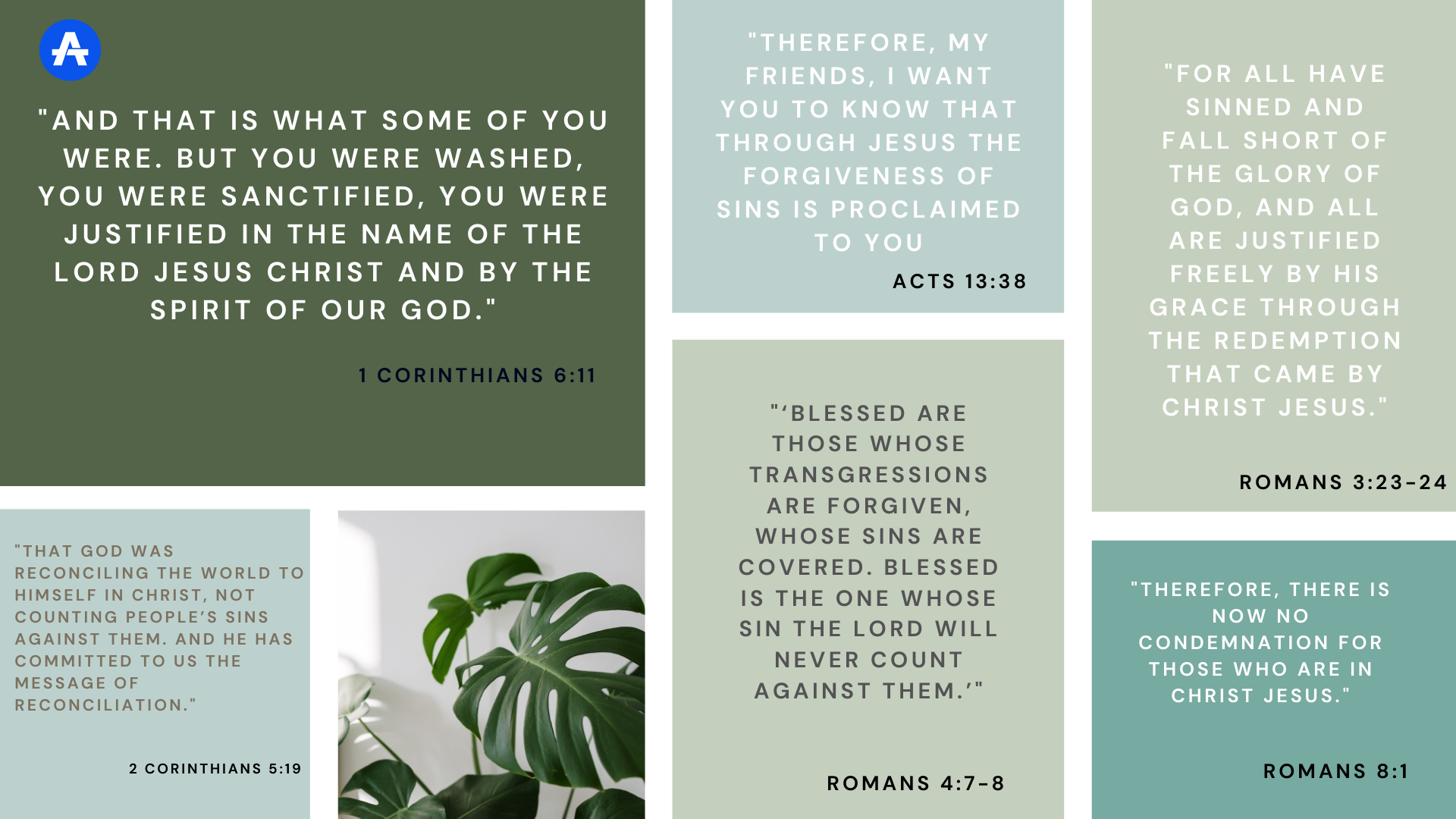
"Therefore, my friends, I want you to know that through Jesus the forgiveness of sins is proclaimed to you."
-
Context: Paul’s message in Pisidian Antioch.
-
Story: Paul announces that Jesus brings forgiveness of sins to all who believe.
-
Explanation: Jesus offers universal forgiveness to those who accept Him.
20. Romans 3:23-24 (NIV)
"For all have sinned and fall short of the glory of God, and all are justified freely by his grace through the redemption that came by Christ Jesus."
-
Context: Paul explains justification by grace.
-
Story: Paul explains that everyone has sinned, but grace through Jesus offers justification.
-
Explanation: Despite universal sin, grace through Jesus justifies and forgives.
21. Romans 4:7-8 (NIV)
"‘Blessed are those whose transgressions are forgiven, whose sins are covered. Blessed is the one whose sin the Lord will never count against them.’"
-
Context: Paul on the blessings of forgiveness.
-
Story: Paul describes the blessed state of those whose sins are forgiven and not counted against them.
-
Explanation: Forgiveness results in divine blessing and freedom from condemnation.
22. Romans 8:1 (NIV)
"Therefore, there is now no condemnation for those who are in Christ Jesus."
-
Context: Paul’s assurance of no condemnation.
-
Story: Paul reassures that being in Christ means living without condemnation.
-
Explanation: Forgiveness in Christ removes all condemnation.
23. 1 Corinthians 6:11 (NIV)
"And that is what some of you were. But you were washed, you were sanctified, you were justified in the name of the Lord Jesus Christ and by the Spirit of our God."
-
Context: Paul’s reminder of believers’ transformation.
-
Story: Paul reminds believers of their past sins and their new state of sanctification and justification.
-
Explanation: Forgiveness through Christ transforms us from our past state.
24. 2 Corinthians 5:19 (NIV)
"that God was reconciling the world to himself in Christ, not counting people’s sins against them. And he has committed to us the message of reconciliation."
-
Context: Paul’s explanation of reconciliation.
-
Story: Paul explains that God’s reconciliation through Christ involves not counting sins against us.
-
Explanation: God’s forgiveness through Christ brings reconciliation and removes the record of our sins.
25. Ephesians 1:7 (NIV)
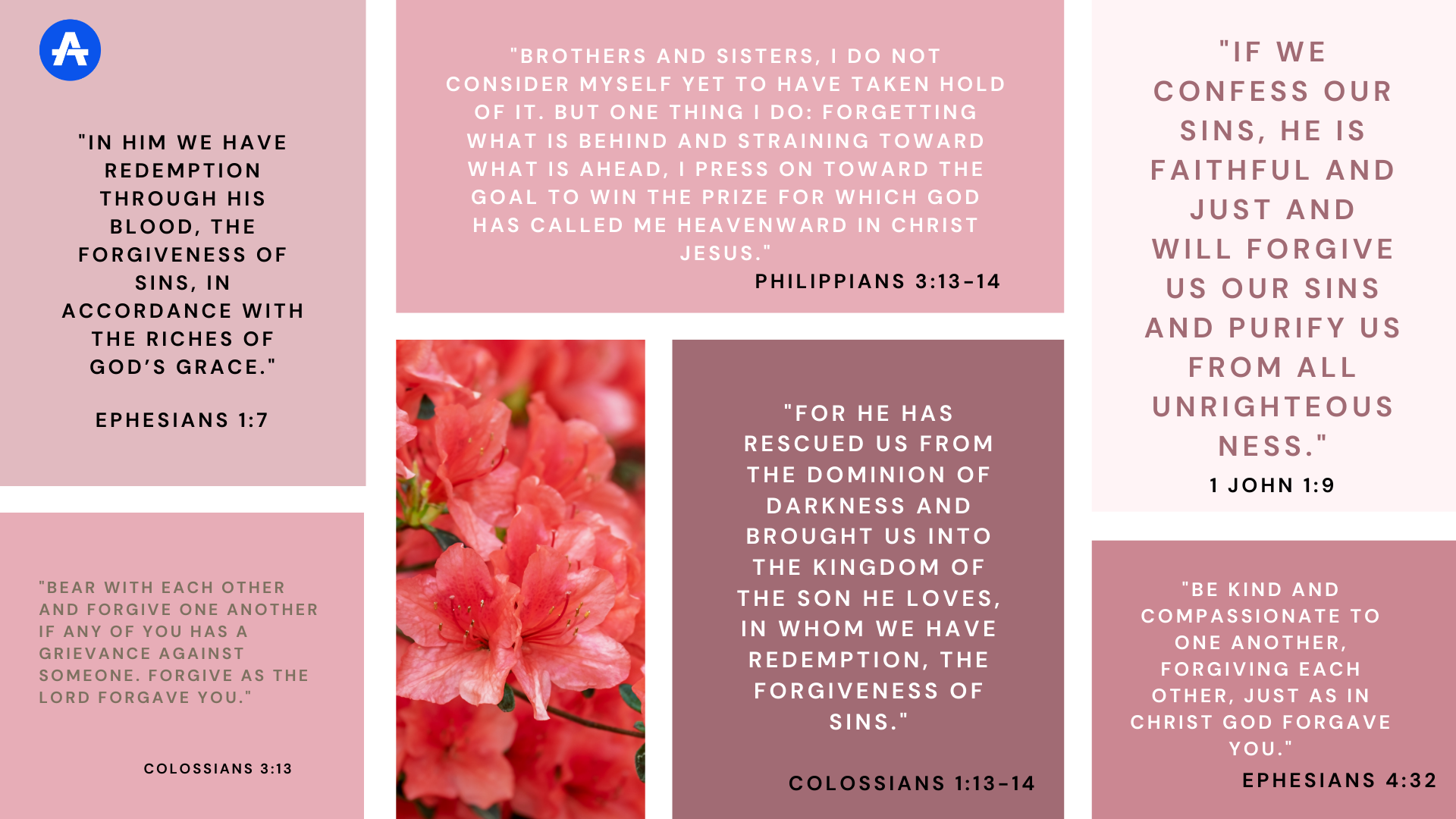
"In him we have redemption through his blood, the forgiveness of sins, in accordance with the riches of God’s grace."
-
Context: Paul on redemption and forgiveness.
-
Story: Paul speaks of redemption and forgiveness through Jesus’ sacrifice.
-
Explanation: Redemption and forgiveness come through Jesus’ sacrifice and God’s grace.
The followingBible Verses on Forgivenessreveal how grace empowers us to forgive even when it feels impossible. With God’s help, we can release resentment and choose compassion instead.
26. Ephesians 4:32 (NIV)
"Be kind and compassionate to one another, forgiving each other, just as in Christ God forgave you."
-
Context: Paul’s instructions for Christian living.
-
Story: Paul encourages kindness and forgiveness, reflecting God’s forgiveness through Christ.
-
Explanation: Forgiveness should mirror the kindness and compassion we have received from God.
27. Philippians 3:13-14 (NIV)
"Brothers and sisters, I do not consider myself yet to have taken hold of it. But one thing I do: Forgetting what is behind and straining toward what is ahead, I press on toward the goal to win the prize for which God has called me heavenward in Christ Jesus."
-
Context: Paul’s personal testimony and encouragement.
-
Story: Paul describes his focus on the future and his pursuit of the heavenly prize, leaving past sins behind.
-
Explanation: Forgiveness allows believers to move past their failures and press on toward spiritual goals.
28. Colossians 1:13-14 (NIV)
"For he has rescued us from the dominion of darkness and brought us into the kingdom of the Son he loves, in whom we have redemption, the forgiveness of sins."
-
Context: Paul’s praise for Christ’s supremacy.
-
Story: Paul praises God for rescuing believers from darkness and granting forgiveness through Jesus.
-
Explanation: Redemption and forgiveness are central to being brought into the kingdom of Christ.
29. Colossians 3:13 (NIV)
"Bear with each other and forgive one another if any of you has a grievance against someone. Forgive as the Lord forgave you."
-
Context: Paul’s instructions for Christian relationships.
-
Story: Paul urges believers to forgive others, following the example of the Lord’s forgiveness.
-
Explanation: Forgiveness among believers should reflect the forgiveness they have received from the Lord.
30. 1 John 1:9 (NIV)
"If we confess our sins, he is faithful and just and will forgive us our sins and purify us from all unrighteousness."
-
Context: John’s letter on fellowship and forgiveness.
-
Story: John assures believers that confessing sins leads to God’s faithful and just forgiveness and purification.
-
Explanation: Confession leads to God’s faithful forgiveness and purification from all unrighteousness.
As we move deeper into theseBible Verses on Forgiveness, we see that forgiving others is an act of obedience and love. Scripture teaches that forgiveness restores peace and strengthens our walk with God.
31. 1 John 2:1 (NIV)
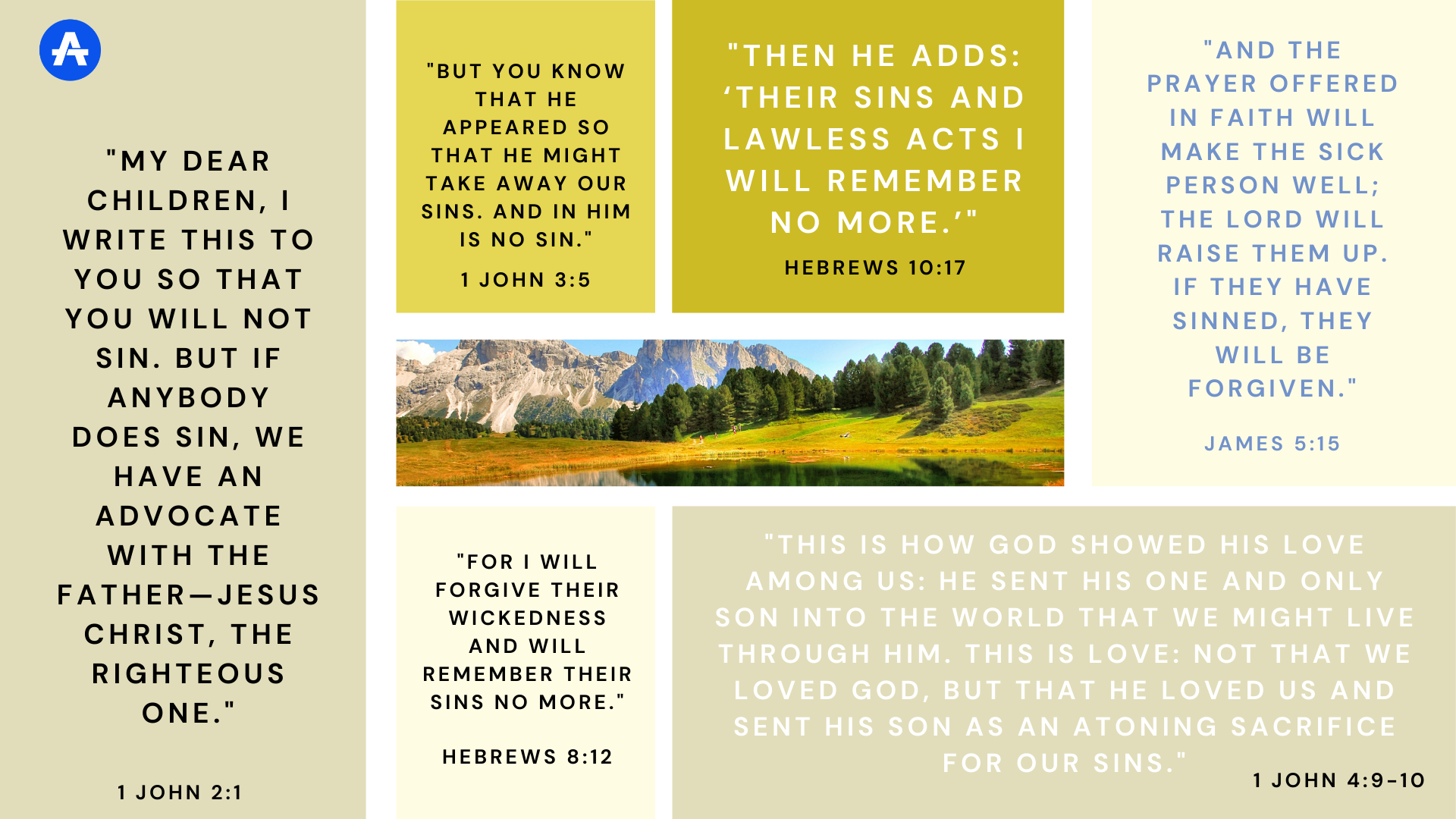
"My dear children, I write this to you so that you will not sin. But if anybody does sin, we have an advocate with the Father—Jesus Christ, the Righteous One."
-
Context: John’s encouragement for righteous living.
-
Story: John reassures believers that despite sin, they have Jesus as their advocate who intercedes for them.
-
Explanation: Jesus’ role as advocate provides assurance of forgiveness and righteousness despite human sin.
32. 1 John 3:5 (NIV)
"But you know that he appeared so that he might take away our sins. And in him is no sin."
-
Context: John’s teaching on Jesus’ purpose.
-
Story: John explains that Jesus came to take away sins and is himself without sin.
-
Explanation: Jesus’ mission was to remove sin from our lives, underscoring His purity and redemptive work.
33. 1 John 4:9-10 (NIV)
"This is how God showed his love among us: He sent his one and only Son into the world that we might live through him. This is love: not that we loved God, but that he loved us and sent his Son as an atoning sacrifice for our sins."
-
Context: John’s explanation of God’s love.
-
Story: John describes God’s love shown through the sending of Jesus as a sacrifice for our sins.
-
Explanation: God’s love is demonstrated through the sacrificial forgiveness provided by Jesus.
34. Hebrews 8:12 (NIV)
"For I will forgive their wickedness and will remember their sins no more."
-
Context: The promise of the new covenant.
-
Story: God promises complete forgiveness and forgetting of sins under the new covenant.
-
Explanation: The new covenant brings total forgiveness and forgetfulness of our sins.
35. Hebrews 10:17 (NIV)
"Then he adds: ‘Their sins and lawless acts I will remember no more.’"
-
Context: The fulfillment of the new covenant.
-
Story: God’s promise of not remembering sins and lawless acts anymore.
-
Explanation: God’s forgiveness involves completely forgetting our sins.
36. James 5:15 (NIV)
"And the prayer offered in faith will make the sick person well; the Lord will raise them up. If they have sinned, they will be forgiven."
-
Context: Instructions on prayer and healing.
-
Story: James assures that prayer in faith results in healing and forgiveness of sins.
-
Explanation: Faithful prayer leads to both physical healing and forgiveness of sins.
As we move deeper into theseBible Verses on Forgiveness, we see that forgiving others is an act of obedience and love. Scripture teaches that forgiveness restores peace and strengthens our walk with God.
37. 1 Peter 2:24 (NIV)
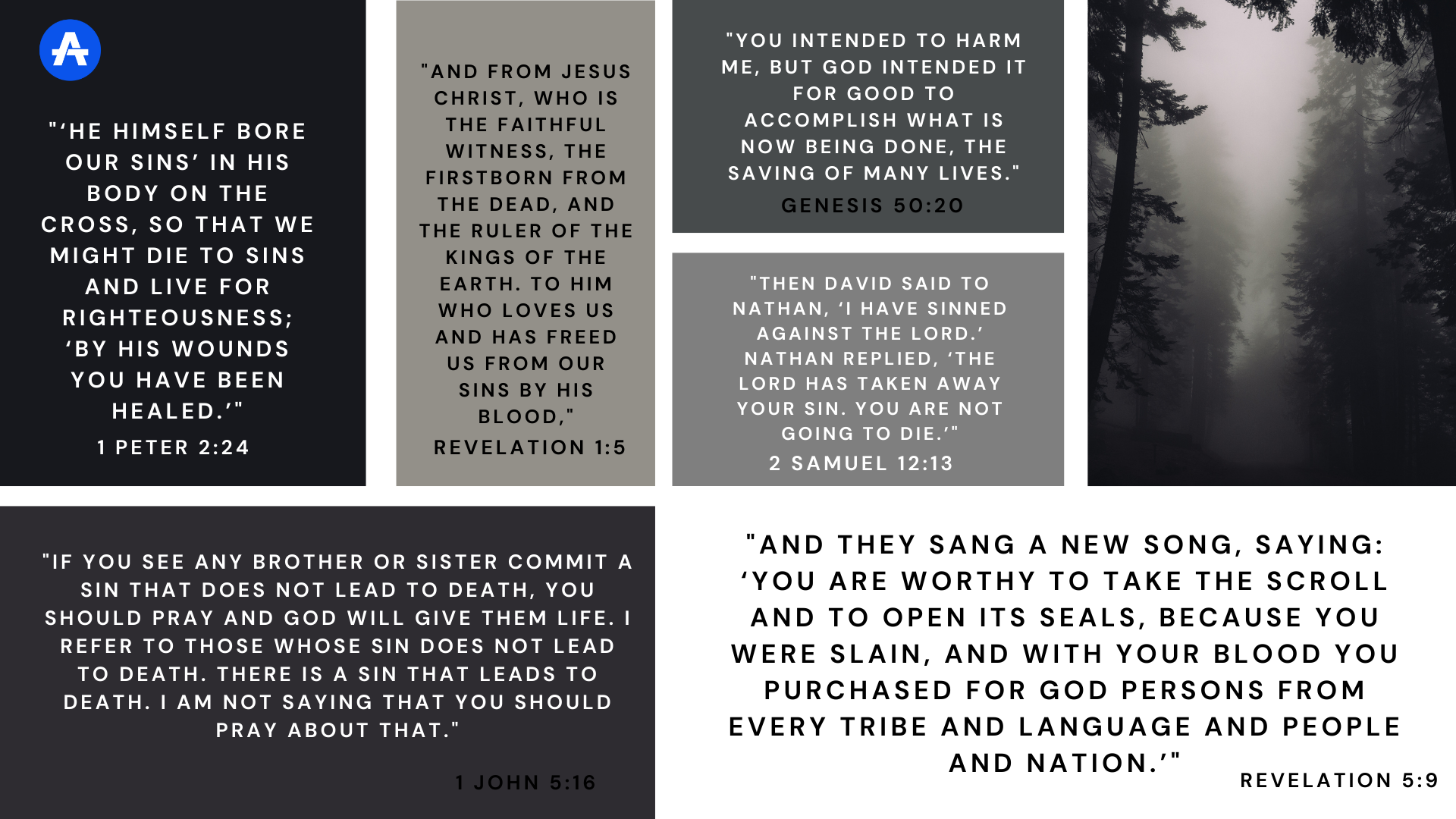
"‘He himself bore our sins’ in his body on the cross, so that we might die to sins and live for righteousness; ‘by his wounds you have been healed.’"
-
Context: Peter on Christ’s suffering and its purpose.
-
Story: Peter explains that Jesus’ suffering and death bear our sins, leading to our healing and righteousness.
-
Explanation: Jesus’ suffering provides both forgiveness of sins and healing.
38. 1 John 5:16 (NIV)
"If you see any brother or sister commit a sin that does not lead to death, you should pray and God will give them life. I refer to those whose sin does not lead to death. There is a sin that leads to death. I am not saying that you should pray about that."
-
Context: John’s instructions on prayer for sins.
-
Story: John advises praying for forgiveness of sins that do not lead to spiritual death.
-
Explanation: Prayer for forgiveness is powerful and can lead to spiritual life.
39. Revelation 1:5 (NIV)
"and from Jesus Christ, who is the faithful witness, the firstborn from the dead, and the ruler of the kings of the earth. To him who loves us and has freed us from our sins by his blood,"
-
Context: Revelation’s introduction and praise.
-
Story: John praises Jesus for His love and the redemption of sins through His sacrifice.
-
Explanation: Jesus’ sacrifice frees us from sins and shows His deep love for us.
40. Revelation 5:9 (NIV)
"And they sang a new song, saying: ‘You are worthy to take the scroll and to open its seals, because you were slain, and with your blood you purchased for God persons from every tribe and language and people and nation.’"
-
Context: Praise of the Lamb in heaven.
-
Story: The Lamb is praised for His sacrifice and the redemption of people from all nations.
-
Explanation: Jesus’ sacrifice purchased the redemption of people from every nation.
41. Genesis 50:20 (NIV)
"You intended to harm me, but God intended it for good to accomplish what is now being done, the saving of many lives."
-
Context: Joseph speaks to his brothers.
-
Story: Joseph acknowledges that despite his brothers’ intentions to harm him, God used the situation for a greater good.
-
Explanation: God can turn harm into a means for greater good and forgiveness.
42. 2 Samuel 12:13 (NIV)
"Then David said to Nathan, ‘I have sinned against the Lord.’ Nathan replied, ‘The Lord has taken away your sin. You are not going to die.’"
-
Context: David’s confession after his sin with Bathsheba.
-
Story: David confesses his sin, and Nathan assures him of God’s forgiveness.
-
Explanation: Confession leads to God’s forgiveness and removal of judgment.
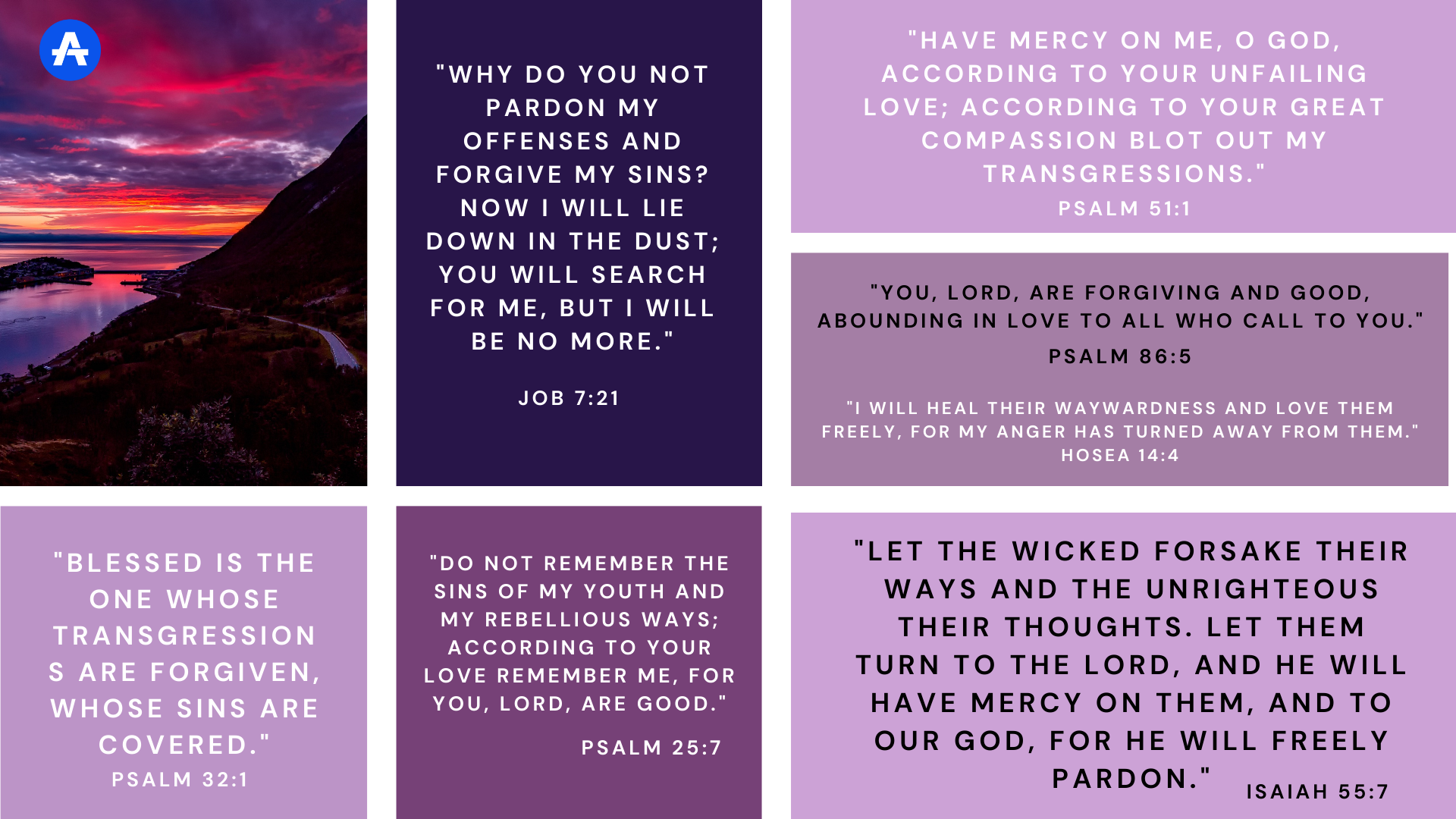
43. Job 7:21 (NIV)
"Why do you not pardon my offenses and forgive my sins? Now I will lie down in the dust; you will search for me, but I will be no more."
-
Context: Job’s lament in his suffering.
-
Story: Job pleads for forgiveness and release from his suffering.
-
Explanation: Even in suffering, Job seeks divine forgiveness and release from his afflictions.
44. Psalm 25:7 (NIV)
"Do not remember the sins of my youth and my rebellious ways; according to your love remember me, for you, Lord, are good."
-
Context: A Psalm of David seeking forgiveness.
-
Story: David asks God to forget his youthful sins and remember him with love.
-
Explanation: Seeking forgiveness involves asking God to overlook past transgressions.
45. Psalm 32:1 (NIV)
"Blessed is the one whose transgressions are forgiven, whose sins are covered."
-
Context: David’s reflection on the joy of forgiveness.
-
Story: David reflects on the blessing and joy of having sins forgiven.
-
Explanation: Forgiveness of sins brings profound blessing and joy.
46. Psalm 51:1 (NIV)
"Have mercy on me, O God, according to your unfailing love; according to your great compassion blot out my transgressions."
-
Context: David’s prayer of repentance after his sin with Bathsheba.
-
Story: David asks for God’s mercy and the removal of his sins.
-
Explanation: Mercy and compassion are sought for the removal of transgressions.
47. Psalm 86:5 (NIV)
"You, Lord, are forgiving and good, abounding in love to all who call to you."
-
Context: A Psalm of David’s plea for help.
-
Story: David praises God for His forgiving nature and abundant love.
-
Explanation: God’s nature is characterized by forgiveness and abundant love toward those who call on Him.
48. Isaiah 55:7 (NIV)
"Let the wicked forsake their ways and the unrighteous their thoughts. Let them turn to the Lord, and he will have mercy on them, and to our God, for he will freely pardon."
-
Context: God’s invitation to repentance.
-
Story: God invites the wicked to turn to Him for mercy and forgiveness.
-
Explanation: Repentance leads to God’s mercy and free pardon.
49. Hosea 14:4 (NIV)
"I will heal their waywardness and love them freely, for my anger has turned away from them."
-
Context: God’s promise of healing and forgiveness.
-
Story: God promises to heal and love Israel freely, turning away His anger.
-
Explanation: God’s healing and love are freely given, removing His anger.
50. Micah 7:18 (NIV)
"Who is a God like you, who pardons sin and forgives the transgression of the remnant of his inheritance? You do not stay angry forever but delight to show mercy."
-
Context: Micah’s praise for God’s mercy.
-
Story: Micah praises God for His unique ability to pardon sin and show mercy.
-
Explanation: God’s nature includes both forgiveness of sins and a delight in showing mercy.
Forgiveness, Grace & Mercy — A Biblical Foundation
As you reflect on theseBible Verses on Forgiveness, notice how consistently Scripture points us toward mercy, compassion, and reconciliation. God’s forgiveness is always an expression of His love—and it becomes our model for forgiving others.
When we meditate on scriptures about forgiveness, grace, and mercy, we begin to understand:
-
Forgiveness restores our relationship with God
-
Grace empowers us to live transformed lives
-
Mercy reminds us of God’s compassion in every circumstance
TheseBible Verses on Forgivenesshelp shape a heart aligned with God’s will—one that lets go of bitterness and embraces healing.
Apply These Bible Verses on Forgiveness in Daily Life
Forgiveness can feel difficult, especially when we’ve been deeply hurt. ButBible teachings on forgivenessshow us that forgiveness is not a sign of weakness—it’s a pathway to freedom.
When we applyBible Verses on Forgivenessto our lives, we learn to:
-
Release resentment
-
Restore broken relationships
-
Walk in grace and compassion
-
Reflect God’s mercy to others
-
Experience emotional and spiritual healing
Forgiving others does not always remove the pain immediately, but it invites God’s healing power into our hearts.
ActsSocial — A Community Rooted in Grace and Forgiveness
At ActsSocial, our mission is to create a community grounded in kindness, empathy, and biblical values. TheseBible Verses on Forgivenessremind us why forgiveness is essential for healthy relationships and spiritual growth.
On our platform, you can:
-
Share testimonies of forgiveness and healing
-
Join faith-based communities
-
Request prayer
-
Support others through acts of kindness
-
Build a ministry or list your church
-
Connect with Christians who value mercy, grace, and spiritual growth
Forgiveness is more than a moment—it’s a lifestyle. And ActsSocial is built to help that lifestyle flourish.
You May Also Enjoy:
Frequently asked questions
1. Why is forgiveness so important in the Christian faith?
Forgiveness is vital in Christianity because it reflects God’s character and His grace toward us. Jesus teaches that forgiveness is essential for spiritual growth, emotional freedom, and maintaining healthy relationships. It is an act of obedience that aligns believers with God’s heart.
2. What does the Bible teach about forgiving people who hurt us deeply?
The Bible teaches that believers must forgive even when the offense is painful. Jesus instructs His followers to forgive "seventy times seven" (Matthew 18:21-22), emphasizing unlimited forgiveness. Forgiving others frees us from bitterness and reflects God’s unconditional love.
3. How can reading Bible verses on forgiveness help me in daily life?
Reading Bible verses about forgiveness brings clarity, comfort, and spiritual strength. These verses help believers release anger, heal emotional wounds, restore relationships, and walk in God’s peace. They also guide practical decision-making rooted in love and grace.
4. What is the biblical meaning of forgiveness?
Biblical forgiveness means releasing someone from their wrongdoing and refusing to hold their sin against them. It mirrors God’s forgiveness, which removes our sins “as far as the east is from the west” (Psalm 103:12). It is a choice rooted in grace, not emotion.
5. What is the difference between God’s grace and God’s mercy?
Grace is God giving us blessings we do not deserve—such as salvation. Mercy is God withholding the punishment we do deserve. Together, they reveal His love: grace offers forgiveness, and mercy removes judgment.
6. Which Bible stories best demonstrate forgiveness?
Powerful examples include Joseph forgiving his brothers (Genesis 50:20), David receiving forgiveness after his sin with Bathsheba (2 Samuel 12:13), and Jesus forgiving those who crucified Him (Luke 23:34). Each story shows the transformative power of forgiveness.
7. How can I practice biblical forgiveness in my daily life?
You can practice forgiveness by releasing resentment, praying for those who hurt you, seeking reconciliation where possible, and choosing compassion over revenge. Ephesians 4:32 encourages believers to be kind and forgiving just as God has forgiven them.
8. Does forgiving someone mean I have to forget what they did?
Forgiveness does not require forgetting the offense. Instead, it means choosing not to hold the wrong against the person. God sets the example by choosing not to remember our sins (Isaiah 43:25), offering a model for healthy, healing forgiveness.
9. Can forgiveness strengthen my relationship with God?
Yes. Forgiveness is deeply connected to spiritual maturity and intimacy with God. When we forgive, we reflect God’s character and open our hearts to His peace, healing, and guidance. Unforgiveness can hinder spiritual growth, while forgiveness brings freedom.
10. What are the most powerful Bible verses about forgiveness?
Some of the most powerful Bible verses about forgiveness include Matthew 6:14-15, Ephesians 4:32, and Colossians 3:13. These scriptures highlight God’s command to forgive others as He forgives us, promoting healing, peace, and restored relationships.

What Does the Bible Say About Discipline?
What Does the Bible Say About Discipline? “Discipline is the bridge between goals and accomplishment,” said Jim Rohn, emphasizing its crucial role in achieving succe…