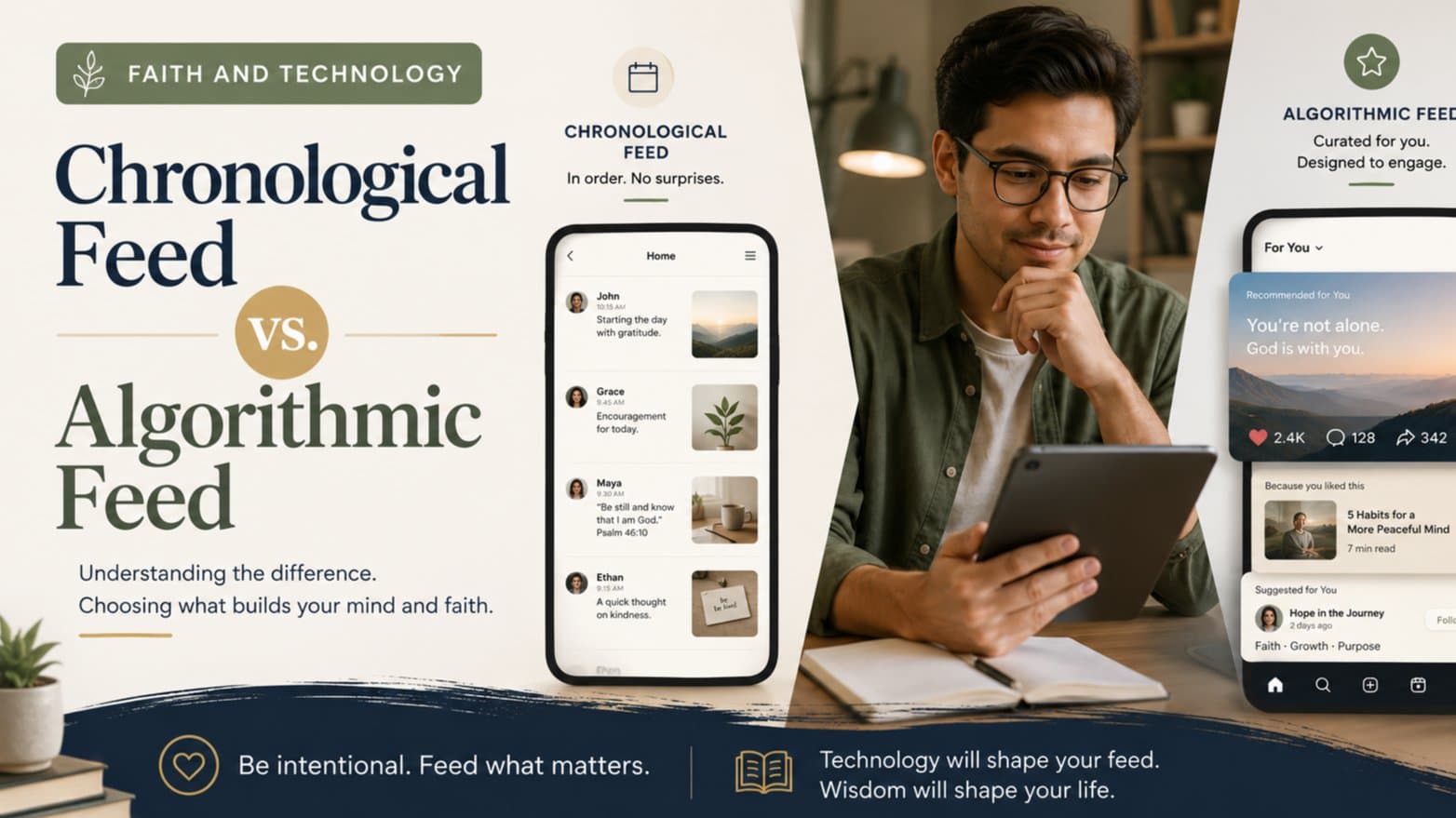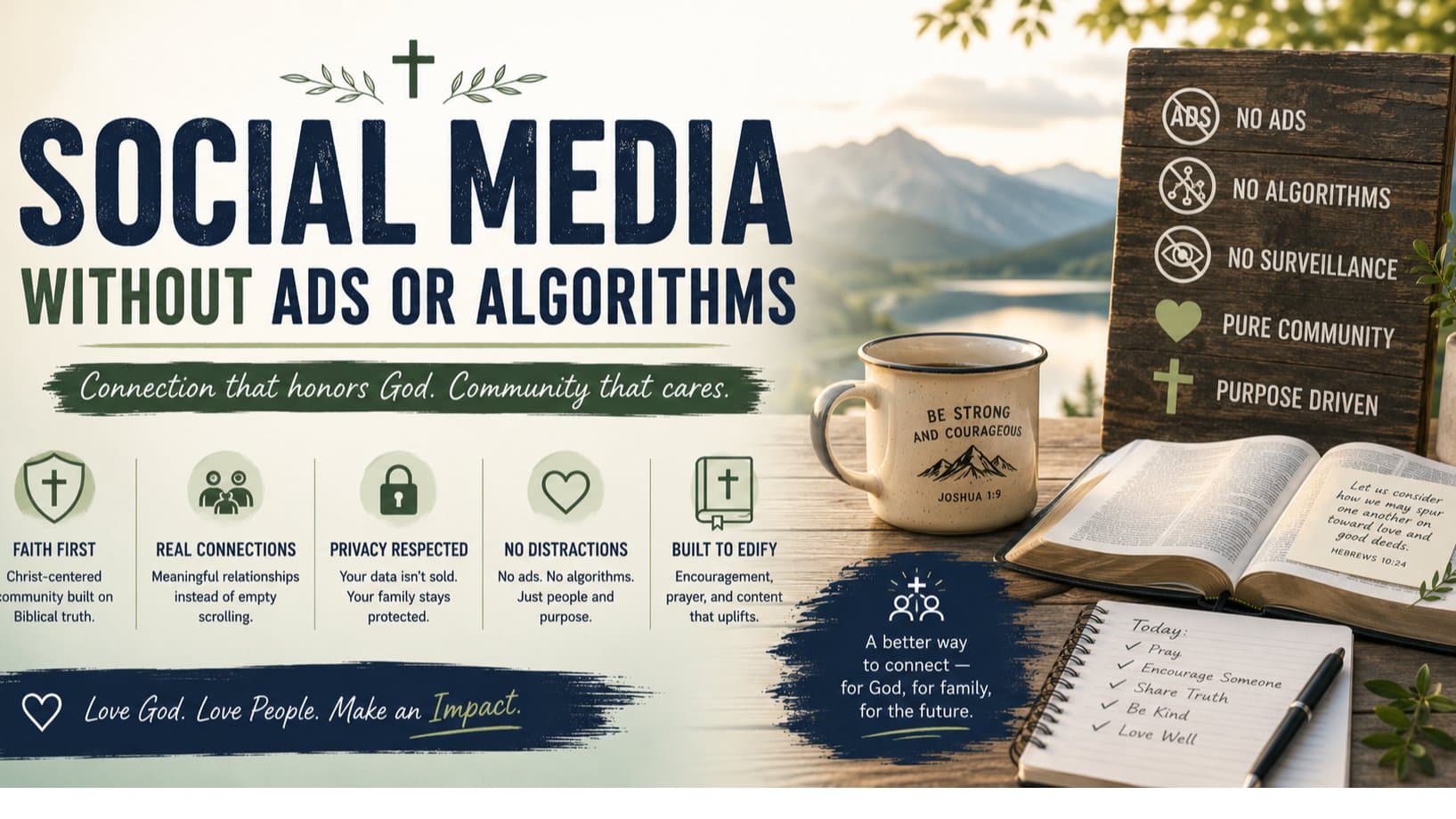
Ad-free social media means a network that shows no advertising, runs no ad auction, and does not rank your feed to maximize attention. A handful of platforms qualify, usually funded by subscriptions or by their own commerce rather than by your attention. Fewer platforms are fully ad-free than the marketing suggests, so the useful question is which specific promise a platform actually keeps. ActsSocial keeps these: no targeted advertising, no ad auction, a chronological feed, verified human accounts, and no sale of user data.
Last reviewed August 2026. Business models change, so check a platform's current privacy policy before signing up.
On this page
- What "ad-free social media" actually means
- At a glance
- Why most free networks can't be ad-free
- How do the business models compare?
- What replaces the algorithm?
- Is there a social media app with no bots?
- Social media that doesn't sell my data
- What you give up on an ad-free network
- Frequently asked questions
What does "ad-free social media" actually mean?
The phrase gets used loosely, so it helps to separate three claims that travel together but are not the same thing.
- No ads is a claim about paid placement: whether a platform sells promoted posts, sells promoted accounts, or charges a "boost this post" fee that lets one person outrank another.
- No algorithm means your feed is not reordered by a system predicting what will hold your attention longest, usually leaving chronological order plus a filter you set.
- No data selling means your activity is not packaged and passed to advertisers, data brokers, or third-party trackers.
A platform can honestly do one and not the others. A subscription app can be ad-free and still run a heavy engagement algorithm. A chronological feed can still be full of trackers. Check each claim separately rather than treating "ad-free" as one badge.
For a closer look at the ranking itself, including the honest trade-offs of switching, see chronological feed vs algorithmic feed.
At a glance
- Ad-free, algorithm-free, and bot-free are three separate promises. Verify them one at a time.
- Advertising is not evil, but it sets incentives: attention is the product being sold.
- Free plus no ads means the money comes from somewhere else: subscriptions, commerce, donations, or investors.
- Removing the ranking algorithm usually leaves a chronological feed plus filters you control.
- Bot-free is enforced at signup, not after the fact: real names, real photos, identity verification.
- The honest tradeoff is reach. Smaller networks have fewer people and weaker discovery.
Why can't most free social networks be ad-free?
Running a social network costs real money in ways invisible from the outside: storage and bandwidth for photo and video, engineers, trust and safety staff reviewing reports around the clock, legal work in every country served. Those costs scale with usage, so a free product gets more expensive the more successful it becomes.
There are only a few ways to cover that. Charge users. Sell something else, like tickets or premium tools. Take donations. Raise investment and defer the question. Or sell access to the audience, which is advertising.
Advertising is the default because it is the only option that scales smoothly with growth and asks nothing of the user at signup. That is why so much of the internet is free. It is also where the incentive lands: an advertiser buys attention, so the platform is rewarded for producing more of it. Ranking, notifications, autoplay, and recommended posts are rational responses to that incentive, not moral failures. The mistake is expecting an ad-supported platform to behave like an ad-free one. If you want different behavior, you need a platform funded a different way.
How do the business models compare?
| Model | How it makes money | What it optimizes for | What you pay with | Typical signs |
|---|---|---|---|---|
| Ad-supported free | Selling audience attention to advertisers | Time on app, impressions, clicks | Attention and behavioral data | Sponsored posts, ranked feed, boost fees |
| Subscription | A monthly or annual fee from users | Perceived value and low churn | Money | Free trial, paywalled features, often still an algorithm |
| Data-brokered free | Selling or licensing user data to third parties | Volume and depth of data collected | Personal data, usually invisibly | Broad permissions, vague privacy policy, many third-party trackers |
| Interest-based free (ActsSocial's model) | Free for individuals, churches, and locally owned businesses, with ticketing available for paid events | Relevance to what you follow and where you live | Nothing, and a smaller network than the giants | No targeted ads, no ad auction, no boost fee, chronological feed, verified accounts |
None of these is automatically right. A subscription has clean incentives and a clear price. An ad-supported network gives you the largest audience at no cash cost. The data-brokered model is the one worth avoiding, because it is the only one where the exchange is hidden from you.
What replaces the algorithm?
Something has to order a feed, so the honest version of "no algorithm" is "no engagement-optimizing algorithm." What replaces it is rules you can understand:
- Time. Newest first, so a post from someone you follow cannot be buried for being insufficiently engaging.
- Proximity. Some platforms weight by location. On ActsSocial the feed is chronological and neighbors first, with a default block radius of about 120 metres, so what is happening near you surfaces before what is happening across the country.
- Explicit choice. Groups you joined, accounts you follow, topics you selected. Nothing is inserted because a model predicted you would react to it, and there are no "suggested for you" posts.
The practical difference shows up within a day: a chronological feed ends. You reach the posts you have already seen and you are finished, which is very different from a feed engineered never to run out. Some people find it quiet. Others find it a relief.
Is there a social media app with no bots?
No platform can promise a perfect record, and any that does is overselling. What separates a serious anti-bot stance from a marketing line is where enforcement happens. Reactive enforcement means bots sign up freely and get removed once reported, which keeps them permanently ahead. Preventive enforcement means an account has to clear a bar before it exists. ActsSocial takes the preventive route: real names only, a real photo, and active verification that a human is behind the account, backed by human moderation 24 hours a day.
The tradeoff deserves naming. Real-name policies rule out pseudonymous accounts, which some people rely on for safety or privacy. If anonymity matters to you, a verified-identity network is not the right fit, and that is a legitimate choice.
Is there social media that doesn't sell my data?
Yes, though the claim needs unpacking. "We do not sell your data" can be technically true while a platform still shares data with advertising partners, embeds third-party trackers, or builds a detailed profile it uses internally. The stronger version is that data is not sold to advertisers, not sold to brokers, and not used to target you at all, because a platform with no ad business has no reason to profile you. That is the position ActsSocial takes, as do several privacy-first apps outside the faith space.
You do not have to take anyone's word for it. Three checks take ten minutes:
- Read the data-sharing section of the privacy policy. Vague language about "partners" is the tell.
- Check the App Store or Google Play privacy label for what is collected and whether it is used for tracking.
- Look for an advertiser or "boost" page. If one exists, there is an ad business.
Apply those checks to the values page and privacy policy here as readily as anywhere else.
What do you give up on an ad-free network?
Being straight about this matters more than the pitch. Leaving a large ad-supported platform for an ad-free one costs you something real:
- Network size. Most of the people you know are still on the big platforms.
- Discovery. Recommendation engines are genuinely good at surfacing things you did not know you wanted. Chronological feeds are not.
- Creator depth. Large audiences attract professional creators, so smaller platforms have thinner libraries of polished content.
- Reach for businesses. No paid amplification means no shortcut. An audience grows slowly.
- Feature velocity. Smaller teams ship more slowly than companies with large ad revenue behind them.
What you gain is a feed that ends, no engagement bait, and reasonable confidence that the person you are talking to is a person. For scrolling entertainment, the big platforms are hard to beat. For staying connected to a particular community, a smaller ad-free network often works better precisely because it is smaller.
Related reading
Part one of a five-part series on what a faith-first platform looks like in practice:
- Safe social media for Christian families
- How to share prayer requests with a community
- A social media app for churches and pastors
- Finding Christian events and jobs near you
To see the model applied: local businesses get free listings with no boost fee, and community events are free to publish on the events page.
The short version
Ad-free is not a virtue signal, it is a business decision with consequences in both directions. You get a quieter feed, no engagement-optimized ranking, no profile built to sell you things, and a reasonable expectation that the accounts around you belong to real people. You also get a smaller world. Knowing which you want is most of the decision.
ActsSocial was built around a particular picture of community from Acts 2:42-47, where people ate together, shared what they had, and knew their neighbors by name. You do not have to share the faith behind that to want the same thing from the internet: fewer strangers selling you things, more people you actually know.
Frequently asked questions
What is a social network without ads or algorithms?
It is a platform that sells no advertising and does not rank your feed by predicted engagement. Posts appear in chronological order, filtered only by choices you made: who you follow, which groups you joined, or where you live. Funding comes from something other than attention, most often subscriptions, commerce, or donations.
Is there a genuinely ad-free social network?
A few exist, usually funded by subscription fees. Most platforms described as ad-free keep some promises and not others, so check them one at a time rather than trusting the label. ActsSocial, for example, runs no targeted advertising, no ad auction, and no fee to boost a post above anyone else's. Check the privacy policy and app store privacy label of any platform before joining.
How does a free social media app make money without ads?
Usually through revenue separate from the feed: paid subscriptions, transaction fees on commerce such as event ticketing, donations, or investor funding while the product grows. Ask any free platform the question directly. If there is no clear answer and no visible product being sold, the answer is often advertising or data.
Which social media apps do not sell your data?
Platforms with no advertising business generally have no commercial reason to build or sell a profile of you, which is why ad-free and privacy-first apps tend to make the strongest commitments here. The reliable way to confirm any such claim is the data-sharing section of the privacy policy plus the App Store or Google Play privacy label.
Can a social media app really have no bots?
No platform can guarantee a perfect record, but enforcement at signup makes a large difference. Requiring a real name, a real photo, and active verification that a human is behind the account stops most automated signups before they happen, rather than removing them after they post. Round-the-clock human moderation closes the remaining gap.
What happens to my feed if there is no algorithm?
It becomes predictable. Posts appear newest first from the people and groups you chose, with no inserted recommendations and no "suggested for you" content. Some platforms add a location filter so nearby posts come first. The most noticeable change is that the feed reaches an end instead of scrolling forever.
Are ad-supported social networks bad?
No. Advertising is what makes most of the internet free to use, and the engineering behind large platforms is genuinely impressive. The point is incentives rather than morality: a platform paid for attention will be built to capture attention. Wanting software built around a different goal means accepting a smaller network in return.
What Is Digital Discipleship? A Practical Guide for 2026
Ask ten church leaders what digital discipleship means and you will get ten answers. Some mean livestreamed sermons, some mean a devotional app, some mean a group chat that neve…