Ask ten church leaders what digital discipleship means and you will get ten answers. Some mean livestreamed sermons, some mean a devotional app, some mean a group chat that never quite became a group. The word has grown fuzzy, and that matters, because the thing it describes is no longer optional. If your people spend hours a day online, part of their formation is already happening there, with or without you. This guide defines the term plainly, measures it against the Acts 2:42–47 pattern of community, and shows how to start.
What Digital Discipleship Actually Means
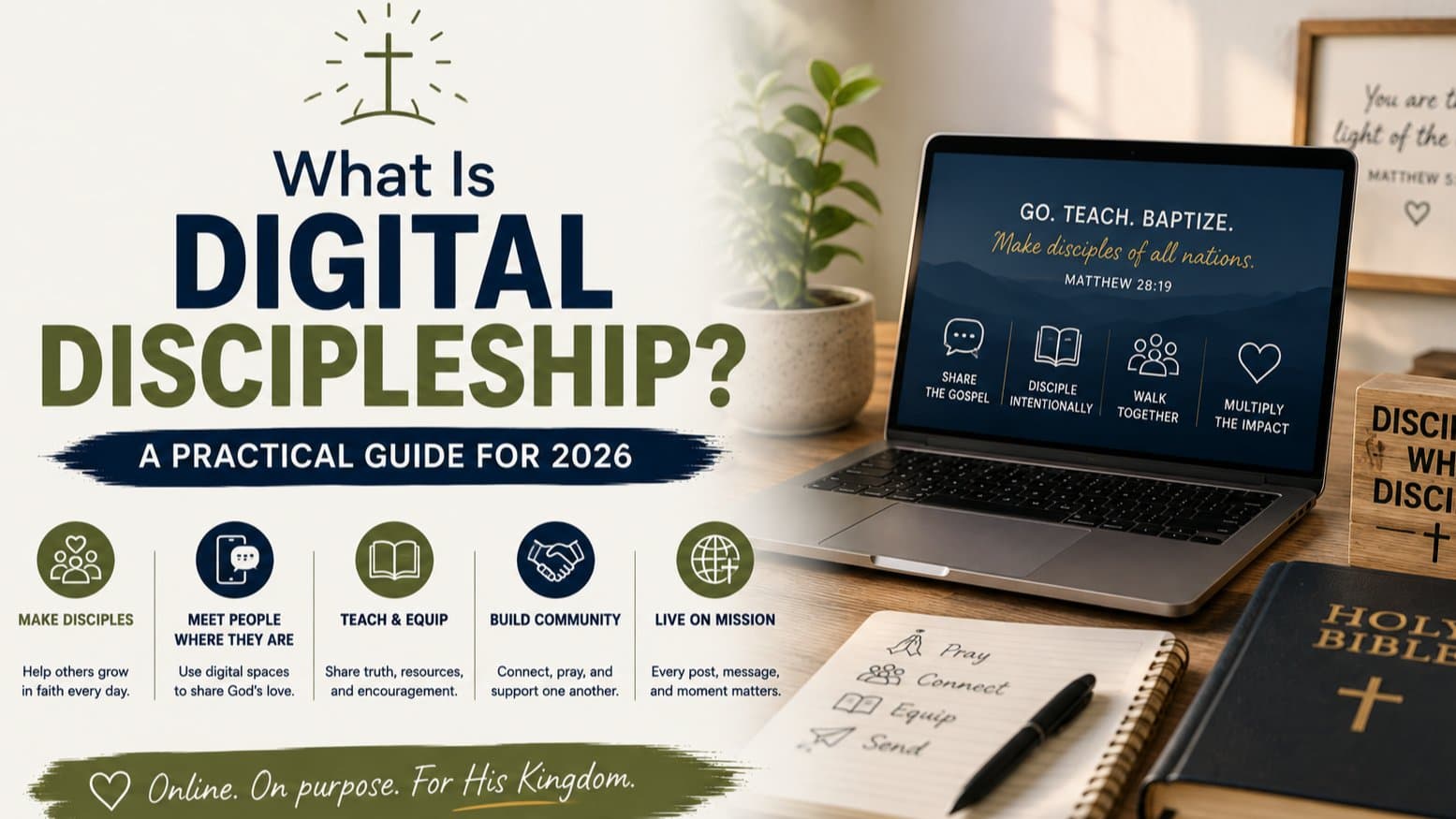
Digital discipleship is the intentional use of digital spaces to help people follow Jesus: to learn his teaching, belong to his people, and obey him in ordinary life.
Notice where the word “digital” sits. It modifies the medium, not the discipleship. The aim has not moved since Jesus gave it:
“Go therefore and make disciples of all nations, baptizing them in the name of the Father and of the Son and of the Holy Spirit, teaching them to observe all that I have commanded you.” (Matthew 28:19–20, ESV)
Read that last clause slowly. Not teaching them to know all that I have commanded you. Teaching them to observe it. Observation is behavior, and behavior is formed in relationship over time, not transferred in a single sitting. Any definition of digital discipleship that ends at information delivery has already lost the thread.
Paul describes the same thing as a chain of trust that keeps extending:
“and what you have heard from me in the presence of many witnesses entrust to faithful men, who will be able to teach others also.” (2 Timothy 2:2, ESV)
Four links in one sentence: Paul, Timothy, faithful people, others also. That is the shape to aim for. A useful test for any digital effort is whether it produces link three and link four, or whether it stops at link two and calls a large audience a success.
In practice, digital discipleship has three components. There is content, which is the teaching itself. There is relationship, which is the people who know your name and your situation. And there is accountability, which is the gentle expectation that you will actually do something with what you heard. Most digital ministry delivers the first component beautifully and the other two barely at all. That imbalance is the whole problem.
What It Is Not, and Why the Difference Matters
It is not broadcasting. A well-produced sermon clip can serve discipleship, but a following is not a discipleship. Broadcasting scales one voice to many ears. Discipleship moves in both directions, which means someone has to be listening back. If nobody in your digital space can interrupt you, correct you, or ask you an inconvenient question, you are publishing, not discipling. Both have value. Only one of them makes disciples.
It is not content consumption. Deuteronomy gives the older picture of how formation actually happens:
“And these words that I command you today shall be on your heart. You shall teach them diligently to your children, and shall talk of them when you sit in your house, and when you walk by the way, and when you lie down, and when you rise.” (Deuteronomy 6:6–7, ESV)
Sitting, walking, lying down, rising. That is not a curriculum, it is a life woven through with conversation. The digital equivalent is not a longer video. It is more moments of ordinary talk about real things, spread across the week, among people who are actually in each other’s lives.
It is not a replacement for the gathered church. Digital discipleship extends the week between Sundays. It does not substitute for the room, the table, or the shared meal. Treat it as connective tissue, not a body.
It is not automation. You can schedule content. You cannot schedule presence.
“So, being affectionately desirous of you, we were ready to share with you not only the gospel of God but also our own selves, because you had become very dear to us.” (1 Thessalonians 2:8, ESV)
Not only the gospel but also our own selves. There is no tool that outsources that part, and the moment a digital discipleship plan starts feeling efficient, it is usually because someone quietly removed the costly ingredient.
Four Marks Drawn From Acts 2:42
The earliest description of Christian community is four devotions in a single verse:
“And they devoted themselves to the apostles’ teaching and the fellowship, to the breaking of bread and the prayers.” (Acts 2:42, ESV)
Those four make a workable audit. Run any digital space you are responsible for against them.
Teaching that expects a response
The apostles’ teaching was authoritative content, and it landed on people who were expected to do something. Ask of your space: after the teaching, is there a place to say “here is where this is hard for me”? If the answer is no, add one before you add more content.
Fellowship that knows names
The Greek word behind “the fellowship” carries the sense of shared life and shared stake, not friendly acquaintance. In digital terms, this is the difference between a comment section and a group of twelve people who would notice if you went quiet for two weeks. Small and known beats large and anonymous every time.
Breaking of bread, the offline anchor
Bread is physical. This mark is the one that keeps the other three honest, and it is the mark most digital plans skip. Every digital discipleship rhythm needs at least one in-person point, even if it is monthly, even if it is only two of you at a coffee shop.
Prayers that are specific
“Praying for you” is kind. “Praying that Tuesday’s conversation with your manager goes better than you fear” is fellowship. Specificity is evidence that someone was paying attention.
How to Start Digital Discipleship in a Small Group
Do not begin with a platform decision or a launch announcement. Begin small enough to succeed.
Step 1. Pick one group, not the whole church. Eight to twelve people. A pilot you can actually pastor beats a program you can only administrate.
Step 2. Say the aim out loud. “By Christmas we want each person to be reading scripture most weeks and to have one person who knows how they are really doing.” Vague aims produce vague activity.
Step 3. Choose a rhythm you can sustain for eight weeks. One weekly discussion thread, one weekly live call, one monthly meal is plenty. Whatever you pick, you personally have to survive it in week seven.
Step 4. Put the offline anchor on the calendar first. Book the meals before you build anything digital. The digital rhythm fills the gaps between them, not the reverse.
Step 5. Give everyone a job. One person opens the weekly thread, one person tracks prayer requests, one person follows up with whoever has gone quiet. Groups where only the leader has a role tend to become audiences.
Step 6. Measure formation, not engagement. Post counts and view counts tell you about attention. Ask better questions at week eight: is anyone reading scripture who was not before, does anyone have a person they can be honest with, has anyone served someone outside the group.
If you are building the container from scratch, the mechanics of how to build Christian community online cover the group-formation side in more depth, and the practical setup for how to start an online Bible study group is the fastest concrete on-ramp for Step 3.
Why the Platform You Choose Shapes the Formation
Environments form people. A room with a table in the middle produces different conversations than a room with a stage at the front, and the same is true of software.
Most large social platforms are funded by advertising, which means the system has a reason to maximize time on device. That is not a moral accusation against any company, it is a description of an incentive. But incentives shape what surfaces, and what surfaces shapes what a community talks about. A feed tuned for reaction will reliably hand you outrage over encouragement, because outrage performs better.
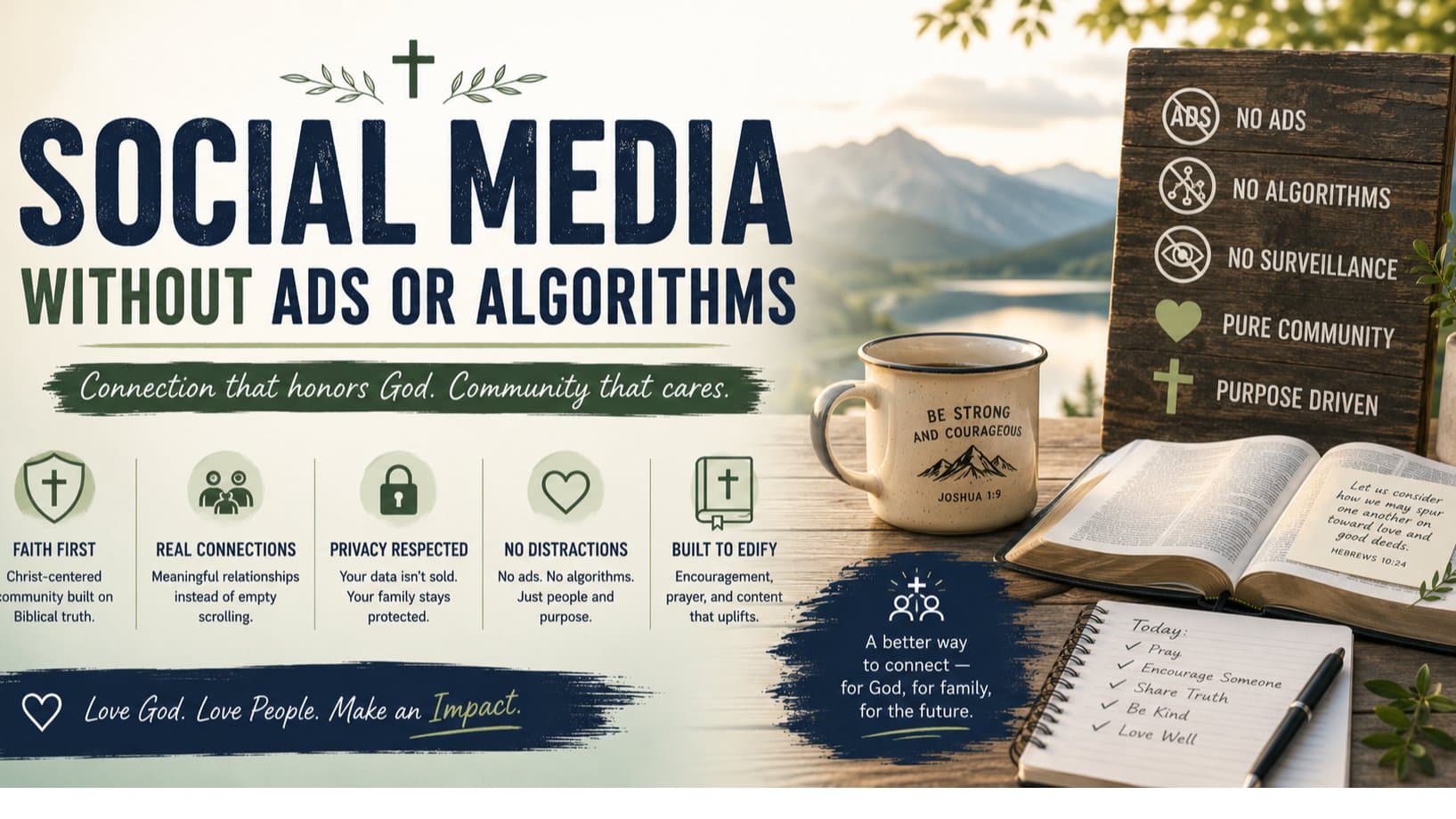
ActsSocial was built on a different arrangement. It is interest-based, not ad-driven, with no ad tracking and no data harvesting, so what you see is sorted by what you actually care about rather than by what keeps you scrolling. That is a design decision, not a claim of moral superiority, and it exists because the sorting mechanism is doing quiet formational work whether anyone notices or not.
Whatever you choose, ask four questions of it. What behavior does this space reward? Can a group of twelve find each other and stay found? Is my community’s data being harvested or sold? Can we bring people who are not yet Christians in here without embarrassment?
That last question deserves weight. Plenty of people are curious about Jesus and exhausted by Christians online, and the shape of the space they walk into is the first thing they read. Jesus named the marker himself:
“By this all people will know that you are my disciples, if you have love for one another.” (John 13:35, ESV)
All people, including the ones just watching. Digital discipleship done well is quietly evangelistic, not because anyone is arguing, but because the love is visible and unusual.
Where to go next. Digital discipleship is not a new mission. It is the old mission carried into the rooms where people now spend their evenings, which means the test has not changed either: are people becoming more like Jesus, and do they belong to somebody who would notice if they disappeared.
Start with one group of twelve. Book the meal first. Read Acts 2:42–47 on ESV.org with them and ask which of the four devotions your group is weakest at, then aim the next eight weeks at that one. The Great Commission in the ESV is worth reading alongside it.
For more on building the community these rhythms live in, browse more from the ActsSocial blog.
Frequently asked questions
What is digital discipleship in simple terms?
Digital discipleship is using digital tools and spaces on purpose to help people follow Jesus, including learning his teaching, belonging to a community, and putting it into practice. The word "digital" describes the medium only. The goal is the same discipleship the church has always pursued.
Is digital discipleship biblical?
The Bible does not mention the internet, but it consistently commands discipleship through whatever means are available, including letters carried across the Roman Empire to churches Paul could not visit. Matthew 28:19–20 gives the mandate and 2 Timothy 2:2 gives the method of entrusting teaching to people who will teach others. Digital tools are a delivery method, and they are judged by whether they produce actual obedience and real community.
Can digital discipleship replace going to church?
No, and it works best when nobody expects it to. Acts 2:42 includes the breaking of bread, a physical practice that requires bodies in a room. Digital discipleship is most useful as connective tissue between gatherings, keeping conversation, prayer, and accountability alive across the week.
What tools do I need to start digital discipleship?
Far less than most people assume. A group of eight to twelve people, one consistent place to talk, a shared reading plan, and one recurring in-person meeting will outperform an expensive stack every time. Choose a platform where a small group can find each other and stay connected without their attention being sold, then add tools only when a real need appears.
How do I know if digital discipleship is working?
Stop measuring engagement and start measuring formation. After eight weeks, ask whether anyone is reading scripture who was not before, whether each person has someone who knows how they are honestly doing, and whether anyone has served someone outside the group. Those three answers tell you more than any dashboard.

Chronological Feed vs Algorithmic Feed: How Feed Ranking Actually Works
ON THIS PAGE At a glance What is the difference between a chronological feed and an algorithmic feed? How does the social media algorithm actually work? Why does content that pr…